Albemarle & Charlottesville
- Over the next three years, Albemarle County will implement the AC44 Comprehensive Plan focusing on four major initiatives:
- The Zoning Modernization project is a comprehensive update to the 40-year-old zoning ordinance to make regulations clearer, more consistent and better aligned with the community’s vision for the future.
- Activity Centers in the county’s Development Areas will identify locations for higher-density development and redevelopment.
- A multimodal transportation planning effort will prioritize completion of the current list of transportation projects and develop the county’s first Multimodal Transportation Plan.
- Shorter-term priorities for the Rural Area include: allowing updated uses in existing non-residential structures; considering permitting restaurants, weddings, and other events and agricultural operations; and continued work on allowing craft artisan uses. In the longer-term, a detailed analysis will identify areas of terrestrial and aquatic biodiversity, active agricultural lands, and historical and archaeological resources, as well as drinking watersheds and entrance corridor buffers — all of which will lay the foundation for the county’s first Rural Area Plan.
The implementation of the AC44 Comprehensive Plan is one of PEC’s highest priorities in Albemarle. PEC will be actively engaging community members, supervisors, planning commissioners, county staff and allied organizations to ensure that these initiatives use best practices and comply with the Comprehensive Plan.
Clarke
- County staff have completed the public input meetings on the newly drafted Rural Lands Plan, which includes the county’s historic villages. The draft will come to the Planning Commission for a public hearing over the summer, then move on to the Board of Supervisors for adoption.
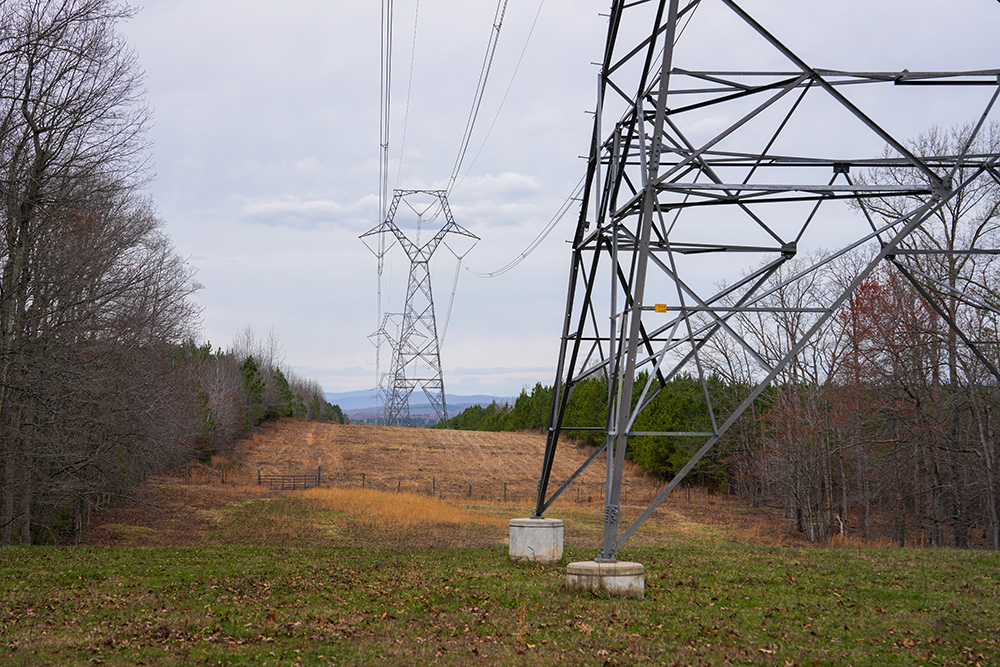
- After posting potential routes for the 765-kilovolt Joshua Falls-Yeat transmission line, carrying power from West Virginia to Maryland, Dominion Energy is holding public meetings for impacted counties in June and July. PEC is monitoring to see if this line impacts Clarke County and will share public meeting information and other opportunities for people to make their voices heard.
Culpeper
- Strata Energy has withdrawn its application for Maroon Solar, a large, utility-scale solar installation on Raccoon Ford Road in southern Culpeper County, after the Planning Commission recommended denial. This marks the fourth time the project has failed to obtain a conditional use permit. PEC opposed the project because of Strata Energy’s history of erosion and sediment violations and the potential presence of rare plants on the site. Strata Energy plans to make a fifth application in the future.
- Several of Culpeper’s data centers are now under construction, including Databank at the corner of state Route 3 and U.S. Route 29. The Culpeper Technology Campus and Copper Ridge, both STACK Infrastructure-owned campuses between McDevitt Drive and East Chandler Avenue, are expected to break ground this summer. If you are being impacted by the construction, you can find contact information for your town and county elected officials on our website: pecva.org/culpeper
- The Culpeper Citizen Information Network is hosting a free lecture series about zoning and development. The series is designed to inform residents how zoning ordinances, the comprehensive plan and citizen input all play a role in land use decisions by the county. The next lecture is tentatively scheduled for July 16 in Jeffersonton.
Fauquier
- Remington Tech Park developers have changed their plan for on-site power generation from natural gas turbines to natural gas fuel cells. From both noise and air emissions perspectives, PEC sees this as a positive change and will continue to advocate for the health, safety and welfare of Fauquier residents.
- Williams Co., developer of the Power Express Quantico Lateral gas pipeline, have asked some landowners in the Catlett area to allow property surveys. Neither the Federal Energy Regulatory Commission, the State Corporation Commission, nor Fauquier County have received an application for this pipeline project. PEC is working with partners to identify the prospective route and understand all potential impacts.
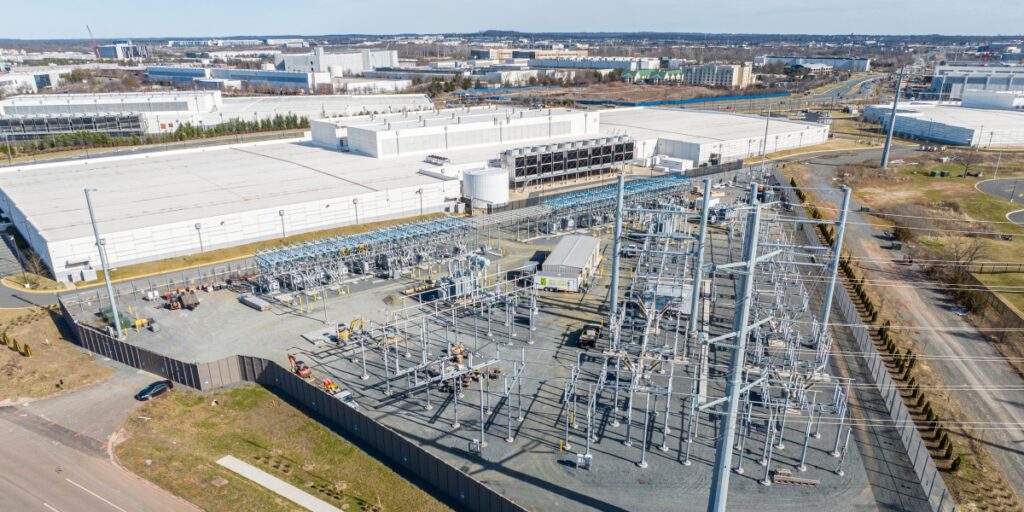
- Dominion Energy acquired 85 acres adjoining its Morrisville substation, positioning the site for a possible major expansion, separate substation, or battery energy storage system. PEC and partners are closely monitoring all activity related to this substation site and its surrounds.
- Fauquier Forward, a 501(c)(3) whose mission is to “build a county that works better for everyone,” is deepening community divisions by pitting protected lands and zoning restrictions against the tax-revenue potential of commercial and industrial development. PEC and partners are demanding transparency around this organization’s actual mission, which we believe to be advocacy for new data center development.
- The Town of Remington invited area residents to an Open House to learn about its Comprehensive Plan, the committee leading its review and revision, and ways to take part in the process. PEC continues to work with other members of the Comprehensive Plan Committee via biweekly public meetings through 2026 and early 2027.
Greene
- The county has started work on an updated Comprehensive Plan scheduled to be adopted in 2028. As part of the update process, PEC will be advocating for rural protections — including action items to explore a purchase of development rights program and a riparian buffer protection program. The county is also in the process of preparing a flood resilience plan.
- PEC is following the economic development work associated with the U.S. Route 29 corridor in Greene and will continue to engage Greene regarding potential impacts of future development.
Loudoun
- During its June business meeting, the Board of Supervisors discussed a version of proactive zoning enforcement that is part of the Western Loudoun Rural Standards and Uses Zoning Ordinance Amendment process. The board also discussed a county-led inventory of existing rural business uses to confirm that filings in the county system are consistent with the current use and that all appropriate health and safety permits are in place.
- Hosted by the Loudoun County Preservation and Conservation Coalition in partnership with PEC, Loudoun Wildlife Conservancy, Save Rural Loudoun and Loudoun’s Future, community groundwater meetings wrapped up in April. With over 300 attendees in total, these meetings revealed that long-term groundwater availability is clearly a concern for residents. This group will hold more localized meetings as it plans next steps in support of a Groundwater Management Area for Loudoun and Fauquier.
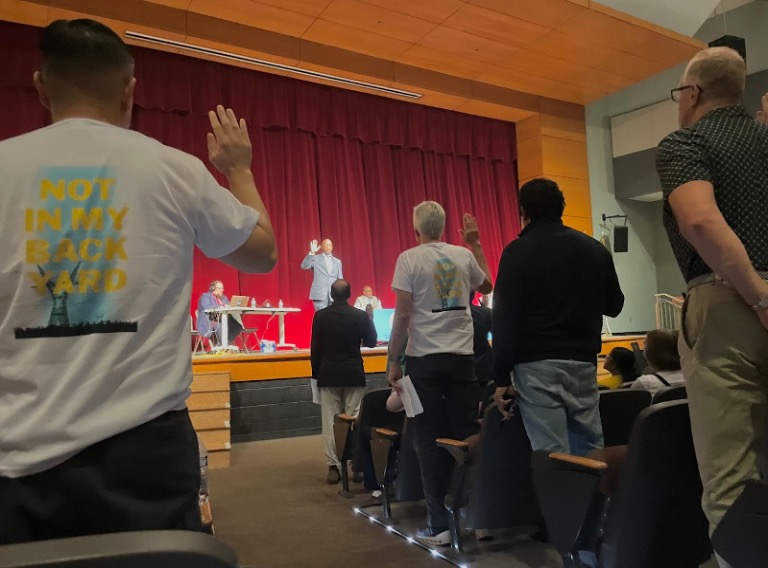
- In April, despite incredible community support for partial undergrounding of the proposed Golden to Mars transmission corridor, the State Corporation Commission selected Route 4, which will cross school property at Rock Ridge High School and Rosa Lee Carter Elementary School, requiring School Board approval by July 2. Given the School Board’s previous opposition, the SCC designated Route 3A as the mandatory backup. This alternative cuts through backyards, and would require Dominion to use eminent domain to seize land from homeowners (an outcome the SCC says would be “regrettable”).
Madison
- PEC’s work continues on the proposed Rapidan River-Clark Mountain Rural Historic District. Our consultant, the Fairfield Foundation, recently completed survey work in the Madison County community of Tanners, and PEC has formally submitted the nomination to Virginia’s Department of Historic Resources. During the department’s review process, PEC expects to hold another community meeting to gather public input in summer or fall 2026. We hope the nomination will go before the Board of Historic Resources by the end of the year. If the Board of Historic Resources approves the nomination, the district will be listed on the Virginia Landmarks Register. That listing opens the door for a final submission: for review by the Keeper of the National Register for listing on the National Register of Historic Places. The historic district, which includes over 40,000 acres of mostly intact agricultural landscape in Madison, Culpeper and Orange counties, would be one of the largest rural historic districts in Virginia.
Orange
- The Orange County Board of Supervisors has removed data centers as a by-right use from the Industrial Zoning District. Now, any future Orange County data center application will need to seek a rezoning to the Technology Zoning District and obtain a special use permit. The only exception might be the property already rezoned for the Wilderness Crossing development. No data centers are currently proposed in Orange County. PEC closely monitors land use applications and will alert the public should a data center be proposed.
- The Orange Town Council has approved an updated zoning ordinance definition of “data center” that better describes modern, hyperscale data centers. Unfortunately, the council did not incorporate PEC’s recommendation that the definition clearly distinguish between on-site emergency back up power generation and on-site primary power generation. However, council members publicly stated their intent to address that elsewhere within the zoning ordinance soon. Next up, we expect the Town Council to continue discussions about a draft data center policy document and to make additions to the zoning ordinance to provide use standards that any future data center would be required to meet. No data centers are currently proposed for the Town of Orange.
Rappahannock
- Rappahannock County continues to evaluate designs for a new, replacement courthouse building on the existing courthouse grounds in the Town of Washington. Following an open house in April, the Board of Supervisors is further assessing the most recent proposal after the judges who will preside in the building raised concerns about some design elements.
- Phase II of Rush River Commons is working to secure tenants for the planned commercial office spaces. The county Library Board of Trustees is currently considering an offer to relocate there from their current location nearby.
- FirstEnergy has announced plans to file an application to wreck and rebuild the existing Page-Sperryville transmission line with the State Corporation Commission in June. PEC is not opposed to the rebuild of the 138 kilovolt line, though we have numerous concerns about FirstEnergy’s lack of public engagement and lack of substantive information about the project.
This article appeared in the 2026 summer edition of The Piedmont Environmental Council’s member newsletter, The Piedmont View. If you’d like to become a PEC member or renew your membership, please visit pecva.org/join.