
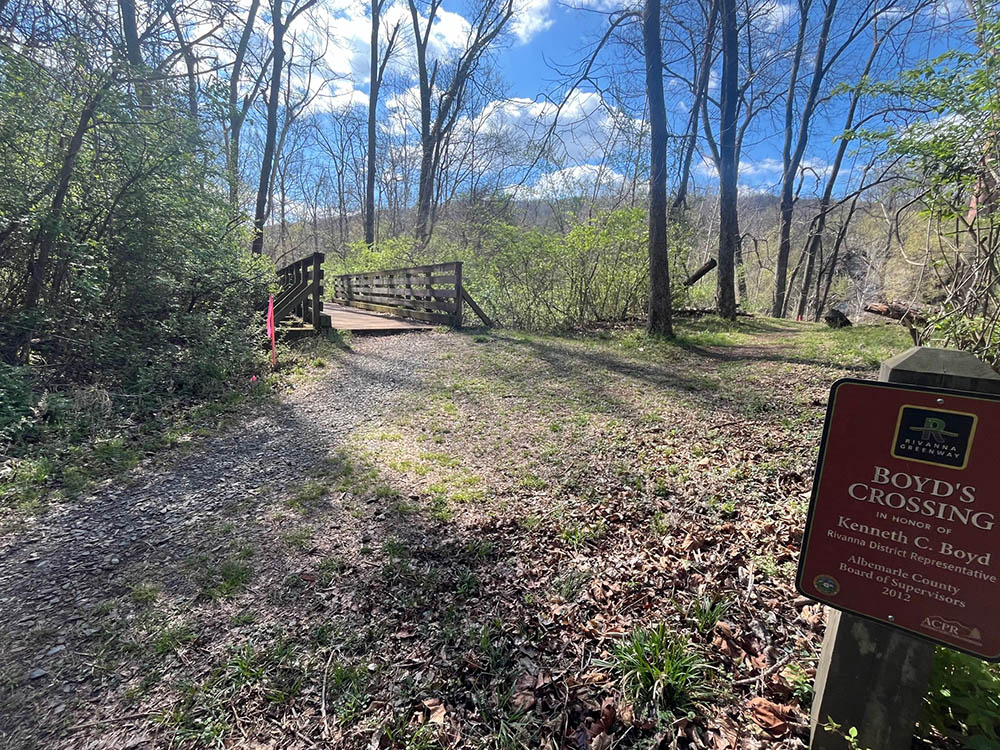
Albemarle is beginning the first phase of a planned project to extend the Old Mills Trail four miles downstream. There it will eventually connect to a future park at Milton Landing and an existing greenway in Glenmore.
Connectivity and Public Access
PEC works to enhance connectivity within communities and expand public access to parks, trails and open spaces.
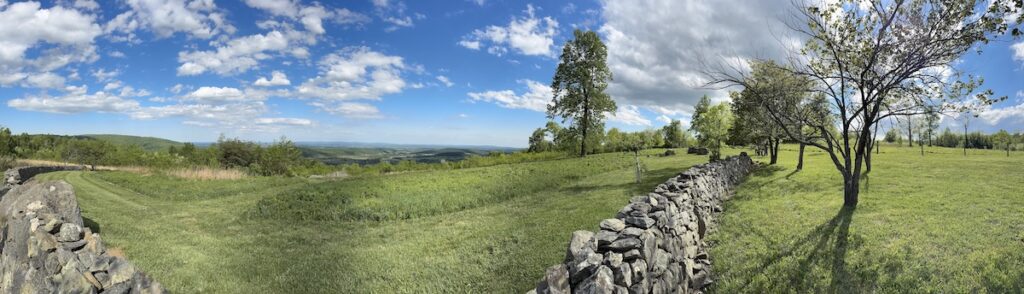
Piedmont Memorial Overlook: the view that inspired a lifelong commitment
A flash of blue soared over my car windshield. What kind of bird creates a vivid cerulean streak? Was that an Eastern bluebird? Or was it an indigo bunting, the eponymous bird I later heard chattering in the treetops?
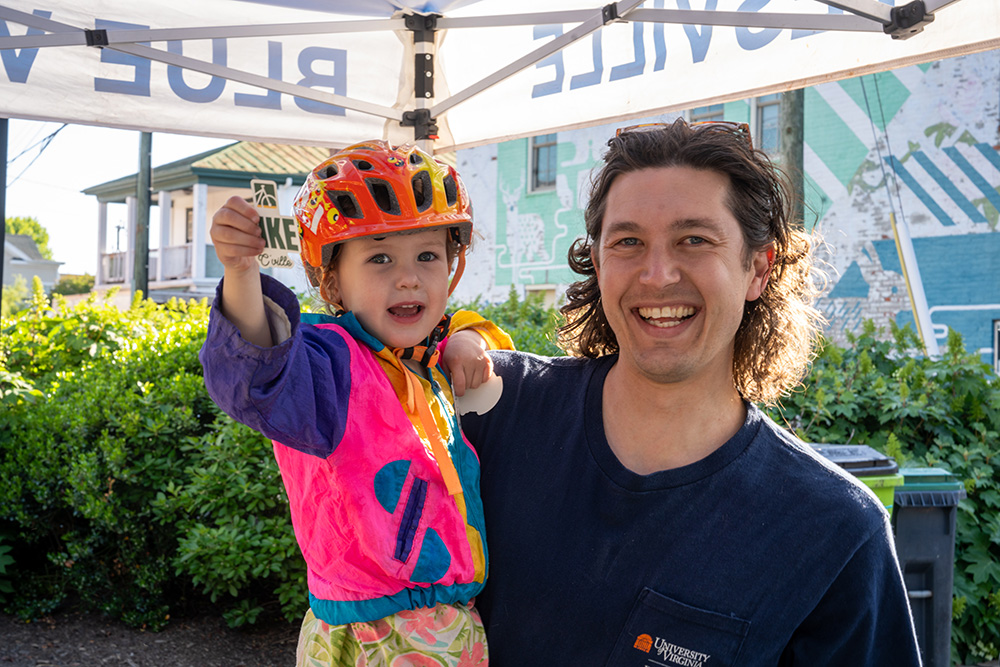
Bike Month 2026: Better Than Ever
Bike Cville’s momentum is spreading. This year, there was something happening every single day, from group rides to events and clinics.
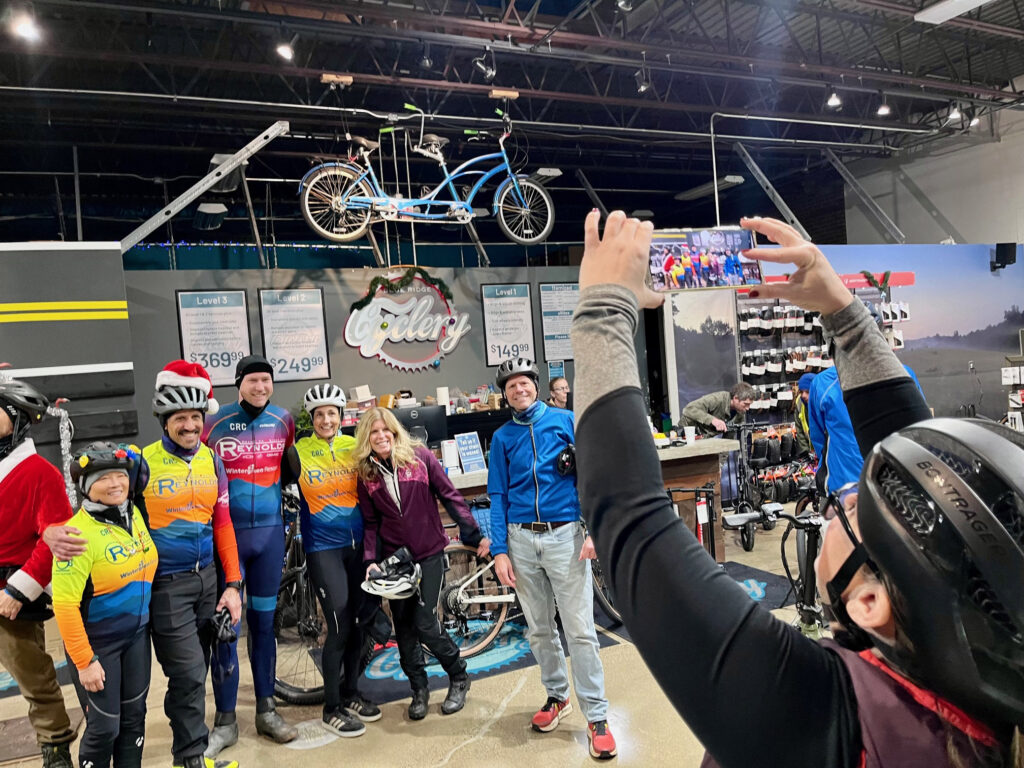
Bike Cville: Jump Starting Sustainable Momentum
This is the second in a series of blog posts reflecting on BikeCville’s eighth year. The previous post described the rides from the viewpoint of a participant. This post talks about why PEC started BikeCville and how it’s going.
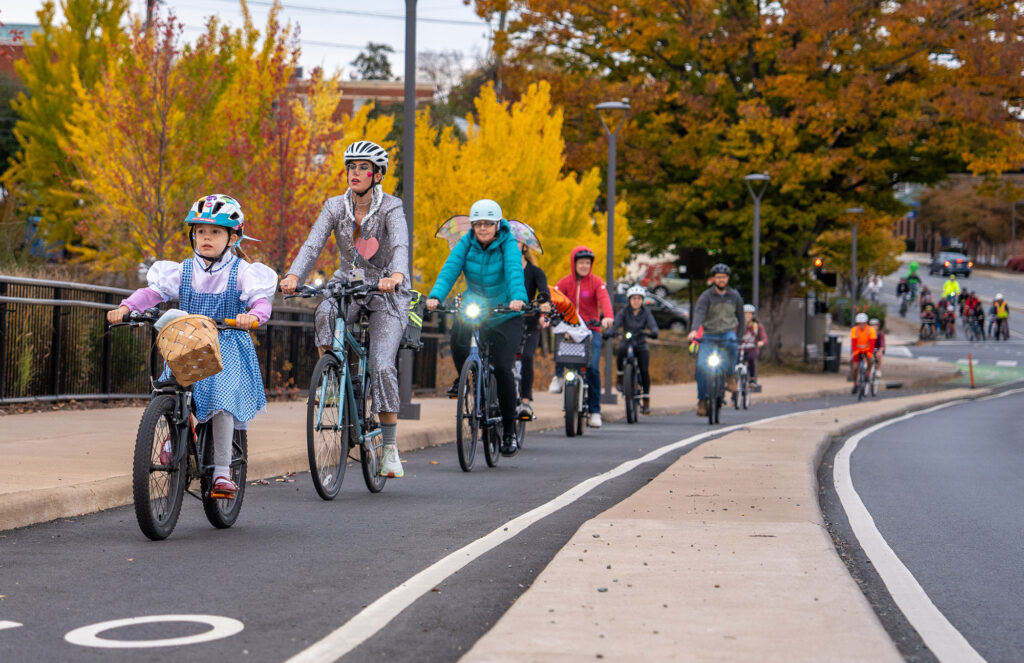
Not many land trusts organize urban bike rides but for the Piedmont Environmental Council it makes perfect sense. BikeCville combines our purpose to promote compact, livable communities with our primary method, which is to empower residents to advocate for positive change.
I was hired in 2017 to help bring about better infrastructure for walking and biking in the Charlottesville, Virginia area. This work carries a chicken-or-egg question: which comes first? We know that most people will only bike on well-protected infrastructure. Our bike-lane network was (and is) insufficient and quite fragmented. As a result, there were far fewer cyclists than one might expect in a small college town. Yet we have also learned from more than 50 years of advocacy that good infrastructure is only possible if droves of people come out and demand it. Charlottesville was stuck; it needed some kind of jump start.
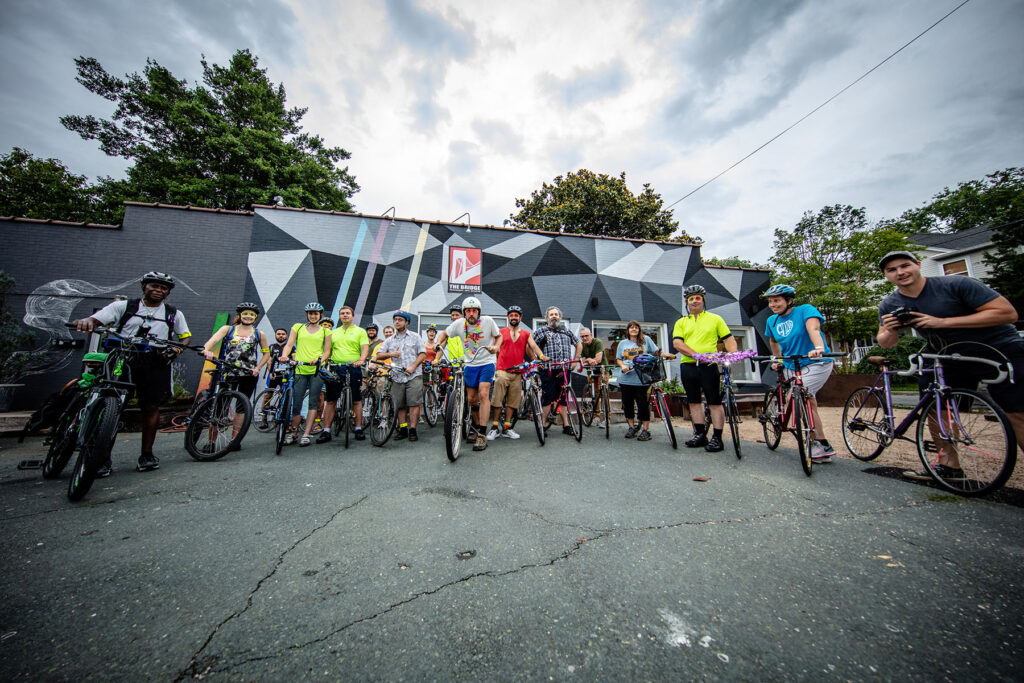
PEC has been attacking both sides of the equation since day 1. We have advocated for and assisted on multiple infrastructure projects that take a long time. After eight years, some of those are finally starting to appear (topic for a future post). We have also spent at least as much time on the cultural front strengthening the bicycling community.
We received a grant from the Bama Works Fund of the Dave Matthews Band for a program we named “BikeCville.” It started as a simple series of group bike rides that emphasize safety education, camaraderie and fun. We hoped to encourage interested-but-concerned riders to claim their rightful place on the street and to learn from one another while enjoying each other’s company. We were also building a strong cohort that would lobby for safer streets for everyone.
Although we’re working hard for safer streets, we refuse to wait another generation (and continue to sacrifice environmental and human health) for slow-developing infrastructure to get built. We want to encourage more cyclists and to make cycling more visible on the streets we presently have. Longer term, we were also methodically building an army that would advocate for the better local policies and infrastructure that were so clearly needed. We organized group bike rides as catalysts and they have been successful.
From Spark to Pilot Light to Burn
PEC is just one organization and could never tackle this complicated problem alone. We needed to build a program that could maintain its own momentum, spread and grow. Generational change needs to outlast any grant’s life or any single organization’s attention span. So, while the rides were fun, educational, organizing events that could change attendees’ day-to-day choices, they were also a proof of concept for other groups to replicate. We figured that if PEC could organize community bike rides, so could anyone.
The rides and our other community-building activities (like Bike Month) have been quite effective. Bicycling in Charlottesville has proliferated. Many others have taken the baton and what were once just a few rides per year, attended by die-hards and “usual suspects”have proliferated into a full calendar with multiple group rides every week. These are organized by participants themselves through clubs, groups and businesses. BikeCville began as a hashtag; now it is a movement.
The Bama Works Fund has stuck with us, renewing the grant every year since. PEC is leading fewer rides now because others have taken the baton. That was always the plan. Now we are using the Bama Works grant primarily for our annual Active Mobility Summit and other programs that nourish the advocacy community and further leverage the effort.
Flames Catching
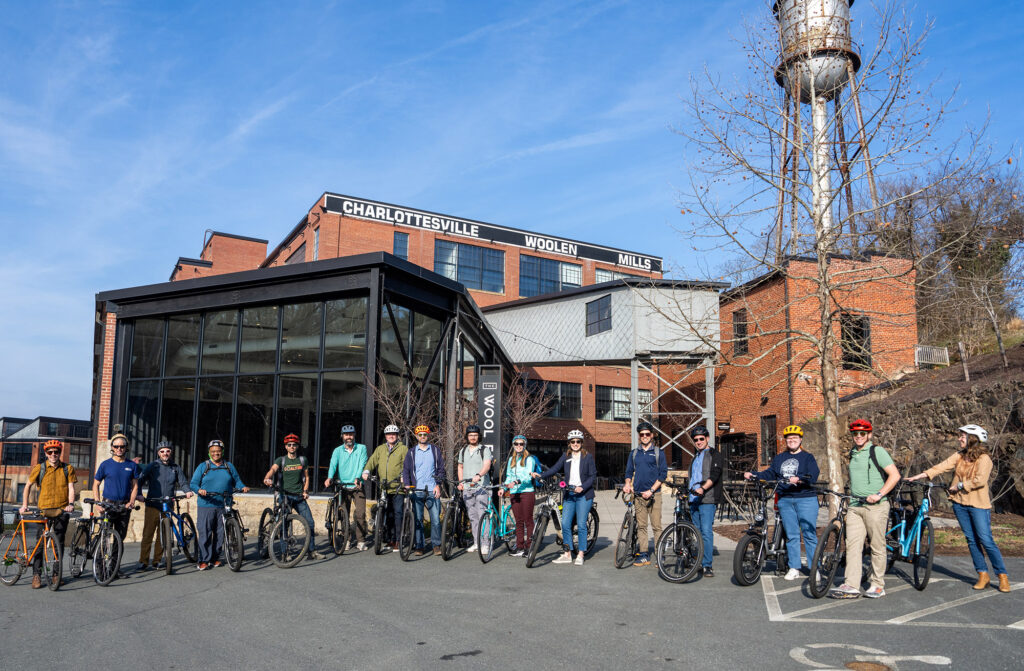
We’re also picking up important local policy wins. For example, Charlottesville has adopted a policy to eliminate deaths and serious injuries; Albemarle has committed to reduce them by half. Charlottesville has an ambitious e-bike voucher program and both localities’ new Comprehensive Plans emphasize dense housing and walkable neighborhoods.
Infrastructure improvements have not unfurled as quickly, but several projects that have been in the works for a long time are either coming online or about to be built. We’d be unreasonable to expect that a built environment made of earth, stone and steel, where every inch is full of challenges, would be dramatically changed in a short time. But it is clear that a motivated and organized community is a necessary precondition for change. We have that now, and they’re working on it.
As I look toward the next eight years, I hope to see better infrastructure, deployed more widely, at a more rapid pace. I’d also like to see the roadways we already have to be more equitably shared. After all, many of the roads in this area were walking and biking (and horseback riding) routes before the advent of the automobile. There’s nothing inevitable about the landscape of today.
I am most excited about who I’m seeing: many leaders and groups organizing rides, creating programs, starting businesses and hatching ideas that I could not have imagined when we started. I can’t wait to see where this energy takes us.
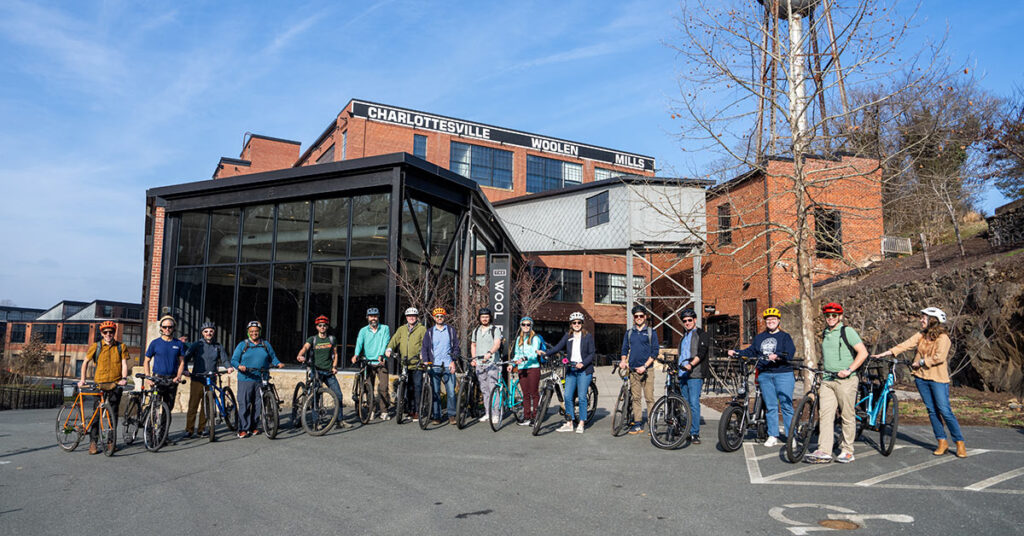
Outdoor Access is Economic Infrastructure: the Sixth Active Mobility Summit
Thanks to everyone who made the sixth annual Active Mobility Summit a success!
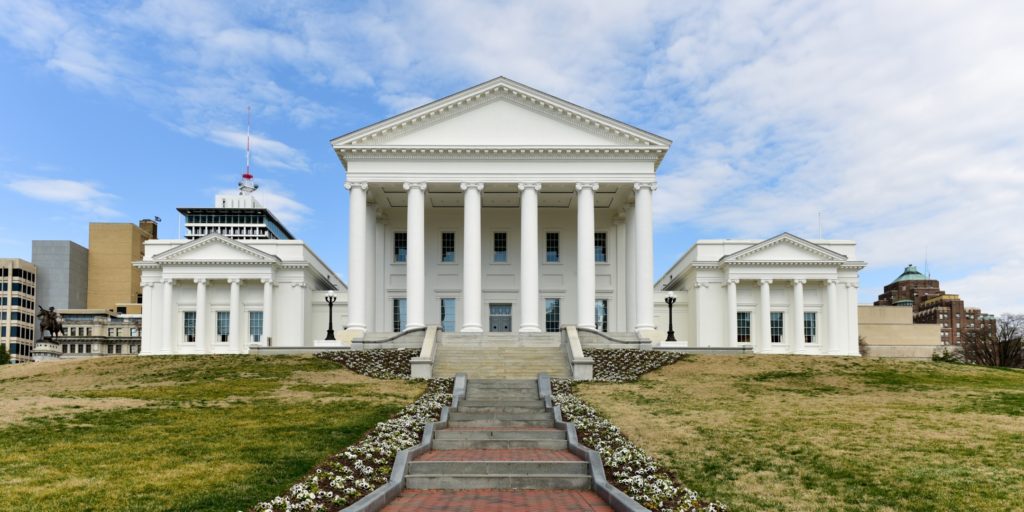
Virginia General Assembly in Full Swing
Our advocacy team is already hard at work as the 2026 Virginia General Assembly gets underway in Richmond.
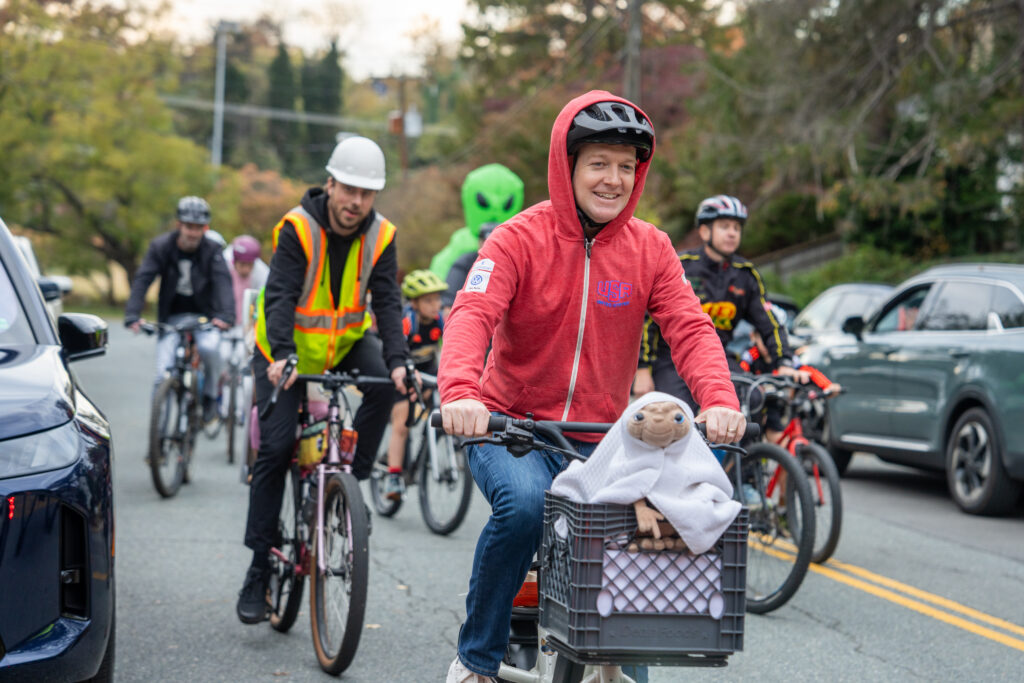
Halloween Costume Bike Promotes Safety on the Roads
Around 30 riders decorated their bikes, dressed up as extra-terrestrials, supernatural beings, cartoons and food items, and enjoyed a November evening of biking around Charlottesville.
A legacy of conservation and community at risk in Fauquier County
From their storied pasts to the present day, the Fauquier County towns of Remington, Bealeton and the many unique crossroad communities in the surrounding region have been characterized by their rural charm. And for decades, The Piedmont Environmental Council has been committed to collaborating with these local communities on conservation, land use planning, historic preservation and public access to nature. But as pressure for massive data center complexes spreads beyond Northern Virginia into the Piedmont’s special rural communities, we worry the progress and investments we and many others have made toward conserving, enhancing and preserving these communities will be lost forever.
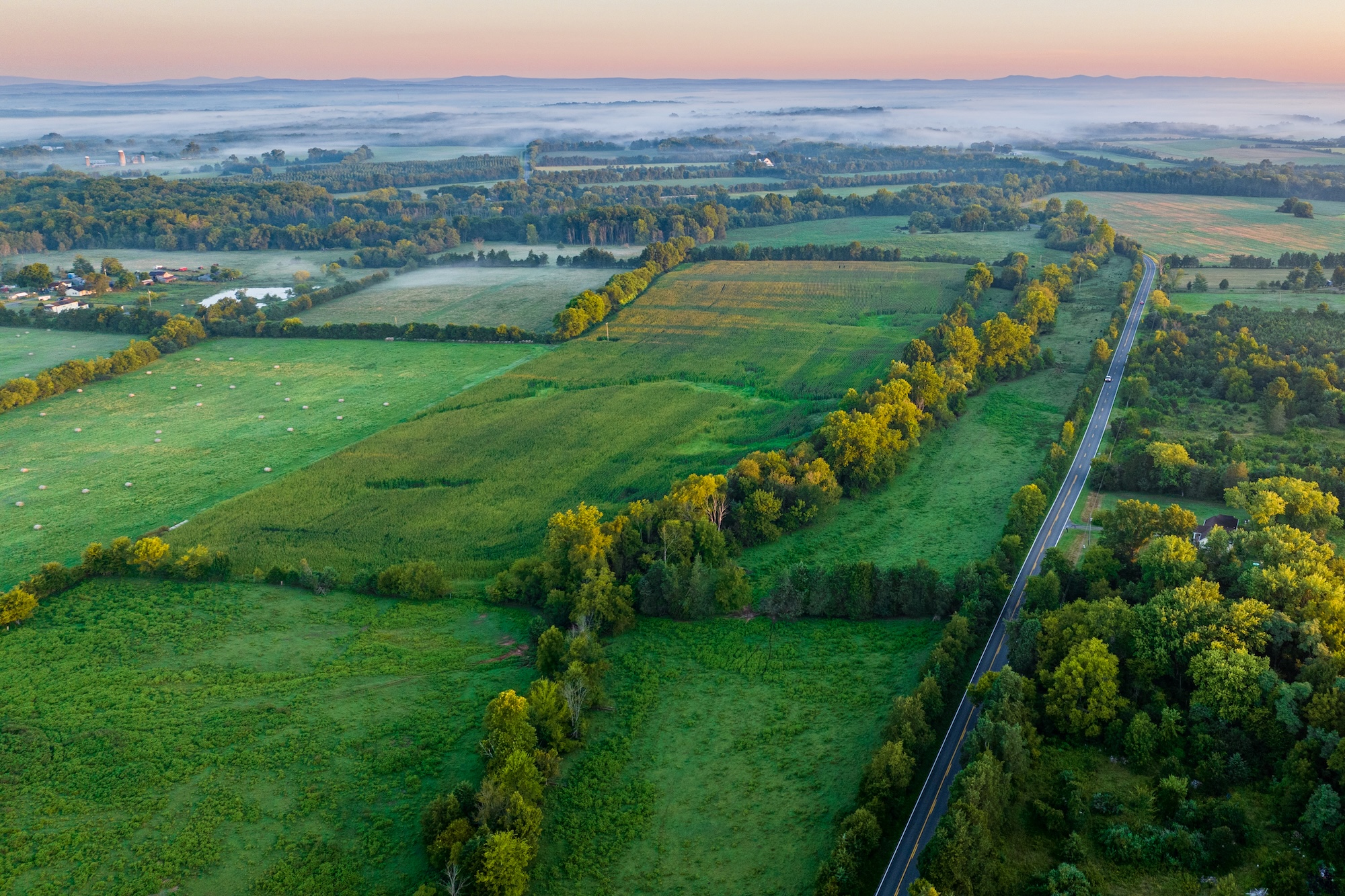
1990s | PEC opposed the Fauquier Forward plan that would have widened Virginia State Route 28 and replaced the agricultural economy through that area with suburbs. Instead, we advocated for an alternative vision of conservation and helped create the county’s Purchase of Development Rights program, which pays landowners to relinquish development rights on their properties, thus supporting farmers, preserving the environmental and economic benefits of agriculture and preventing costly sprawl. Since then, Fauquier’s PDR program has become a model for other places, creating an important tool for landowners who want to keep their land in farming.
2006 | PEC helped the county acquire Rappahannock Station Battlefield Park, preserving this critical battlefield for a future public park and recreation area near the town of Remington. PEC supported development of a master plan for the park and continues to advocate for walking trails and interpretive signage that will tell the important history of the town and this historic battlefield.
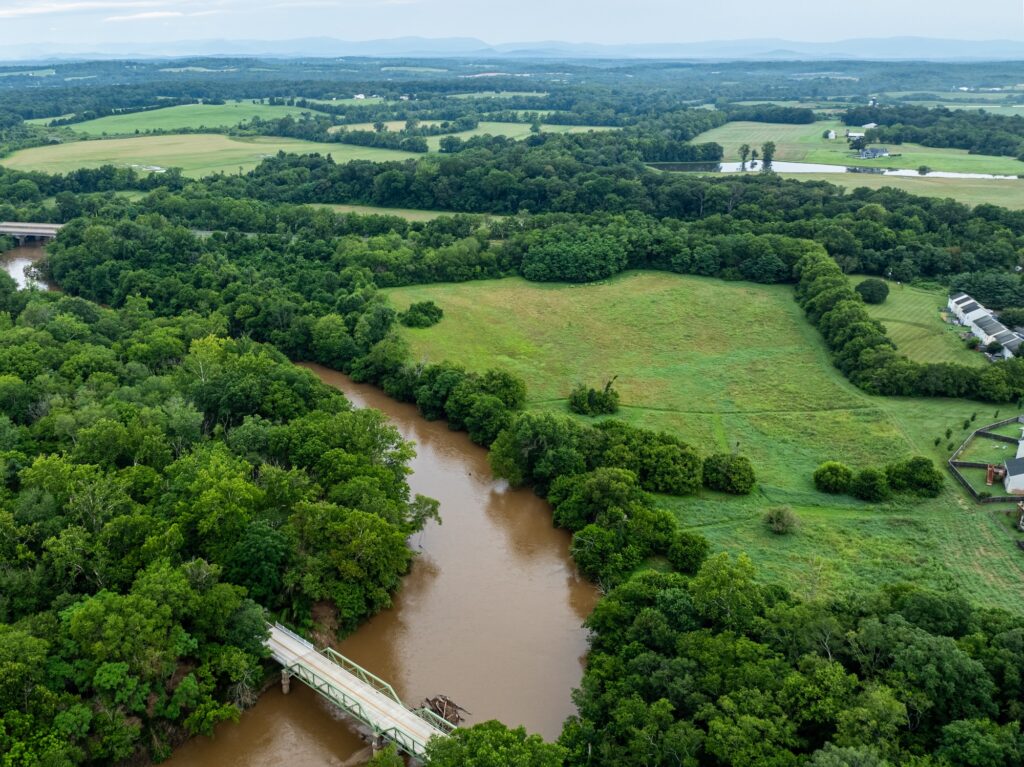
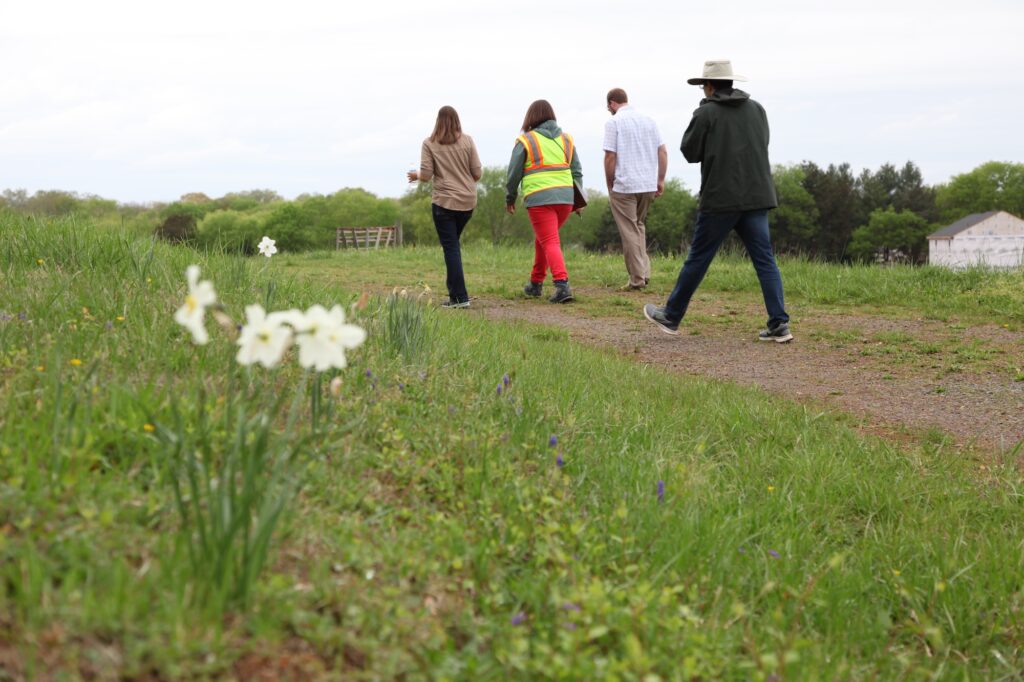
2017 | In support of Remington’s effort to strengthen tourism and enhance pedestrian safety, PEC received a PATH Foundation grant to develop a plan called Remington Walks. This plan to rejuvenate Main Street with walking trails, town signage, pedestrian-friendly connectivity and more was developed with input gathered during community meetings and walking audits with residents. Remington Walks was adopted into Remington’s comprehensive plan and has been a guide and supportive document for several subsequent projects, including a gazebo next to the town hall, completed trail connections to Margaret Pierce Elementary and an improved railroad crossing accessible for strollers and wheelchairs downtown.
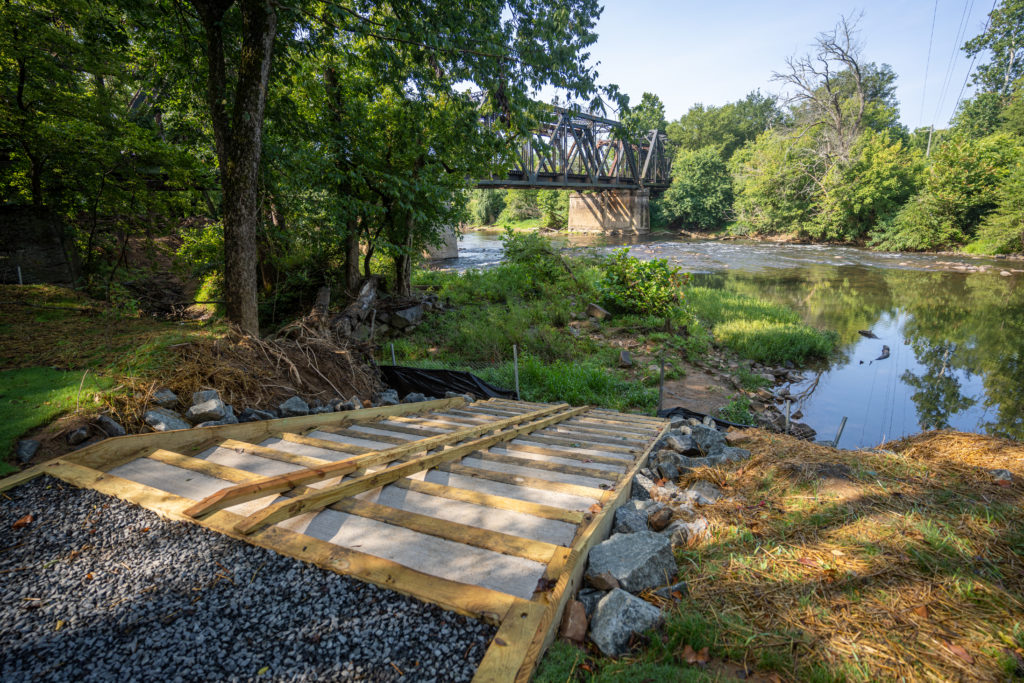
2021 | PEC and numerous partners set about creating an Upper Rappahannock River Water Trail that provides much-needed public access at several points along this Virginia-designated scenic river. In August 2021, we helped cut the ribbon on the new Rector Tract public canoe and kayak launch a short walk from downtown Remington. Open dawn to dusk, this launch closes a 25-mile gap in public access to the river between Riverside Preserve and Kelly’s Ford in Culpeper County.
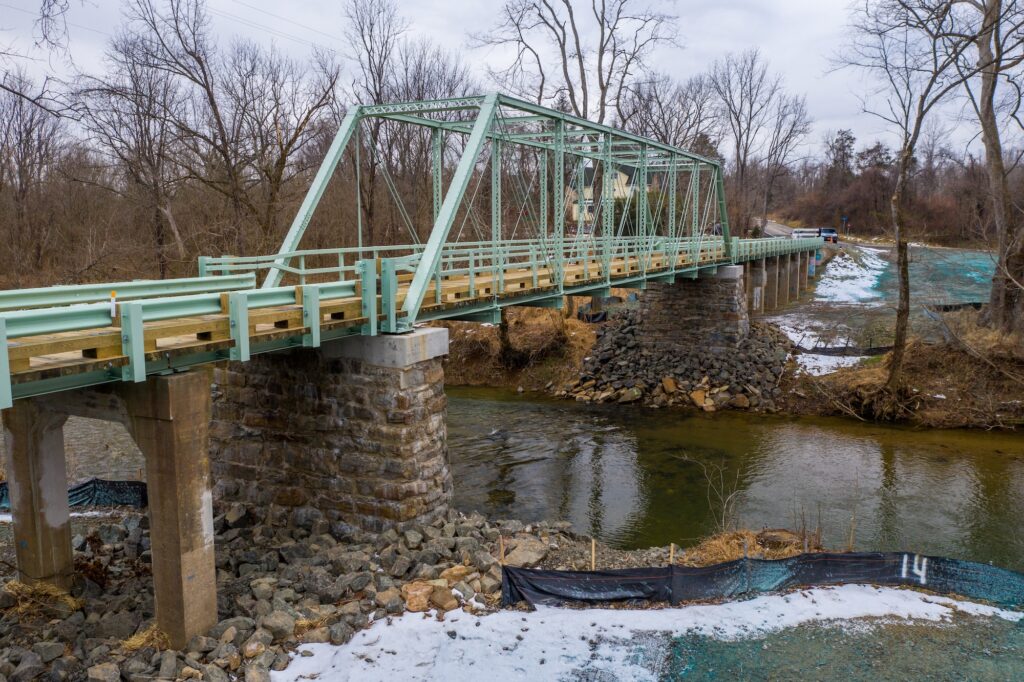
2021 | Waterloo Bridge over the Rappahannock River is the uppermost point of the historic Rappahannock Canal, an important historic resource and a unique community treasure. Built in 1878, it was closed in 2014 and slated for replacement by the Virginia Department of Transportation. Advocating for its restoration, rather than replacement, PEC invested in a consultant to put forward a restoration alternative, held numerous community meetings, pushed VDOT to consider other options, and, with the financial help of the Hitt family, was able to fully restore the oldest metal truss bridge still standing in Virginia today.
2021 | PEC established a native plant garden at C.M. Crockett Park in Midland. As a part of our efforts to promote native landscaping practices, we applied for a grant from Kortlandt Fund of the Northern Piedmont Community Foundation to purchase the native plants for the project. We also designed the garden and worked with the Fauquier Parks and Recreation Department and community volunteers to install it.
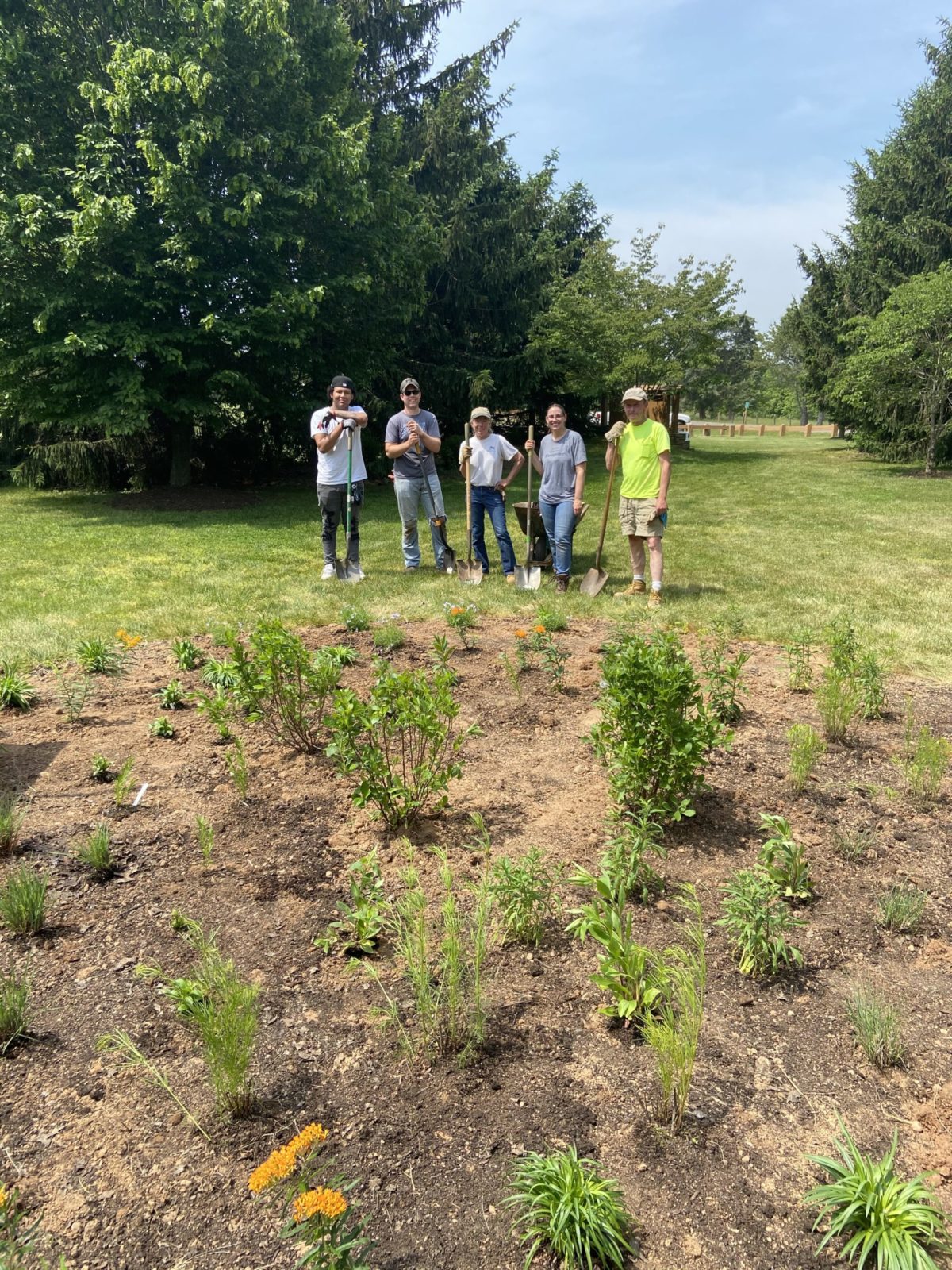
The network of support to conserve, enhance, and preserve Remington and southern Fauquier extends well beyond PEC. The local churches, the Virginia Cooperative Extension, and John Waldeck established the Remington Community Garden. The town utilized a PATH Make It Happen Grant to build a new gazebo next to the town hall. And the Remington Community Partnership — run by the tireless Mary and Ray Root — has worked to document, preserve and promote the historic resources of the town. Countless people have led numerous other projects, but a comprehensive list could take up the entire publication!
Remington and its surrounding areas are at the intersection of two very different futures. The tremendous work we’ve all already done together paves a path that retains the region’s rural charm, agricultural heritage and economy, and promise of a vibrant place for visitation and recreation.
This progress is threatened by pressure from multiple data center proposals that could put more industrial development in the quaint town of Remington than all the commercial space in Fauquier County combined. Together these projects would open a floodgate of new transmission lines, substations, construction traffic, air pollution, noise, and massive concrete computer warehouses that will crowd out other forms of investment and business interest and induce even more industrial sprawl.
Before our county leaders make major decisions that will forever alter a critical piece of Fauquier’s rural identity and economy, it’s important to revisit and remember the investments and community accomplishments made in the face of past development pressures that would have transformed this region.
This article appeared in the 2025 fall edition of The Piedmont Environmental Council’s member newsletter, The Piedmont View. If you’d like to become a PEC member or renew your membership, please visit pecva.org/join.
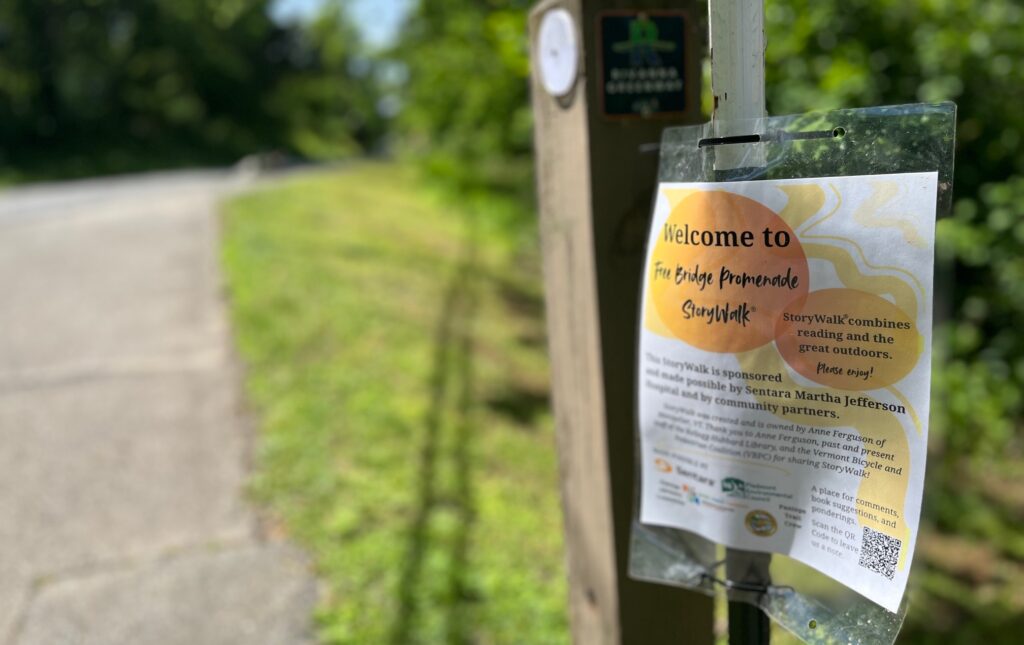
Take Action: Make Free Bridge Lane Permanently Car-free
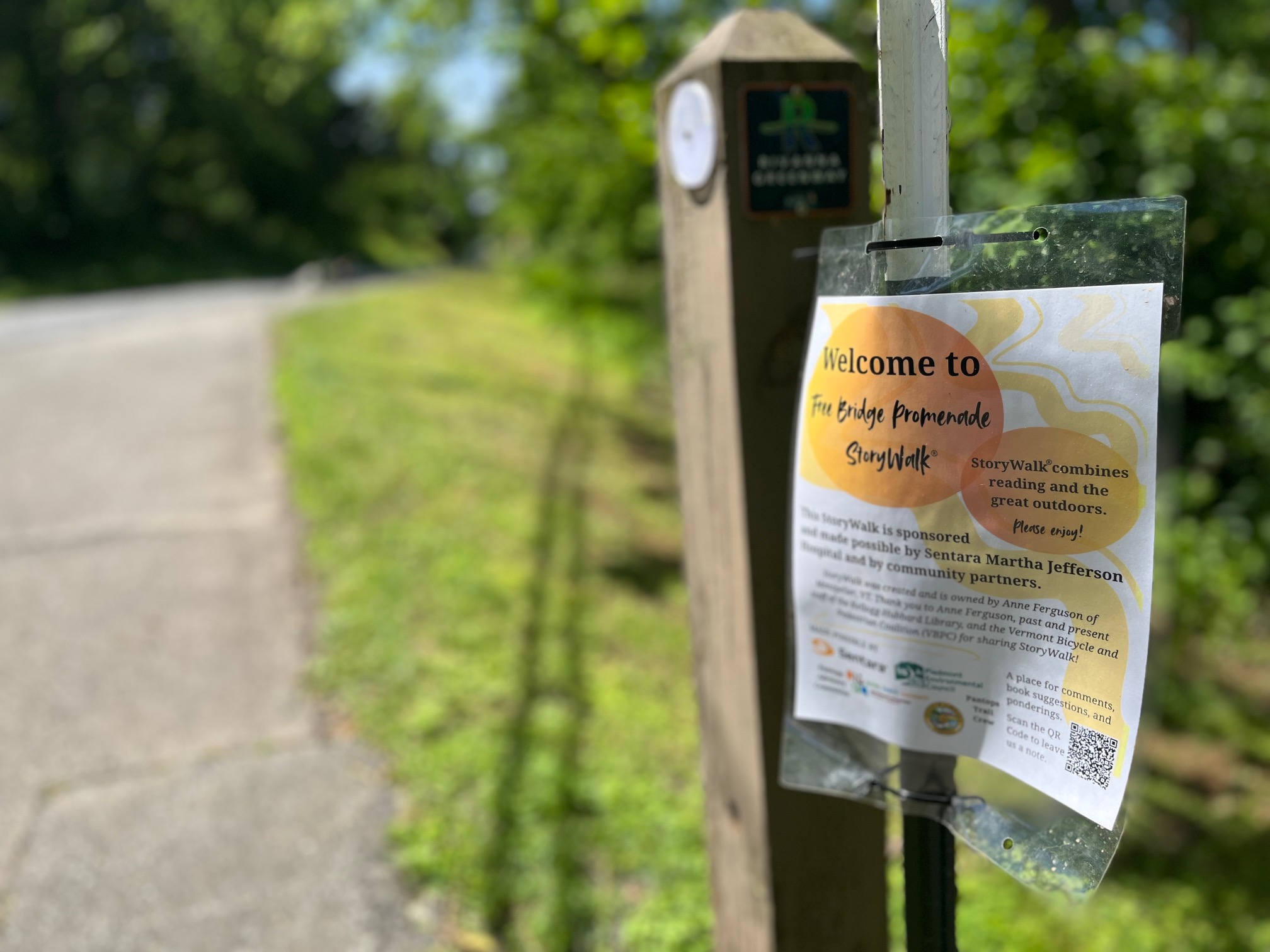
Late last year, Albemarle County closed Free Bridge Lane to automobile traffic, creating a safe, riverside space for walking, running, and biking. That has proved very popular so the Board of Supervisors will discuss making the arrangement permanent at its August 6 meeting.
Here are five ways you can help:
- Please sign PEC’s petition requesting the following: 1) finalize the road closure, 2) fund and build a first wave of safety, access and environmental improvements, and 3) budget in coming years to construct the proposed promenade. We will forward the petition to County leaders when the time comes.
- Contact the Board of Supervisors directly and tell them why places like Free Bridge Lane are important to you.
- Attend the August 6 meeting and consider speaking during the public comment period (at the beginning of the meeting).
- Share your ideas for improvements, projects, activities, or events you would like to see On Free Bridge Lane (especially things that can be done quickly, cheaply and that you would be willing to champion).
- Get inspired! A team of PEC Summer Fellows has prepared an idea book of (mostly) practical ways to transform the disused roadway into a lively park. Take a look!
The future of Free Bridge Lane will depend on a combination of volunteer energy, private donations and certain specific actions that only the government can take (like improving the safety and access). We depend on all of you to make it happen!
In the meantime, go check it out. The flat, paved riverside space is especially good for learning ride a bike or rollerblade, doing measured wind sprints or walking with elders. [Info page]
A Conversation on Trails and Connectivity
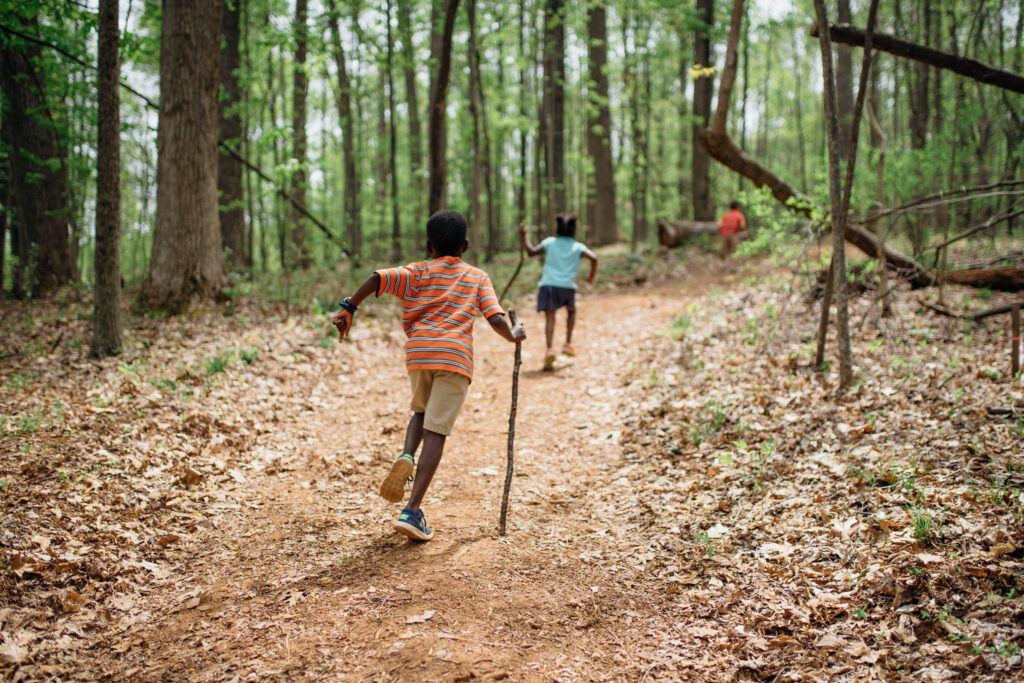
While conserving the verdant landscapes of Virginia’s Piedmont is foundational to The Piedmont Environmental Council’s mission, making the outdoors accessible to everyone has become an equally vital goal. Over the past few years, we have deliberately integrated trail development into our broader conservation mission, protecting strategic properties that can serve as trail corridors or public access points to create lasting places and ways for people to experience the Piedmont’s natural beauty firsthand.