
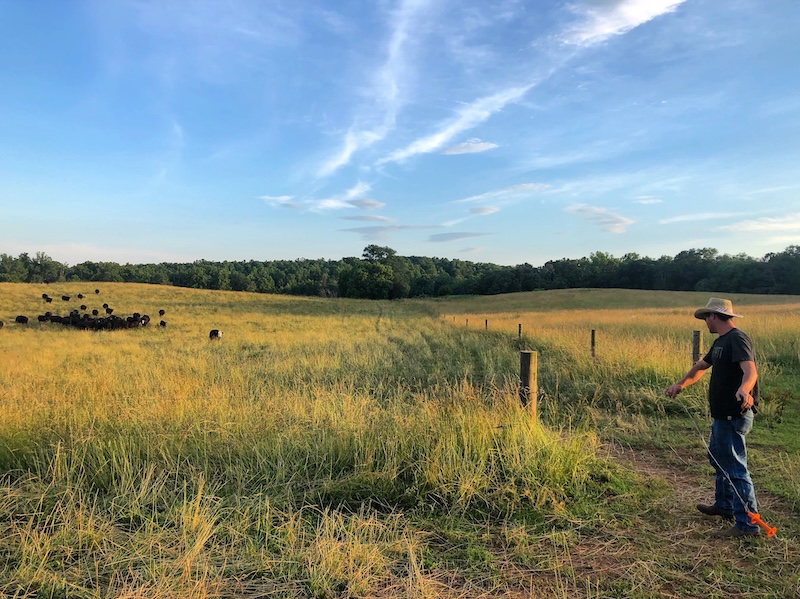
Dustin always wanted to carry on the tradition as the fourth-generation family member to own the farm. His great-grandfather bought the farm in 1939, and it had passed down to his grandfather.
Working Farms & Food
Farmland and forests produce the necessities of life and provide essential natural services. In PEC’s nine county area, over 180,000 acres of farmland and 140,000 acres of forests are protected through private, voluntary land conservation.
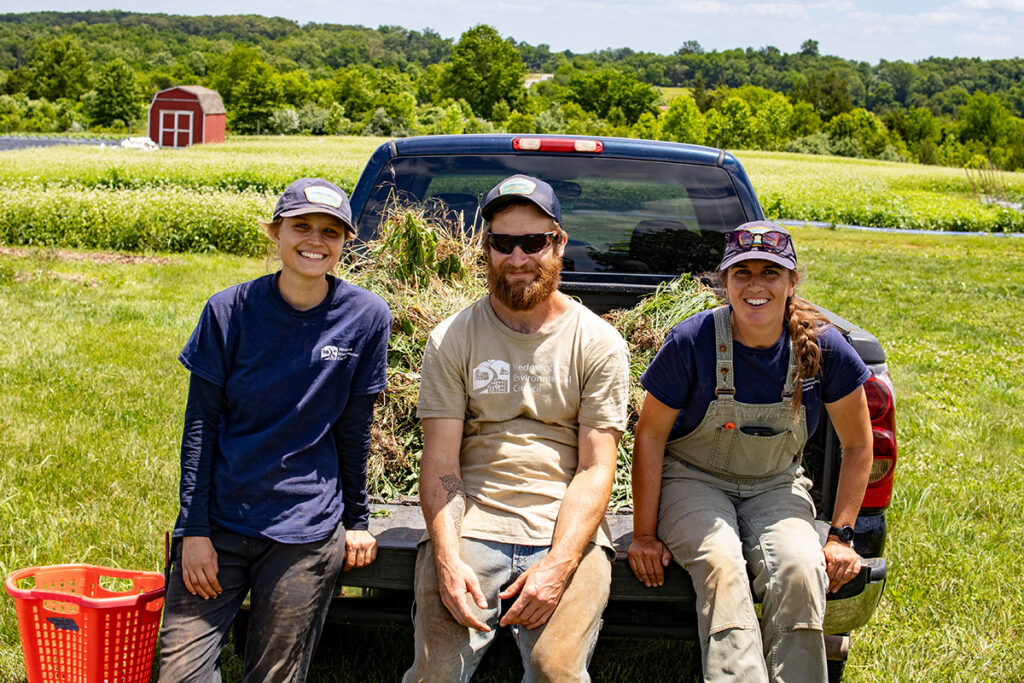
Meet the Team: Community Farm
The Piedmont Environmental Council’s Community Farm at Roundabout Meadows in Aldie is a remarkable place punching way above its weight class in community impact. The 8-acre farm, part of the larger 172-acre Roundabout Meadows property owned by PEC, epitomizes PEC’s mission. It serves as a demonstration site for our innovative agrivoltaics project, supports hands-on education about local agriculture through its ever-growing volunteer program, and donates nearly all of the produce it grows to hunger relief organizations serving Loudoun, Fauquier and Clarke county residents. In 2025, the Community Farm grew and donated over 57,700 pounds of fresh produce, its largest annual yield yet. Since its first growing season in 2019, PEC has donated over 240,000 pounds of food, worth a collective retail value of over $1.1 million.
None of this would be possible without PEC’s dedicated farm team, which consists of Gilberts Corner Program Manager Dana Melby, Community Farm Manager Teddy Pitsiokos, Community Farm Assistant Manager Catherine Fisher, Gilberts Corner Farmers Market Manager Jen Wilkins and Volunteer Coordinator Lea Justice, as well as two seasonal growers. With decades of combined experience in agriculture and farm management, it’s no wonder they can perform such incredible feats and build on their successes year over year. Dana emphasizes that “the strength of the harmonious team makes work on the farm joyful” and helps this small group work with a variety of people including volunteers, visitors interested in PEC’s conservation and agrivoltaics work, contractors, and their growing number of hunger relief partners.
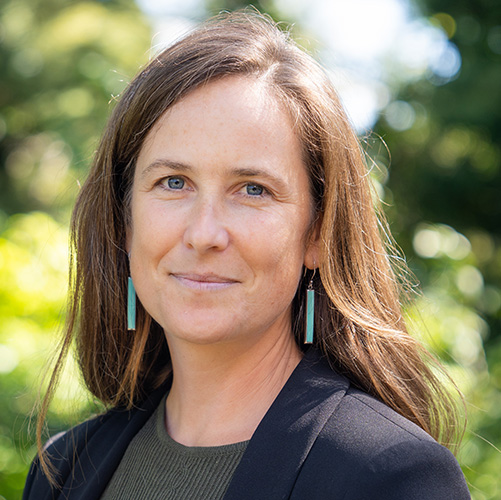
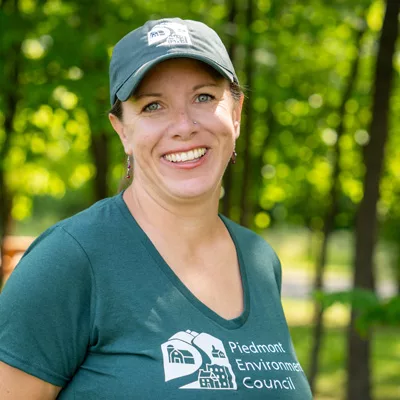
Farm activities run the gamut, and staff need to be masters of all trades, from agriculture to land conservation to solar solutions to volunteer engagement. “I think most people don’t know how multidisciplinary farm work can be,” Teddy says. “While the work is intensely physical, I am also using math, geometry, biology, chemistry and systems design every day.” Teddy and Catherine monitor all the produce they plant and grow across the farm, and collect and codify data to track the impact they’re making, while also finding ways to improve their processes and produce. Soil testing, pest control, growth assessments, and weighing produce are all critical components to the farm’s work.
Testing and data collection are of particular interest for the farm’s quarter-acre that holds PEC’s agrivoltaics demonstration project, where beds of vegetables, both in-ground and in raised beds, grow under three rows of 42 solar panels. The power produced by the array offsets all the Community Farm’s electrical usage and includes battery storage to backup critical systems like the well pump, cold storage and greenhouse in the event of a grid outage. This project is an educational tool, which means collecting and sharing data about crop growth with PEC’s networks, as well as evaluating agrivoltaics as an energy solution for small farms and low-income communities across Virginia and beyond.
While the growing season runs from April to October, work on the farm is active all year round. Catherine notes that “farming is complex and requires careful decision-making, both in the moment and in the dead of winter when outcomes are months away.” To add to that complexity and joyful work, Catherine says that “every farm season engages different people, and this year we’ve added new food pantry partners and planned collaborations with many new organizations. First-time volunteers from April are becoming regulars, and our farm team has grown to include seasonal growers and PEC’s wonderful volunteer coordinator.”
The volunteer program at the farm highlights local agriculture while educating people about sustainable farming practices. Volunteers are invited to participate in every aspect of the farming process — from seeding and transplanting to weeding and harvesting.
In 2025, the farm staff welcomed 802 volunteers to support their work, a 140% increase from 2024. “I love the conversations held with volunteers as we work together in the fields,” says Lea. “The shared work is a great icebreaker; we already have something in common. People come to volunteer at the farm from all walks of life and for diverse reasons. Hearing their stories is always fascinating and renews my belief that we as an organization are the sum of our parts, including all these volunteers, and are stronger for it.”
The farm’s work extends into the Gilberts Corner Farmers Market on the weekends, all year round, welcoming local vendors selling everything from French pastries, locally famous barbecue, kettle corn, ice cream, fresh produce and meat, and more. Gilberts Corner Farmers Market Manager Jen Wilkins manages the market and works to enhance its history and legacy as a place to find local food and fiber. And with food insecurity on the rise in the region, the market now accepts SNAP benefits, providing essential access to locally-grown, nutrient-rich foods.
The Community Farm, Gilberts Corner and Roundabout Meadows as a whole offer many opportunities to connect the over two million nearby residents with the Piedmont’s open spaces. Whether people volunteer, visit and learn about agrivoltaics, shop at the Farmers Market, or receive donated food, we empower each other to build stronger, more sustainable food systems and protect our vital agricultural culture and resources. The farm may be small, but its work has mighty ripple effects throughout our nine-county region and beyond.
This article appeared in the 2026 summer edition of The Piedmont Environmental Council’s member newsletter, The Piedmont View. If you’d like to become a PEC member or renew your membership, please visit pecva.org/join.
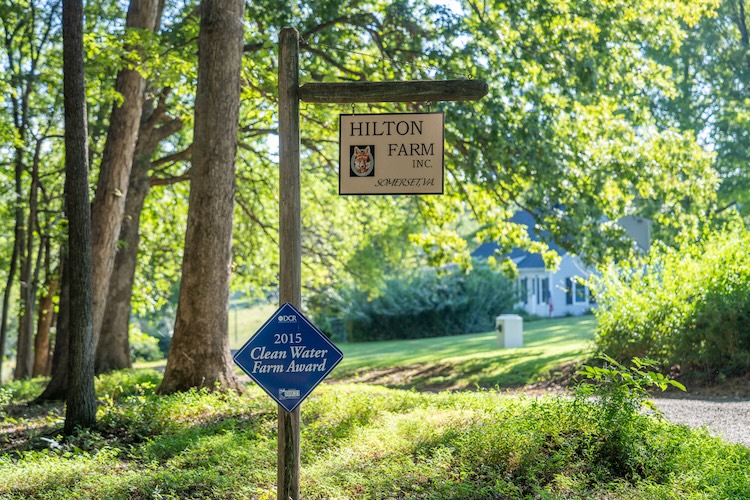
Hilton Farm: A Key Piece of the Conservation Puzzle in the Rappahannock-Rapidan Watershed
You know that feeling when you’re putting together a puzzle and there’s that “Aha!” moment, when filling in one missing piece brings everything together? Hilton Farm in Orange County is an example of this phenomenon playing out in conservation form.
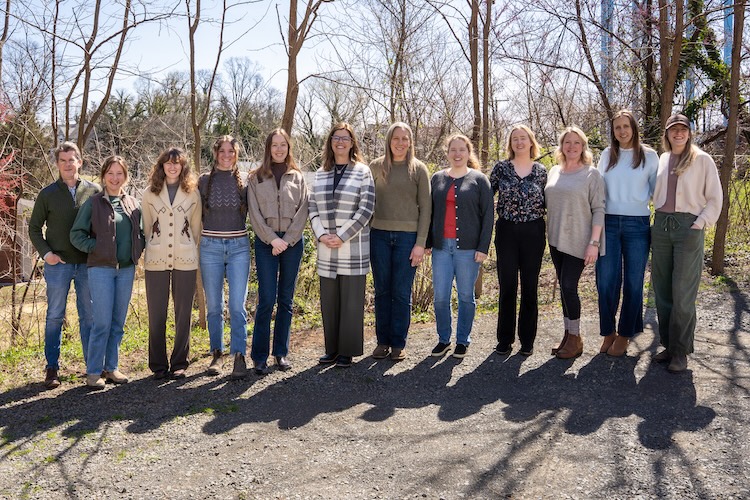
Meet the Team: Conservation
At the heart of The Piedmont Environmental Council’s efforts to protect and restore the lands and waters of the Virginia Piedmont is our dedicated conservation team. You’ve likely met some of our conservation staff somewhere in your community (whether you knew it or not!), but few people know the tremendous work they do behind the scenes.
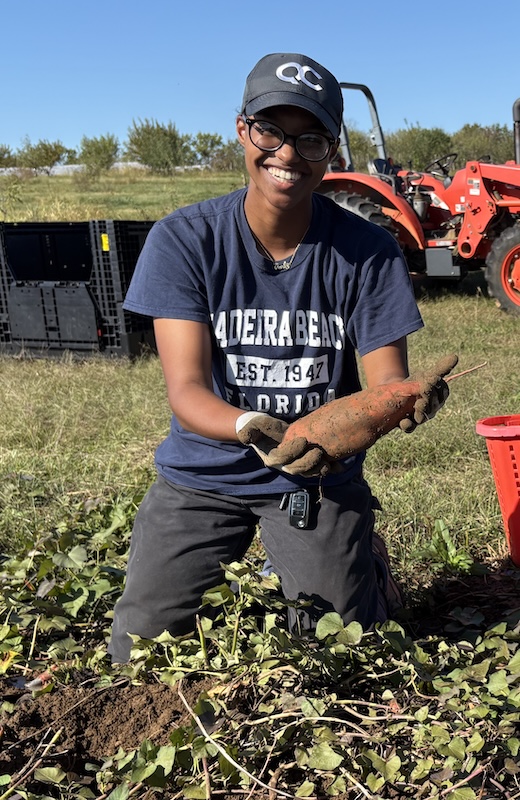
Who’s Protecting the Piedmont? – Spring 2026
Here, we highlight three people who are protecting the Piedmont by growing local food, stewarding conservation easements and donating to make PEC’s work possible.
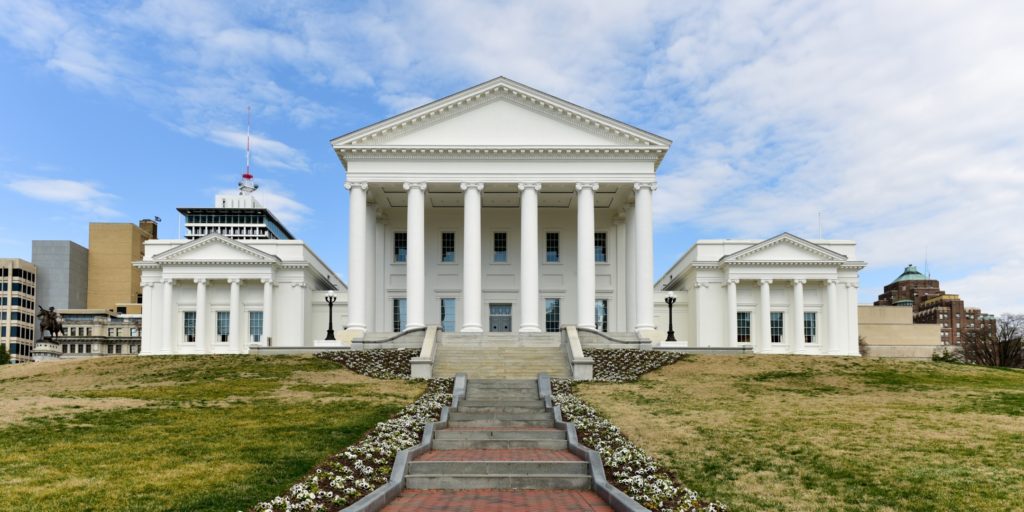
Virginia General Assembly in Full Swing
Our advocacy team is already hard at work as the 2026 Virginia General Assembly gets underway in Richmond.
Update on Solar Regulations, Soil/Forage Research & Agrivoltaic Project Initiatives – Webinar Recording
On December 5, 2025, Virginia Tech’s School of Plant & Environmental Sciences Department of Biological Systems Engineering, Virginia Cooperative Extension, and the Virginia Department of Environmental Quality (DEQ) hosted a webinar on updates around solar regulations, soil/forage research, and agrivoltaics project initiatives.
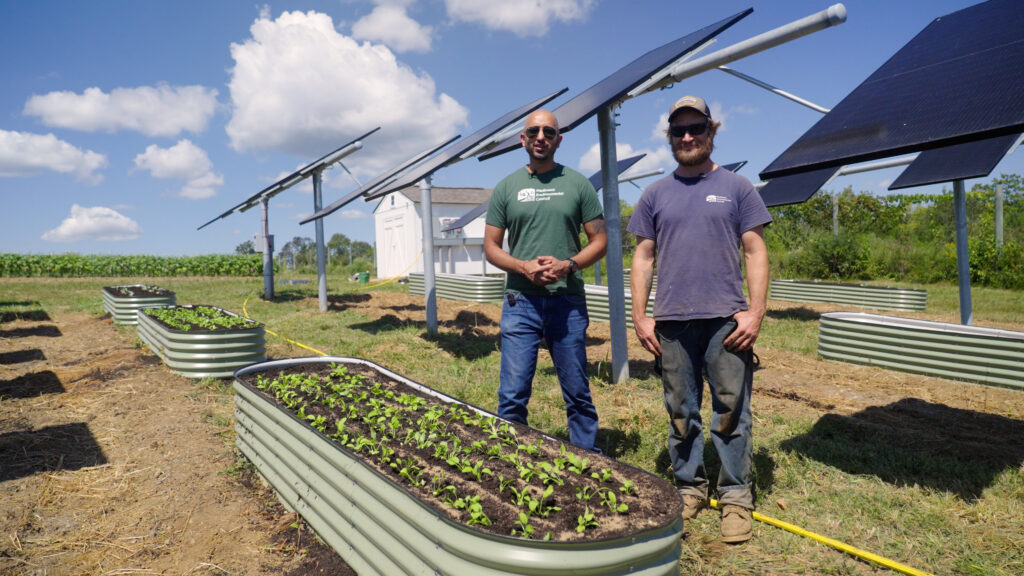
The friendliest type of energy generation: a conversation on agrivoltaics
PEC’s Senior Energy & Climate Advisor Ashish Kapoor and Community Farm Manager Teddy Pitsiokos sat down to tell us more about PEC’s groundbreaking agrivoltaics project, which has the potential to revolutionize the conversation around solar and agriculture.
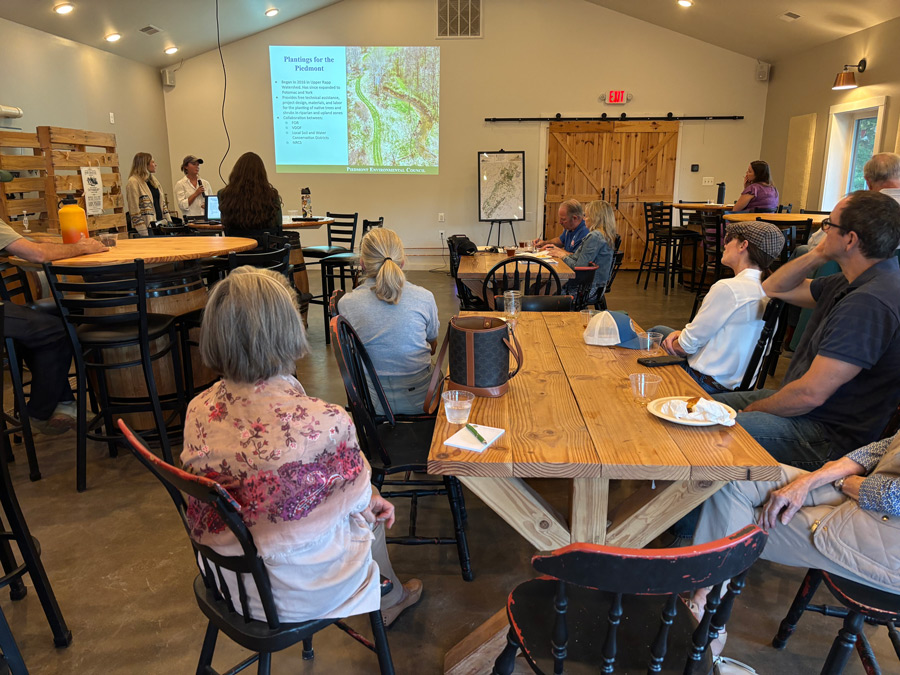
Conservation Funding Workshop & Social 2025 – Resources
It was fantastic to have such an engaged crowd at our recent Conservation Funding Workshop and Social at Powers Farm & Brewery in Midland!
Videos: Agrivoltaics Project at PEC’s Community Farm
Explore our video updates detailing the exciting progress of the Piedmont Environmental Council’s agrivoltaics project, where solar energy and sustainable agriculture meet.