Strong Communities

PEC believes that the work of protecting natural resources and the work of building better communities are integral to each other. 
Halloween Costume Bike Promotes Safety on the Roads

Halloween Costume Bike Promotes Safety on the Roads

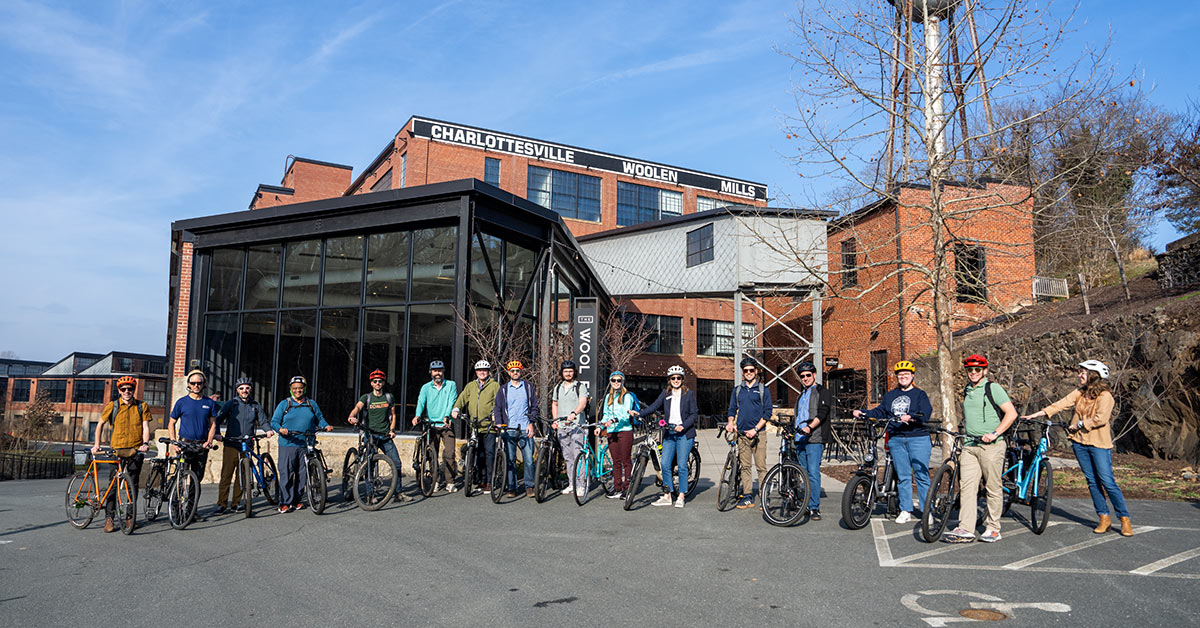
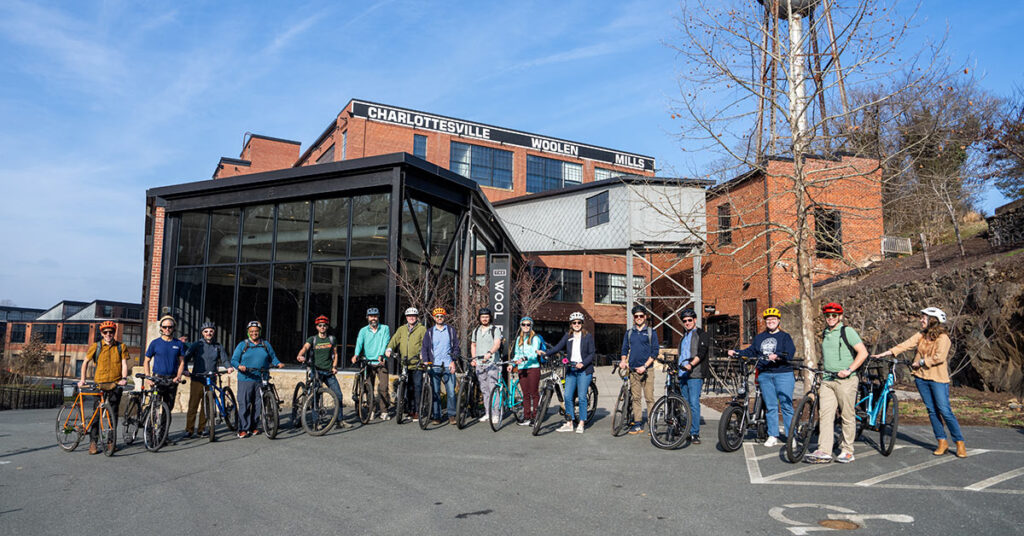
Around 30 riders decorated their bikes, dressed up as extra-terrestrials, supernatural beings, cartoons and food items, and enjoyed a November evening of biking around Charlottesville.

Op-Ed: Protect Virginians from paying billions for data center infrastructure

Op-Ed: Protect Virginians from paying billions for data center infrastructure

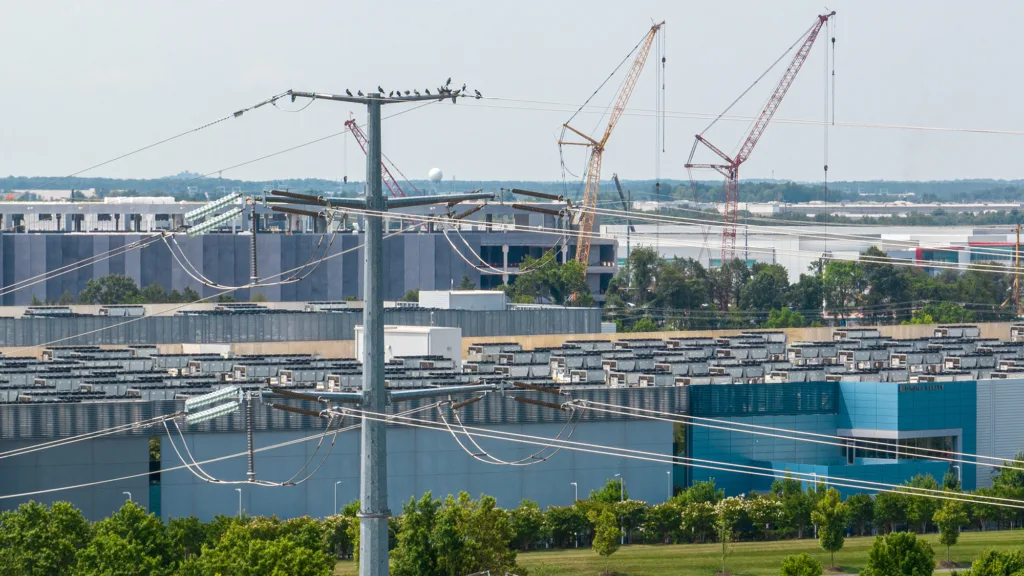
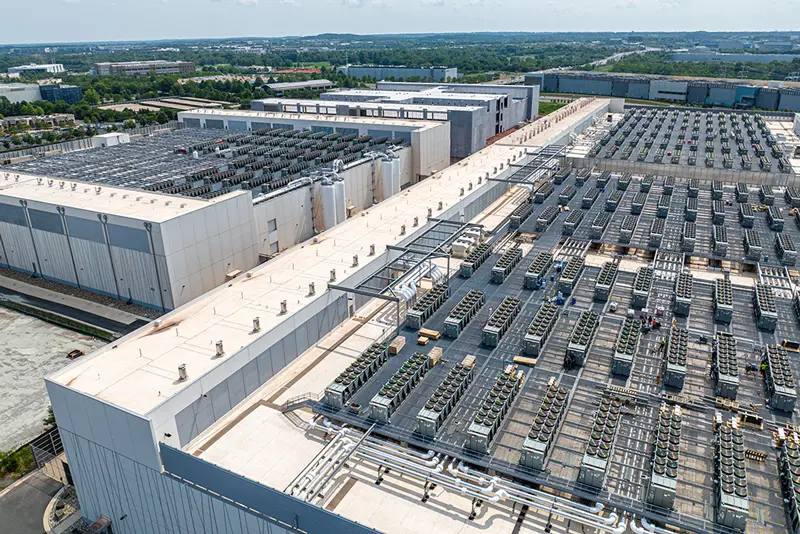
Billions of dollars of new power generation and transmission infrastructure is needed to meet data center demand. As of now, all of Virginia’s ratepayers are on the hook to pay for this through their electric bills.

Videos: Agrivoltaics Project at PEC’s Community Farm

Explore our video updates detailing the exciting progress of the Piedmont Environmental Council’s agrivoltaics project, where solar energy and sustainable agriculture meet.

A legacy of conservation and community at risk in Fauquier County

From their storied pasts to the present day, the Fauquier County towns of Remington, Bealeton and the many unique crossroad communities in the surrounding region have been characterized by their rural charm. And for decades, The Piedmont Environmental Council has been committed to collaborating with these local communities on conservation, land use planning, historic preservation and public access to nature. But as pressure for massive data center complexes spreads beyond Northern Virginia into the Piedmont’s special rural communities, we worry the progress and investments we and many others have made toward conserving, enhancing and preserving these communities will be lost forever.


Photo by Hugh Kenny

1990s |  PEC opposed the Fauquier Forward plan that would have widened Virginia State Route 28 and replaced the agricultural economy through that area with suburbs. Instead, we advocated for an alternative vision of conservation and helped create the county’s Purchase of Development Rights program, which pays landowners to relinquish development rights on their properties, thus supporting farmers, preserving the environmental and economic benefits of agriculture and preventing costly sprawl. Since then, Fauquier’s PDR program has become a model for other places, creating an important tool for landowners who want to keep their land in farming.

2006 |  PEC helped the county acquire Rappahannock Station Battlefield Park, preserving this critical battlefield for a future public park and recreation area near the town of Remington. PEC supported development of a master plan for the park and continues to advocate for walking trails and interpretive signage that will tell the important history of the town and this historic battlefield.

Photo by Hugh Kenny
Photo by Paula Combs

2017 |  In support of Remington’s effort to strengthen tourism and enhance pedestrian safety, PEC received a PATH Foundation grant to develop a plan called Remington Walks. This plan to rejuvenate Main Street with walking trails, town signage, pedestrian-friendly connectivity and more was developed with input gathered during community meetings and walking audits with residents. Remington Walks was adopted into Remington’s comprehensive plan and has been a guide and supportive document for several subsequent projects, including a gazebo next to the town hall, completed trail connections to Margaret Pierce Elementary and an improved railroad crossing accessible for strollers and wheelchairs downtown.

2021 |  PEC and numerous partners set about creating an Upper Rappahannock River Water Trail that provides much-needed public access at several points along this Virginia-designated scenic river. In August 2021, we helped cut the ribbon on the new Rector Tract public canoe and kayak launch a short walk from downtown Remington. Open dawn to dusk, this launch closes a 25-mile gap in public access to the river between Riverside Preserve and Kelly’s Ford in Culpeper County.

the complete boat launch
Photo by Hugh Kenny
Photo by Hugh Kenny

2021 |  Waterloo Bridge over the Rappahannock River is the uppermost point of the historic Rappahannock Canal, an important historic resource and a unique community treasure. Built in 1878, it was closed in 2014 and slated for replacement by the Virginia Department of Transportation. Advocating for its restoration, rather than replacement, PEC invested in a consultant to put forward a restoration alternative, held numerous community meetings, pushed VDOT to consider other options, and, with the financial help of the Hitt family, was able to fully restore the oldest metal truss bridge still standing in Virginia today.

2021 |  PEC established a native plant garden at C.M. Crockett Park in Midland. As a part of our efforts to promote native landscaping practices, we applied for a grant from Kortlandt Fund of the Northern Piedmont Community Foundation to purchase the native plants for the project. We also designed the garden and worked with the Fauquier Parks and Recreation Department and community volunteers to install it.

Photo by Dan Holmes

The network of support to conserve, enhance, and preserve Remington and southern Fauquier extends well beyond PEC. The local churches, the Virginia Cooperative Extension, and John Waldeck established the Remington Community Garden. The town utilized a PATH Make It Happen Grant to build a new gazebo next to the town hall. And the Remington Community Partnership — run by the tireless Mary and Ray Root — has worked to document, preserve and promote the historic resources of the town. Countless people have led numerous other projects, but a comprehensive list could take up the entire publication! 

Remington and its surrounding areas are at the intersection of two very different futures. The tremendous work we’ve all already done together paves a path that retains the region’s rural charm, agricultural heritage and economy, and promise of a vibrant place for visitation and recreation. 

This progress is threatened by pressure from multiple data center proposals that could put more industrial development in the quaint town of Remington than all the commercial space in Fauquier County combined. Together these projects would open a floodgate of new transmission lines, substations, construction traffic, air pollution, noise, and massive concrete computer warehouses that will crowd out other forms of investment and business interest and induce even more industrial sprawl. 

Before our county leaders make major decisions that will forever alter a critical piece of Fauquier’s rural identity and economy, it’s important to revisit and remember the investments and community accomplishments made in the face of past development pressures that would have transformed this region.

This article appeared in the 2025 fall edition of The Piedmont Environmental Council’s member newsletter, The Piedmont View. If you’d like to become a PEC member or renew your membership, please visit pecva.org/join.

PFAS-Contaminated Biosolids Proposed in Orange: Voices Needed by Aug. 4

PFAS-Contaminated Biosolids Proposed in Orange: Voices Needed by Aug. 4

America’s largest biosolids land-application company (Synagro) is seeking a permit to spread more PFAS-contaminated biosolids on farmland across Orange County, including fields adjacent to Pamunkey Creek, which already has elevated levels of PFAS contamination. 

The SCC Must Protect Ratepayers From Big Tech’s Skyrocketing Energy Bill

The SCC Must Protect Ratepayers From Big Tech’s Skyrocketing Energy Bill

Weigh in! The State Corporation Commission (SCC) is hearing the 2025 biennial review of Dominion Energy’s rates, terms, and conditions for generation and transmission infrastructure. This rate case is the first opportunity to address the electricity rate structure for the largest concentration of data centers in the world.

Take Action: Make Free Bridge Lane Permanently Car-free

Take Action: Make Free Bridge Lane Permanently Car-free

The Free Bridge Lane storywalk is just one of the quick improvements to pop up on Free Bridge Lane. You can share your ideas here. Photo by Peter Krebs/PEC.

Late last year, Albemarle County closed Free Bridge Lane to automobile traffic, creating a safe, riverside space for walking, running, and biking. That has proved very popular so the Board of Supervisors will discuss making the arrangement permanent at its August 6 meeting.

Here are five ways you can help:

  1. Please sign PEC’s petition requesting the following: 1) finalize the road closure, 2) fund and build a first wave of safety, access and environmental improvements, and 3) budget in coming years to construct the proposed promenade. We will forward the petition to County leaders when the time comes.
  2. Contact the Board of Supervisors directly and tell them why places like Free Bridge Lane are important to you.
  3. Attend the August 6 meeting and consider speaking during the public comment period (at the beginning of the meeting).
  4. Share your ideas for improvements, projects, activities, or events you would like to see On Free Bridge Lane (especially things that can be done quickly, cheaply and that you would be willing to champion).
  5. Get inspired! A team of PEC Summer Fellows has prepared an idea book of (mostly) practical ways to transform the disused roadway into a lively park. Take a look!

The future of Free Bridge Lane will depend on a combination of volunteer energy, private donations and certain specific actions that only the government can take (like improving the safety and access). We depend on all of you to make it happen!

In the meantime, go check it out. The flat, paved riverside space is especially good for learning ride a bike or rollerblade, doing measured wind sprints or walking with elders. [Info page]

A Conversation on Trails and Connectivity

A Conversation on Trails and Connectivity

While conserving the verdant landscapes of Virginia’s Piedmont is foundational to The Piedmont Environmental Council’s mission, making the outdoors accessible to everyone has become an equally vital goal. Over the past few years, we have deliberately integrated trail development into our broader conservation mission, protecting strategic properties that can serve as trail corridors or public access points to create lasting places and ways for people to experience the Piedmont’s natural beauty firsthand.