
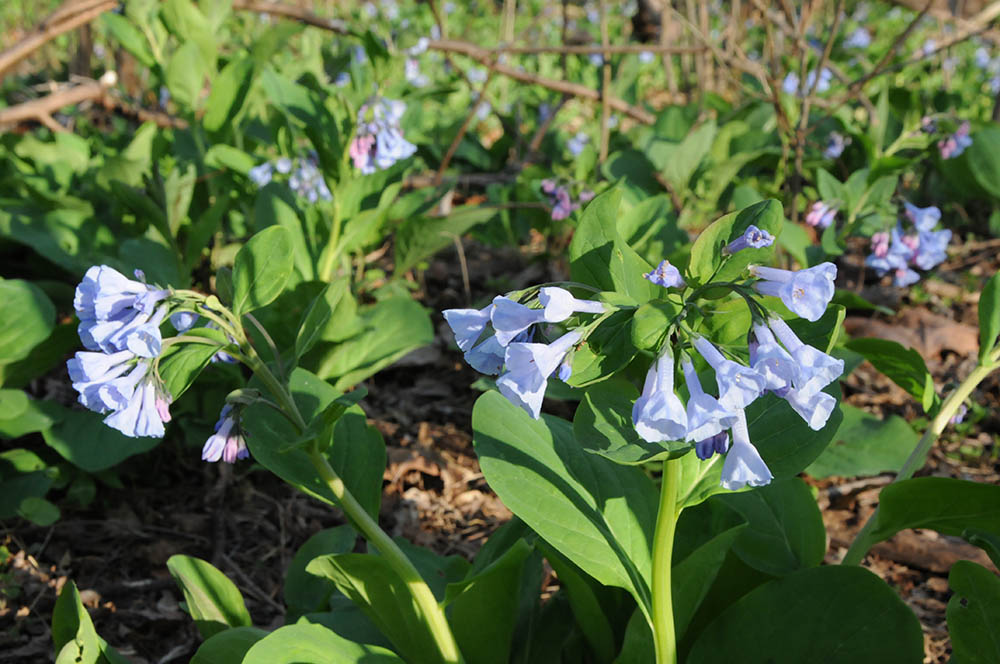
It’s bluebell season, and this weekend would have been our annual Bluebell Walk on Cedar Run. Since we couldn’t gather together in person, Margrete and Mike Stevens, who host the event at their farm in Catlett, VA, made this fantastic video to bring the beauty of spring to all of us at home!
Our Region
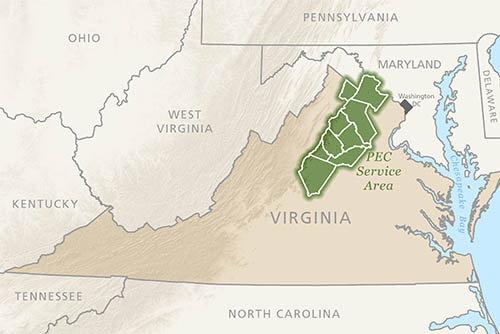 PEC focuses on nine counties and one city in the northern Piedmont of Virginia: Albemarle, Charlottesville, Clarke, Culpeper, Fauquier, Greene, Loudoun, Madison, Orange, and Rappahannock.
We also team with local organizations to promote thriving communities and healthy natural resources in a much larger region, including the Shenandoah Valley, the central Piedmont, and the Journey Through Hallowed Ground Corridor. In addition, we are proud to serve as fiscal sponsor of the Coalition for Smarter Growth, an organization that focuses on land use and policy in the greater Washington D.C. area.
Rappahannock Update – April 6, 2020
The COVID 19 pandemic has forced many of us and our localities to rethink how we do business. Here at PEC, we are working remotely and continue to try and provide you with connection to your community and the issues that affect you. This includes connecting you to the important decisions being made at the state and local level.
Week Ahead for April 6, 2020 (Alb/Cville/Greene)
Another week of quarantine begins across Virginia, with local government activity continuing but without public meetings. This is a list of what we know is happening for this week and into the rest of the month. It will be updated as new information becomes known.
Orange Land Use Update – April 6, 2020
The pink and white blooms of the dogwoods bring with them an update for Orange County. Last week, during a special meeting on April 2nd, the Board of Supervisors officially named Theodore “Ted” Voorhees as the new County Administrator.
Fauquier Land Use Update – April 3, 2020
As I wrote last week, the Covid-19 pandemic is upending a lot, but our local governments are continuing to function and provide the vital services we depend on. One way Fauquier County has stepped up to address this crisis is by working with the PATH Foundation to provide internet hotspots at several locations throughout the County. According to Fauquier Times recent interview with Supervisor Gerhardt four locations are up and running and several more should be active soon.
Blue Ridge Conservation Alliance
The Blue Ridge Conservation Alliance (BRCA) is a regional conservation partnership, a network of partners working to protect the natural, scenic, and historic values of the Blue Ridge from Front Royal, Va., to the Potomac River at Harpers Ferry, W.Va.
The Piedmont Environmental Council is a proud BRCA steering committee member. Together, with other members, we collaborate on strategies to conserve land, restore and protect habitat, and to preserve the historic character along the Appalachian Trail corridor, the Potomac and Shenandoah Rivers, and the surrounding landscape.
Reconnecting To Our Premier Outdoor Destination
The Charlottesville-Albemarle Regional Planning Organization is applying for a VDOT SmartScale grant in the 2020 cycle to build a shared-use path along Route 20, connecting Charlottesville sidewalks and bike lanes to the entrance of Piedmont Virginia Community College and the Saunders-Monticello Trail and beyond. In doing so, the project will link Charlottesville and Albemarle communities together and integrate the area’s most popular trail into the regional network and bring numerous economic, environmental and health benefits. The $2.5M grant request will be submitted this summer.
Week Ahead for March 30, 2020 (Alb/Cville/Greene)
We are in the third week of the COVID-19 response waiting for more information and staying at home as much as we can. I want to update you on what’s happening in local government this week. Many localities are beginning to adjust. I hope you and your family are safe. I want to hear from you. Please tell me what’s going on in your area. Please reach out.
Loudoun Land Use Update – March 30, 2020
On Wednesday, March 25th, the Loudoun County Board of Supervisors held a special meeting to adopt a 60-day Emergency Ordinance (click to download) that will guide the Board’s actions during the previously adopted local State of Emergency. …
Clarke Land Use Update – April 2, 2020
The Clarke Board of Supervisors adopted a local emergency declaration on March 18. It is mostly to deal with the COVID-19 disaster and related impacts.