
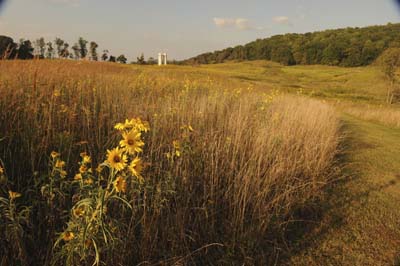
As part of our ongoing habitat restoration project at our Piedmont Memorial Overlook property near Sky Meadows State Park, the Virginia Department of Forestry helped us conduct a prescribed burn on 5 acres of our native warm season grass meadow. Prescribed fire reduces fuels, suppresses some woody species, recycles nutrients and stimulates plant growth– all of which improves habitat for wildlife.
Our Work
Safeguarding the landscapes, communities and heritage of the Piedmont by involving citizens in public policy and land conservation. Learn more about our work by browsing the subject areas below and find out how to get involved!
On the Ground — Spring 2017
Updates from the around the PEC region, organized by county. Here’s the blurb from Culpeper, which actually applies to residents in multiple counties: The Culpeper Soil and Water District recently secured funding from the Virginia Department of Environmental Quality for a Septic System Repair and Replacement Fund that’s available to residents of Culpeper, Greene, Orange, Madison, and Rappahannock Counties. Failing septic systems can affect both ground and surface water quality. The funds cover 50 percent of approved costs and are only available for a two-year term…
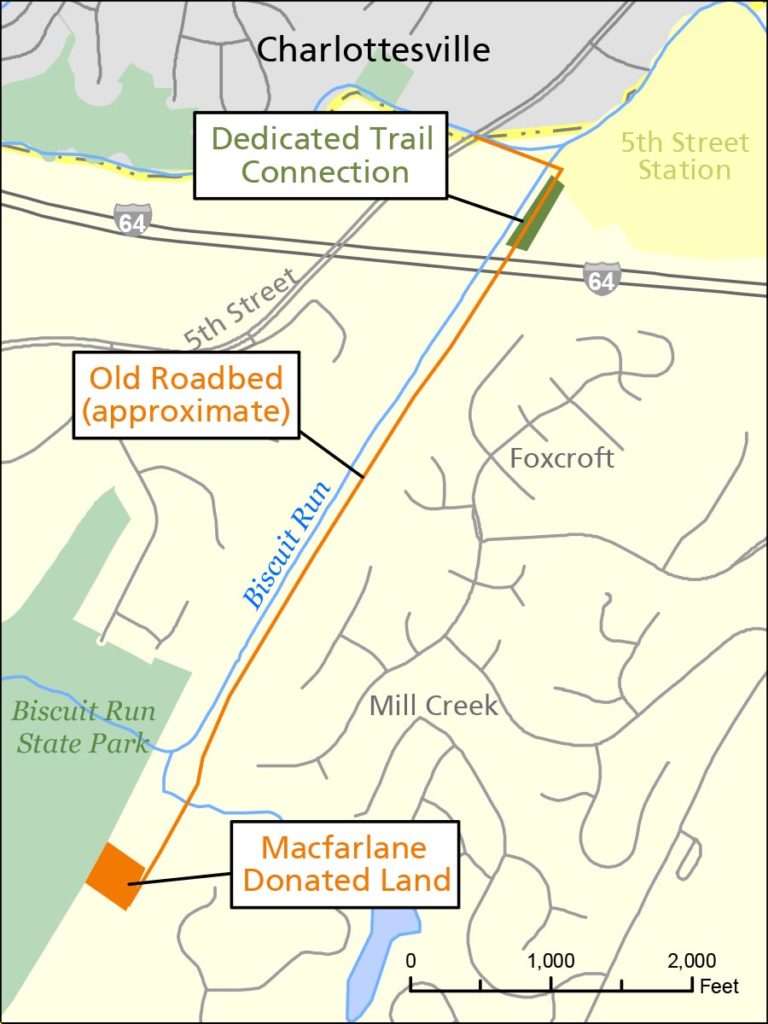
Trail Blazing
Pedestrian and bicycle trail systems can improve our health, increase property value, provide sustainable transportation choices and even strengthen a community’s economy — especially in an urban area.
Something not everyone may know about PEC is that we’ve been working to increase public access to parks, historic sites and a number of different trail networks. This type of work helps provide more options for people in the region to enjoy the beautiful outdoors and connect with the land. Trails in urban settings can also provide a more sustainable and healthy way of traveling in and around neighborhoods. These benefits are why we have raised funds for the extension of the Warrenton Branch Greenway in Fauquier County and partnered with James Madison’s Montpelier and Grelen Market to facilitate the creation of the Montpelier-Grelen trail, to name a few.
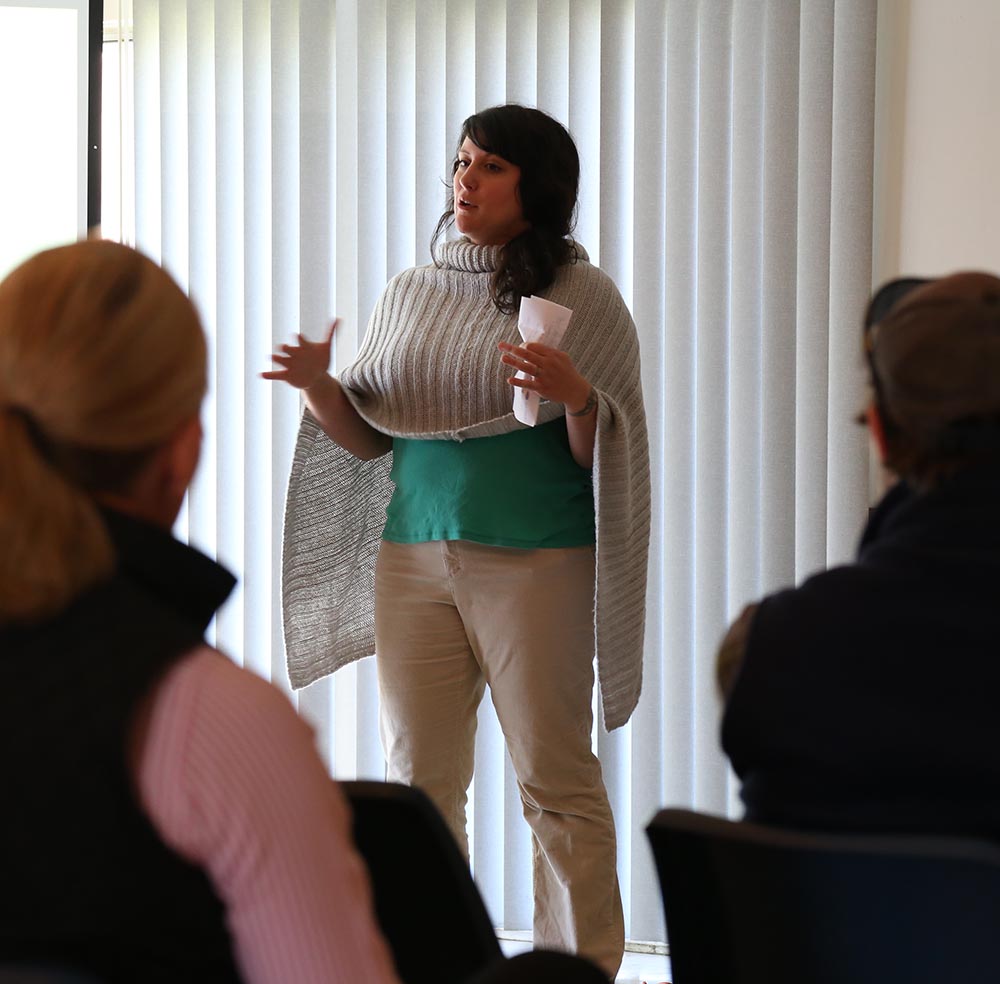
Protecting Thumb Run
What’s good for wildlife is often good for water quality,” said Celia Vuocolo, PEC’s wildlife habitat and stewardship specialist, as she spoke to guests at the fifth Annual Thumb Run Open House.
This sentiment was reinforced at the event, held on November 13 at the Orlean Fire Hall, by speakers Amy Johnson of Smithsonian Conservation Biology Institute’s Virginia Working Landscapes Program, Janet Davis of Hill House Farm and Nursery and Dr. Tania Cubitt of Performance Horse Nutrition LLC, whose presentations focused on grassland bird conservation, landscaping for wildlife and healthy horse pastures, respectively. While the presentation topics varied, the underlying theme was the same — land stewardship supports clean water.
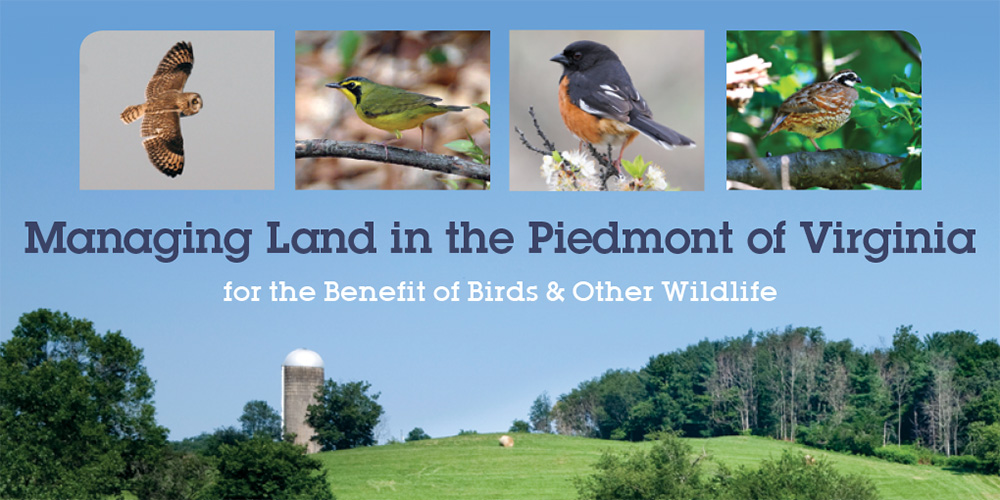
Managing Land in the Piedmont for the Benefit of Birds & Other Wildlife
Interested in managing your property or backyard for wildlife, but not sure where to start? Our guide, Managing Land in the Piedmont of Virginia for the Benefit of Birds and Other Wildlife, introduces landowners to land management options that should be considered for a variety of habitat types.
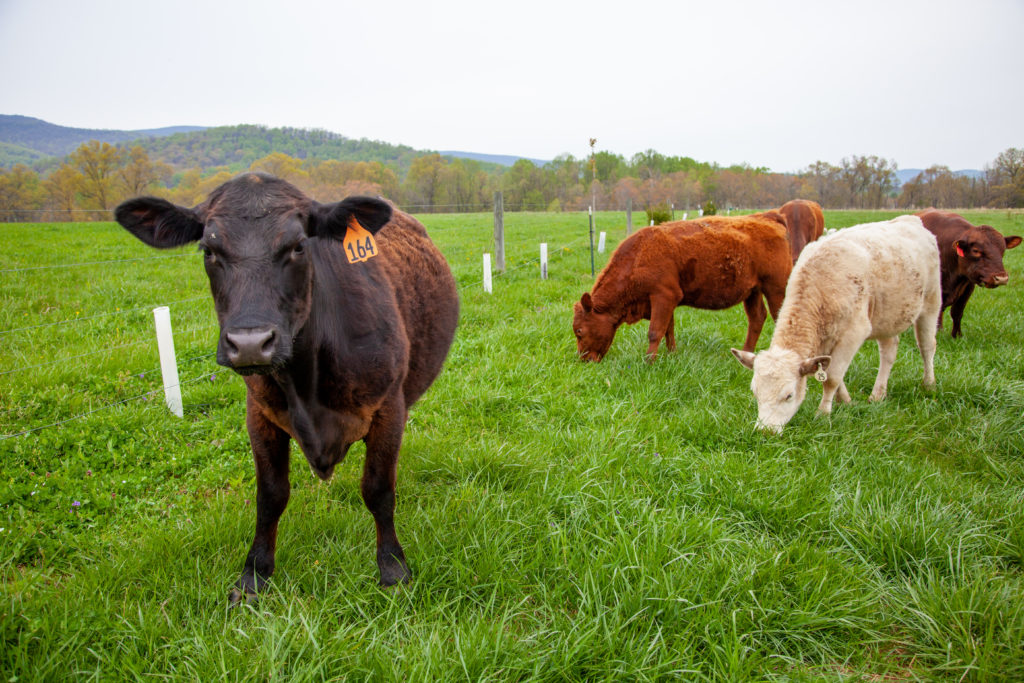
Productive Pastures at Bean Hollow Grassfed
At Bean Hollow Grassfed, Mike Sands wanted to use his training to revive Over Jordan Farm’s worn-out pastures and develop a financially stable farm model. Read about our approach to this project, or listen to Mike Sands directly.
Thumb Run Wildlife Habitat Corridor Project
In June 2012, PEC received a grant from The Volgenau Foundation to improve wildlife habitat in the northwestern region of Fauquier County. This project area is geographically defined by the Thumb Run watershed; all water in the region drains into Thumb Run and eventually the Rappahannock River. Wildlife habitat improvement goals for this project align with state priority wildlife species including: early successional song birds, pollinators, fresh water aquatic species such as mussels, amphibians, and more. Improving the connectivity of habitat “corridors” such as riparian buffers is a key focus of the project. Habitat practices that have other environmental benefits such as improved water quality are also of high priority. Get involved!
PEC Donates Land to National Park Service
Shenandoah National Park just grew a little bigger and a little more beautiful. This past May, The Piedmont Environmental Council donated a 17.2-acre property it owned in Rappahannock County to the National Park Service. A forested and vacant parcel on a mountain slope south of Sperryville, VA, the land is within the legislative boundary of Shenandoah National Park.
Fenced in at Roundabout Meadows
Polluted water is not only bad for us and the environment, but it’s bad for livestock as well,” says Celia Vuocolo, habitat and stewardship specialist at PEC.
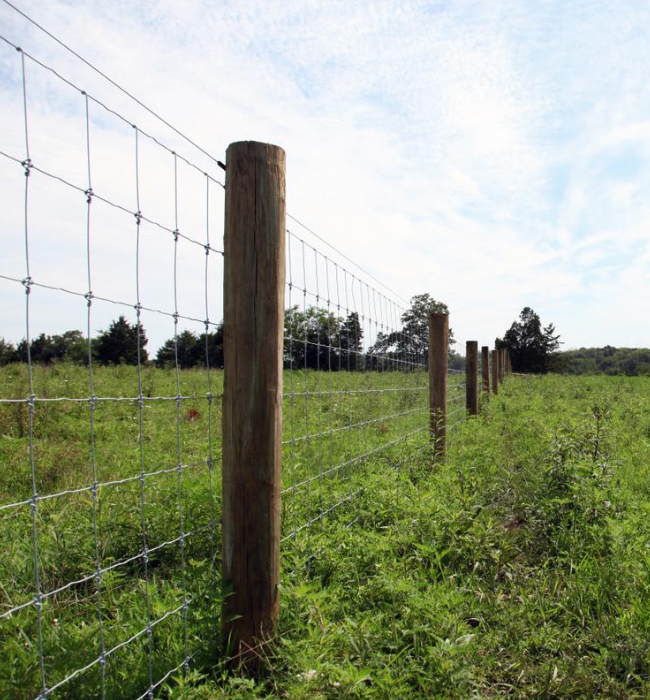
A significant stewardship project is wrapping up this fall at Roundabout Meadows, the 141- acre property near Gilbert’s Corner that was gifted to PEC in 2013. The project is focused on implementing agricultural Best Management Practices (BMPs) that will keep livestock away from the property’s streams and provide a clean source of water for cattle. As part of the effort, over 2 miles of fencing and almost a mile of pipeline plumbing for a watering system have been installed.
“Our long-term plan for Roundabout Meadows is to retain its agricultural use, and we want to do so in a manner that is in harmony with being good stewards of the land and water resources, while farming continues on the property,” says Michael Kane, director of conservation at PEC.
Preserving History at Jack’s Shop and James City
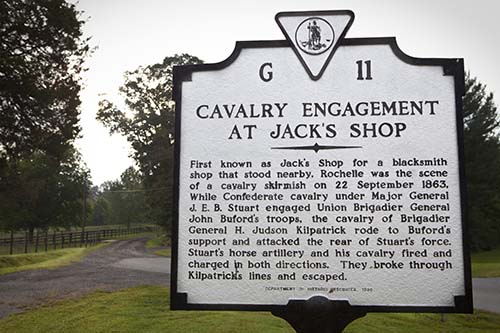
PEC received a grant of $35,300 from the National Park Service’s American Battlefield Protection Program to research the history of two previously undocumented Civil War battles that occurred at Jack’s Shop and James City in Madison County, Va.