
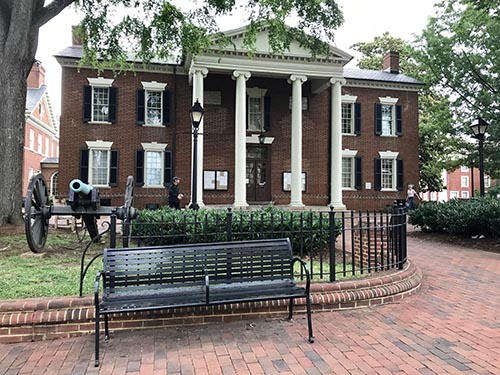
Updates from the around the PEC region, organized by county. Albemarle: Route 29 Transportation Improvements & Land Use Planning Update. Clarke: Quarry Site & Sporting Clays for Conservation. Culpeper: The Future of Solar Farms. Fauquier: Water in Marshall & Buckland Bypass. Greene: Making Main Street More Walkable. Loudoun: Transportation Planning & Comprehensive Plan Updates. Madison: Civil War Battlefield Research. Orange: Gordonsville Park Initiative. Rappahannock: Sprucepine Branch Restored!
Our Work
Safeguarding the landscapes, communities and heritage of the Piedmont by involving citizens in public policy and land conservation. Learn more about our work by browsing the subject areas below and find out how to get involved!
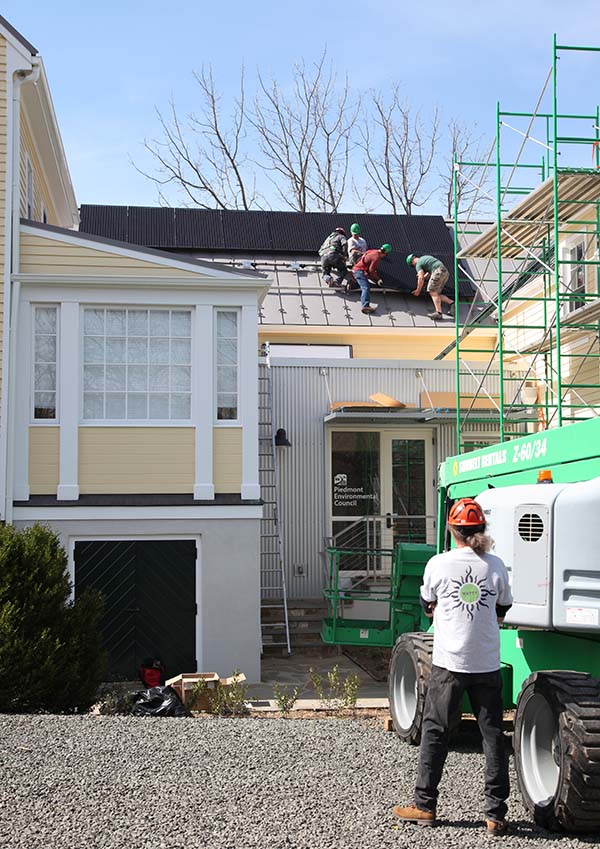
More than $1 Million Worth of Solar Installed
The benefits of solar power are multi- fold: it provides peak power close to the demand, energy security, cost savings, local employment opportunities and emission reductions. These benefits are why, for the last three years, we’ve partnered on a Solarize Piedmont campaign with friends at the Local Energy Alliance Program and the Northern Virginia Regional Commission.
Now that the 2017 Solarize Piedmont campaign has come to a close (it ran from mid-March through April), we wanted to share the results from these past three years: — Signed Contracts: 41– Dollar Value of Systems: $1,260,005 — Installed Capacity: 395 kW — Locations: Albemarle, Charlottesville, Culpeper, Fauquier, Greene, Loudoun, Orange & Rappahannock…
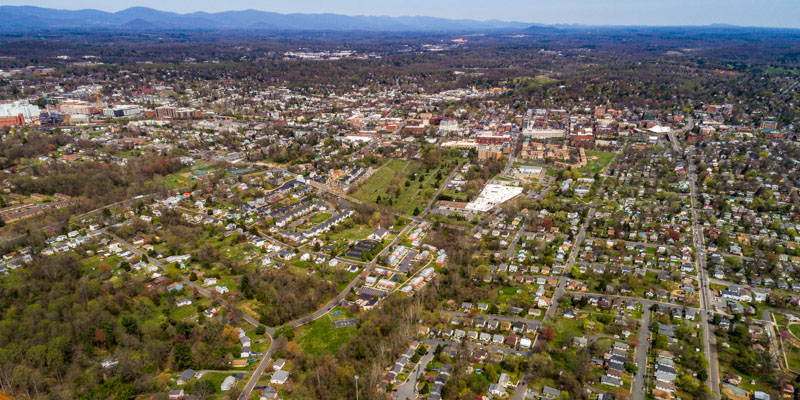
Charlottesville’s Strategic Investment Area (SIA)
The City of Charlottesville in the process of creating a plan to redevelop an approximately 330 acre area south and east of the downtown mall, called the Strategic Investment Area (SIA). This target area was identified by the City as a potential “growth” area due to its currently low density of development, vacant parcels, and location as a gateway to downtown, including pedestrian connections to the Downtown Mall area.
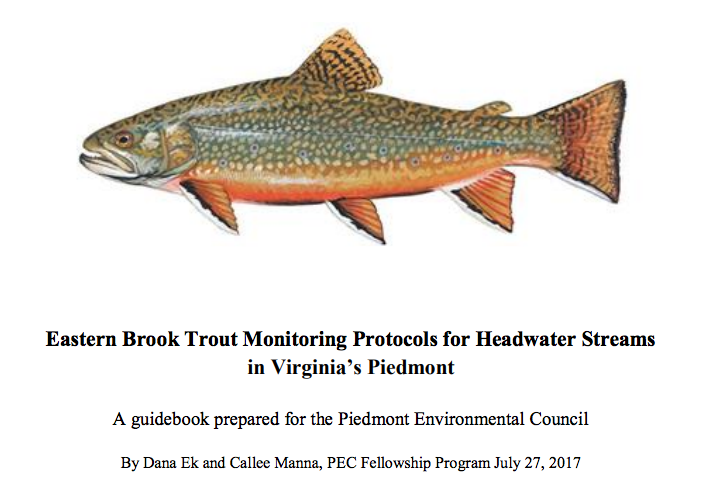
Eastern Brook Trout Monitoring Protocols for Headwater Streams in Virginia’s Piedmont
During the summer of 2017, PEC Fellowship participants Dana Ek and Callee Manna put together this stream monitoring guidebook as part of their final practicum project. The guidebook is meant to serve as a reference for PEC and other entities who are planning of stream restoration projects, especially in the development of improved monitoring procedures.
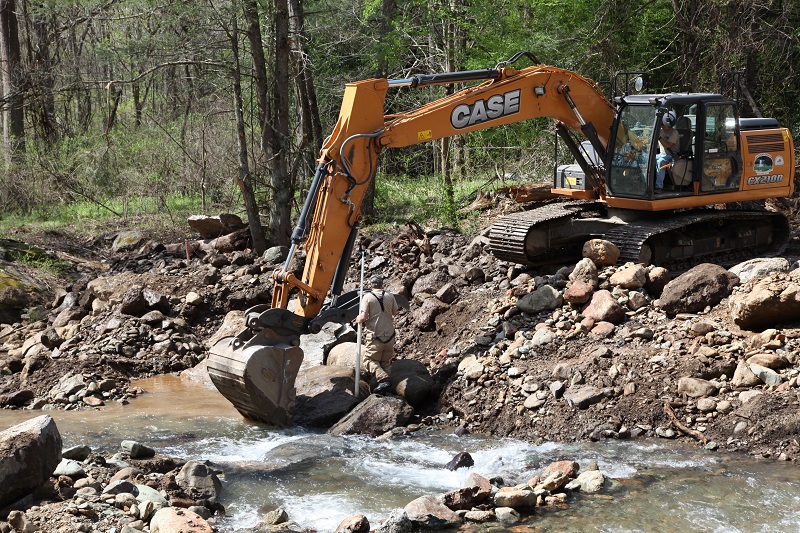
Robinson River
SYRIA, VA. At the Robinson River, 350 linear feet of stream was restored to its natural channel, stabilizing banks from erosion, and ultimately removing sediment from going downstream to the Chesapeake Bay. In all, 5.3 miles of habitat was restored for aquatic species such as American eel and brook trout. PEC worked with USFWS, Shenandoah Streamworks, Trout Unlimited, and local landowners to complete this stream restoration project in April 2017. Monitoring for water quality, and fish population health with the help of partners of VA DGIF and TU.
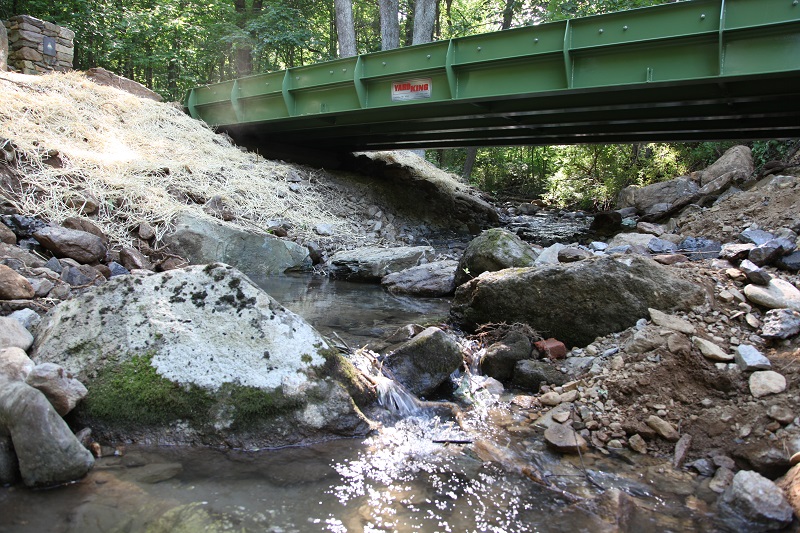
Sprucepine Branch
HUNTLY, VA: Recent work at Sprucepine Branch reconnected 2 miles of stream, as a set of culverts were removed from a private driveway, and replaced with a bridge. PEC coordinated with the U.S. Fish and Wildlife Service and Shenandoah Streamworks on the natural channel design and construction. The work included re-grading stream banks and in-stream structures that restored the natural hydrology of those streams.
The Virginia Department of Game and Inland Fisheries provided pre and post fish community monitoring.
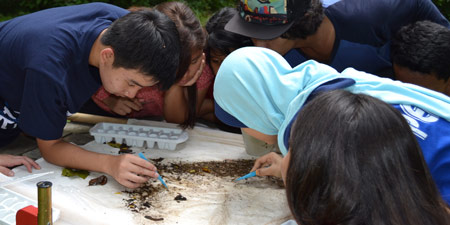
Stream Health Monitoring
Monitoring water quality, biological populations, and physical features of stream habitat are all vital to understanding stream health.
Restoring Connections – By Eliminating Barriers
Culverts, low-water crossings and linear infrastructure (i.e. pipelines, highways) can serve as disruptions to healthy stream flow.
Charlottesville Area Community Foundation grant to help boost urban greenway work
Through funding from the Charlottesville Area Community Foundation, PEC is working in partnership with the Thomas Jefferson Planning District Commission on a community engagement initiative to build support for implementation of a comprehensive greenway system. Specifically, we will be engaging the community to build a shared vision for greenways among the public sector, nonprofit organizations, and business and civic actors.
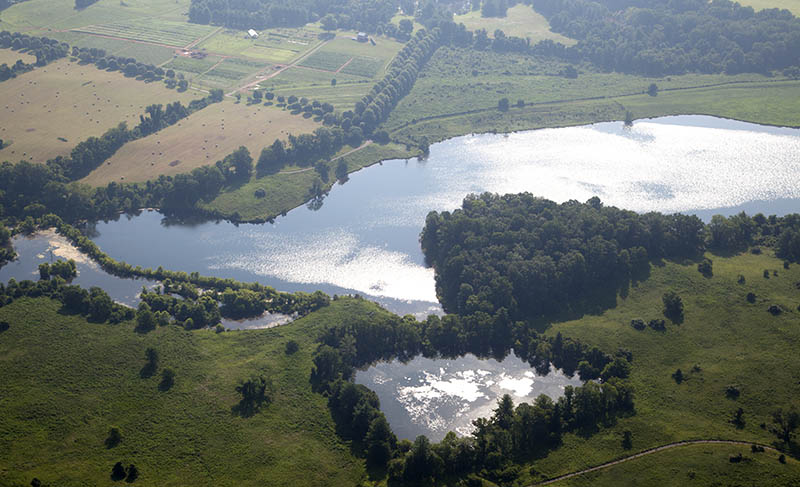
Water Demand in Fauquier County
This summer, PEC participated in a Water Information Session organized by the Conservation Roundtable. Other guests include Michael Focazio, Marshall District WSA Board Representative, and Kurt McCoy with USGS. The purpose was to discuss the drinking water challenges facing Fauquier County.