
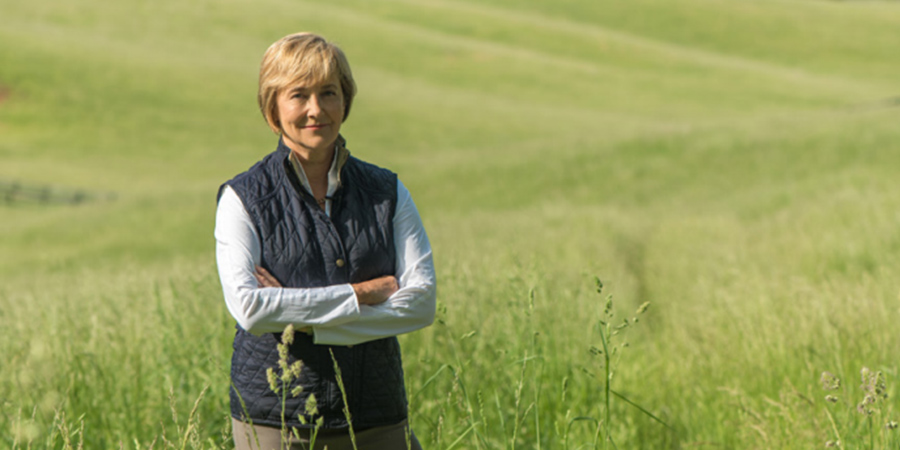
When it comes to conservation, Kat Imhoff is nothing short of a virtuoso, as abundant in inspiration and innovation as she is in action. At the helm of Montpelier, Monticello, and The Nature Conservancy in Montana, she led conservation and restoration projects that preserve significant historical, cultural and rural legacies. PEC is proud to welcome Kat into its fold as senior conservation fellow, working out of our Charlottesville office.
Maps & Resources
Year One on the Farm
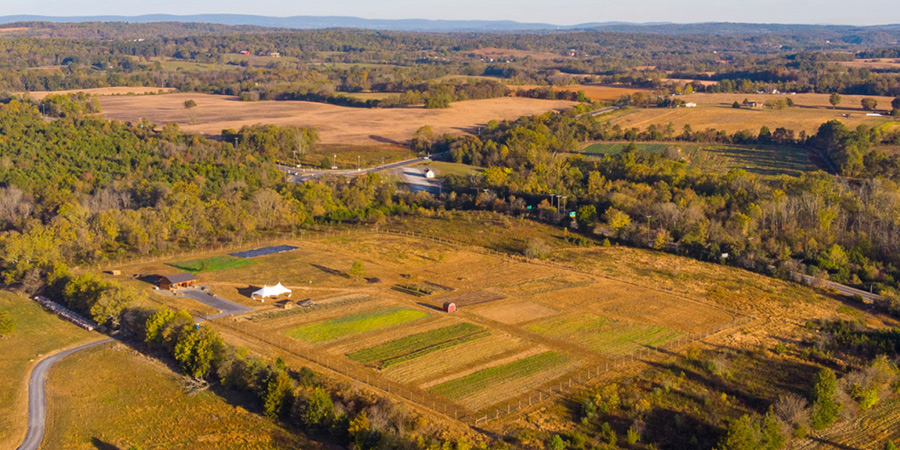
Loudoun County is one of the most affluent counties in the nation and simultaneously home to some 14,000 people without reliable access to affordable, nutritious food. It is consistently one of the fastest-growing counties in the nation, and yet over 200,000 acres is planned to remain rural with over 58,000 acres of permanently conserved open space. Nestled among the three roundabouts of Routes 15 and 50 and Howser’s Branch Road, lies PEC’s Community Farm. Located at the literal intersection of suburban and rural Loudoun County, it is perfectly positioned both to shine a light on the value of conservation and to make practical, tangible progress to address food insecurity in the community.

What will tomorrow bring?
This year’s Virginia General Assembly promises to be an interesting one, as the November 2019 elections resulted in a change in leadership in both the House and the Senate. A new Speaker of the House (Filler-Corn), Senate Majority Leader (Saslaw) and large shifts in committee memberships of both bodies are among the changes. With Governor Northam still in office, the Democrats have consolidated control of state government for the first time in more than two decades. And that means we will see many of the priorities of the party at the forefront of the legislative agenda.
On the Ground – Winter 2019
A series of short updates from around the PEC region – Albemarle & Charlottesville, Clarke, Culpeper, Fauquier, Greene, Loudoun, Madison, Orange & Rappahannock.
A Fish Runs Through It
As the fog broke on a brisk November morning in Madison County, more than three dozen people arrived at the Whiteoak Canyon trailhead ready to celebrate the new, 35-foot, open-span bridge over Cedar Run. They marveled at the sounds of water bubbling over the rocky streambed from the north side of the bridge to the south. Many walked upright beneath the sturdy, brown, steel-framed structure. And all excitedly searched the deep pools for our guests of honor—the native brook trout, a species of concern on Virginia’s Wildlife Action Plan.
Montpelier CEO Kat Imhoff to join The Piedmont Environmental Council
Piedmont Environmental Council President Chris Miller is pleased to announce the appointment of Kat Imhoff to the organization’s staff on Dec. 2. Imhoff joins the organization following seven years as president and CEO of James Madison’s Montpelier
New bridge improves access to one of Shenandoah Park’s most unique trails
A new 35-foot span bridge across Cedar Run opened this week, offering hikers and nature-loving community members improved access to the popular Whiteoak Canyon trailhead and opening up three miles of stream habitat to native fish for the first time in decades. The effort is a public-private partnership between Shenandoah National Park, The Piedmont Environmental Council, Trout Unlimited, and the local landowners, the Graves family.
Gordonsville Parks Growing with New Addition
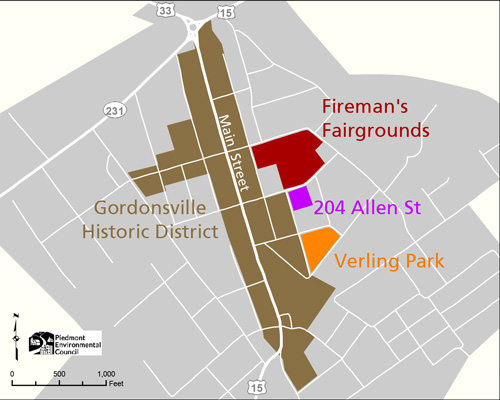
Town to Trail, a working group of the non-profit The Piedmont Environmental Council (PEC), is excited to announce the acquisition of the vacant lot at 204 Allen Street, which PEC purchased with contributions from private donors over the last year.
President’s Letter – Fall 2019
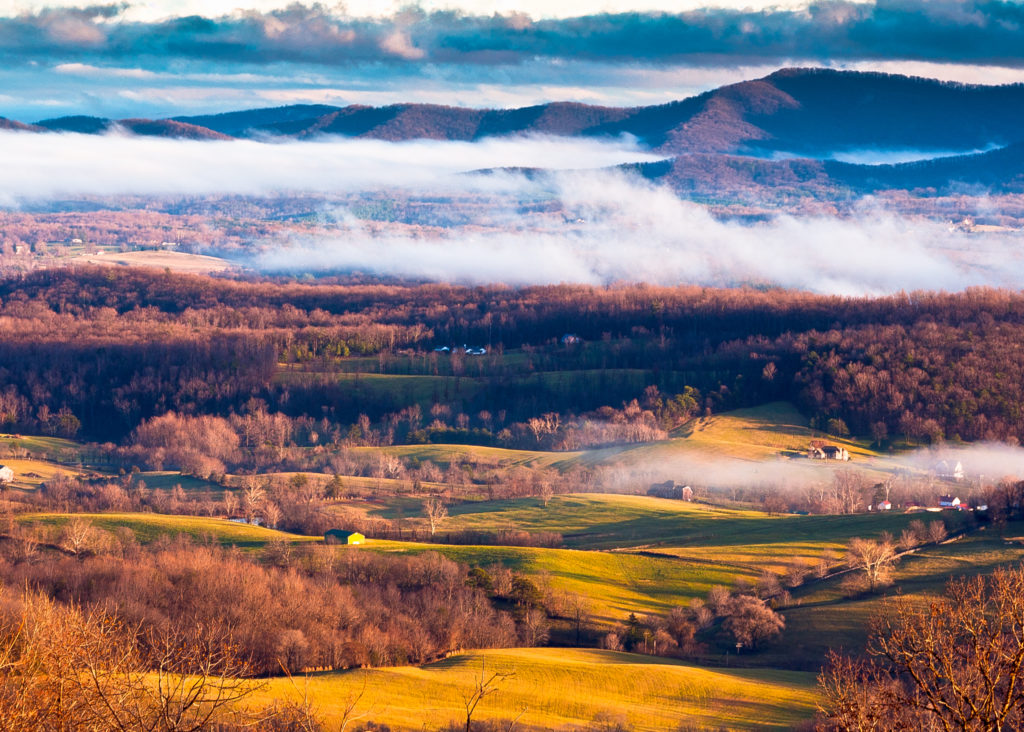
At this summer’s Sunset Safari event, The Piedmont Environmental Council, the Shenandoah National Park Trust, and the Smithsonian Conservation Biology Institute recognized The Volgenau Foundation for its leadership and philanthropy in land conservation and restoration of native habitats in Virginia and beyond since 1994.
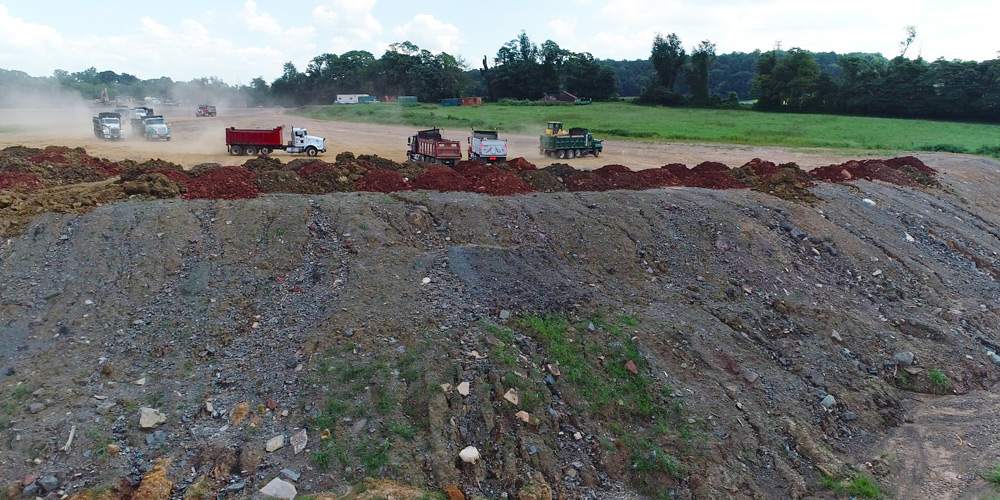
A Dirty Secret: How Construction Waste is Making its Way Onto Rural Lands
Steve and Jennifer Rainwater’s world was turned upside down in 2017 when an access road was built along their property line and hundreds of dump trucks started arriving to dump dirt, non-stop, on a section of the property, behind their house. The new access road created runoff and flooding problems that damaged their pastures and a small pond that had provided fresh water for the horses. Although silt fences were used in places, they regularly collapsed and were generally ineffective. The view from their second floor has changed from woods to a never-ending construction site.