
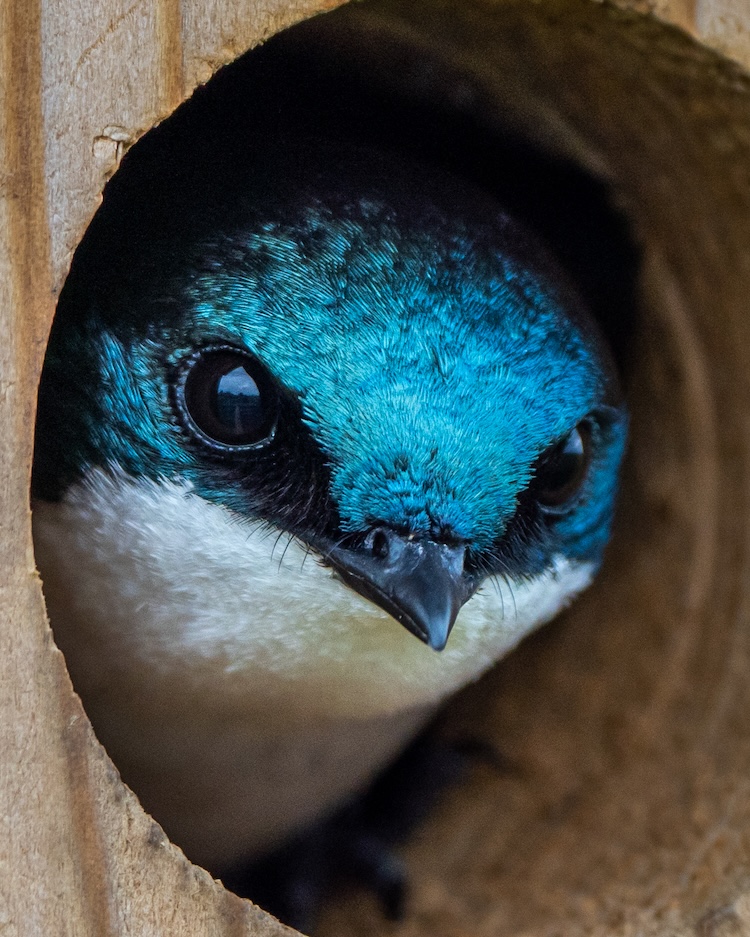
As Virginia loses open spaces to conversion, many species of birds struggle to find a safe place to raise their young. Luckily, you can support native bird species in your own backyard.
Virginia Grassland Bird Initiative
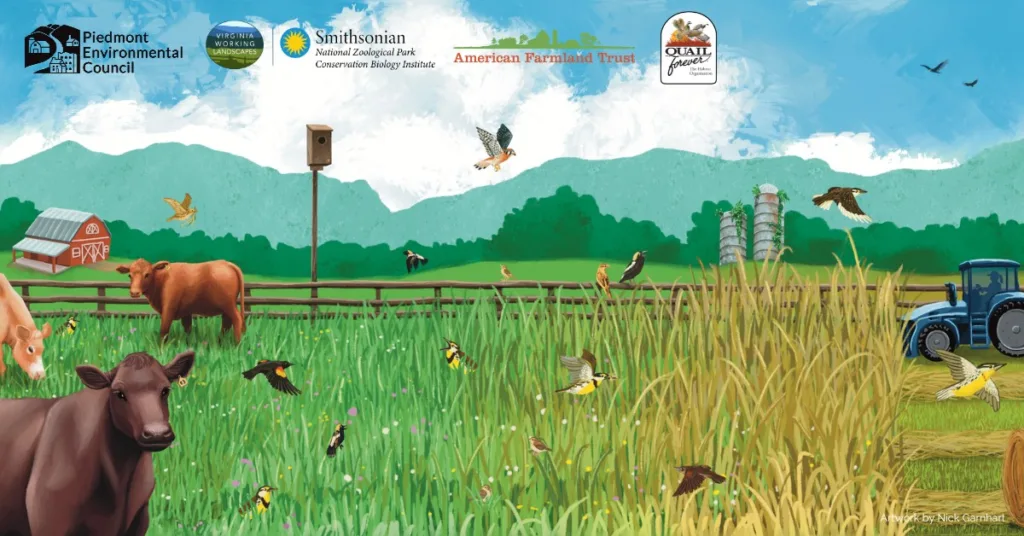
The Virginia Grassland Bird Initiative (VGBI) creates a resilient agroecosystem that benefits grassland birds through the work of the Piedmont Environmental Council, the Smithsonian’s Virginia Working Landscapes, the American Farmland Trust and Quail Forever.
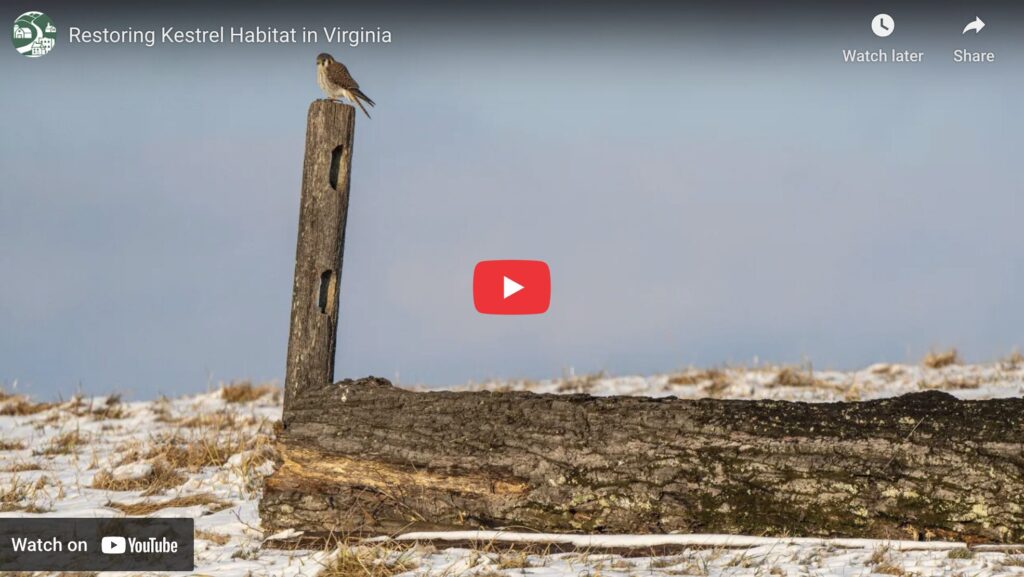
Video: Restoring Kestrel Habitat in Virginia
PEC’s Lauria McShane and other members of the Virginia Grassland Bird Initiative team are busy this fall and winter installing kestrel boxes across our landscape.
Press Release: Financial incentives available to farmers for haying practices that support nesting birds
Media Contacts:
October Greenfield, VGBI Co-Coordinator, [email protected]; 540-347-2334, x7051
Lauria McShane, VGBI Assistant; [email protected]; 540-347-2334, x7056
PIEDMONT, SHENANDOAH VALLEY, BLUE RIDGE, Va. (Oct. 14, 2025) – The Virginia Grassland Bird Initiative is pleased to announce the opening of its incentives program for landowners and farmers! Now through Nov 30, farmers in the 16 counties across the northern Virginia Piedmont, Blue Ridge, and Shenandoah Valley regions can apply for financial incentives to implement practices that help support nesting grassland birds during the 2026 haying season.
Entering its fifth year, the Virginia Grassland Bird Initiative is a collaborative effort of The Piedmont Environmental Council, Smithsonian’s Virginia Working Landscapes, Quail Forever, American Farmland Trust, and Shenandoah Valley Conservancy working together with landowners and farmers to restore grassland habitat using “regenerative” agricultural practices tested by farmers and researchers alike, proving to benefit both birds and agricultural operations. Funded by the National Fish and Wildlife Foundation, VGBI provides tools and technical assistance and pays farmers up to $35 per acre in exchange for: 1) delaying the first cut of hay until July 1 or later; and/or 2) rotating livestock out of select fields between April 15 and July 1 or later. Farmers can learn more about the program and apply at: vagrasslandbirds.org/incentives/.
VGBI was formed in response to the 53% decline in the 60 species of native grassland birds that have adopted hayfields and pasturelands as surrogate habitat as native grasslands have suffered more intense impact by humans than any other land-based ecosystem in North America. Since 2021, 57 farmers have formally enrolled over 3,600 acres of land into the financial incentives program, while another 37 have participated voluntarily, without the financial incentives, adding another 3,700 acres of land supporting nesting grassland birds.
“Delayed haying until at least July 1 is a game change for birds, because it allows them to fledge at least one successful clutch of young. But it also lets producers strategically spread out labor requirements during the hay cutting season, and the higher fiber, more mature hay resulting from delayed haying is good for feeding dry cows, horses, and retired animals, as well as for mushroom hay and bedding,” said Lauria McShane, PEC’s VGBI assistant.
Rotating livestock out of certain fields in early spring is called summer pasture stockpiling, and it “bridges the summer dormancy gap by providing standing forage in late summer without the risk and expense of planting summer annuals. Stockpiling also allows fields to rest for fall or winter stockpiling with the goal of reducing the days that hay is fed and, therefore, reducing annual feed cost,” McShane said.
On Francis McGuigan’s farm in Greene County, “the results were dramatic,” he said, pointing out a flock of at least 30 goldfinches perched atop vegetation enjoying seedheads from the field on a recent check-in with McShane that’s part of the incentives program. He said that in the past, he’d only see a couple of goldfinches fly over the field in any given year. “Not only did the bird population increase, but so did the insect, small mammal and amphibian populations. We saw and heard the results all summer. I’m proud that my small farm is supporting ecosystem expansion and resilience through VGBI’s summer pasture stockpiling program,” McGuigan said.
In Albemarle County, Michelle McKenzie enrolled Bellair Farm in both the delayed haying and summer pasture stockpiling programs in 2024. The increase in grassland birds has been so significant that McKenzie has hosted bird walks with the Virginia Society of Ornithology’s Piedmont Bird Club. “I would absolutely recommend this program to others. Interacting with the VGBI staff has also provided networking opportunities and discussions about other programs that we’re getting involved in,” McKenzie said. Those include four kestrel boxes and a barn owl box, which McShan monitors in spring and summer.
Monte Vista Farm in Greene County had 295 enrolled in VGBI’s delayed haying incentive program this summer, while another 40 acres on the outskirts of the hayfields have been converted into pollinator fields. “Happily, the new owners of Monte Vista Farm have the property primarily for wildlife habitat, and they’re already committed to delayed haying for the entire property going forward,” McShane said.
Producers can meet Virginia’s grassland birds and learn more about best management practices for birds, native plantings for quail, nesting boxes for American kestrel, streamside plantings for wildlife and water quality, and more at: https://www.vagrasslandbirds.org/resources/
Downloadable high-resolution images for media:
- Cattle entering a stockpiled field to graze. Credit John Teel.
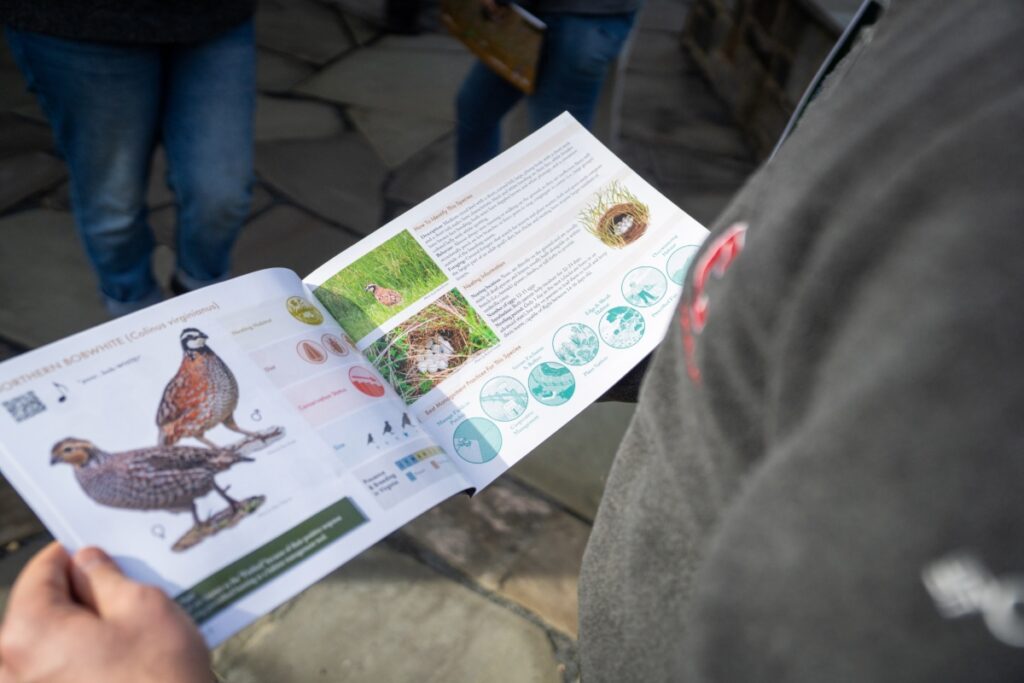
- Members of the VGBI team sharing the Meet Your Grassland Birds guide. Credit Hugh Kenny, PEC.
- A peek at a page inside the Meet Your Grassland Birds guide. Credit Hugh Kenny, PEC
- A bobolink nest in a grassland field. Credit Bernadette Ridgely
#####
The Piedmont Environmental Council (PEC) works to protect and restore the lands and waters of the Virginia Piedmont, while building stronger, more sustainable communities. Founded in 1972, PEC is a locally based, community-supported 501(c)3 nonprofit and accredited land trust. At the core of PEC’s approach is a focus on educating, engaging and empowering people to effect positive change in their communities.
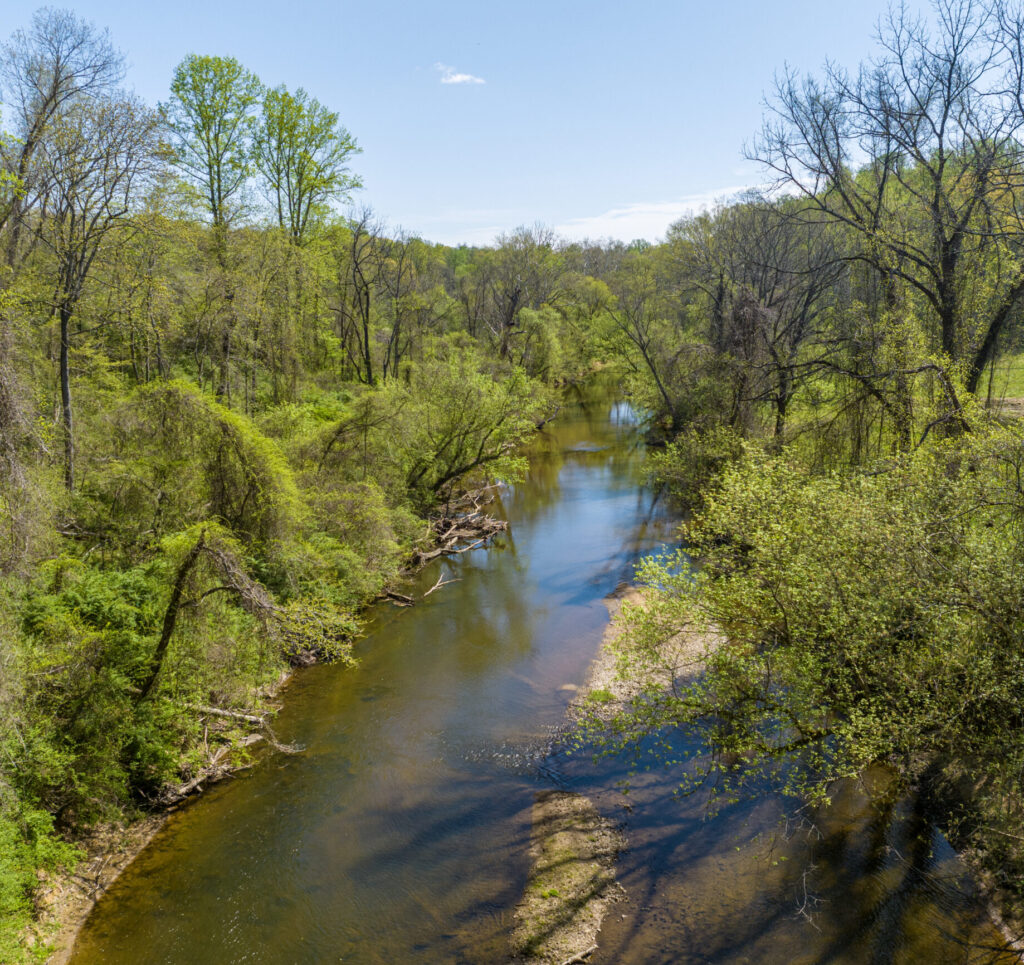
2024 Highlights: By the Numbers
PEC’s dedicated staff work relentlessly to advance land conservation, sound land use planning, the protection of natural resources and better climate and energy policy.
Landowner Testimonial – Virginia Grassland Bird Incentive Program
The Virginia Grassland Bird Initiative’s Incentives Program application is open!
Open to 16 counties, VGBI’s financial incentives program pays farmers $35 per acre for delayed haying and/or summer pasture stockpiling during the grassland bird nesting season.
Both practices balance grassland bird conservation and long-term production goals by allowing ample time for nesting grassland birds to successfully fledge their young before farmers cut hay or rotate cattle into select fields.
Since 2021, 46 farmers have formally enrolled 3,000 acres of land into our financial incentives program, and 28 have implemented delayed haying or summer pasture stockpiling on another 3,000 acres voluntarily, without the financial incentives.
This year, the National Fish and Wildlife Foundation and the U.S. Fish & Wildlife Service have provided funding to support enrolling new properties in the program!
Apply by November 15 at vagrasslandbirds.org/incentives
VGBI is a collaborative effort of PEC, Smithsonian’s Virginia Working Landscapes, Quail Forever and American Farmland Trust working together with landowners and farmers to restore grassland habitat for the benefit of birds and farms across the Virginia Piedmont, Blue Ridge and Shenandoah Valley
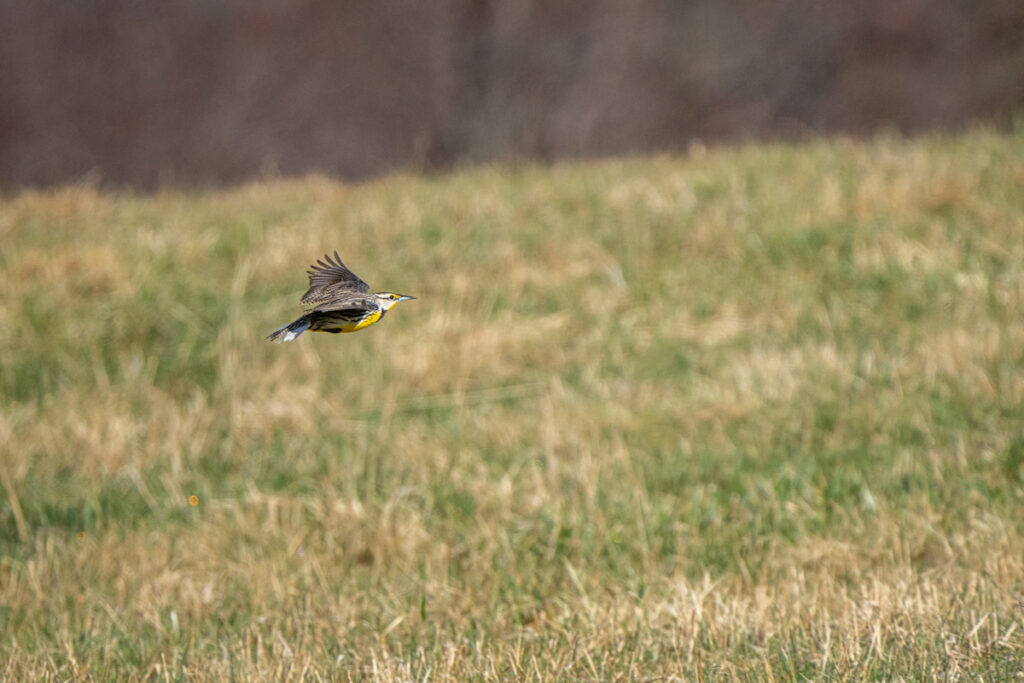
Let’s bring back our grassland birds
This text was taken from an email alert sent out on Oct. 29, 2024. Sign up for email alerts →
Dear Supporter,
I’d like to share exciting news about our Virginia Grassland Bird Initiative, entering its fourth season in 2025. VGBI is a collaborative effort of PEC, Smithsonian’s Virginia Working Landscapes, Quail Forever and American Farmland Trust working together with landowners and farmers to restore grassland habitat for the benefit of birds and farms across the Virginia Piedmont, Blue Ridge and Shenandoah Valley.
Native grasslands have suffered a more intense impact from humans than any other North American terrestrial ecosystem. In response, remaining grassland birds have begun to rely on hayfields and pastureland as their primary habitat. VGBI gives landowners and farmers the tools as well as the technical and financial assistance to help protect these grassland birds while benefiting their agricultural operations.
Financial incentives program application open through Nov. 15
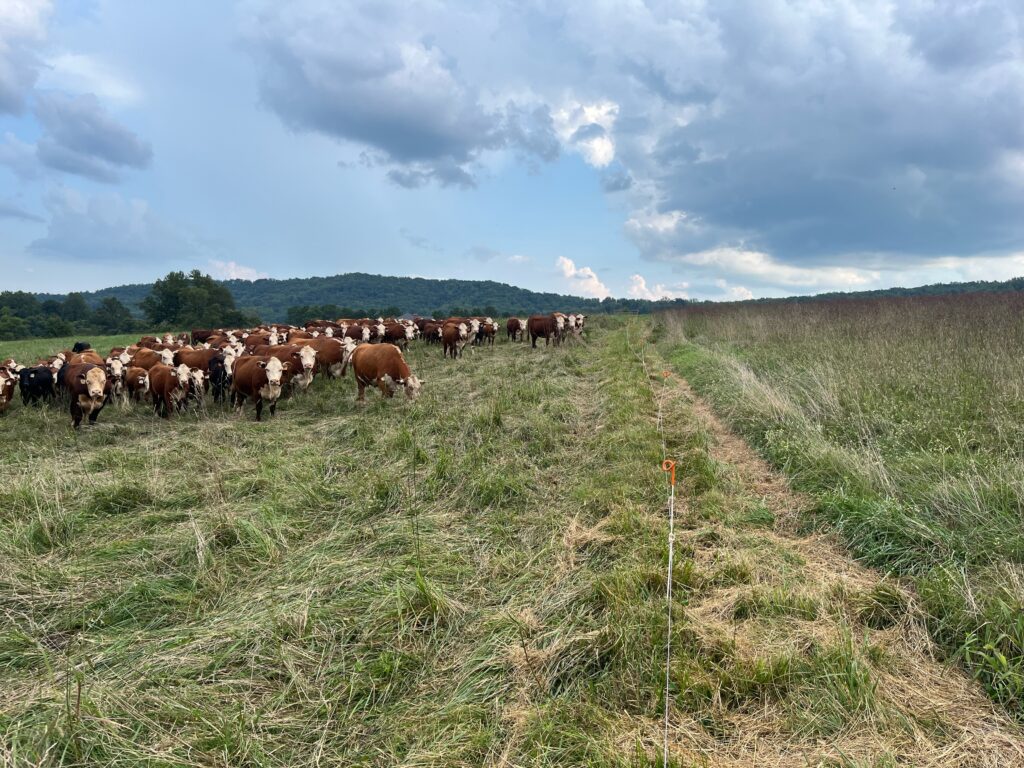
Open to 16 counties, VGBI’s financial incentives program pays farmers $35 per acre for delayed haying and/or summer pasture stockpiling during the grassland bird nesting season. Both practices balance grassland bird conservation and long-term production goals by allowing ample time for 80% of nesting grassland birds to successfully fledge before farmers cut hay or rotate cattle into select fields.
Since 2021, 46 farmers have formally enrolled 3,000 acres of land into our financial incentives program, and 28 have implemented delayed haying or summer pasture stockpiling on another 3,000 acres voluntarily, without the financial incentives.
This year, the National Fish and Wildlife Foundation and the U.S. Fish & Wildlife Service have provided funding to support enrolling new properties in the program!
Submit your application today at vagrasslandbirds.org/incentives. Landowners who already participate in grassland bird-friendly land management or would like to participate in our program without receiving financial incentives can fill out this form.
Resources

VGBI has been hard at work developing new resources to make it easier for landowners and folks to learn about our work. These resources include information on best management practices for grassland birds, native plantings for quail, and riparian buffers for wildlife. Check them all out here or link to them individually below:
- Factsheet: Raise the Blade
- Factsheet: American Kestrel Nest Boxes: Stewardship and Monitoring
- Factsheet: Best Management Practices (BMPs) for Grassland Birds
- Factsheet: Native Plantings for Quail
- Pamphlet:Riparian Buffers for Wildlife
Out & About with VGBI
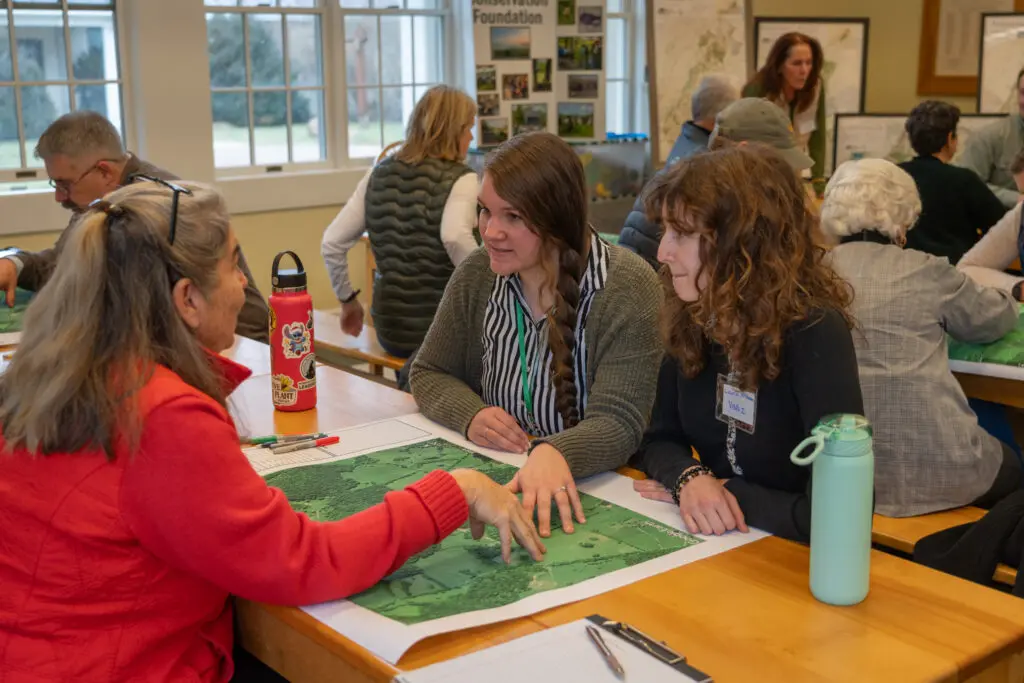
Spreading the word about declining grassland bird populations and sharing strategies for implementing grassland bird-friendly best management practices is a crucial step to actually solving the problem. That’s why our team has been busy traveling and giving presentations to conservation groups, other land trusts, landowners and farmers.
Conservation Speed Dating Workshops
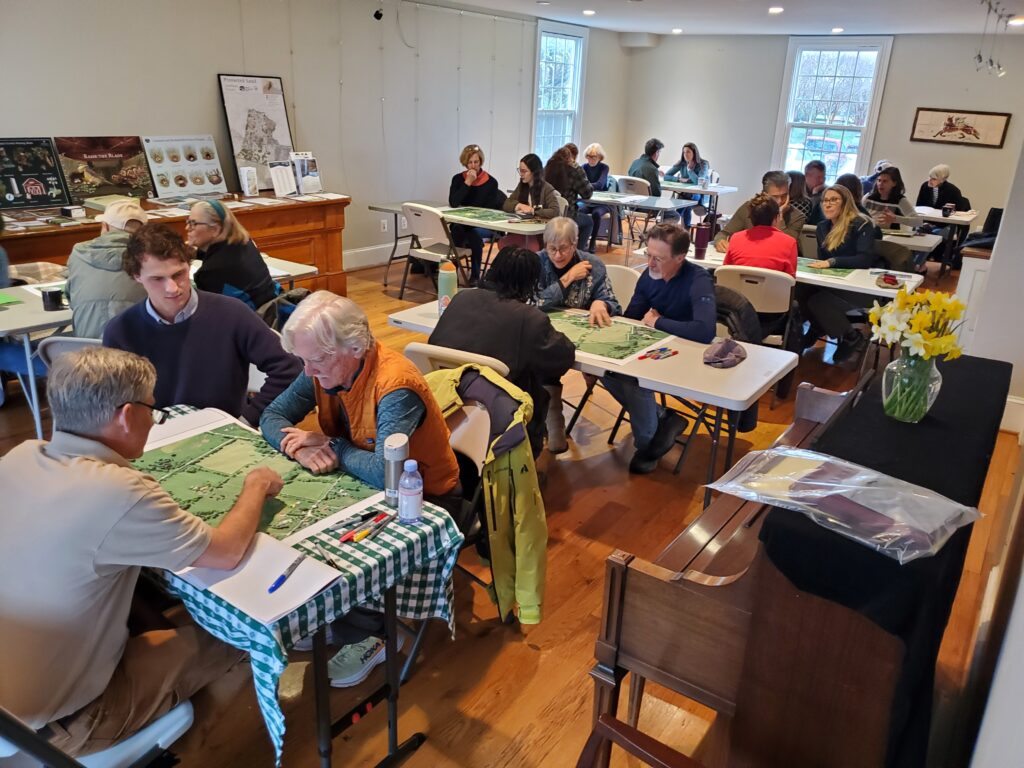
VGBI has been getting to know landowners in the region with our intentionally-intimate Conservation Speed Dating workshops. These have become a great way for landowners and producers to get to know local conservation experts who can share their full suite of (technical and financial) resources, knowledge, and programs their departments and organizations can provide. Local staff from NRCS, Soil and Water Conservation Districts, land management companies and nonprofits engage one-on-one with each participant, discussing how their programs apply specifically to each landowner’s property and conservation goals, using a large, hard-copy map of each property as a focal point for discussion.
Since 2023, we have held about a dozen of these workshops across VGBI’s 16-county region, with more planned for this winter! You can read more about these workshops here.
Conferences across the Region
VGBI recently traveled to Vermont to present about our collaborative work at the Northeast Bird Habitat Conservation Initiative (NBHCI) partner meeting. It was attended by conservationists from Virginia to Maine to learn about bird conservation in northeastern grasslands and forests. I worked in partnership with Sara Barker from the Cornell Land Trust Bird Conservation Initiative, Jennifer Brockway of Ag Allies, and Zoe Warner of the Grassland Bird Collaboration to give a presentation in Rhode Island at the Land Trust Alliance (LTA) Rally titled “Collaborative Conservation: Managing Working Grasslands for People and Birds.”
We also recently presented about our Conservation Speed Dating Workshops in Fredericksburg, Va., at the Rappahannock River Symposium hosted by the Rappahannock River Roundtable. In case you missed any of these opportunities, we’ll be presenting at their next event, Land & Water Conservation: Carbon, Easements & Cost-Share Opportunities, this Thursday, Oct. 31.
Upcoming Event:

Carbon & Conservation Workshop
Oct. 31st, 11 a.m. -2 p.m., Standardsville, Va.
Join PEC, Rappahannock Carbon and others on Oct. 31 in Greene County to learn about forest carbon, conservation easements, and other climate-smart conservation programs and opportunities available to landowners.
Rappahannock Carbon is a program offered by the Rappahannock River Roundtable to assist landowners in conserving their forests by utilizing carbon market resources and conservation tools. The Piedmont Environmental Council will provide information about land conservation opportunities available to landowners.
If you have any questions about PEC’s grassland bird work and how you can get involved, please don’t hesitate to reach out to one of our team members.
Sincerely,
October Greenfield
Wildlife Habitat Restoration Coordinator
VGBI Co-Coordinator
[email protected]
(540) 347-2334 ext. 7051
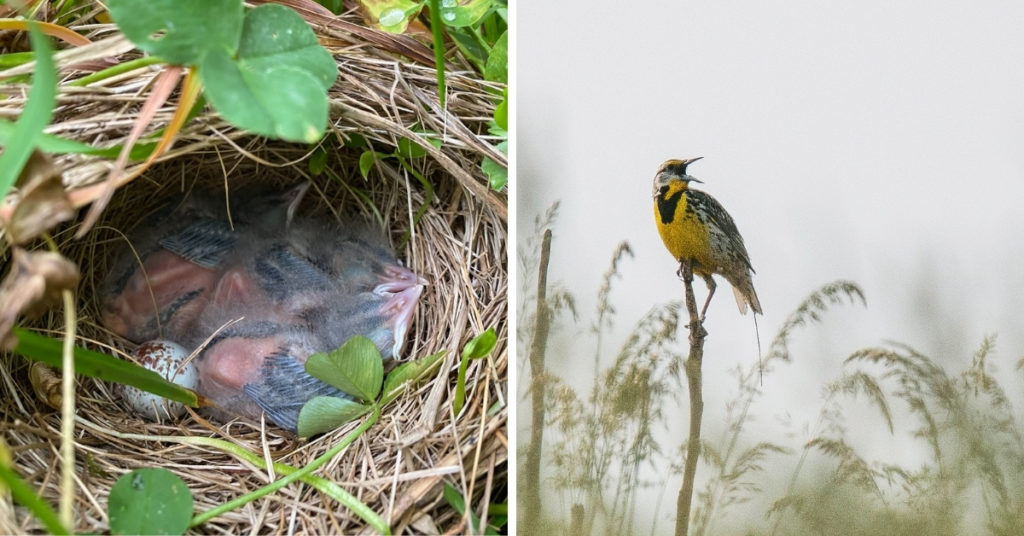
Virginia Grassland Bird Initiative offers financial incentives for delayed haying and summer pasture stockpiling
Now through Nov 15, the Virginia Grassland Bird Initiative (VGBI) is accepting applications from producers in 16 counties across the northern Virginia Piedmont, Blue Ridge, and Shenandoah Valley, who are interested in financial incentives for protecting nesting grassland birds during the 2025 haying season.
A Match Made in Conservation
Stepping into land conservation for the first time, or starting a new conservation project, can feel as intimidating or overwhelming as a first date might feel. But in these brightly lit rooms with friendly faces, VGBI’s Conservation Speed Dating workshops replace the awkward small-talk with a fun and comfortable atmosphere where neighbors come together with conservation professionals to receive guidance.
Virginia Grassland Bird Initiative offers financial incentives for delayed haying and summer pasture stockpiling
Now through Nov 15, the Virginia Grassland Bird Initiative (VGBI) is accepting applications from producers in 16 counties across the northern Virginia Piedmont, Blue Ridge, and Shenandoah Valley, who are interested in financial incentives for protecting nesting grassland birds during the 2025 haying season.
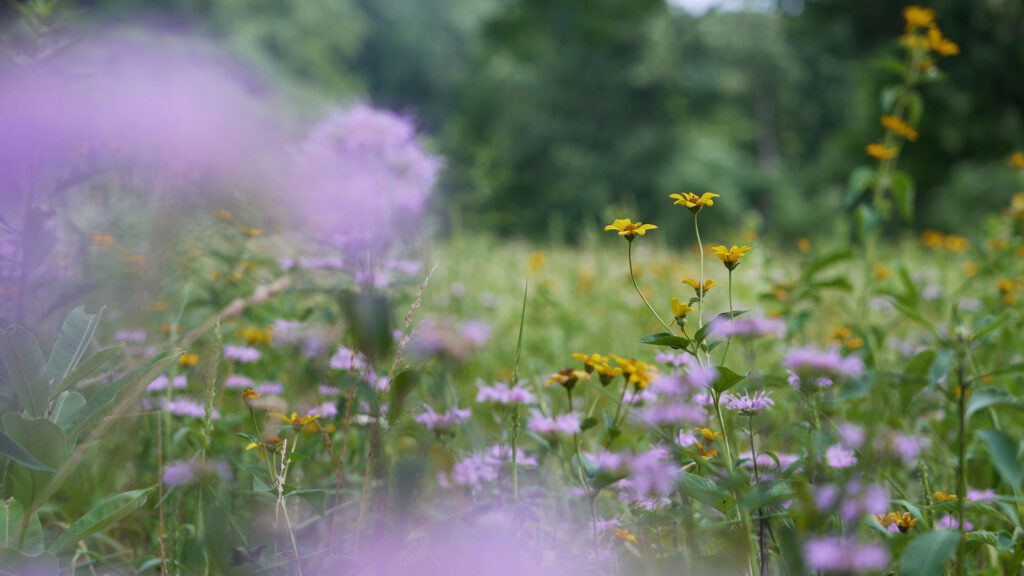
Wildflowers in bloom at the Piedmont Memorial Overlook
The native meadow at the Piedmont Memorial Overlook is in bloom and can be accessed via Sky Meadows State Park or the Appalachian Trail.