Our Work

Safeguarding the landscapes, communities and heritage of the Piedmont by involving citizens in public policy and land conservation. Learn more about our work by browsing the subject areas below and find out how to get involved!
PFAS-Contaminated Biosolids Proposed in Orange: Voices Needed by Aug. 4

PFAS-Contaminated Biosolids Proposed in Orange: Voices Needed by Aug. 4

America’s largest biosolids land-application company (Synagro) is seeking a permit to spread more PFAS-contaminated biosolids on farmland across Orange County, including fields adjacent to Pamunkey Creek, which already has elevated levels of PFAS contamination. 

The SCC Must Protect Ratepayers From Big Tech’s Skyrocketing Energy Bill

The SCC Must Protect Ratepayers From Big Tech’s Skyrocketing Energy Bill

Weigh in! The State Corporation Commission (SCC) is hearing the 2025 biennial review of Dominion Energy’s rates, terms, and conditions for generation and transmission infrastructure. This rate case is the first opportunity to address the electricity rate structure for the largest concentration of data centers in the world.

Speak Up: Advocate for Responsible Regulation and Transparency in Albemarle’s Data Center Ordinance

Speak Up: Advocate for Responsible Regulation and Transparency in Albemarle’s Data Center Ordinance

This text was taken from an email alert sent out on August 1, 2025. Sign up for email alerts ➝

Check out our explainer video about the impacts of data centers. Video by Hugh Kenny/PEC.

Dear Supporter,

Conversations about data center development have made their way steadily down PEC’s service region — from the “data center capital of the world” in Loudoun County to historic and environmentally significant sites in Culpeper and Orange counties, and now down to Albemarle County. PEC has been there every step of the way. 

Last year, PEC and the Southern Environmental Law Center successfully advocated that larger data centers (those over 40,000 square feet) must go through the local legislative review process of a Special Use Permit, which requires opportunities for public feedback. Now, as the county further develops the existing Data Center Ordinance, PEC is focused on ensuring the county’s new ordinance includes responsible regulations and transparency to protect Albemarle County from potential adverse impacts from data centers. 

Check out the impacts of data centers and the actions PEC is taking at the local and state level on our data center landing page, and learn more about Albemarle County’s data center ordinance on the county’s webpage. Let’s advocate together. 


Data Center Impacts

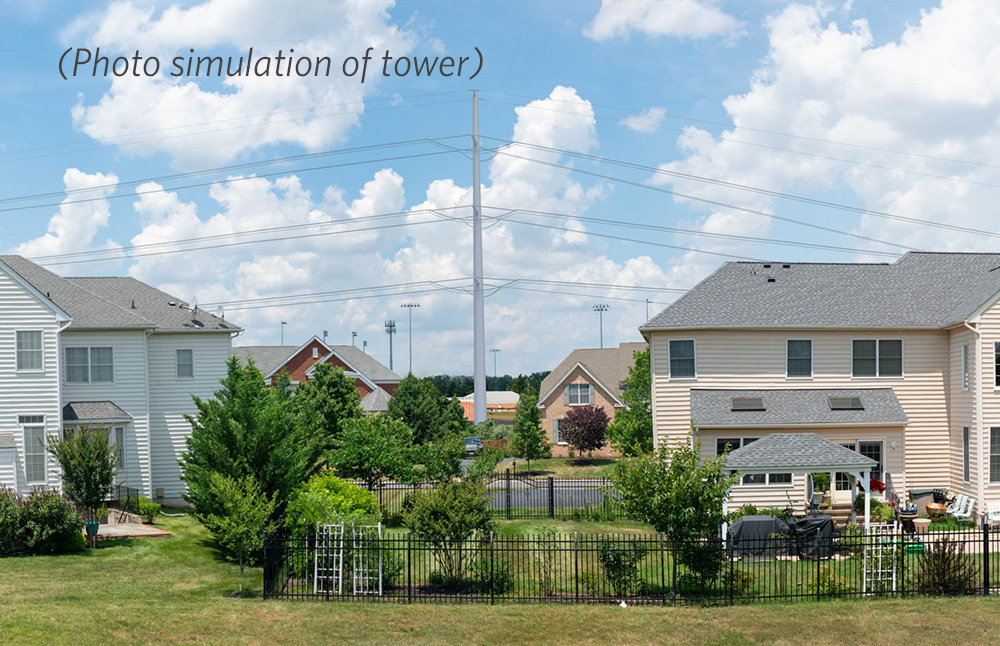
The impacts of explosive data center development include increased utility rates for all consumersnew massive transmission lines and substations, impaired air qualitythreats to local water supply, and Virginia’s pending failure to meet our hard-fought climate goals by continuing to rely on energy generated using fossil fuels.

Locally, the potential for noise pollution, visual obtrusion and diesel generator-caused air pollution of large data centers near parks, neighborhoods and medical facilities are reasons enough to ensure that community members have the ability to voice their concerns through a Special Use Permit when data center proposals are introduced in the future.


Albemarle County has identified potential Data Center Overlay Districts including parcels within the Development Area near the I-64/US29 interchange. Photo by Hugh Kenny/PEC.

What’s in the Proposed Data Center Ordinance

To protect our communities from the impacts of massive data centers, those larger than 40,000 square feet should be required to go through a Special Use Permitting process, even in Industrial Districts. In their data center ordinance, the county is proposing rules that would allow much larger data centers to be built by-right, without public input. 

We are especially concerned that Albemarle County is proposing:

  • Data Center Overlay Districts in Light Industrial-zoned parcels in the Development Areas. Within these districts, data centers as large as 500,000 square feet could be built by-right. Data centers larger than those upper limits would require Special Use Permits. 
  • Data centers located with the Data Center Overlay Districts will be classified with two size tiers to reflect the relative sensitivity of exisitng land uses to data centers and their impacts: 
    • Tier 1: 125,000 square feet, or about two football fields
    • Tier 2: 500,000 square feet, or over eight football fields; by-right Tier 2 data centers could be as large as the entire square footage of the Fifth Street Station shopping center
  • Preliminary county-identified potential Data Center Overlay District locations include: alongside U.S. Route 29 North at Rivanna Futures and the Emerson campus; in the North Fork Industrial Park near the airport; behind Martha Jefferson Hospital on Pantops; near Heyward Community Forest at the I-64 and U.S. Route 29 interchange; and along Avon Street north of I-64.
  • Data centers can still be built outside of these overlay districts through a Special Use Permit process so the public will have a chance to voice their concerns. 

Additional Concerns:

  • Impacts of water use, including the county’s proposed requirement for cooling through re-use of water and closed-loop systems
  • The potential inadequacy of the county’s noise ordinance to address the unique noise generation of data centers
  • Threats to public health associated with the operation of large numbers of diesel and gas generators, particularly during power outages 

Take Action

Tell the Board of Supervisors that all proposed data centers larger than 40,000 square feet within industrial districts, should go through a Special Use Permit process.

By proposing Data Center Overlay Districts, where very large data centers would be by-right development with no opportunity for public comment and no review by Planning Commissioners and the Board of Supervisors, the county seems to be deliberately attracting data center development and failing to protect the public interest.

Given the very real potential adverse impacts of data centers and the rapidly evolving technologies, building design, and data center operations, the county should prioritize protection of public health, safety, and welfare with this new Data Center Ordinance by requiring all data centers larger than 40,000 square feet in industrial districts to go through a Special Use Permit process.

  • Email your comments by Aug. 5: Email your comments to the Board of Supervisors and the Planning Commission at [email protected] and [email protected] with the subject line “For Responsible Regulation and Transparency in Albemarle’s Data Center Ordinance.”
  • Attend the Aug. 6 Work Session: Showing elected and county officials that their citizens are paying attention to the decisions that impact them is significant. Tell your friends and family what you heard after the work session.
  • Submit questions to county staff: The public can submit questions on the data center ordinance landing page that will be answered publicly by county staff.
  • Learn more about the Draft Ordinance: The public will be able to speak at the Planning Commission’s Public Hearing Sept. 23 and the Board of Supervisors’ Public Hearing on Nov. 19. Stay tuned for a PEC community meeting and talking points from us. 

Thank you!

Rob McGinnis, PLA FASLA
Senior Land Use Field Representative
Albemarle & Greene Counties
[email protected]
(434) 962-9110 ext. 7049

Related News Coverage: July 31, 2025: 29 News: Albemarle County grapples with proposed data center regulation

Planning Commission Recommends Denial of Gigaland Data Center Project in Remington, but It Could Still Get Approved

Planning Commission Recommends Denial of Gigaland Data Center Project in Remington, but It Could Still Get Approved

On Wednesday, June 18, the Fauquier County Planning Commission voted 4-1 to recommend that the seven-building, 2.2-million-square-foot data center campus known as “Gigaland” be denied. Although the recommendation to deny is a positive result, the Board of Supervisors can still approve this project at the regular Board meeting on September 11.

Take Action: Make Free Bridge Lane Permanently Car-free

Take Action: Make Free Bridge Lane Permanently Car-free

The Free Bridge Lane storywalk is just one of the quick improvements to pop up on Free Bridge Lane. You can share your ideas here. Photo by Peter Krebs/PEC.

Late last year, Albemarle County closed Free Bridge Lane to automobile traffic, creating a safe, riverside space for walking, running, and biking. That has proved very popular so the Board of Supervisors will discuss making the arrangement permanent at its August 6 meeting.

Here are five ways you can help:

  1. Please sign PEC’s petition requesting the following: 1) finalize the road closure, 2) fund and build a first wave of safety, access and environmental improvements, and 3) budget in coming years to construct the proposed promenade. We will forward the petition to County leaders when the time comes.
  2. Contact the Board of Supervisors directly and tell them why places like Free Bridge Lane are important to you.
  3. Attend the August 6 meeting and consider speaking during the public comment period (at the beginning of the meeting).
  4. Share your ideas for improvements, projects, activities, or events you would like to see On Free Bridge Lane (especially things that can be done quickly, cheaply and that you would be willing to champion).
  5. Get inspired! A team of PEC Summer Fellows has prepared an idea book of (mostly) practical ways to transform the disused roadway into a lively park. Take a look!

The future of Free Bridge Lane will depend on a combination of volunteer energy, private donations and certain specific actions that only the government can take (like improving the safety and access). We depend on all of you to make it happen!

In the meantime, go check it out. The flat, paved riverside space is especially good for learning ride a bike or rollerblade, doing measured wind sprints or walking with elders. [Info page]

Data Centers: Industry Impacts In Virginia

Data Centers: Industry Impacts In Virginia

Virginia holds the largest global concentration of data centers anywhere in the world. This multibillion-dollar industry requires huge amounts of energy, land, and water, resulting in widespread community impacts. Without swift intervention, data centers in the Commonwealth will derail critical climate goals and efforts to improve air and water quality, advance land conservation, and protect national and state parks.

A Conversation on Trails and Connectivity

A Conversation on Trails and Connectivity

While conserving the verdant landscapes of Virginia’s Piedmont is foundational to The Piedmont Environmental Council’s mission, making the outdoors accessible to everyone has become an equally vital goal. Over the past few years, we have deliberately integrated trail development into our broader conservation mission, protecting strategic properties that can serve as trail corridors or public access points to create lasting places and ways for people to experience the Piedmont’s natural beauty firsthand.