
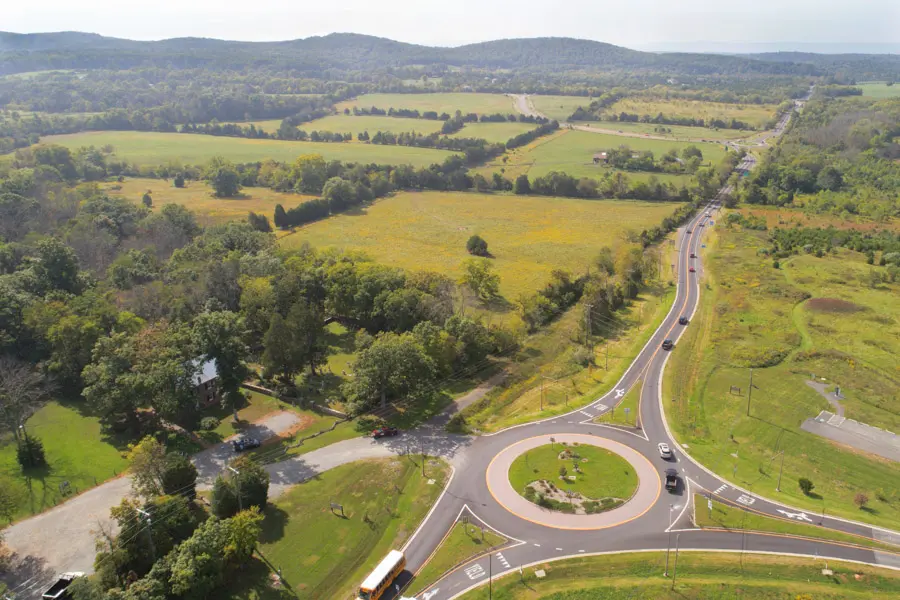
I want to let you know about another opportunity to weigh in on an important transportation planning issue that could impact the quality of life and sense of place for residents and visitors along the U.S. Route 50 corridor.
Our Region
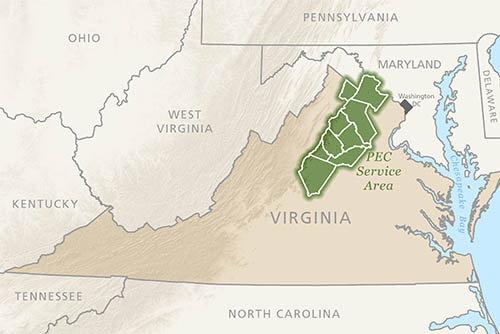 PEC focuses on nine counties and one city in the northern Piedmont of Virginia: Albemarle, Charlottesville, Clarke, Culpeper, Fauquier, Greene, Loudoun, Madison, Orange, and Rappahannock.
We also team with local organizations to promote thriving communities and healthy natural resources in a much larger region, including the Shenandoah Valley, the central Piedmont, and the Journey Through Hallowed Ground Corridor. In addition, we are proud to serve as fiscal sponsor of the Coalition for Smarter Growth, an organization that focuses on land use and policy in the greater Washington D.C. area.
Cville Area Land Use: Week Ahead for March 17, 2025
Albemarle begins budget town halls while budget work sessions continue; Affordable housing project at 1000 Wertland not recommended for funding by Charlottesville panel
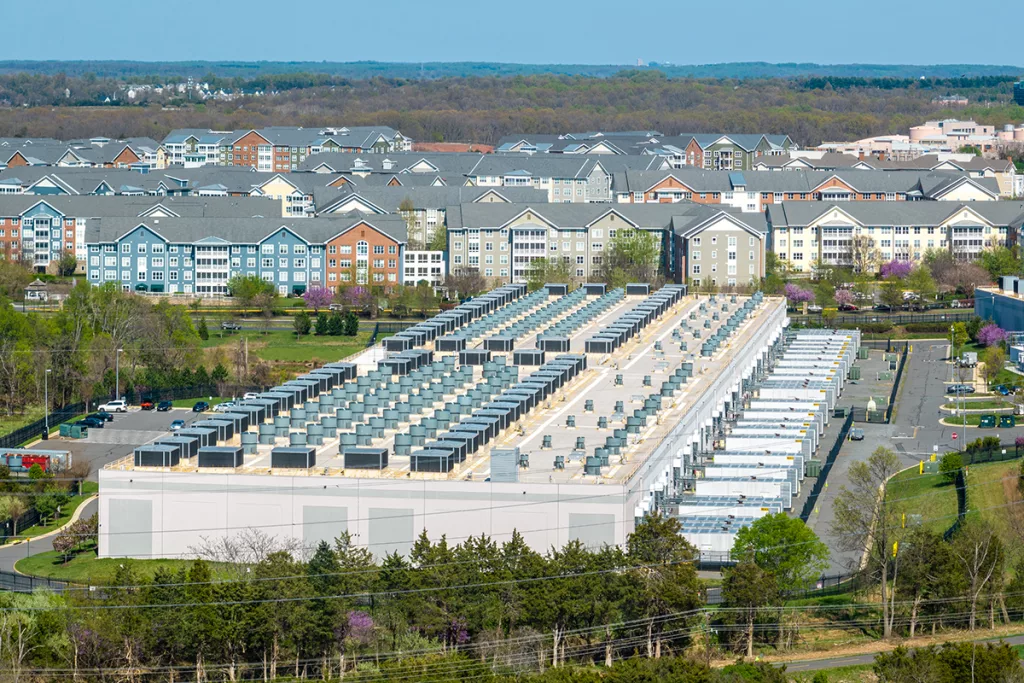
March 18: Loudoun Board to Vote on Proposed Changes to Regulate Data Center Development
Next Tuesday, Mar. 18, the Loudoun Board of Supervisors plans a major vote on its proposed Phase One amendments to the comprehensive plan and zoning ordinance to better manage data center development in the county.

Fifth Annual Mobility Summit is Largest Yet
By Peter Krebs, Charlottesville/Albemarle Community Advocacy Manager
Full video of Thursday Presentations | Full video of Friday Panel Discussion | View All Photos
Charlottesville, VA (March 6 – 7, 2025) Every year, leaders, professionals, advocates, business owners and passionate people come together at the Active Mobility Summit to find ways to improve walking, biking, running and everyday access to nature in Charlottesville and Albemarle County. Part celebration, part learning opportunity, part work-session, it is an opportunity for attendees and their organizations to identify ways to collaboratively tackle problems that none of them can solve alone.
This year’s Active Mobility Summit (the fifth one) was much larger than any before (more than 150 attendees over two days). That enthusiasm was due in large measure to this year’s theme: the Three Notched Trail (TNT), a proposed multi-use trail that will connect the City of Charlottesville to the Blue Ridge Mountains through the rolling countryside of Albemarle County. This year’s Summit served to unofficially launch the two-year design effort.
The event was divided into two parts to accommodate people’s diverse schedules. Both sessions were free and included food, drinks and abundant networking and fellowship. Both also included guest speakers but the events were not the same.
The Thursday evening session was for a general audience. The Friday morning workshop (the next day) was for advocates and professionals who wanted to dig deeper. The tone of both gatherings was inspirational but also highly practical and focused on solving problems.
Thursday: a Public Convening on Transformative Possibilities
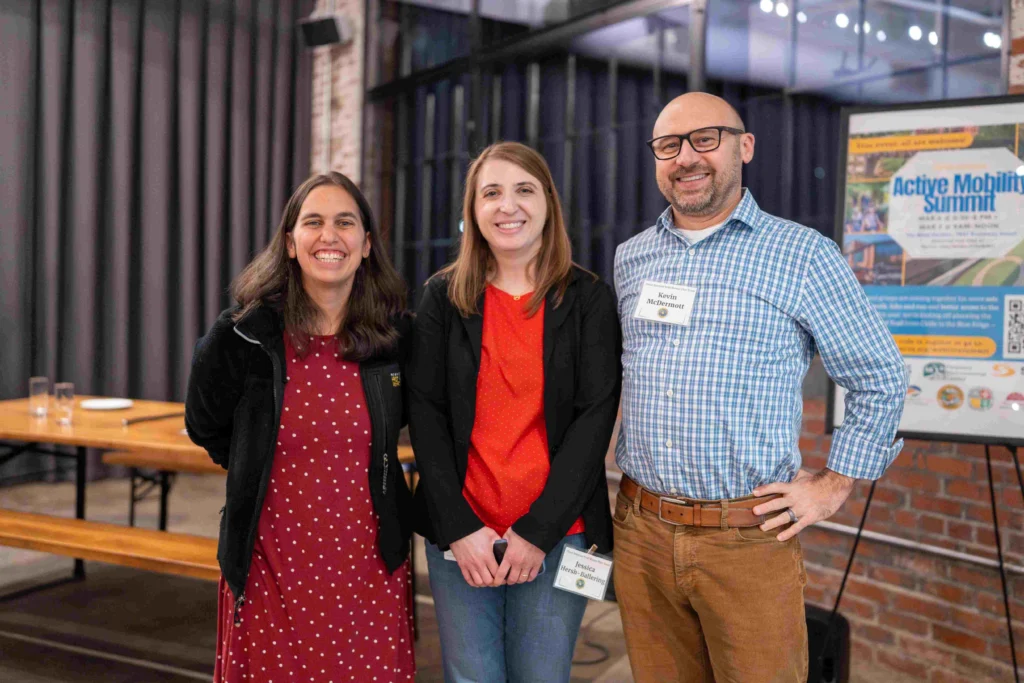
The Thursday, Mar. 6 session was full of fellowship, information and inspiration. Albemarle County officials described the upcoming trail planning and design process. Next, Cat Anthony, executive director of the Virginia Capital Trail Foundation, spoke about that fabulous trail connecting Richmond to Williamsburg — and what Charlottesville area residents can learn from it.
Three Notched Trail: What, How and Why
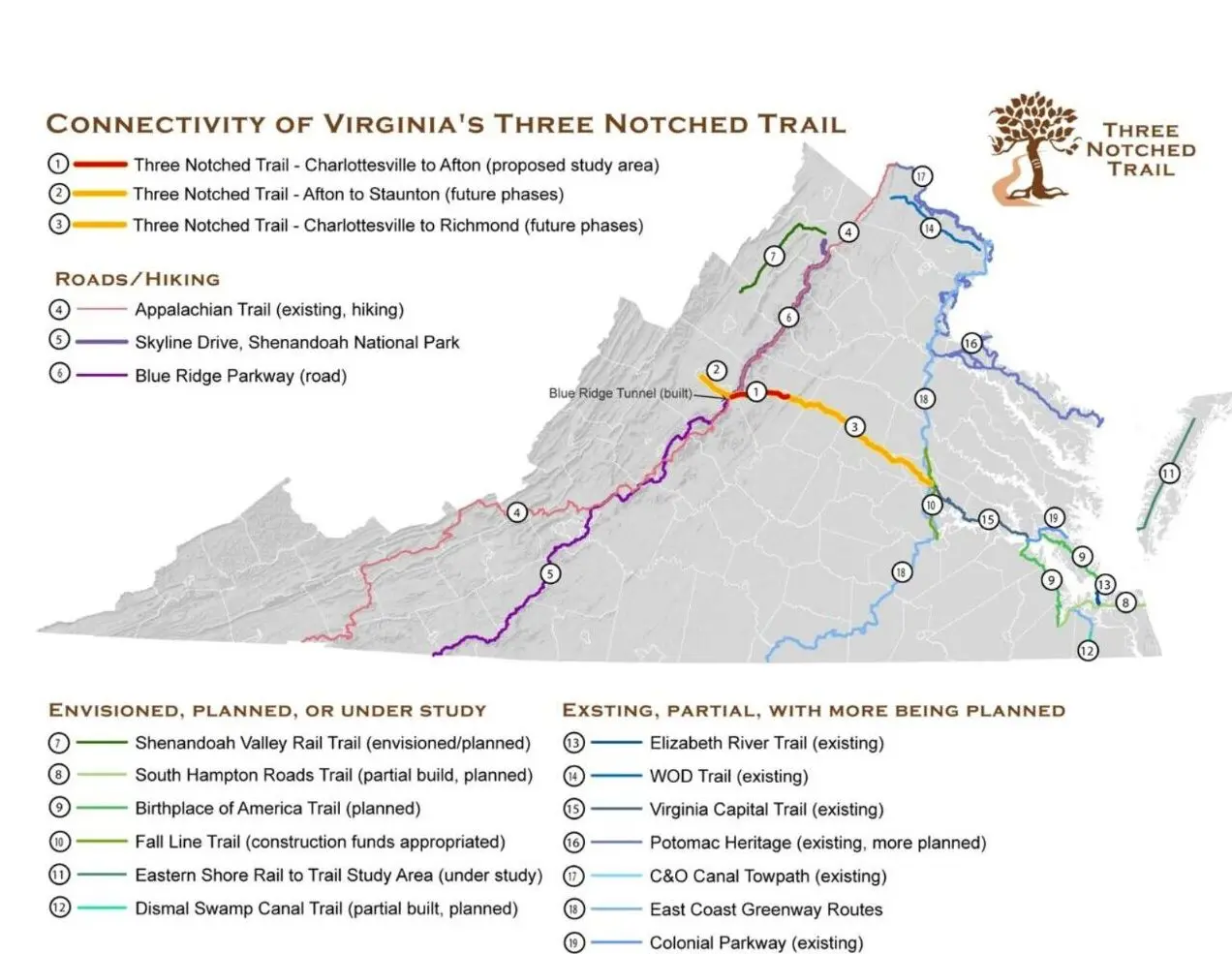
Jessica Hersch Ballering and Kevin McDermott, of Albemarle County’s Office of Community Development provided an overview of the $2 million, two-year effort. They started by clarifying what type of trail is being designed. It will be an approximately 24-mile shared use path from the City of Charlottesville through western Albemarle County to the Blue Ridge Tunnel.
To qualify for transportation dollars the trail will need to be at least 10 feet wide, with a maximum grade of 5%. There is some flexibility about the surface but shared-use paths are typically paved. This trail will provide an off-road, low-stress connection between Charlottesville, Crozet, the Afton Tunnel (and beyond), passing through suburban and rural areas, and will be connected to a broader state-wide network.
Next, they laid out the process, which will start with the development of a Master Plan that identifies the preferred alignment through an alternatives analysis and lots of public engagement. The next steps will be to create shovel-ready designs for a few high-priority segments that could be started first to begin to solve the most pressing gaps. The project will include an implementation plan that creates a timeline and identifies likely funding sources.
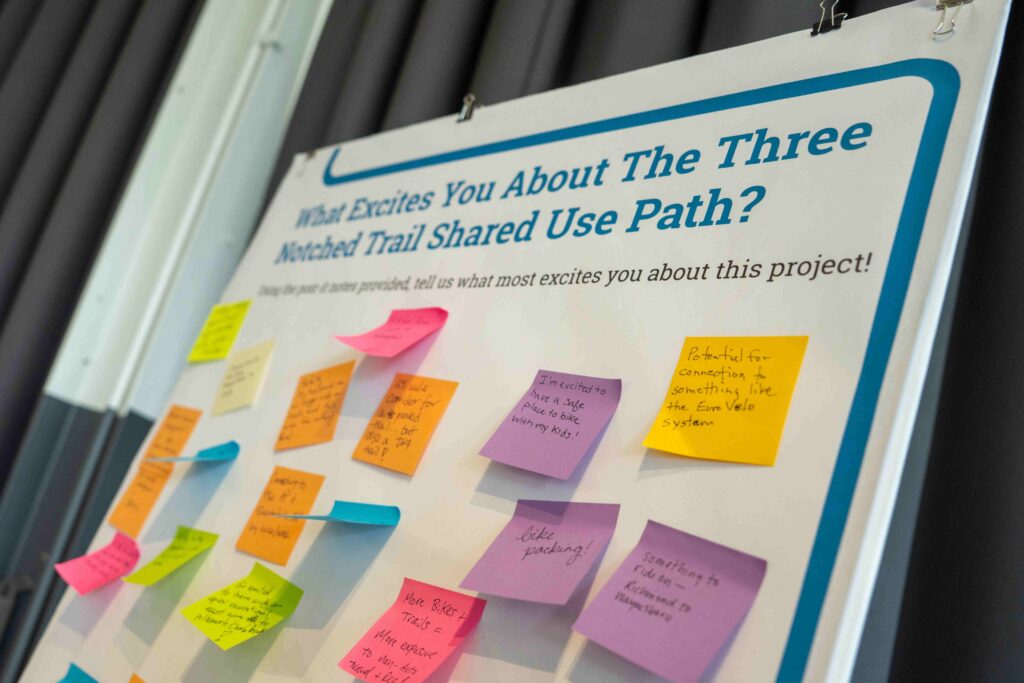
Their presentation proactively answered some commonly asked questions, such as what route the trail would follow (to be determined) and how much it will cost to build (a lot). They finished by outlining the project’s intended benefits. These include improving safety, providing more transportation options, reducing greenhouse gas emissions, promoting better health, igniting small business and economic growth opportunities, and improving quality of life.
Members of the project consultant team (Vanasse Hangen Brustlin, Toole Design Group and EPR PC) were present and had a table where they collected ideas and feedback.
Learn more about the TNT Plan at https://engage.albemarle.org/three-notched-trail-master-plan
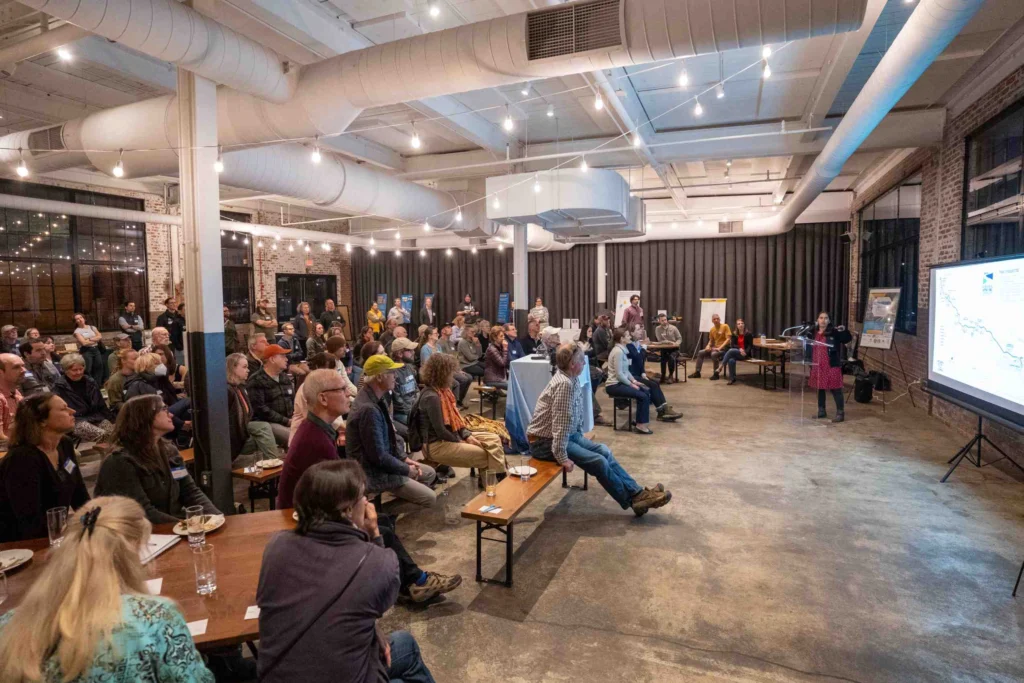
A Capital Trail for Everyone
Next, Cat Anthony gave an inspiring presentation about the Virginia Capital, a 51.1-mile paved, protected multi-use trail from Richmond to James City County / Williamsburg. It is used by more than a million people every year. She explained how the trail came about, what obstacles were overcome and how, who uses the trail today and how it impacts the community.

She emphasized that it is not a bike trail. It is a trail for everyone to exercise, commute, or simply enjoy fresh air. Many people who go there would not run or bike at all without this safe environment to do so. She noted that many early trail opponents became supporters; “Some people initially wanted a fence between the trail and their property; later they wanted a gate.”
Cat spoke of the importance of organized community support through the Capital Trail Foundation, a non-profit organization that shepherded the trail through construction, and now manages the trail and its programs.
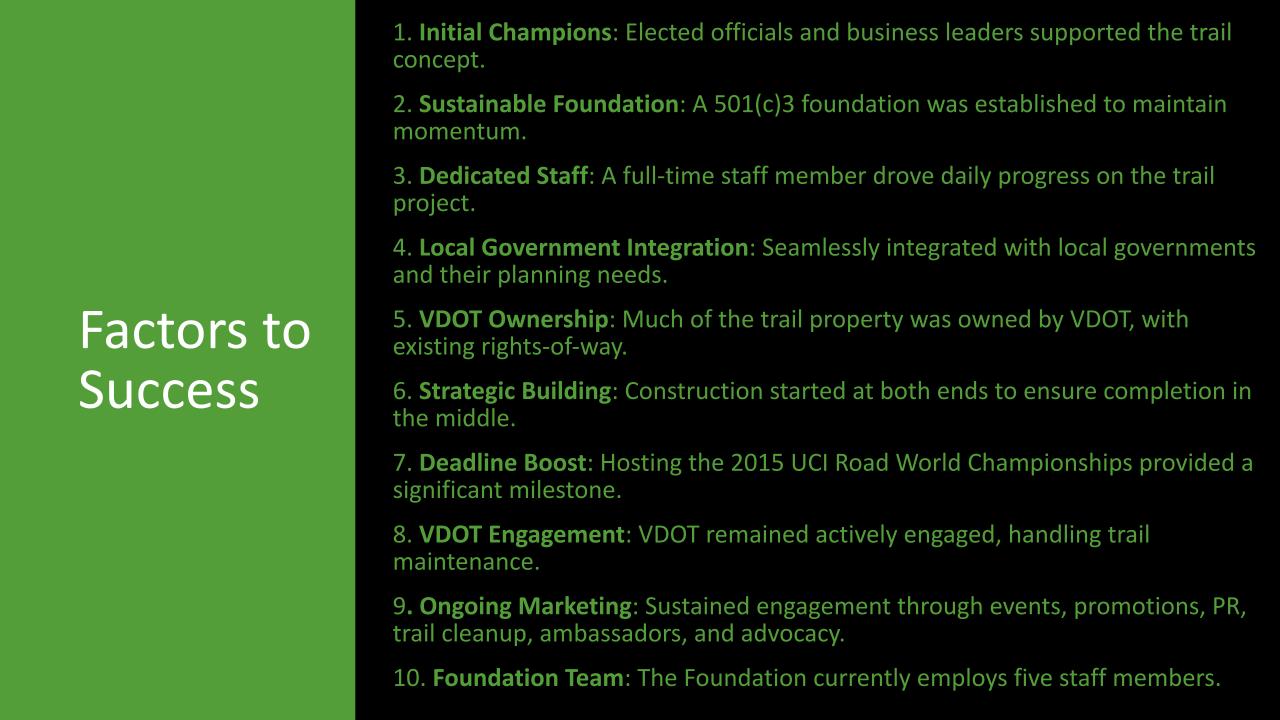
Cat spent a portion of her presentation talking about why it would be a good idea to build the Three Notched Trail. She described the economic and social benefits the trail would bring, citing a 2018 study showing that Capital Trail had generated $8.9 million in economic activity, supported 99 full-time equivalent jobs and $3.6 million in wages that year. Those numbers have probably increased substantially since the COVID-19 pandemic.
She also noted that the successful RAISE grant application says a lot about TNT’s merits because that grant is extraordinarily competitive. She said that people across the Commonwealth would benefit, especially if the trail manages to connect with other regional greenways. That is the intention and it is part of the reason why the Capital Trail Foundation is so supportive.
Learn more about the Virginia Capital Trail at https://www.virginiacapitaltrail.org/
An extensive question and answer session followed, during which audience members asked questions about both trails. The evening concluded with more fellowship and opportunities for one-on-one and small group discussions.
Friday: A Focused Workshop for Stakeholders
The next morning, about 70 people (half of whom had not attended the evening program) showed up for detailed conversations on how to successfully get the Three Notched Trail built. There was a panel discussion, small-group workshops and plenty of informal conversation over free coffee and breakfast.
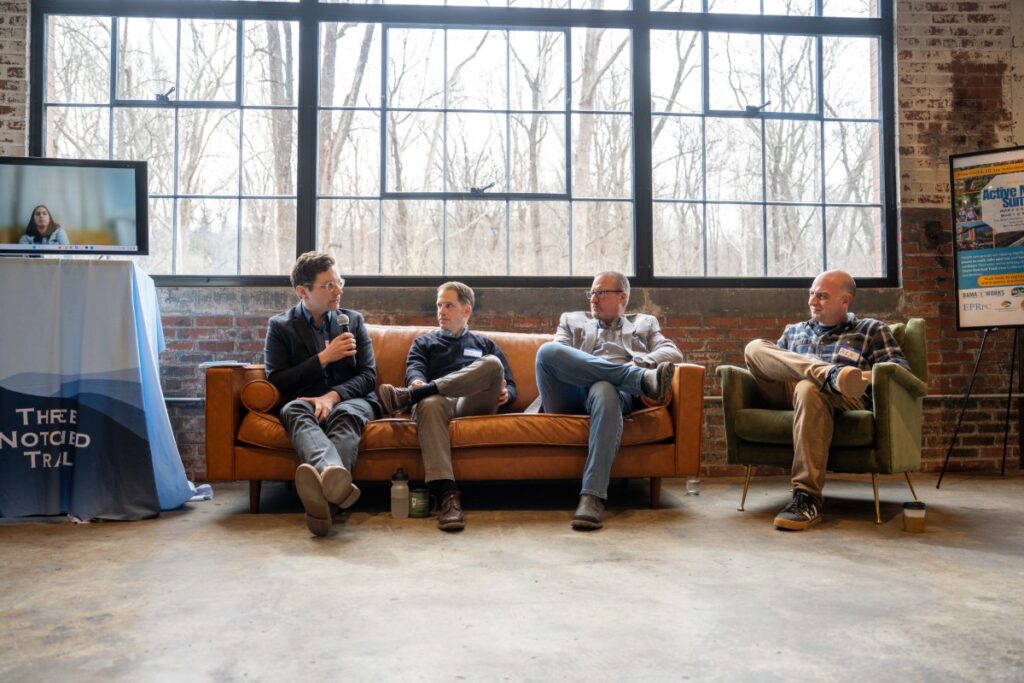
Wins and Challenges from Across Virginia
Ben Chambers, Charlottesville’s transportation planning manager, led a discussion of leaders of existing and emerging trails from across the Commonwealth.
Cat Anthony, executive director of the Virginia Capital Trail Foundation, re-joined the discussion, this time remotely from her office in Richmond. She is also the president of the Virginia Trails Alliance. She began her response to a question about lessons learned by pointing out that no one regrets building the Capital Trail. She’s excited that its success is spawning similar efforts all across the country.
Brantley Tyndall, director of BikeWalkRVA, is a leading proponent of the Fall Line Trail. When complete, the Fall Line Trail will connect Ashland to Petersburg via Richmond and cover 43 miles, spanning multiple localities and jurisdictions. That trail started with a well-produced Vision Plan. Brantley spoke about the galvanizing impact the plan had, along with the extensive conversations that went into it. That early dialog will help assure that, when built, the trail will improve the lives of the many people who live, work and go to school near it.
Elliott Caldwell’s organization, the East Coast Greenway Alliance, is making progress to connect 3,000 miles of protected greenway from Maine to Florida. He’s constantly impressed that greenways like the one he’s working on don’t just physically link destinations. They are places where people from many different backgrounds come together and meet in a common space.
Dwayne Jones, Waynesboro’s director of Parks & Recreation is working to string together the city’s emerging South River Greenway and is the visionary of the Rockfish Gateway Trail that will connect the City of Waynesboro to the Blue Ridge Tunnel and, eventually, to the Three Notched Trail. He spoke about the tremendous opportunity of connecting to Shenandoah, the Crozet Tunnel and the Blue Ridge Parkway, which is America’s most-visited park. He added that it is much easier to win local support for large projects if the leverage significant external resources, such as Federal funds. He has been more successful when that is the case.
All of the panelists spoke about the importance of mobilizing citizen activists early to generate momentum and having an organization in place to keep the project moving and pursue opportunities. Once a trail is built, people tend to love it, but that support organization is crucial in the beginning, and later for maintenance and programming.
Celebrating Community Champions
The Mobility Alliance periodically recognizes local leaders and volunteers who are tenacious and who accomplish difficult things. A volunteer usually crafts a handmade award that is fun and kindheartedly goofy to embody our values of community and joyful camaraderie.
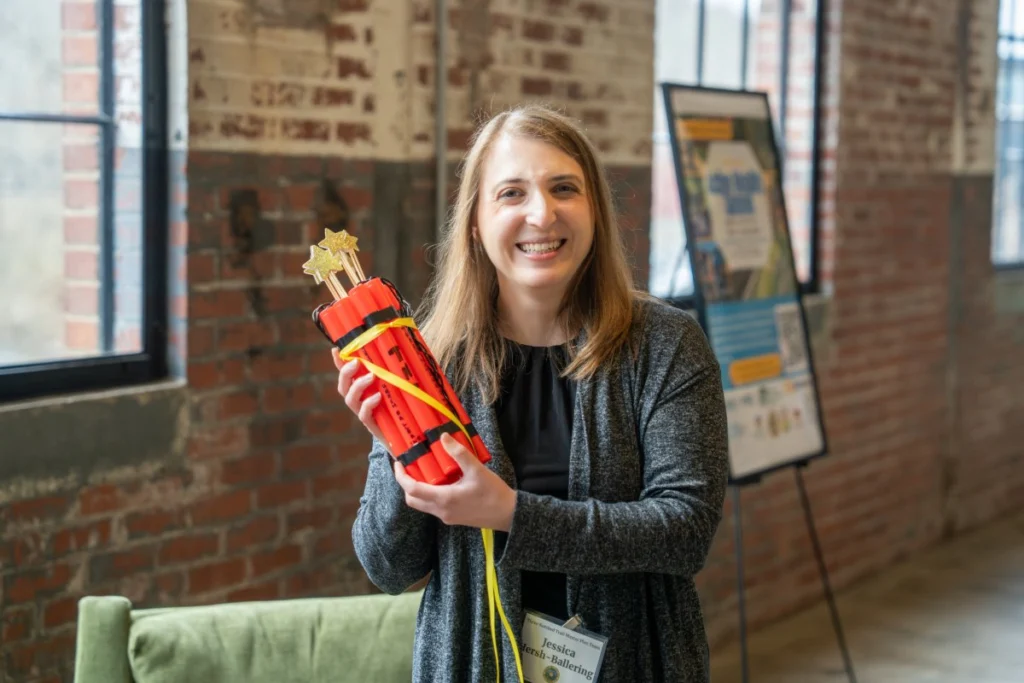
This year, the Mobility Alliance recognized Jessica Hersh-Ballering, for the work she did to obtain the $2 million dollar RAISE grant that is funding the TNT design. She has created numerous other wins like closing Free Bridge Lane to cars, shepherding multiple transportation projects and inspiring more people to ride e-bikes by organizing a community film screening.
Jessica is moving back to her native Wisconsin but will leave a significant legacy behind.
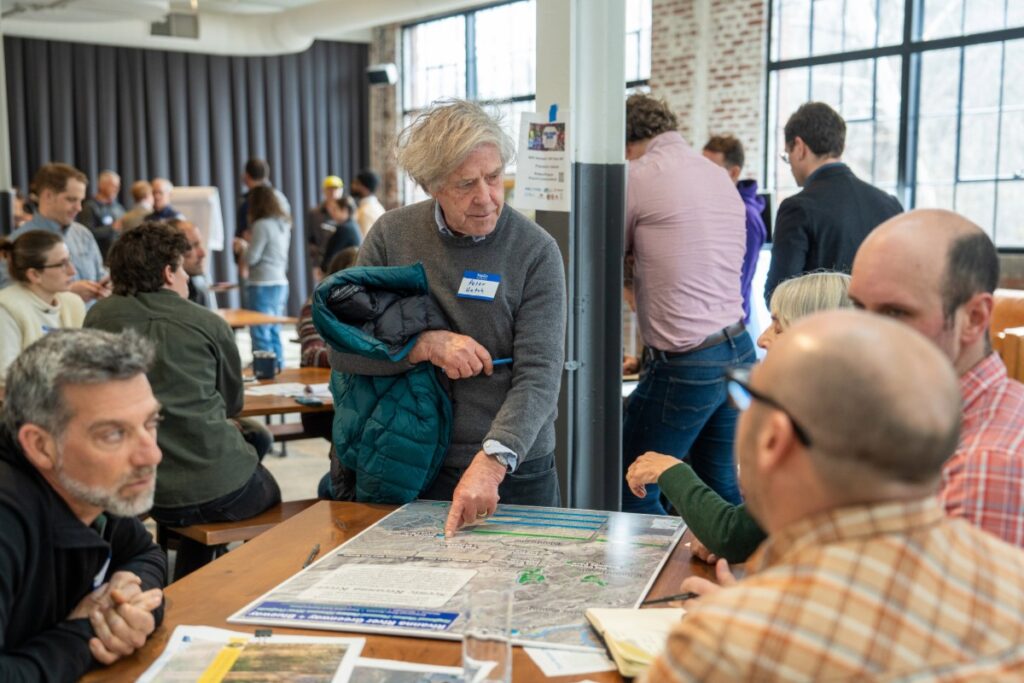
Generating Collective Impact through Strategic Doing
One key purpose of the Mobility Summit is to bring people together to tackle large problems that no group or entity can resolve alone. None of us have everything we need but together we do.
This year’s attendees formed three large groups to explore topics related to the Three Notched Trail that require local action.
About half the room stepped aside to dig deep into the idea of community involvement. They had subgroups that discussed the formation of an advocacy organization, organizing events and research trips, and how to make sure that the planning process includes authentic participation from everyone who will be impacted.
A second group discussed what the Three Notched Trail might look like within the City of Charlottesville, where it will pass through fully-built communities that may not have space for new, dedicated facilities. That might include making existing roads and sidewalks safer, incorporating consistent signage, and interpreting local history.
A third group considered how a future “TNT-East” might connect to Richmond and the Virginia Capital Trail. A first segment of that trail is actually within reach along the Rivanna River (the Old Mills Trail). This 4-mile greenway, which passes visible traces of the original Three Notched Road as well as Thomas Jefferson’s birthplace, is currently in its own planning phase.
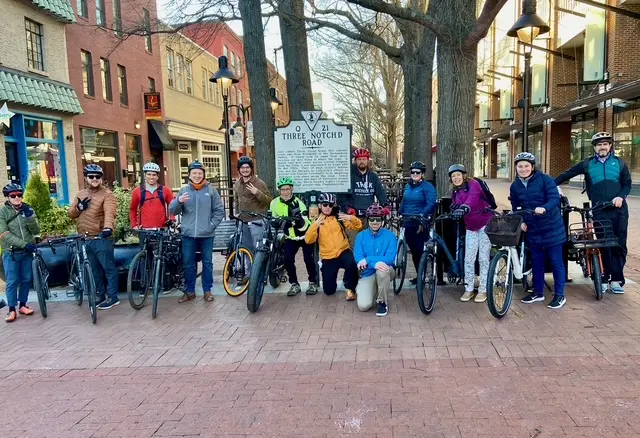
It’s More Fun to Ride – and Work –Together
Both sessions of the summit began and ended with group bicycle rides from downtown to the Wool Factory and back. These were organized by Charlottesville BPAC, the city’s Bicycle and Pedestrian Committee. BPAC is one of many groups that promote walking and biking in the City for transportation and pleasure.
BPAC is part of the larger Piedmont Mobility Alliance, the coalition that organized the summit. The Mobility Alliance is active throughout the year and will be meeting again March 31 from 4-5:30 p.m. at the Charlottesville Parks and Recreation office (find more details here). The main agenda item will be the coalition’s next large-scale effort. Bike Month (May) will include a full calendar of rides, events and programs.
Meanwhile we are compiling notes from the work groups, answers to most of the audience questions, and a list of resources is underway in the crowd-sourced program document. We invite attendees add their own notes there and to assist with the transcription. If you would like to learn more about the Active Mobility Summit, the Piedmont Mobility Alliance or other local efforts to improve walking, biking, transportation, and trails, please contact Peter Krebs ([email protected]).
Sign up for updates at www.pecva.org/mobilityadvocate.

Cville Area Land Use: Week Ahead for March 10, 2025
This week: Public hearing in Charlottesville for parks and recreation master plan; Albemarle County PC to review economic development, Darden-Towe committee to review survey result
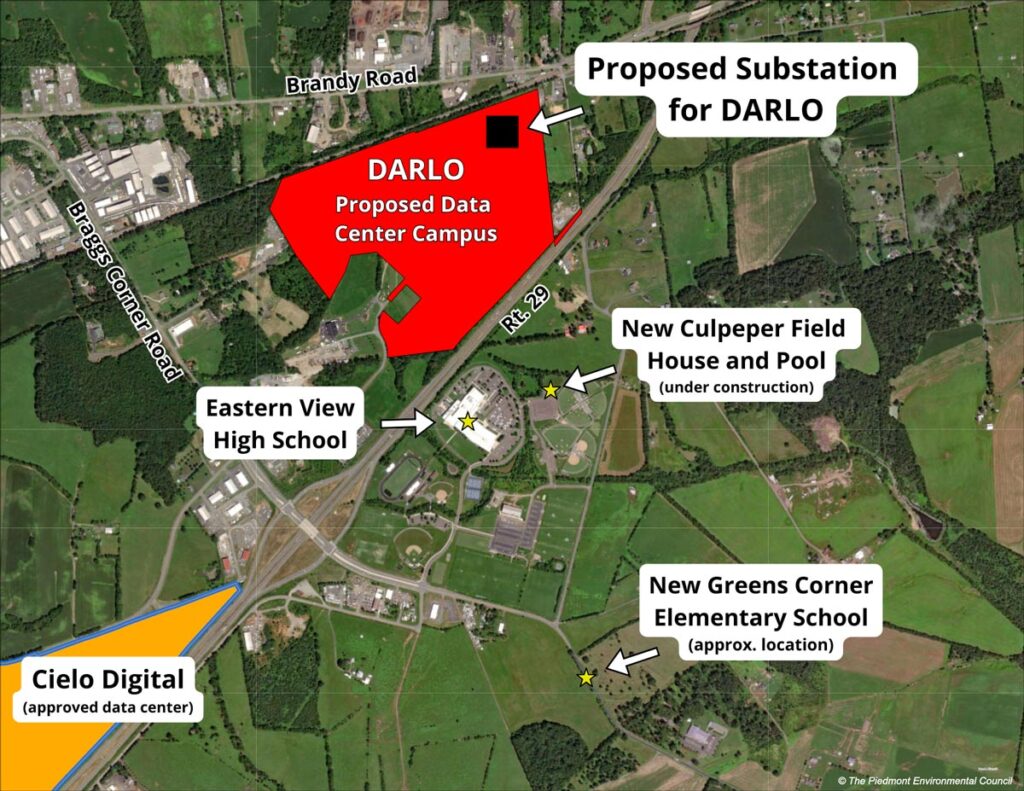
Culpeper: Town poised to allow more data center noise; County considers a substation for yet another data center
Next week, both will have the opportunity to choose: does Culpeper want to better protect residents from the impacts of data centers?
Cville Area Land Use: Week Ahead for March 3, 2025
Charlottesville considering plan to move from trash stickers to monthly service payments; Public hearing on Albemarle’s recommended budget
Cville Area Land Use: Week Ahead for February 24, 2025
This week: Albemarle unveils its recommended 2026 budget, Fluvanna holds a meeting to update its comprehensive plan, and Greene County looks at the possibility of an ice park and a technology district.
Cville Area Land Use: Week Ahead for February 17, 2025
This week: Charlottesville City Council to review how opioid settlement money will be used; Albemarle Supervisors to resume AC44 discussion
Cville Area Week Ahead for February 10, 2025
This week: Public hearing in Charlottesville on parks and recreation master plan; Nelson Supervisors to consider Flock Safety cameras