
This week: Albemarle County Supervisors will have a public hearing Wednesday on changes to the county’s zoning code and more.
Albemarle County & the City of Charlottesville
The staff in PEC's Charlottesville office works with citizens to solve the many land use and conservation challenges facing the Charlottesville and Albemarle area.
Cville Area Land Use: Week Ahead for July 7, 2025
If you’re new to the newsletter, every Sunday I go through all of the scheduled meetings coming up to make sure I know what’s coming up. You should be able to navigate to more information.
Some highlights this week:
- Charlottesville City Council will learn Monday that community greenhouse gas emissions increased in 2023 due to a return to pre-pandemic levels of driving.
- Louisa County Supervisors made over $42 million in the sale of the Shannon Hill Regional Business Park and all of that funding will go into a reserve fund for future capital projects. They’ll also consider cash proffers related to a developer’s request to build more units at a Lake Anna resort.
- The Nelson County Board of Supervisors will get details of revisions for construction plans at the Albemarle-Charlottesville Regional Jail
- The Albemarle Planning Commission will hold a public hearing Tuesday on request from Riverbend Development to allow more homes at Brookhill.
- Charlottesville’s Planning Commission will get details from city staff on the feasibility of a tax abatement program to incentivize development of affordable units, and will also review the design of a 250-unit apartment building at 1185 Seminole Trail
This Sunday edition is sponsored by the Piedmont Environmental Council as has been the case for nearly five years. By my calculations, this is the 231st edition. Thank you PEC for the support!
Monday, July 7, 2025
Charlottesville City Council to get annual report on climate action
The Charlottesville City Council will meet for the first time since the zoning code was thrown out and since President Jim Ryan was forced out at the University of Virginia. They’ll begin their work at 4 p.m. with a work session followed by a closed session and then a regular session at 6:30 p.m. (meeting overview)
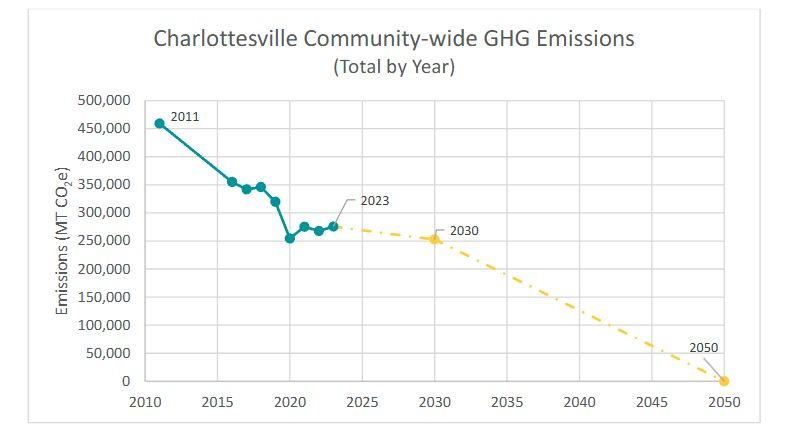
The 4 p.m. session is an overview of what actions were taken by the city government to address climate change in the past year. In 2019, Council adopted the goal of reducing its own greenhouse gas emissions by 45 percent of a 2011 baseline by the year 2030 and to completely eliminate them by 2050. This annual report from the Office of Sustainability also includes an updated inventory based on data from 2023. (read the report)
“In 2023, community-wide emissions were up slightly relative to 2022, with emissions down 40% relative to the 2011 baseline,” reads page 7 of the report. “The 2023 inventory represents a return to pre-pandemic travel patterns, with vehicle miles traveled (VMT) at 99 percent of 2019 levels.”
The opening note from the office’s director expresses sweeping changes that have come since the second presidency of Donald Trump began in January.
“While the federal government is stepping away from climate leadership on the national and international front, local action needs to step in,” said Kristel Riddervold. “Charlottesville joins peer local governments in doubling down on the important work of reducing our contribution to greenhouse gas emissions, actualizing resilience strategies, and operationalizing climate in our government.”
One item to watch as the University of Virginia prepares for new leadership is whether they will remain partners with Charlottesville and Albemarle County in efforts such as Resilient Together.
After this session, Council will go into closed session to discuss appointments to the Charlottesville Redevelopment and Housing Authority. The terms of Laura Goldblatt and Wes Bellamy expired on June 30.
There are several action items:
- Council will hold a public hearing on partial vacation of a stormwater easement at 501 Cherry Avenue. That’s the site of a project being developed by Piedmont Housing Alliance under the now-discarded zoning. (staff report)
- The second public hearing will be on partial vacation of a natural gas easement on an undeveloped lot in the Kenridge subdivision in Albemarle County. (staff report)
- The third public hearing will be on a vacation of a stormwater easement at 100 Stadium Road, the site of the construction of the Verve building built under the 2003 zoning rules. (staff report)
- The fourth public hearing will be on two easements requested by Dominion Energy to underground electrical equipment at Pen Park and Quarry Road. (staff report)
- The fifth public hearing will be on a lease for the Dogwood Vietnam Memorial Foundation for space at McIntire Park. This was already voted on at the May 14 meeting but the required public hearing was not held. Here’s the story I wrote then. (staff report)
The final item is a request for a compromise for taxes due for 1603 6th Street SE.
“On May 13, 2025, the City Treasurer received and accepted an Offer in Compromise from Legal Aid Justice Center, working on behalf of the property owner,” reads the staff report.
In this case, the current owner inherited the property and the title transfer closed on March 28, 2025. They also inherited back taxes across several years. Real estate tax relief cannot be applied retroactively and if the city pursued collection of amount owed, the owner would lose their home.
“Accepting the Offer in Compromise would reduce the real estate tax receivable account by $9,248.39, and the stormwater utility fee receivable account by $262.66,” the report continues.
The details of what is in the compromise are not listed in the staff report. Can we expect more requests for tax forgiveness in the coming months and years as property assessments continue to climb?
In 2015, the house and property had a combined assessment of $121,100 and a tax bill of $1,150.45. By 2020 that had risen to $159,000 and real estate taxes had gone up to $1,510.50.
In five years, the combined assessment increased to $248,200 and the real estate bill increased to $2,432.36.
Louisa Supervisors to put $42M in business park sale toward long-term project fund
The seven members of the Louisa County Board of Supervisors will meet at 5 p.m. for a closed session and then go into open session at 6 p.m. No reason for the closed session is listed in the agenda. (meeting info)
Some items on the consent agenda are worth reviewing:
- There is a resolution to appropriate a $150,000 grant the Louisa County Sheriff’s Department secured from the Commonwealth of Virginia’s Public Safety Answering Point Grant program. Of this amount, $76,246 will go to E911 expenses, $30,000 will go to pay for bonuses for 15 full-time dispatchers, $1,250 for bonuses for two part-time dispatchers, and $5,000 to pay signing-bonuses when two vacant positions are hired. (learn more)
- There is a resolution to proceed with $2 million in capital improvement programs. (learn more)
- There is a formal request to ask the Virginia Department of Transportation to conduct a speed study for Bumpass Road near Saint Thomas Baptist Church. (learn more)
- There is a resolution to approve an award for beverage machines at Louisa County and Louisa County Public School buildings. (learn more)
- There is a resolution to proceed with a $204,552.40 contract to resurface the tennis courts at Jouett Elementary School. (learn more)
- There is a resolution allowing the county to apply for a SAFER grant from the Federal Emergency Management Agency. According to the draft June 16, 2025 minutes, the Board voted to authorize one application. Is this another one? (learn more)
Under unfinished business there will be a presentation from the Louisa County Chamber of Commerce as well as a discussion of proposed amendments to the dogs running at large ordinance.
Under unfinished business, there could be action on a request from Lake Anna Resort to amend a previous rezoning to allow 114 units, an increase from the 96 units originally approved. The developer is offering cash proffers for every unit above allowed that amount. That breaks down like this:
- $500 would go to the Fluvanna and Louisa Housing Foundation for each additional unit allowed as a part of the rezoning.
- $5,060 would go to the Fluvanna and Louisa Housing Foundation for the issuance of each certificate of occupancy.
- $500 would go to the Foundation of Lake Anna Emergency Services for each additional unit allowed under the rezoning
- That group would get $1,111 for each certificate of occupancy
There are several items under new business.
- The first is consideration of an appropriation of $78,043 to the Louisa County Water Authority for replacement of a valve stem at the Bowlers Mill Dam. (learn more)
- The second is consideration of an appropriation of $90,000 in revenue raised by the Foundation for Lake Anna Emergency Services for a brush truck for the New Bridge Fire & EMS Station. (learn more)
- The third is for appropriation of $42,465.36 for lighting at the county-owned airport. Ninety-percent of that amount will be reimbursed by the state. (learn more)
- Last month it was announced that Louisa County sold the Shannon Hill Regional Business Park to a data center developer. There is a resolution to appropriate $41,966,400 of that to a long-term county reserve fund. I wrote a story about the sale here. (learn more)
- The fifth item is to establish the Louisa County Airport Advisory Committee. (learn more)
There are two public hearings.
- One is for a conditional use permit to allow for a contractor’s office and general sales on a property zoned General Commercial (C-2). (learn more)
- The second is for a conditional use permit to allow for a cabinet maker to operate on a property zoned Agricultural (A-2).
The Louisa Board of Supervisors will not meet again until August 4.
Albemarle ARB to review Pantops hotel
The Albemarle Architectural Review Board will meet at 1 p.m. in Lane Auditorium at the county’s office building at 401 McIntire Road. (meeting info)
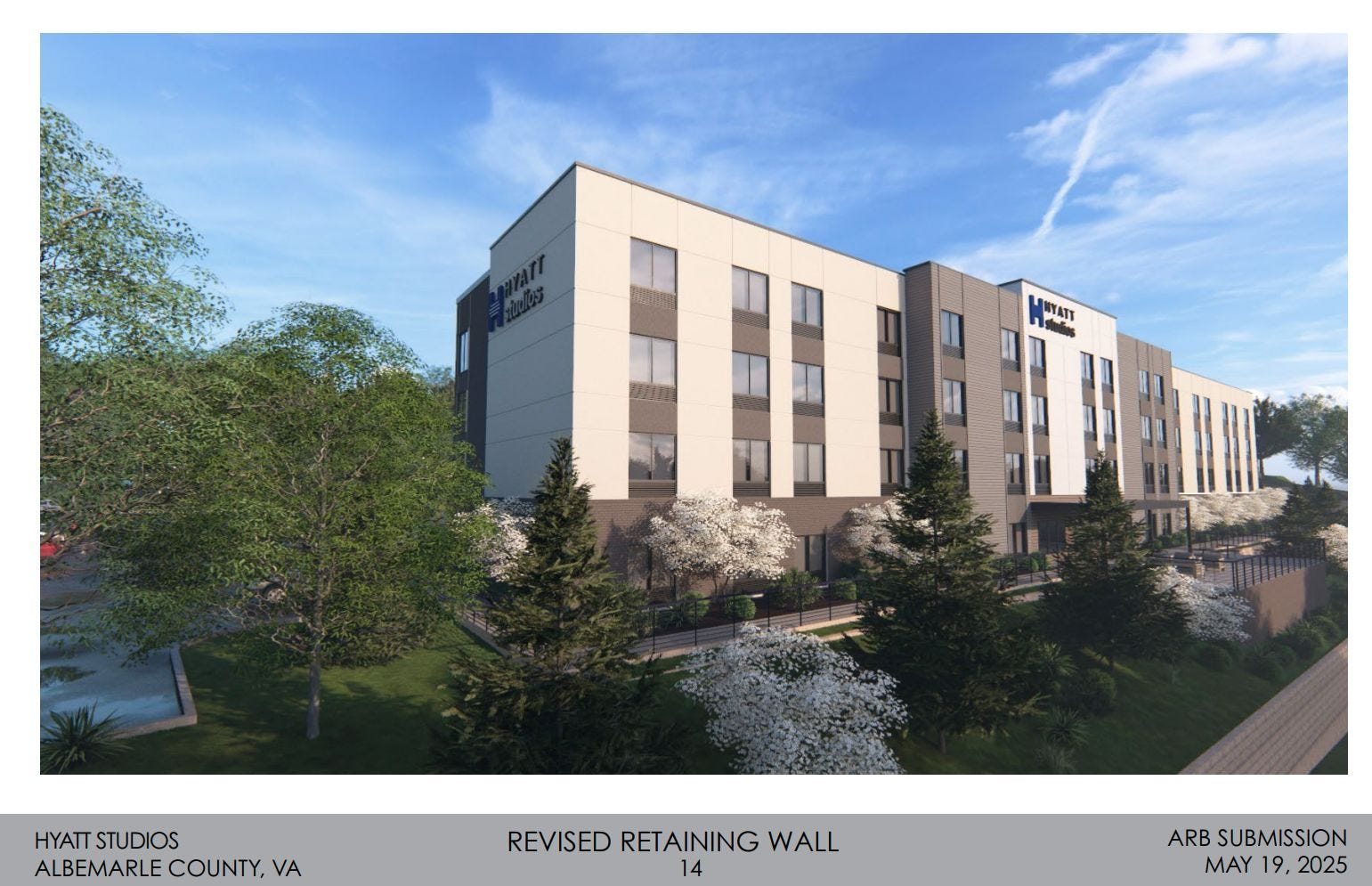
The only item under regular review will be of the final site plan for a four-story hotel planned on U.S. 250 on Pantops on land currently undeveloped.
The proposed Hyatt Studios franchise has been in the works for several years. A preliminary plan went before the ARB in January 2020 and did not recommend approval because of concerns over a tree preservation area. A subsequent review of the property’s zoning indicated a hotel use was not allowed.
The project returned to the ARB in November 2021 with a series of reviews that coincided with a rezoning that the Board of Supervisors approved on March 16, 2022. In July the ARB recommended approval based on several conditions.
“An application that addressed those conditions was not received,” reads the staff report.
A new plan came forward two years later and underwent review on September 16, 2024.
“This proposal replaced the previously reviewed initial and final site plan and architecture,” the report continues, adding that another parcel of land has been added and that a new hotel chain is involved.
In January of this year, The Board of Supervisors approved a special exception allowing a stepback requirement to be waived.
Previous stories:
- Pantops CAC gets a look at the Overlook Hotel, January 27, 2021
- Albemarle Planning Commission to hold public hearings on Pantops hotel, January 11, 2022
- Third new hotel planned for Pantops, February 3, 2022
The ARB will also have a work session on wooder buffers and how the role they play in the county’s Entrance Corridor Review. Staff has two topics.
“First, ‘wooded buffers’ are referenced frequently throughout the Addenda, but we have not distinguished between buffers that define the character of a corridor and those that are a byproduct of un- or under-developed properties,” reads the first.
“Second, ARB and staff have observed that wooded buffers expected to screen or limit visibility of newer developments are proving ineffective in some cases, due to factors including topography, composition of the buffers, and location of the buffers within rights-of-way, etc,” reads the other.
Albemarle Fire Rescue Executive Committee to continue discussion on mutual aid
The Albemarle County Fire and Rescue Committee will meet at 4:30 p.m. in Fire Rescue Conference Room 2 at 460 Stagecoach Road Suite F.
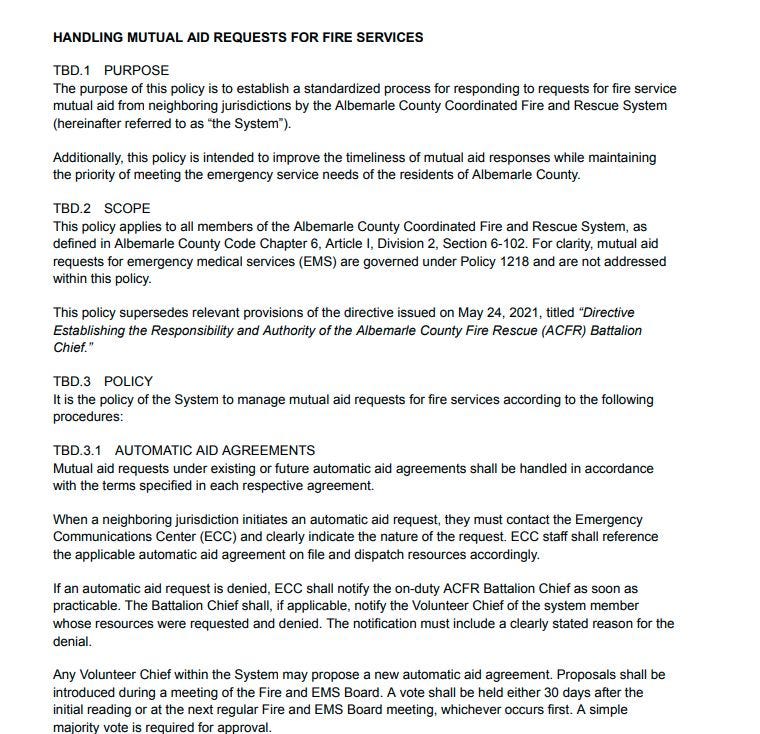
Under unfinished business, they will continue a discussion from the June 9 meeting on mutual aid between agencies. The minutes indicate a tension between providing support to other localities and serving county taxpayers first. For instance, Greene County recently shut down the Ruckersville Volunteer Fire Company for an undetermined amount of time.
“Chief Eggleston said that he told Greene that ACFR was not in a position to help, given limited resources. He stated that he told them that on the weekends, stations 4 and 6 were often browned out, and sometimes 2, and Station 12 was the only station in service,” read the minutes.
If I had a reporter, I would assign them to write a lengthy story examining the current state of mutual aid for public safety agencies. A starting point would be to look at the draft included in the agenda. (look here)
They will also discuss a pharmacy policy.
Charlottesville Community Engagement is a reader-supported publication. To receive new posts and support my work, consider becoming a free or paid subscriber.Subscribed
Tuesday, July 8, 2025
Nelson Supervisors to review new scope for Albemarle-Charlottesville Regional Jail
The five members of the Nelson County Board of Supervisors will meet at 2 p.m. and again at 7 p.m. in the General District Courtroom in Lovingston. Well, four of them will meet. North District Supervisor Tommy Harvey hasn’t attended a meeting for over a year. (meeting info)
Usually presentations are held in the afternoon session, but one on financing for the Albemarle-Charlottesville Regional Jail will be held in the evening session. In the afternoon there will be a report from the Virginia Department of Transportation.
There are four items under new business.
- There is a request from the Lovingston Beautification Committee to appear before the Board of Supervisors to thank them for a $2,000 grant in 2024 and to begin the process of asking for another one. The money was used to purchase barrel planters and soil. (learn more)
- There is a resolution on the salary and classification system for FY25 and FY26 to accommodate a three percent pay increase for all county employees and an additional three percent for employees who work for a Constitutional officer or the registrar. (learn more)
- There is a vote on an ordinance to confirm a one-time bonus for employees. (learn more)
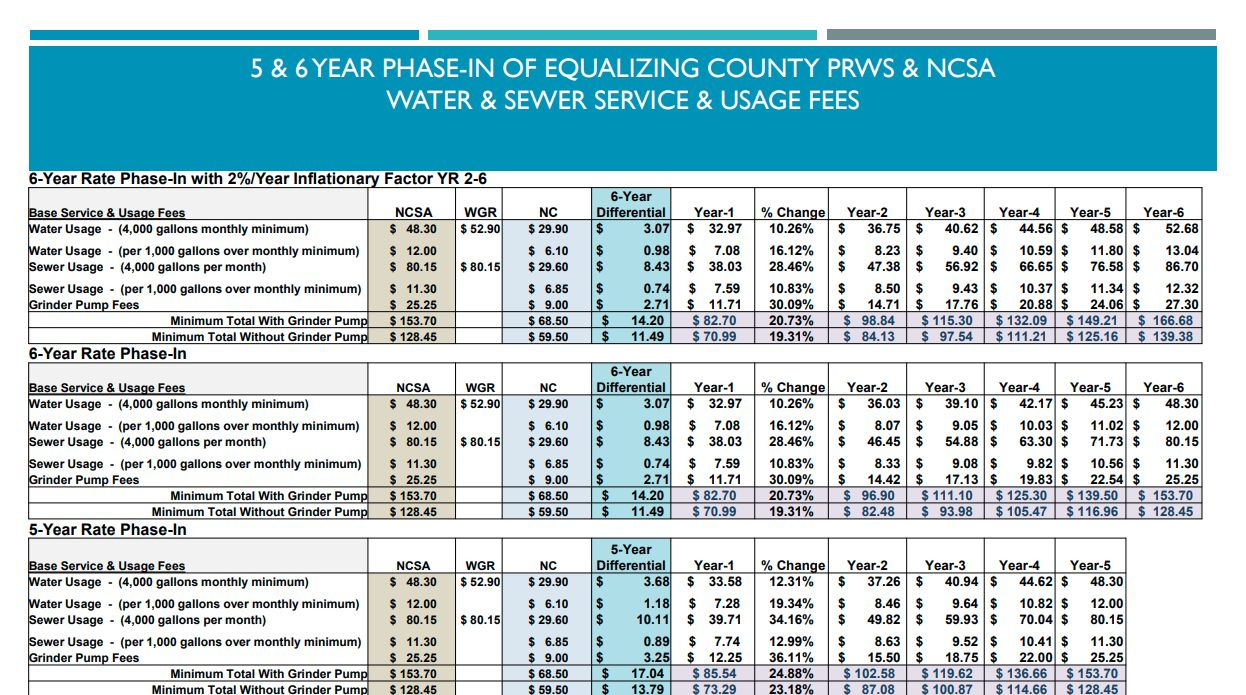
- There is a proposal to equalize rates paid by the 206 customers who use the Piney River Water and Sewer system. (learn more)
Then there will be a series of reports.
In the evening session there will be two public hearings. (learn more)
The first is on changes to the county’s transient occupancy tax ordinance to add new definitions and change language to be compliant with Virginia code.
The second is on an amendment to the business license ordinance to require a zoning approval before one can be issued.
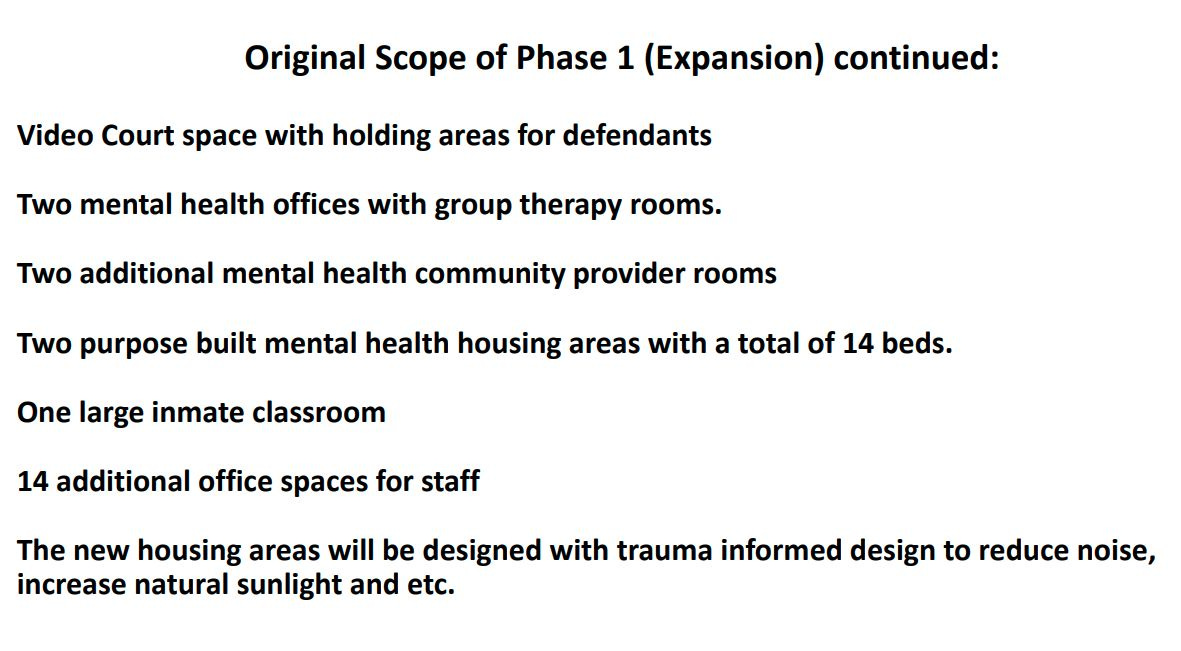
Then there will be the presentation on the financing for the Albemarle-Charlottesville Regional Jail renovation and expansion. After bids came in over the $49 million budget, value engineering was conducted. Nelson County is a member of the ACRJ Authority. (learn more)
“With the lowest bid approximately 34% over the estimate we determined to not seek additional funding but to work within the previously approved budget,” reads the presentation.
The new scope will eliminate the renovation portion in favor of the expansion portion.
“Expansion refers to total square footage only,” the presentation continues. “There is no increase in the rated bed capacity of 329.”
Greene Supervisors to hold public hearing on childcare facility
The five members of the Greene County Board of Supervisors will meet at 5:30 p.m. for a closed meeting followed by an open meeting at 6:30 p.m.
There are two public hearings.
The first is a change to the zoning code to revise the definition of Indoor Recreation and to add a new definition for Health and Fitness Centers.
“The definition for indoor Recreation has not been reviewed since 2005. Health and Fitness Centers or ‘Gyms’ are retail in nature and have similar or lesser impacts than many of the other by-right retail uses,” reads the staff report.
The second is for a special use permit for a childcare center at 919 Morning Glory Turn. The Planning Commission unanimously recommended approval on June 18, 2025.
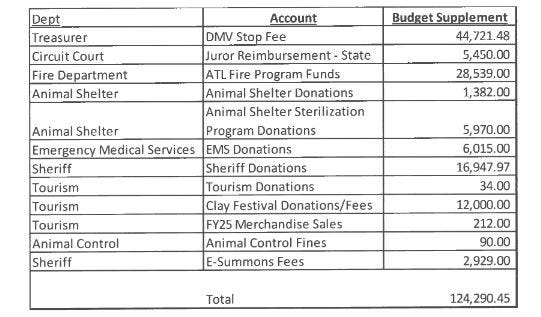
On the consent agenda is a resolution to accept and appropriate $124,290.45 in revenue from donations received in FY2025.
The only item up for action is a request from Greene Commons to build restrooms. Currently toilets are available in the County Administration building.
“The Farmers Market, Sunsets on Main, other Greene Commons events, and members of the public using the facility would all greatly benefit from restroom facilities adjacent to the Greene Commons structures—while also eliminating the time and effort staff currently spend coordinating access to the lobby restrooms,” reads a letter from James Tsikerdanos, President of Greene Commons.
Tskierdanos said there is a $37,000 matching grant from the Perry Foundation and the organization wants $50,000 in tourism dollars.
Charlottesville PC to hold closed session, review 250-unit building at Hibachi Grill site
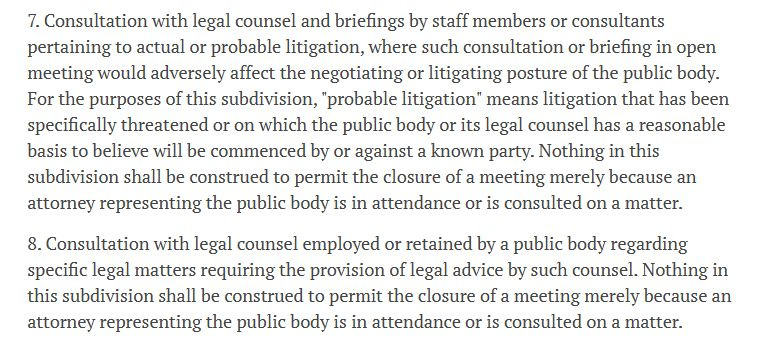
Why is the Charlottesville Planning Commission going into closed session at 5 p.m. to start their meeting? The public has no way to know by looking at the agenda. Could it be about the voidance of the zoning code and how to proceed? I’d like to see the specific citation under Virginia’s open meeting rules and believe it should be listed in the agenda.
The Planning Commission was originally a party in White v. Charlottesville but were removed at some point along the legal journey that ended on June 30 when Charlottesville Circuit Court Judge Claude Worrell entered a default judgment against the city because a document was not filed on time. That voided the entire zoning code.
In case you missed it due to vacation, my coverage so far:
- Judge Worrell grants default judgement against city, voiding new development code, July 1, 2025
- Charlottesville has paused acceptance of new land use applications, July 2, 2025
- “Terribly disappointing” – Charlottesville responds to voidance of city’s new zoning code, July 4, 2025
- Charlottesville pledges to restore new zoning code, C-Ville Weekly, July 4, 2025
What will be discussed at the closed session, and is the Planning Commission an appropriate body that can do so? I don’t have the resources beyond asking the question but the public could benefit from being able to hear what the appointed body has to say in a public meeting. We’re all waiting to see what the city will do to correct what may be the biggest error in the nearly 20 years I have covered city government.
After reports from Commissioners, there will be a discussion of the affordable housing tax exploration project that the city’s Department of Neighborhood Development Services has been working on. NDS now is home to the housing division following the dissolution of the Office of Community Solutions and the department of its one and only director. Read my story for more details.
The tax abatement program is companion to the inclusionary zoning provision in the now-voided rules. If an apartment building had more than ten units, ten percent would have to be rented or sold at prices within reach of households making less than 60 percent of the area median income. City Council discussed the idea at their work session on April 21 and asked staff for more information on how the project would function and whether it is feasible. That included hiring the firms 3TP Ventures and Line and Grade to conduct market research.
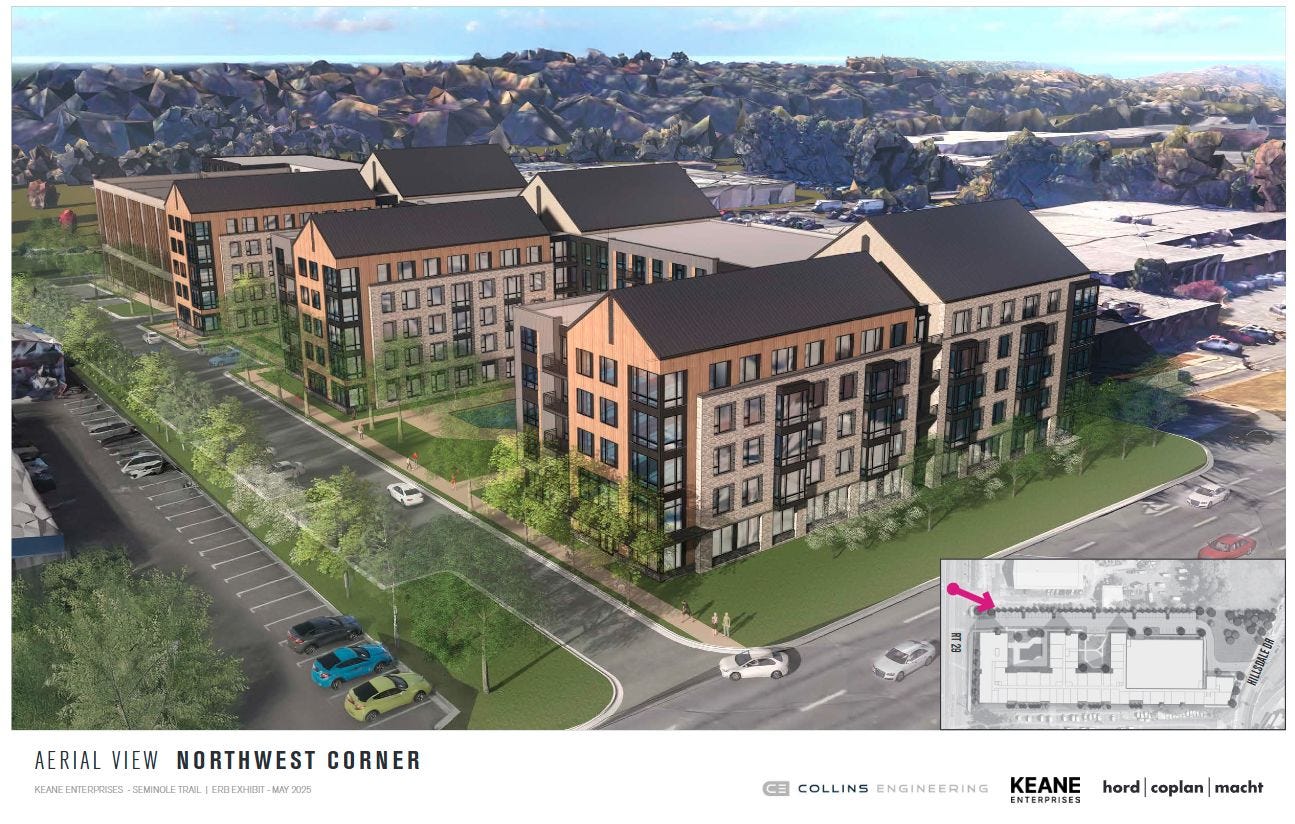
After that the Planning Commission will transform into the Entrance Corridor Review Board to take a look at a proposal to demolish the Hibachi Grill at 1185 Seminole Trail and build a 267-unit apartment building. This is a project being reviewed under the 2003 zoning. For details, take a look at this story I wrote for C-Ville Weekly last month.
Albemarle PC to review request for more homes at Brookhill
The Albemarle County Planning Commission will meet at 6 p.m. in Lane Auditorium at the county’s office building at 401 McIntire Road. (learn more)
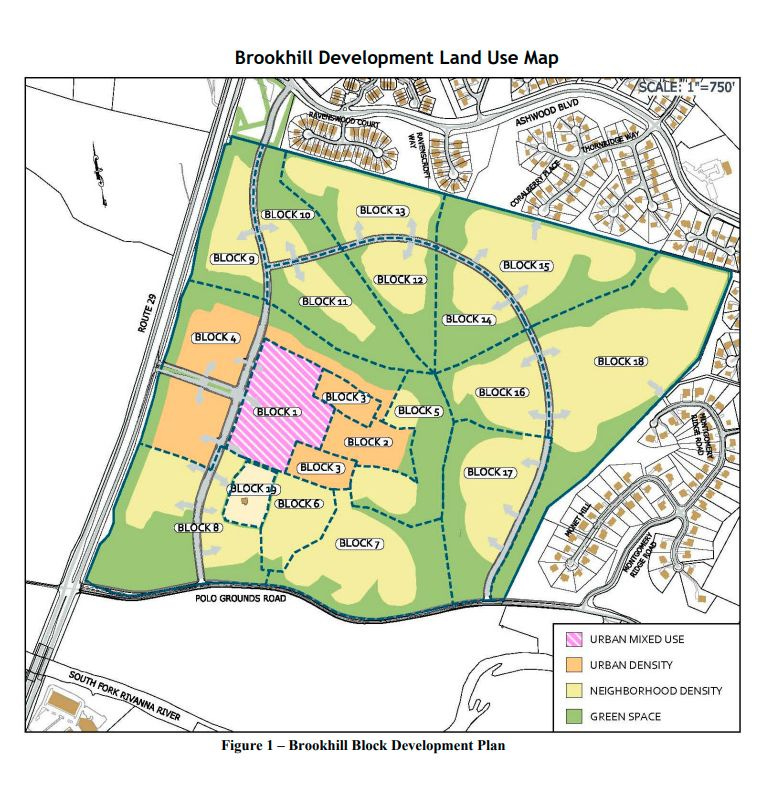
The first item on the agenda is a public hearing on an amendment to the rezoning that created the Brookhill development between Polo Grounds Road and the Forest Lakes community. Riverbend Development wants permission to increase the number of homes that can be built.
The request is to amend the Code of Development to allow a maximum of 1,850 residential units, up from a maximum of 1,550. Additionally, Riverbend Development wants to allow a minimum of 50,000 square feet of residential and a maximum of 130,000 square feet.
The Board of Supervisors originally approved the rezoning on November 9, 2016 as well as a special use permit to fill in a portion of the floodplain to allow for a road crossing. There was another amendment granted in July 2019 related to transportation proffers.
If this amendment is granted, 20 percent of the 300 additional units would be required to be rented to households at 60 percent of the area median income (AMI) or below, or sold to households at 80 percent of AMI. Staff have requested some revisions to become compliant with the Housing Albemarle policy.
For more information, take a look at a story I wrote for C-Ville Weekly last October though please remember parts of it may be out of date. I did not attend the community meeting held in February.
After that the Planning Commission will have a work session on the implementation chapter of the updated Comprehensive Plan.
“The current draft of AC44 has over 200 actions across the nine (9) topic chapters within Part III,” reads the staff report. “The quantity and scope of these actions presents a challenge for implementation, including the reporting and tracking of implementation progress.”
Staff wants the Planning Commission to provide guidance on which of those actions should be prioritized. They’ve suggested a list they’re referring to as “AC44 Big Moves.”
One document I don’t believe I’ve seen before is the Albemarle County Community Story. That’s probably worth its own story.
Another story could also likely be made out of the Engagement Process Summary. Very few people are paying attention to the process, in part because there has been almost no media coverage. The county is trying to get people to engage through the Engage Albemarle website, but I’ve found it very difficult to keep track of what’s happening.
I still owe you a real update on where things stand with what Albemarle refers to as AC44, but that’s not this summary. When I get around to it, it will be based on this recent Lunch and Learns which has ten views on YouTube as of publication.
In other meetings:
- The Albemarle Police Citizens Advisory Committee will meet at 8:30 a.m. in Conference Room B in the county’s office building at 1600 5th Street. There is no agenda posted. (meeting info)
- The Charlottesville Retirement Commission will meet at 2 p.m. in CitySpace for a closed session where they will discuss investment strategies. (learn more)
- Charlottesville’s Sister Cities Commission will meet at 4:30 p.m in the small conference room in CitySpace. One thing to note from the minutes of the June meeting is that there has been “a breakdown of collaboration between the Commission and former City Rep Nana Ghartey.” (agenda packet)
- The Fluvanna Planning Commission will meet at 6 p.m. for a work session followed by a regular session. I’m going to write this one up later as it’s getting late on this Sunday afternoon. (learn more)
Wednesday, July 9, 2025
Could it be there are no meetings on this day? Surely I’ll learn one as soon as I hit send.
Thursday, July 10, 2025
Could it be there are no meetings that merit a full blurb this time? Possibly. But I have follow-ups to do on two of these and will put them in future newsletters.
In other meetings:
- The six-member Albemarle County Board of Equalization will meet at 8:30 a.m. in Lane Auditorium. There’s no agenda. (meeting info)
- The Nelson County Economic Development Authority meets at 3 p.m. at the Nelson Center at 8445 Thomas Nelson Highway. There’s no information on the website. (calendar item)
- The Charlottesville Police Civilian Oversight Board is scheduled to meet at 6:30 p.m. in CitySpace. There is no agenda at this time. (meeting info)
- The Louisa County Planning Commission will meet at 7 p.m. There is no work session. As with the Fluvanna PC meeting, I’ll write up a bigger summary later in the week. (meeting info)
Friday, July 11, 2025
Charlottesville history group to meet
The Charlottesville Historic Resources Committee will meet in the Department of Neighborhood Development Services conference room at 10 a.m. The agenda includes a discussion of the 50th anniversary of the Charlottesville Downtown Mall, upcoming walking tours to be put on by the Bike and Pedestrian Advisory Committee, and a draft work plan to present to City Council. (meeting agenda)
This post was contributed by Sean Tubbs. Sean is a journalist working to build a new information and news outlet centered around Charlottesville and Virginia. In 2020, he launched a daily newscast and newsletter and also created a semi-regular podcast on the pandemic.
Support for Sean’s “Week Ahead” update comes from The Piedmont Environmental Council.
Cville Area Land Use: Week Ahead for June 30, 2025
This week: Data center regulation subject of Albemarle community meeting
Take Action: Make Free Bridge Lane Permanently Car-free
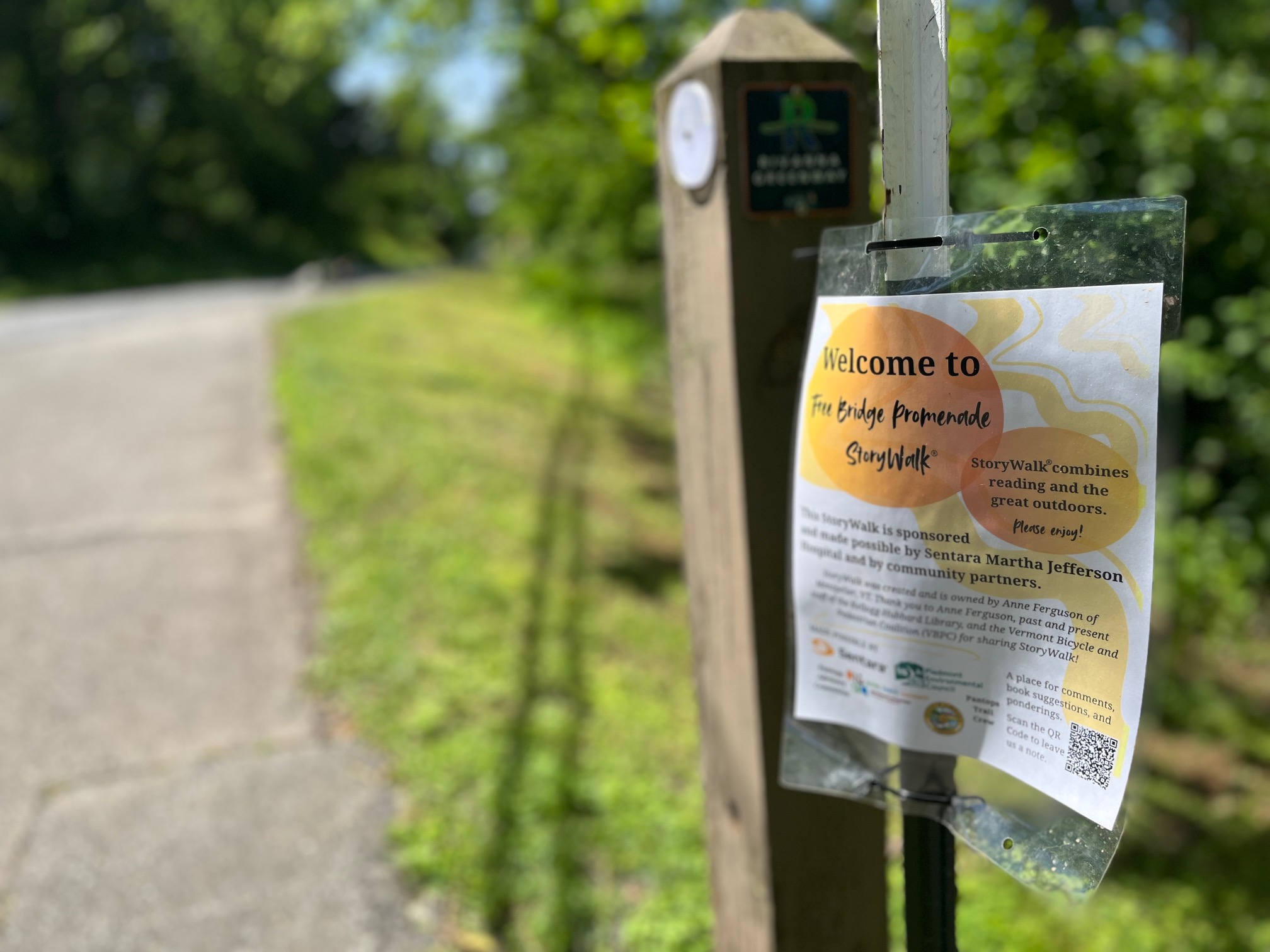
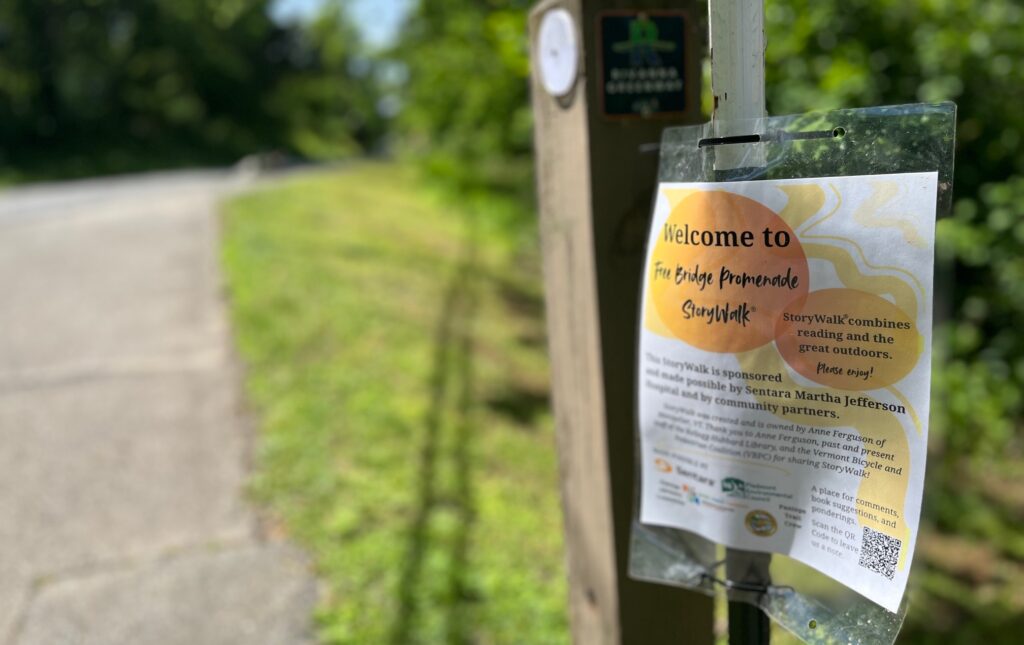
Late last year, Albemarle County closed Free Bridge Lane to automobile traffic, creating a safe, riverside space for walking, running, and biking. That has proved very popular so the Board of Supervisors will discuss making the arrangement permanent at its August 6 meeting.
Here are five ways you can help:
- Please sign PEC’s petition requesting the following: 1) finalize the road closure, 2) fund and build a first wave of safety, access and environmental improvements, and 3) budget in coming years to construct the proposed promenade. We will forward the petition to County leaders when the time comes.
- Contact the Board of Supervisors directly and tell them why places like Free Bridge Lane are important to you.
- Attend the August 6 meeting and consider speaking during the public comment period (at the beginning of the meeting).
- Share your ideas for improvements, projects, activities, or events you would like to see On Free Bridge Lane (especially things that can be done quickly, cheaply and that you would be willing to champion).
- Get inspired! A team of PEC Summer Fellows has prepared an idea book of (mostly) practical ways to transform the disused roadway into a lively park. Take a look!
The future of Free Bridge Lane will depend on a combination of volunteer energy, private donations and certain specific actions that only the government can take (like improving the safety and access). We depend on all of you to make it happen!
In the meantime, go check it out. The flat, paved riverside space is especially good for learning ride a bike or rollerblade, doing measured wind sprints or walking with elders. [Info page]

Albemarle’s Growth Management Policy at Inflection Point
Expanding the Development Areas now is not only unnecessary, but would compromise the county’s climate and resiliency goals.
Cville Area Land Use: Week Ahead for June 23, 2025
This week: Greene Supervisors to see reduced scope for water supply plan implementation

A Conversation on Trails and Connectivity
While conserving the verdant landscapes of Virginia’s Piedmont is foundational to The Piedmont Environmental Council’s mission, making the outdoors accessible to everyone has become an equally vital goal. Over the past few years, we have deliberately integrated trail development into our broader conservation mission, protecting strategic properties that can serve as trail corridors or public access points to create lasting places and ways for people to experience the Piedmont’s natural beauty firsthand.
On the Ground Updates – June 2025
A series of short updates from around the PEC region – Albemarle & Charlottesville, Clarke, Culpeper, Fauquier, Greene, Loudoun, Madison, Orange & Rappahannock.
Cville Area Land Use: Week Ahead for June 16, 2025
This week: Student housing building planned in Fifeville; Albemarle and Charlottesville to consider permanent financing for renovations at regional jail
Cville Area Land Use: Week Ahead for June 9, 2025
Albemarle PC to get update on county’s affordable housing efforts; Charlottesville PC to consider special exceptions for 24-unit apartment complex on Barracks Road