
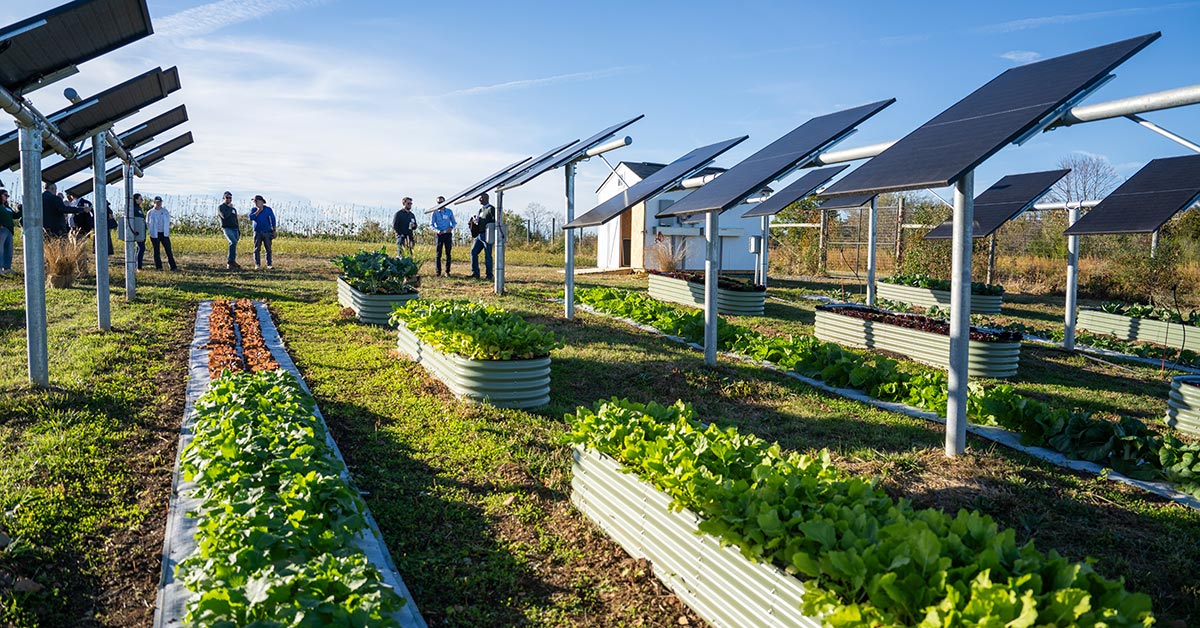
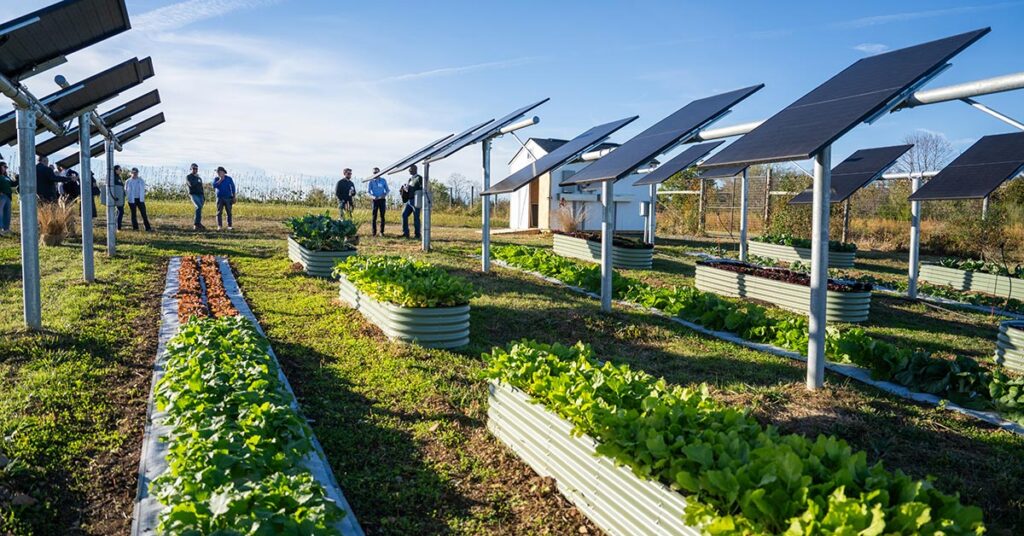
PEC has received an $11,000 grant from the Land Trust Alliance and Open Space Institute to help launch an initiative to develop agrivoltaics projects for urban and low-income communities. Agrivoltaics combines food production with on-site clean energy generation on the same plot of land.
Distributed solar
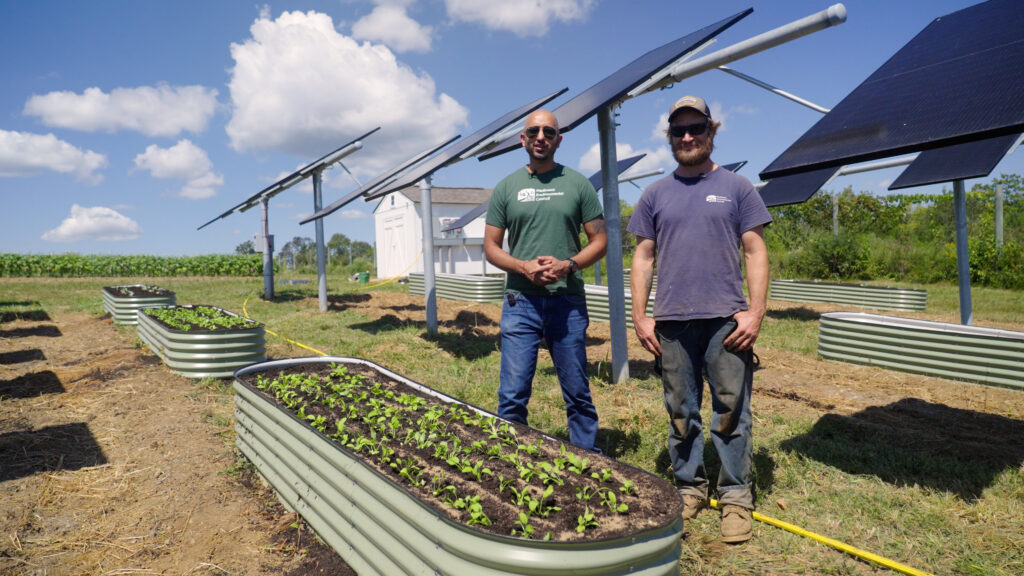
The friendliest type of energy generation: a conversation on agrivoltaics
PEC’s Senior Energy & Climate Advisor Ashish Kapoor and Community Farm Manager Teddy Pitsiokos sat down to tell us more about PEC’s groundbreaking agrivoltaics project, which has the potential to revolutionize the conversation around solar and agriculture.
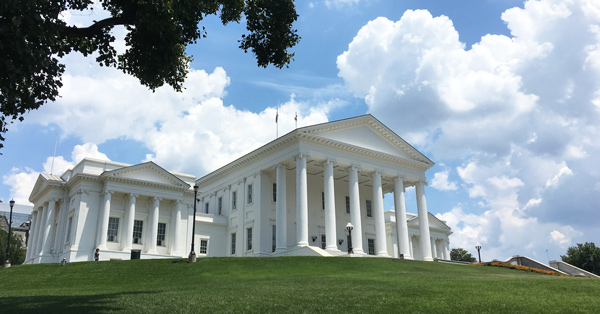
General Assembly Snapshot: 2026
The Virginia General Assembly will convene for a 60-day session beginning Wednesday, Jan. 14, 2026. PEC staff have co-authored several briefing papers that form the framework of the Virginia Conservation Network’s legislative priorities. Below, we break down some of the key issues we are tracking in the upcoming session.
Press Release: Energy independence and dual land use are central pillars of PEC’s new crop-based agrivoltaics demonstration project
On an appropriately sunny Friday afternoon, Oct. 17, more than 70 community members came together at The Piedmont Environmental Council’s Community Farm at Roundabout Meadows to officially “cut the ribbon” on Virginia’s first crop-based agrivoltaics project.
Net Metering Fight, Value of Solar Report and PEC’s Agrivoltaics Project
Read on to learn more about our recently completed, first-of-its-kind in Virginia, agrivoltaics project at PEC’s Community Farm; the results of a PEC-commissioned study on the true value of smaller-scale solar; our efforts to ensure rooftop solar owners and other behind-the-meter solar users are able to maintain electricity bill savings in the face of a challenge by Dominion; and our upcoming efforts, both during the General Assembly and year-round, to increase distributed generation energy (i.e. solar on rooftops, parking lots, small-scale agrivoltaics, etc.) in Virginia.
How Agrivoltaics Can Help Solve Virginia’s Energy Crisis
Virginia needs energy solutions that work with communities, not against them. Agrivoltaics does exactly that—it gives farmers additional revenue to help them keep their land, produces clean energy where people actually want it, and gets projects connected to the grid in months instead of years.
Across the state of Virginia, the electrical grid is at a breaking point. In order to meet the growing energy demand being driven by the explosion of data centers, our state faces the prospect of having to double or possibly triple the electrical grid in the next 15 years, or potentially face recurring blackouts.
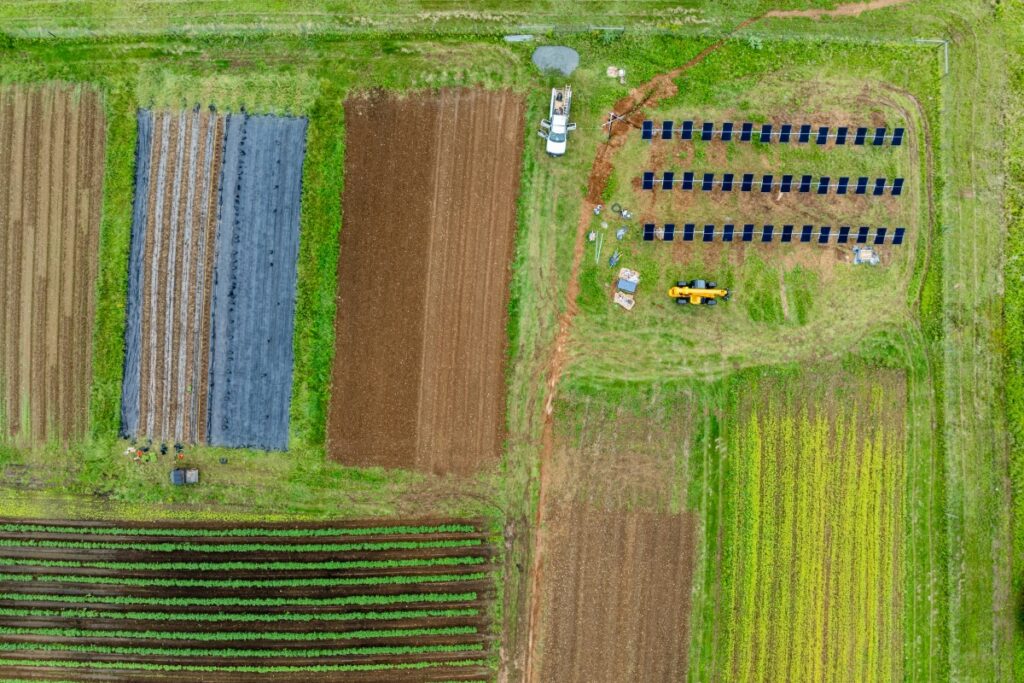
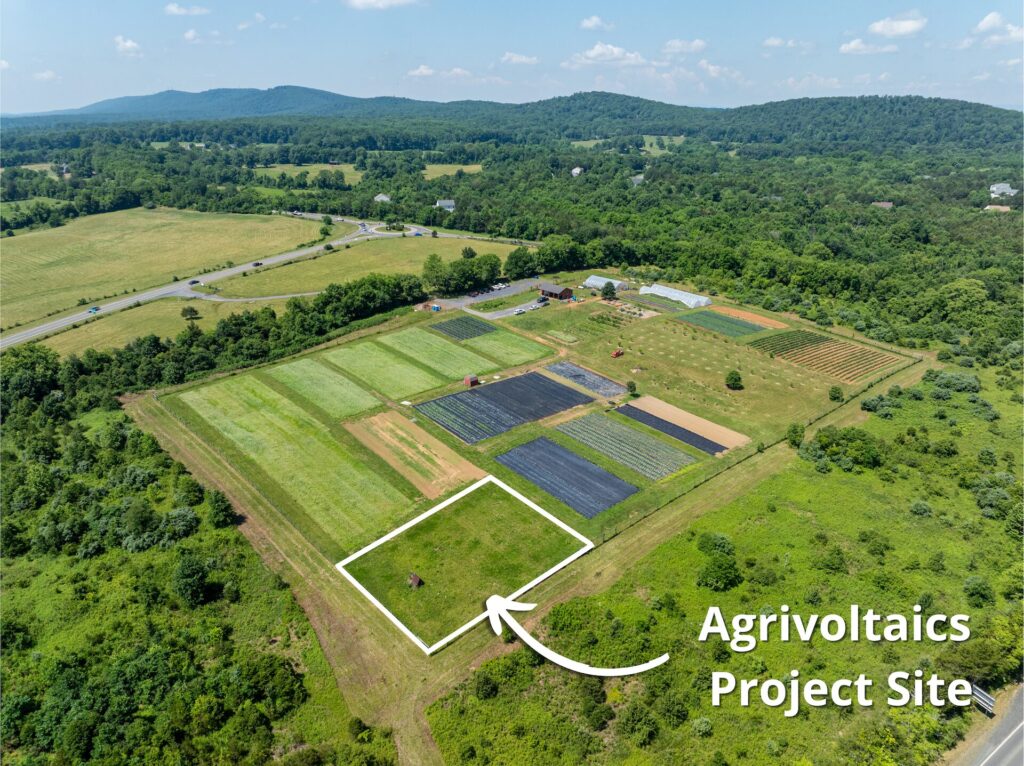
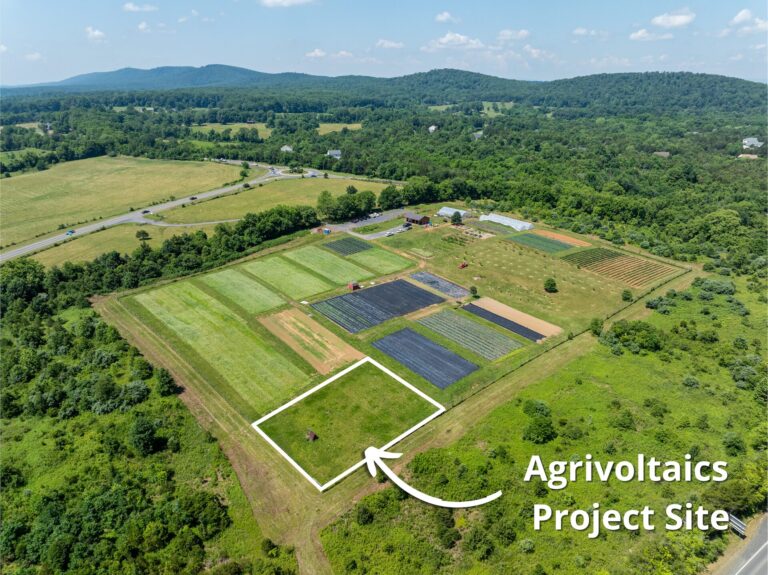
As the state scrambles to find solutions, options such as large-scale solar development that could help are facing local opposition and red tape. To address this energy “crisis by contract,” the Piedmont Environmental Council (PEC) is testing a dual-purpose approach that doesn’t force a choice between feeding people and powering our communities. At its Roundabout Meadows Community Farm, located between the county’s data center-heavy east and rural west, PEC has installed a quarter-acre crop-based agrivoltaics project—growing vegetables and producing electricity on the same small plot.
More than simply an agricultural experiment, this project could change how Virginia thinks about energy and farming. Agrivoltaics offers a path forward that both farmers and rural communities can get behind.
Agrivoltaics works…
Instead of deciding whether land should be used for farming or energy, agrivoltaics makes it possible to have both.
American Farmland Trust defines agrivoltaics as the production of marketable agricultural products in conjunction with solar energy production throughout the full life of a solar array, with intentional design that ensures land within the array remains suitable for agricultural production.
Farmers and rural communities that typically oppose large solar developments often embrace agrivoltaics because it keeps their land in agricultural production while saving on utility bills or adding revenue streams. Adding battery backup to the system not only adds another potential future source of income through virtual power plants, but also adds full energy independence – off-grid living. In Virginia, this all matters—we have over 39,000 farms covering more than 7 million acres, with 97% of them family-owned and averaging 187 acres each. Imagine connecting small 1-megawatt (MW) agrivoltaics projects on each of those farms; that would be nearly 40 GW of energy connecting to the grid – on a much shorter timeline than large-scale solar – while directly benefiting our agricultural communities. Even if we got 10% of that potential, it is still the equivalent of four nuclear power plants. By adding solar installations in parking lots and brownfields to the calculus, the energy potential grows significantly higher.
As a land conservation organization, PEC supports the clean energy transition but recognizes that large-scale solar often functions like industrial land use. That’s why PEC focuses on distributed energy solutions—from supporting parking lot solar legislation to organizing “Solar on the Farm” workshops that connect farmers with installers for behind-the-meter projects. Agrivoltaics represents the next step in that strategy.
…PEC’s Community Farm project demonstrates how.
The Loudoun County project shows what agrivoltaics looks like in practice. Through its Clean Energy to Communities program, the U.S. Department of Energy’s National Renewable Energy Lab (NREL) provided PEC with technical guidance and subsequently invited PEC into a national cohort of agrivoltaics developers. The project is also part of a university research network that includes Cornell University, University of Wisconsin, Rutgers University, Virginia State University, Virginia Tech and others.
The site itself has a compelling backstory. The 170-acre Roundabout Meadows property was originally slated to become a shopping plaza with a Harris Teeter grocery store until conservationists stepped in to purchase and preserve the land. Now it sits at the literal edge of Loudoun’s growth boundary—a demonstration of what is possible when you choose conservation and innovation over development.
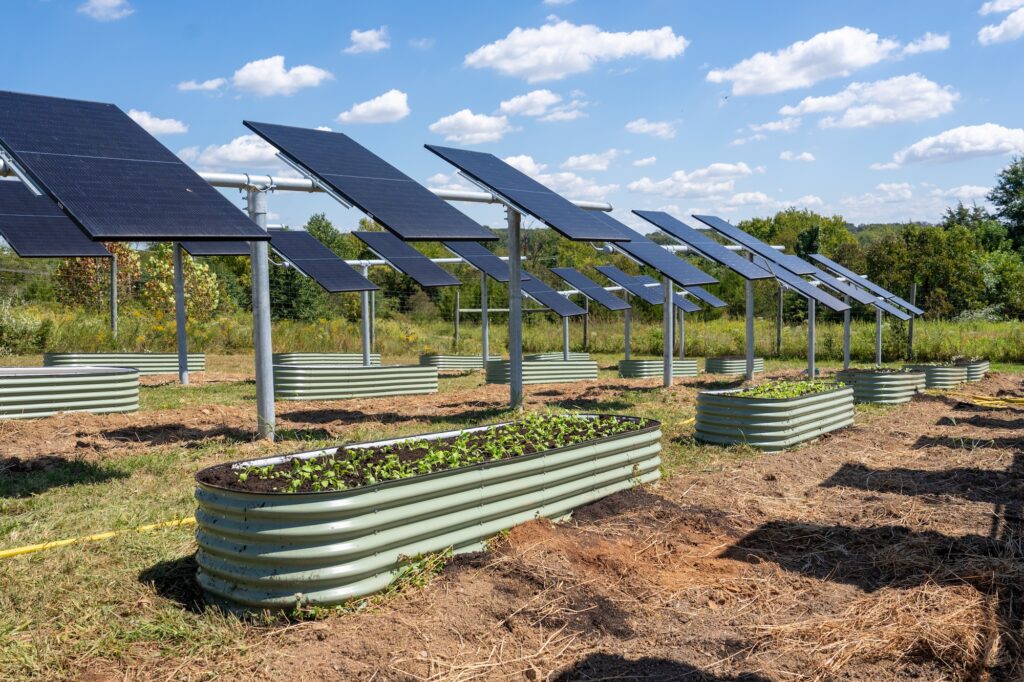
In the summer of 2025, on a quarter-acre section of the farm, PEC installed 42 solar panels mounted 6-8 feet high.
- After obtaining approval to connect to the electrical grid, the panels now generate 130% of the entire farm’s electricity needs
- The space underneath the panels produces food – crops grown in-ground as well as in planter boxes placed between rows of panels
- The panels are spaced out to create shade conditions that researchers believe help crops grow more consistently
- The project uses fixed-tilt panels because they offer the best cost-benefit for production at a project of this scale
- The design uses NREL data and focuses on replicability
- Everything from cost to construction is designed so that other farmers can adapt it to their own operations.
The broader farming operation at Roundabout Meadows is also impressive, with three full-time staff using Certified Naturally Grown practices on its 40 acres of farmland to grow organic vegetables, donating the full harvest – about 50,000 pounds annually – to local food pantries through Loudoun Hunger Relief and Christ Cares. Volunteers and corporate groups regularly help with the farm work and learn about sustainable agriculture.
Because the project has a built-in battery backup, the farm can keep running essential operations—e.g., well pumps, produce cooling, greenhouse, etc.—even when the electrical grid goes down. While it is an added optional cost, those batteries can do double duty, generating income for farmers by selling excess power back to the grid during peak demand periods, essentially functioning as a small, clean power plant.
In order to measure its effectiveness and address concerns, the agrivoltaics section includes side-by-side research plots to compare how crops perform under panels versus in full sun, measuring everything from crop yields to water usage to disease pressure. Because crops will be grown both in-ground and in raised beds, the findings will apply not just to farms but to parking lots, brownfields and other sites where it may make sense to combine solar energy and useful ground-level activities.
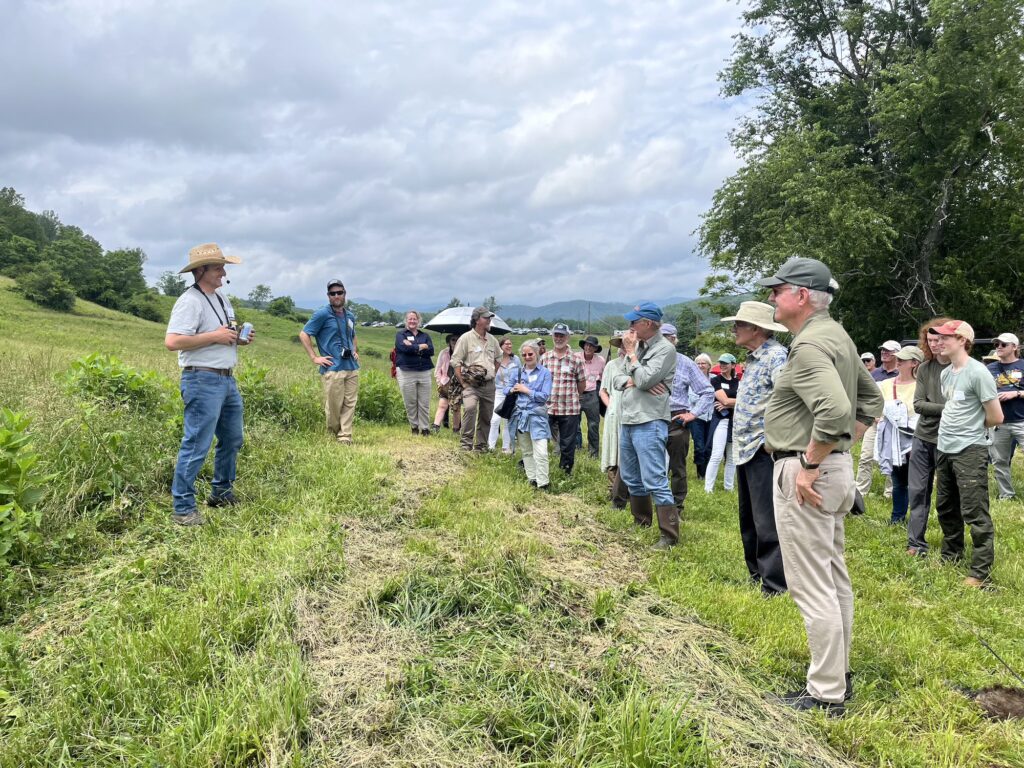
The PEC project is designed from the ground up for replication. Every decision—from cost to construction methods—was made with other farmers in mind.
For farmers and homeowners, solar systems typically save $60,000 over their lifetime—and those savings grow as utility bills rise.
It’s time to make this a reality for more farmers.
Dominion Energy’s tremendous lobbying pressure has been a longstanding and powerful force against efforts to create a more distributed energy grid, because the utility company loses profits from distributed energy, like agrivoltaics. Please submit comments to the State Corporation Commission to keep this energy source viable by maintaining the current 1:1 net metering structure.
View and learn about our energy work →

Why is Dominion trying to kill rooftop solar?
These days, it’s always refreshing to find things that most folks agree on. Solar on rooftops, parking lots and brownfields, …
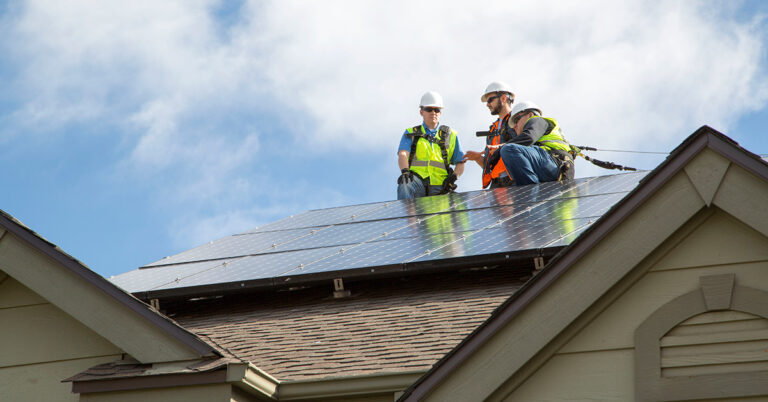
Report Finds Solar Far Exceeds Value Communicated by Dominion
PEC commissioned Dunsky Energy + Climate Advisors to study and calculate the actual value of distributed solar generation in Dominion …
Shining a Light on Agrivoltaics at Roundabout Meadows
This spring, the Piedmont Environmental Council will unveil a project at our Community Farm at Roundabout Meadows with the potential …
Videos: Agrivoltaics Project at PEC’s Community Farm
Explore our video updates detailing the exciting progress of the Piedmont Environmental Council’s agrivoltaics project, where solar energy and sustainable …
For more information about the agrivoltaics project or PEC’s energy work, contact Ashish Kapoor at [email protected].
Videos: Agrivoltaics Project at PEC’s Community Farm
Explore our video updates detailing the exciting progress of the Piedmont Environmental Council’s agrivoltaics project, where solar energy and sustainable agriculture meet.
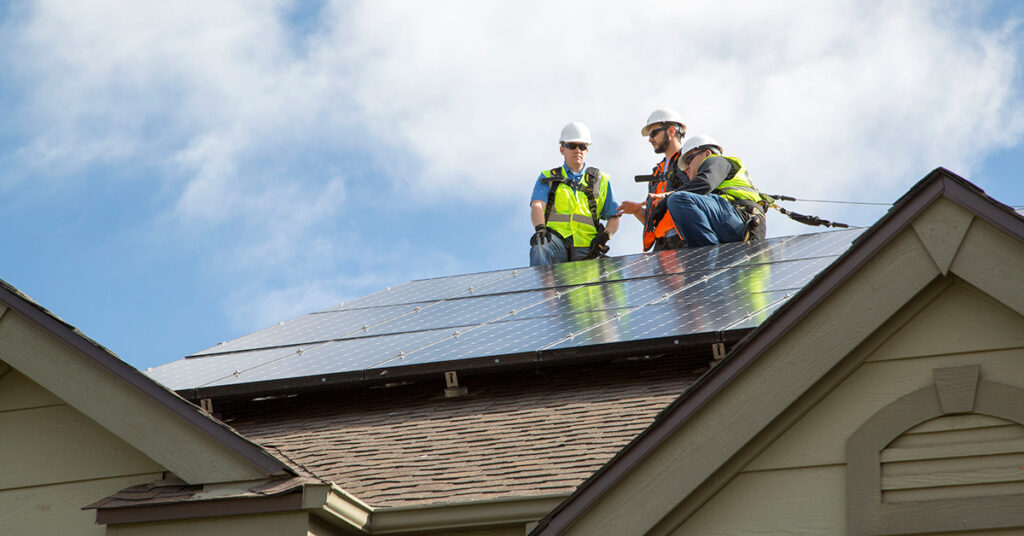
Report Finds Solar Far Exceeds Value Communicated by Dominion
PEC commissioned Dunsky Energy + Climate Advisors to study and calculate the actual value of distributed solar generation in Dominion Energy’s territory.

Why is Dominion trying to kill rooftop solar?
These days, it’s always refreshing to find things that most folks agree on. Solar on rooftops, parking lots and brownfields, along with smaller-scale agrivoltaics (combining agriculture and solar production on the same land), get pretty widespread support in the world of renewable energy and climate efforts. But Dominion Energy wants to undermine the economic viability of these popular energy solutions in Virginia by slashing the value of their most critical element: net metering.
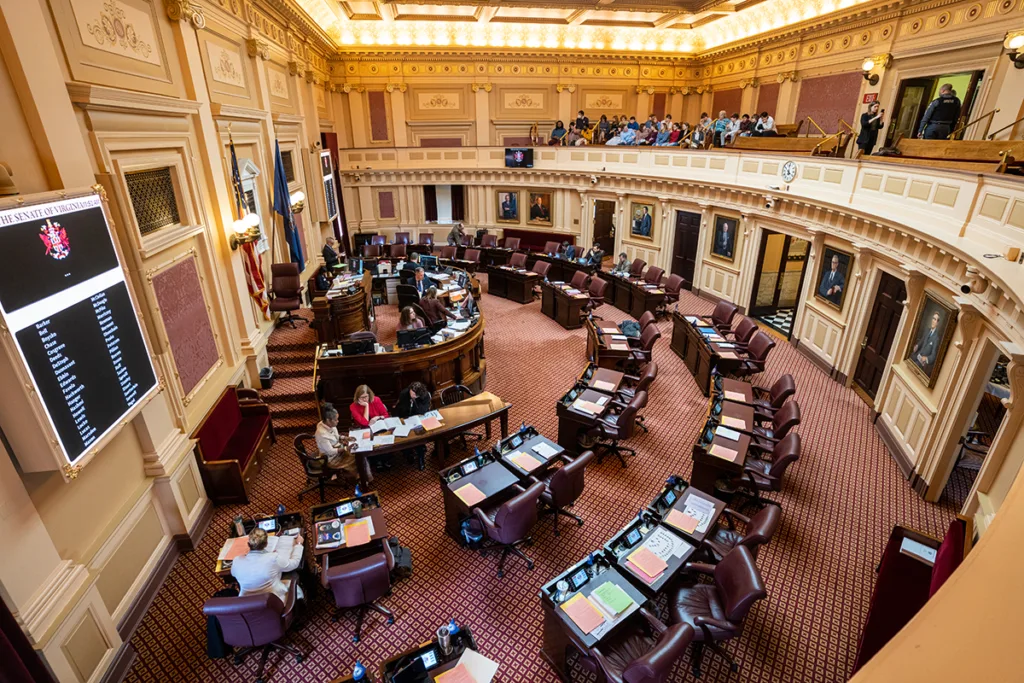
The 2025 Virginia General Assembly is in Session.
An overview of the topics that PEC has its eye on this session: data center reform, land conservation and public access, solar implementation, housing and local land use authority