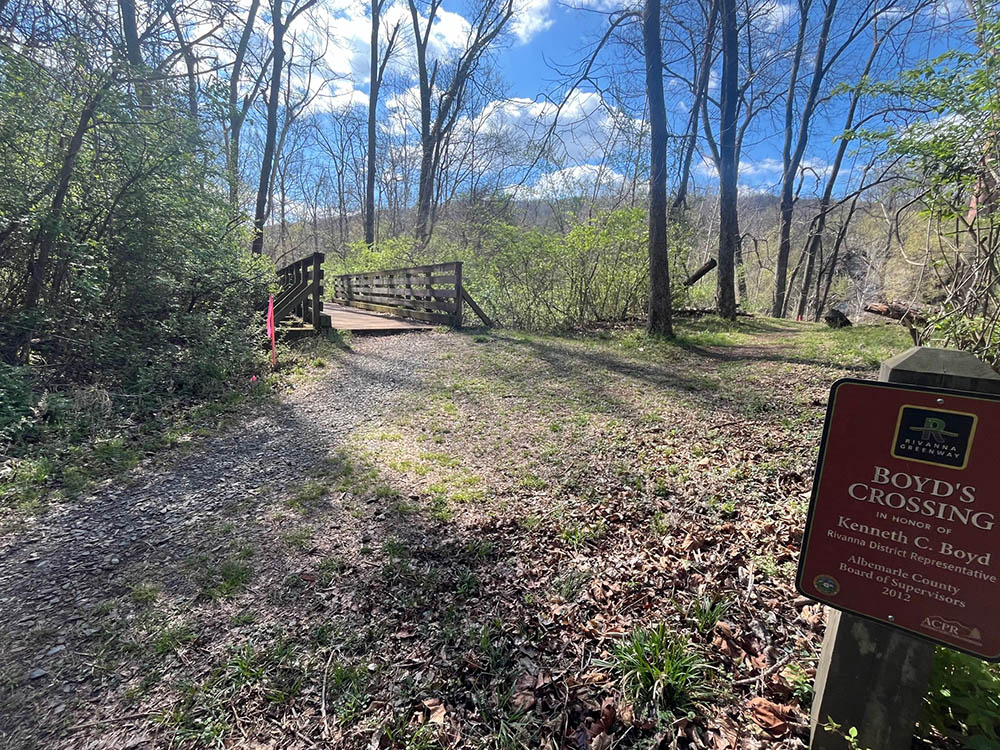
Albemarle is beginning the first phase of a planned project to extend the Old Mills Trail four miles downstream. There it will eventually connect to a future park at Milton Landing and an existing greenway in Glenmore.
bikes
Bike Cville: Jump Starting Sustainable Momentum
This is the second in a series of blog posts reflecting on BikeCville’s eighth year. The previous post described the rides from the viewpoint of a participant. This post talks about why PEC started BikeCville and how it’s going.
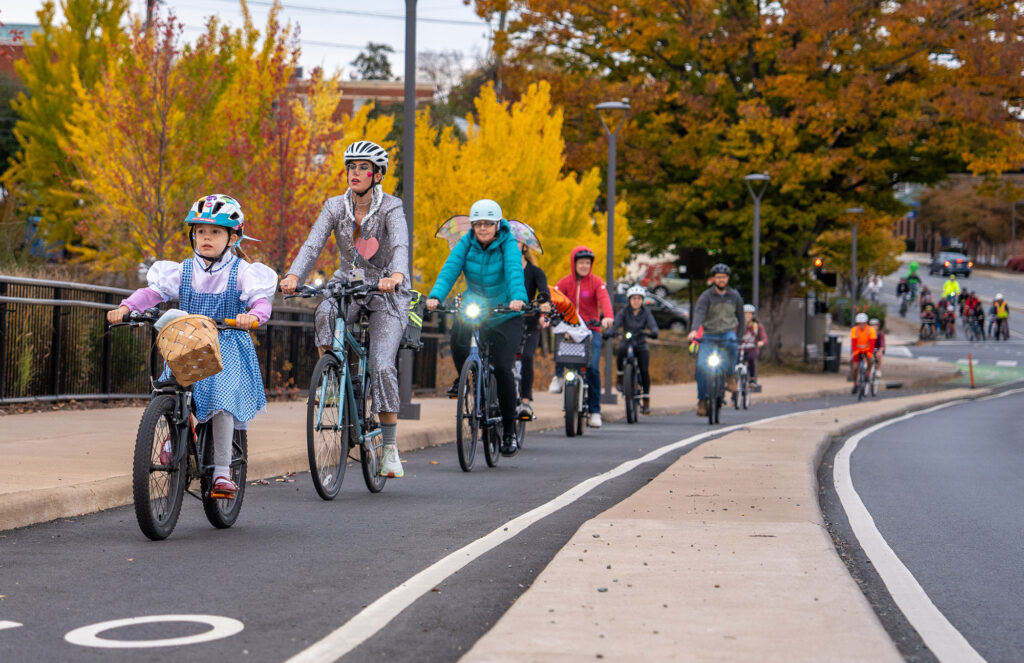
Not many land trusts organize urban bike rides but for the Piedmont Environmental Council it makes perfect sense. BikeCville combines our purpose to promote compact, livable communities with our primary method, which is to empower residents to advocate for positive change.
I was hired in 2017 to help bring about better infrastructure for walking and biking in the Charlottesville, Virginia area. This work carries a chicken-or-egg question: which comes first? We know that most people will only bike on well-protected infrastructure. Our bike-lane network was (and is) insufficient and quite fragmented. As a result, there were far fewer cyclists than one might expect in a small college town. Yet we have also learned from more than 50 years of advocacy that good infrastructure is only possible if droves of people come out and demand it. Charlottesville was stuck; it needed some kind of jump start.
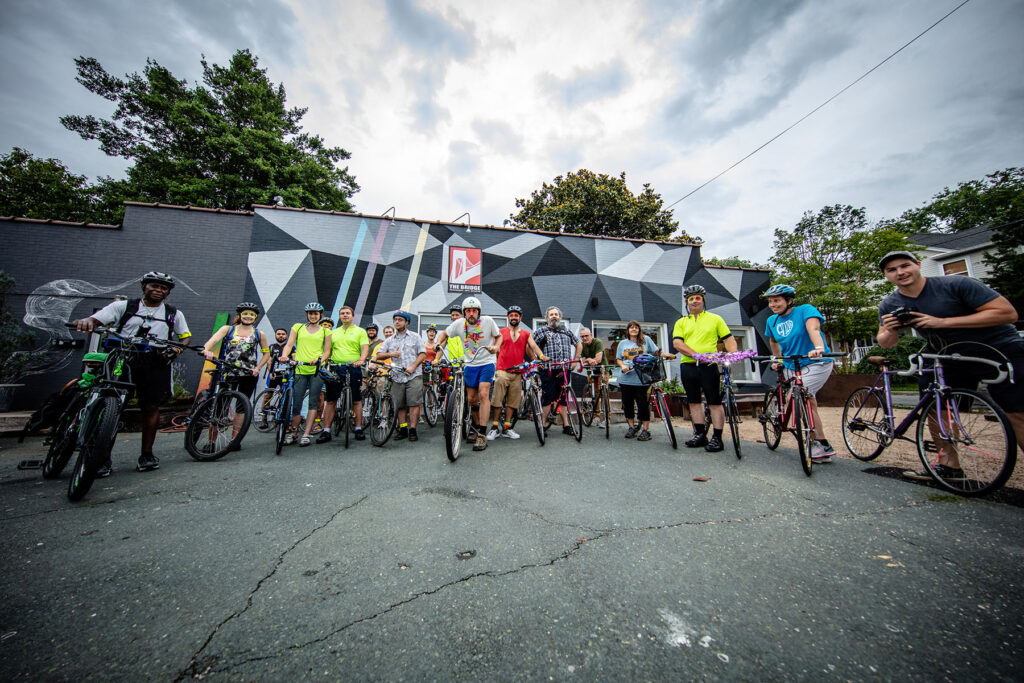
PEC has been attacking both sides of the equation since day 1. We have advocated for and assisted on multiple infrastructure projects that take a long time. After eight years, some of those are finally starting to appear (topic for a future post). We have also spent at least as much time on the cultural front strengthening the bicycling community.
We received a grant from the Bama Works Fund of the Dave Matthews Band for a program we named “BikeCville.” It started as a simple series of group bike rides that emphasize safety education, camaraderie and fun. We hoped to encourage interested-but-concerned riders to claim their rightful place on the street and to learn from one another while enjoying each other’s company. We were also building a strong cohort that would lobby for safer streets for everyone.
Although we’re working hard for safer streets, we refuse to wait another generation (and continue to sacrifice environmental and human health) for slow-developing infrastructure to get built. We want to encourage more cyclists and to make cycling more visible on the streets we presently have. Longer term, we were also methodically building an army that would advocate for the better local policies and infrastructure that were so clearly needed. We organized group bike rides as catalysts and they have been successful.
From Spark to Pilot Light to Burn
PEC is just one organization and could never tackle this complicated problem alone. We needed to build a program that could maintain its own momentum, spread and grow. Generational change needs to outlast any grant’s life or any single organization’s attention span. So, while the rides were fun, educational, organizing events that could change attendees’ day-to-day choices, they were also a proof of concept for other groups to replicate. We figured that if PEC could organize community bike rides, so could anyone.
The rides and our other community-building activities (like Bike Month) have been quite effective. Bicycling in Charlottesville has proliferated. Many others have taken the baton and what were once just a few rides per year, attended by die-hards and “usual suspects”have proliferated into a full calendar with multiple group rides every week. These are organized by participants themselves through clubs, groups and businesses. BikeCville began as a hashtag; now it is a movement.
The Bama Works Fund has stuck with us, renewing the grant every year since. PEC is leading fewer rides now because others have taken the baton. That was always the plan. Now we are using the Bama Works grant primarily for our annual Active Mobility Summit and other programs that nourish the advocacy community and further leverage the effort.
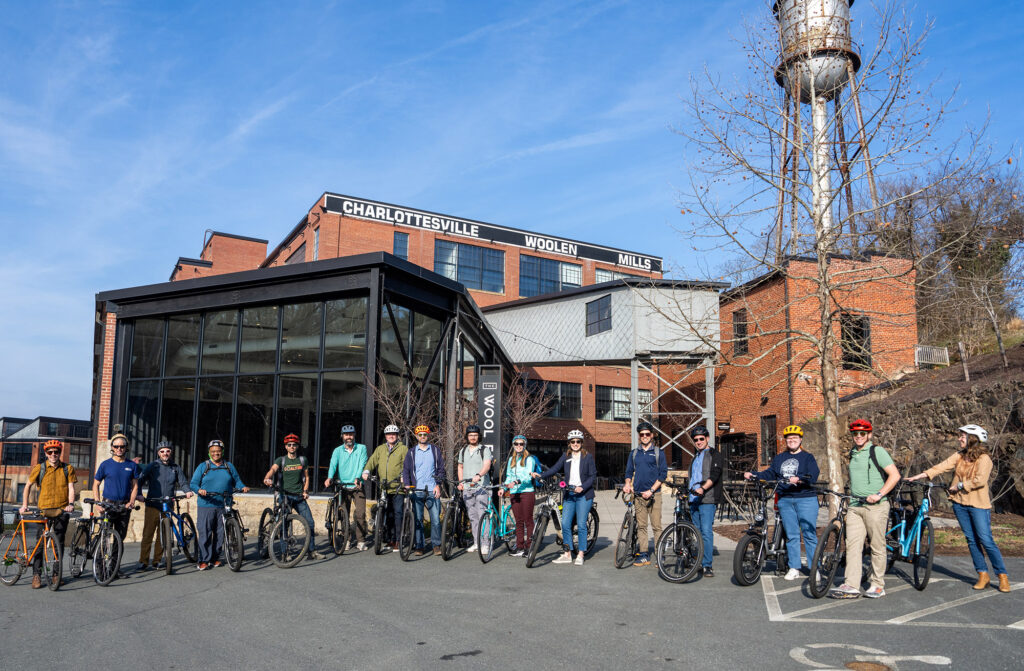
Flames Catching
We’re also picking up important local policy wins. For example, Charlottesville has adopted a policy to eliminate deaths and serious injuries; Albemarle has committed to reduce them by half. Charlottesville has an ambitious e-bike voucher program and both localities’ new Comprehensive Plans emphasize dense housing and walkable neighborhoods.
Infrastructure improvements have not unfurled as quickly, but several projects that have been in the works for a long time are either coming online or about to be built. We’d be unreasonable to expect that a built environment made of earth, stone and steel, where every inch is full of challenges, would be dramatically changed in a short time. But it is clear that a motivated and organized community is a necessary precondition for change. We have that now, and they’re working on it.
As I look toward the next eight years, I hope to see better infrastructure, deployed more widely, at a more rapid pace. I’d also like to see the roadways we already have to be more equitably shared. After all, many of the roads in this area were walking and biking (and horseback riding) routes before the advent of the automobile. There’s nothing inevitable about the landscape of today.
I am most excited about who I’m seeing: many leaders and groups organizing rides, creating programs, starting businesses and hatching ideas that I could not have imagined when we started. I can’t wait to see where this energy takes us.