
Eight generations of cattle farming had taken its toll on the streams at Dean and Carina Elgin’s Mountain Hollow Farm in northern Fauquier County. Historically, “all the cattle had access to the creek. That was our watering system. And that was the norm in that day,” Dean Elgin said. But by 2015, the Elgins wanted to repair the streambank erosion and reduce the water pollution caused by the foot traffic and waste generated by 200 cattle moving in and out of the water repeatedly. But there was a problem.
Clean Water
Water flows through all of our land. To keep it plentiful and safe for drinking, swimming and fishing, we need clean air, expansive forests, responsible farms, wooded stream banks, and communities and individuals who make choices to avoid pollution.
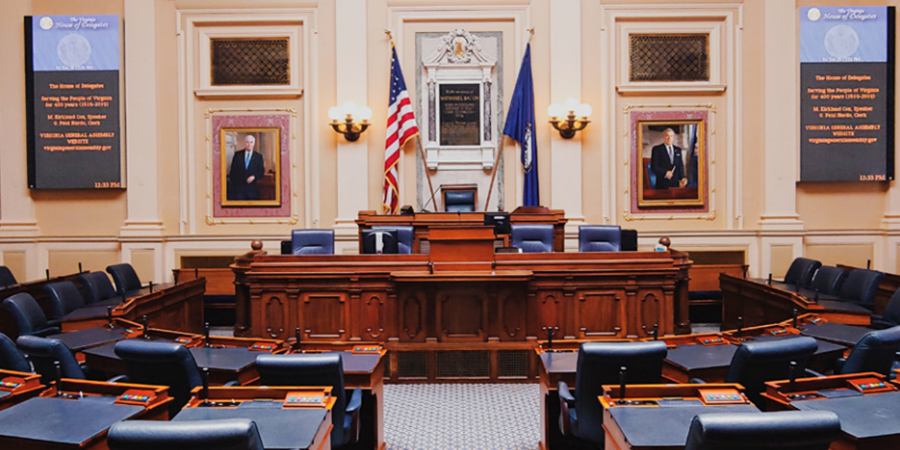
What will tomorrow bring?
This year’s Virginia General Assembly promises to be an interesting one, as the November 2019 elections resulted in a change in leadership in both the House and the Senate. A new Speaker of the House (Filler-Corn), Senate Majority Leader (Saslaw) and large shifts in committee memberships of both bodies are among the changes. With Governor Northam still in office, the Democrats have consolidated control of state government for the first time in more than two decades. And that means we will see many of the priorities of the party at the forefront of the legislative agenda.
A Fish Runs Through It
As the fog broke on a brisk November morning in Madison County, more than three dozen people arrived at the Whiteoak Canyon trailhead ready to celebrate the new, 35-foot, open-span bridge over Cedar Run. They marveled at the sounds of water bubbling over the rocky streambed from the north side of the bridge to the south. Many walked upright beneath the sturdy, brown, steel-framed structure. And all excitedly searched the deep pools for our guests of honor—the native brook trout, a species of concern on Virginia’s Wildlife Action Plan.
Whiteoak Canyon Trailhead
SYRIA, VA: The new 35-foot span bridge across Cedar Run offers hikers and nature-loving community members improved access to the popular Whiteoak Canyon trailhead and opening up three miles of stream habitat to native fish for the first time in decades. The effort is a public-private partnership between Shenandoah National Park, The Piedmont Environmental Council, Trout Unlimited, and the local landowners, the Graves family.
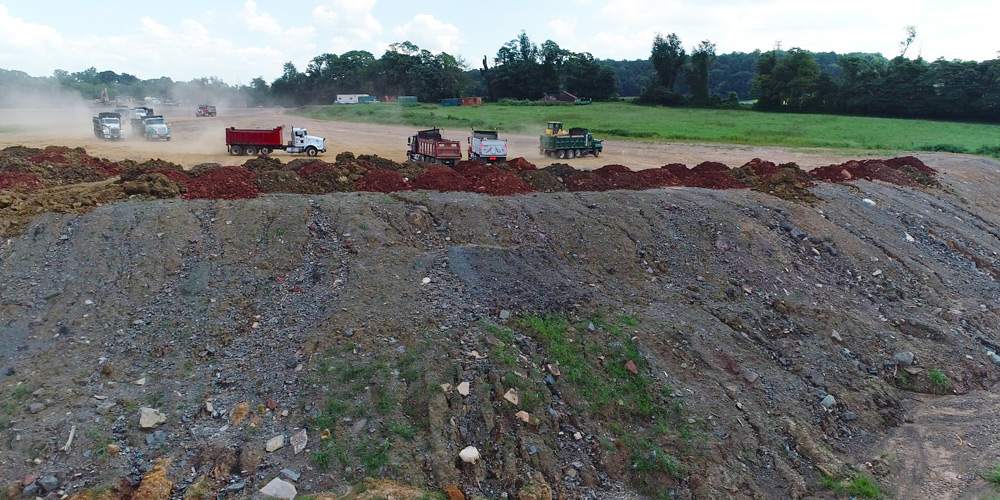
A Dirty Secret: How Construction Waste is Making its Way Onto Rural Lands
Steve and Jennifer Rainwater’s world was turned upside down in 2017 when an access road was built along their property line and hundreds of dump trucks started arriving to dump dirt, non-stop, on a section of the property, behind their house. The new access road created runoff and flooding problems that damaged their pastures and a small pond that had provided fresh water for the horses. Although silt fences were used in places, they regularly collapsed and were generally ineffective. The view from their second floor has changed from woods to a never-ending construction site.
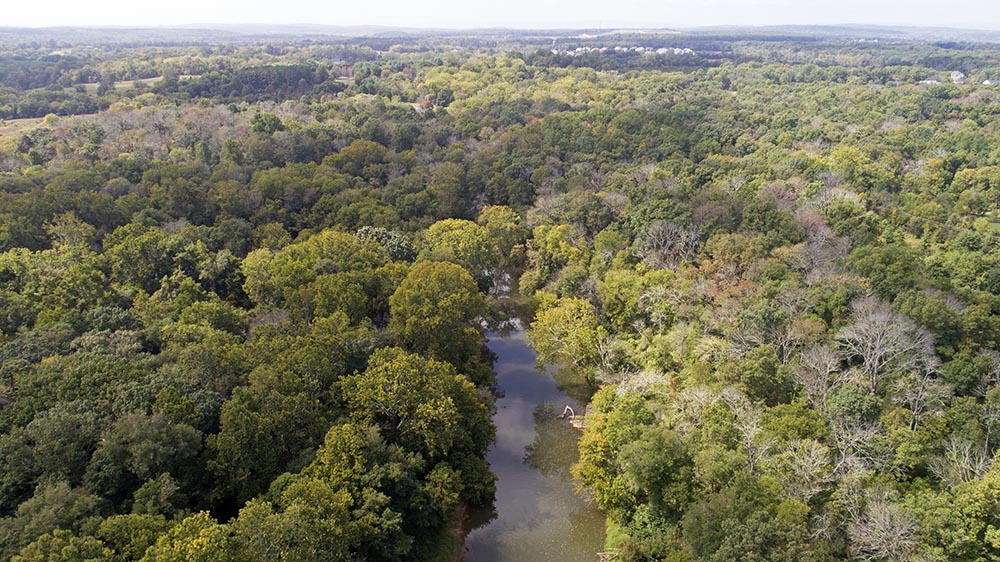
Protecting the Goose Creek Watershed
PEC was recently awarded a $15,600 grant from the Virginia Environmental Endowment to further our work identifying and prioritizing opportunities to implement agricultural best management practices (BMPs) and strengthen efforts on land protected by conservation easements in the Goose Creek watershed.
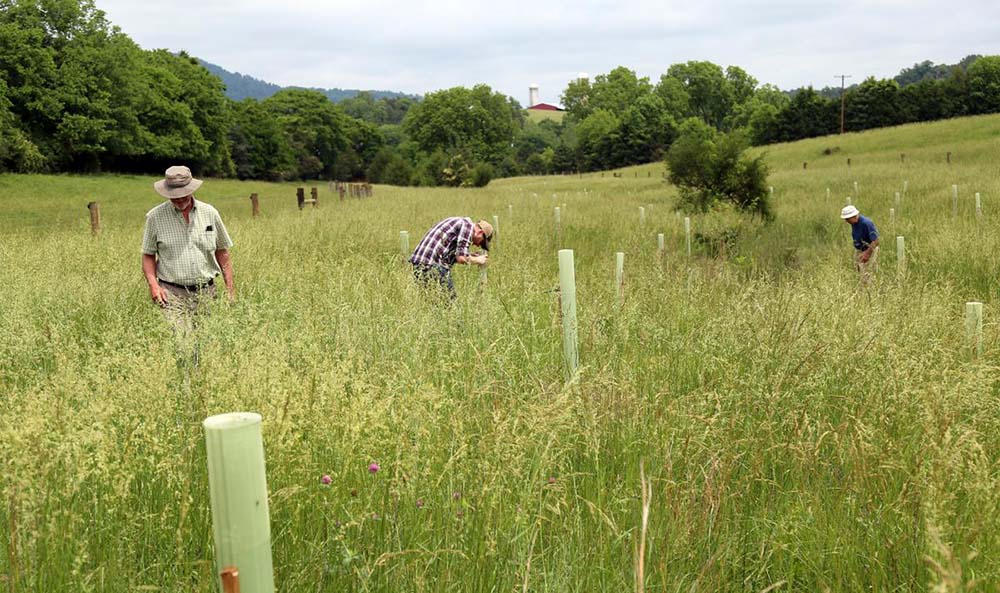
A Legacy of Love
Through the Headwaters Stream Initiative, an astounding 3,765 trees were planted on 16 acres the Goodall property in Madison County, including 4,600 linear feet of stream.
Free Flow
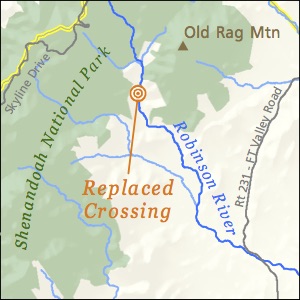
PEC has taken on the work of restoring local rivers by removing culverts and low-water crossings that can be roadblocks to stream health. By replacing these barriers on roads and driveways with fish- friendly designs, we are improving habitat and water quality.
Many aquatic species, including Virginia’s state fish, the Eastern brook trout, benefit from these restoration projects. Ideally, we hope these projects will influence government agencies to incorporate fish-friendly designs as they update roads and stream crossings.
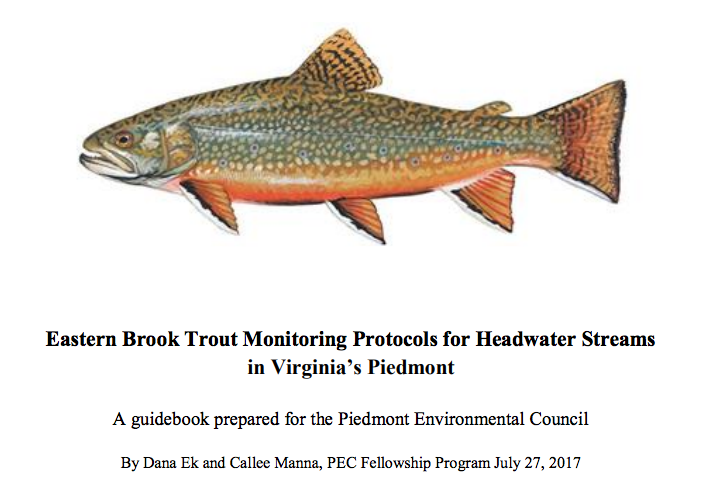
Eastern Brook Trout Monitoring Protocols for Headwater Streams in Virginia’s Piedmont
During the summer of 2017, PEC Fellowship participants Dana Ek and Callee Manna put together this stream monitoring guidebook as part of their final practicum project. The guidebook is meant to serve as a reference for PEC and other entities who are planning of stream restoration projects, especially in the development of improved monitoring procedures.
Robinson River
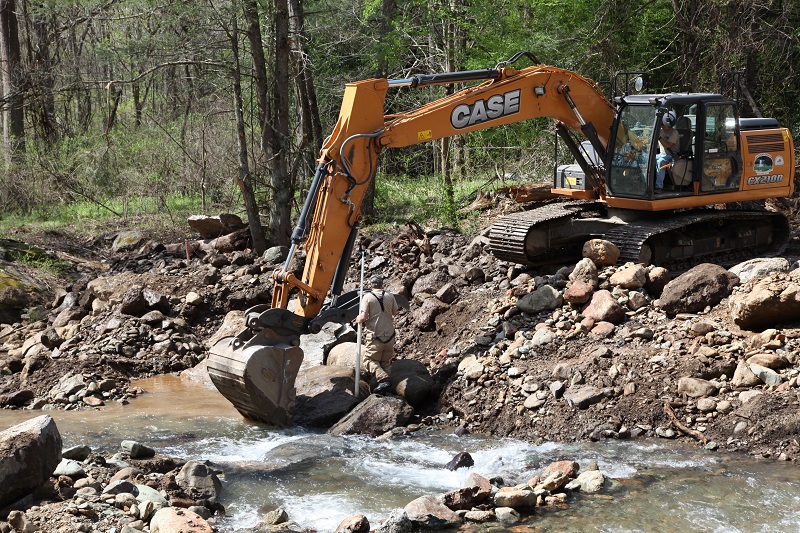
SYRIA, VA. At the Robinson River, 350 linear feet of stream was restored to its natural channel, stabilizing banks from erosion, and ultimately removing sediment from going downstream to the Chesapeake Bay. In all, 5.3 miles of habitat was restored for aquatic species such as American eel and brook trout. PEC worked with USFWS, Shenandoah Streamworks, Trout Unlimited, and local landowners to complete this stream restoration project in April 2017. Monitoring for water quality, and fish population health with the help of partners of VA DGIF and TU.