Maps & Resources

Press Release:  Financial incentives available to farmers for haying practices that support nesting birds

Press Release: Financial incentives available to farmers for haying practices that support nesting birds

Media Contacts:
October Greenfield, VGBI Co-Coordinator, [email protected]; 540-347-2334, x7051
Lauria McShane, VGBI Assistant; [email protected]; 540-347-2334, x7056

artwork graphic with hayfield, cows, a tractor and birds with mountains in the background

PIEDMONT, SHENANDOAH VALLEY, BLUE RIDGE, Va. (Oct. 14, 2025) –  The Virginia Grassland Bird Initiative is pleased to announce the opening of its incentives program for landowners and farmers! Now through Nov 30, farmers in the 16 counties across the northern Virginia Piedmont, Blue Ridge, and Shenandoah Valley regions can apply for financial incentives to implement practices that help support nesting grassland birds during the 2026 haying season.

Entering its fifth year, the Virginia Grassland Bird Initiative is a collaborative effort of The Piedmont Environmental Council, Smithsonian’s Virginia Working Landscapes, Quail Forever, American Farmland Trust, and Shenandoah Valley Conservancy working together with landowners and farmers to restore grassland habitat using “regenerative” agricultural practices tested by farmers and researchers alike, proving to benefit both birds and agricultural operations. Funded by the National Fish and Wildlife Foundation, VGBI provides tools and technical assistance and pays farmers up to $35 per acre in exchange for: 1) delaying the first cut of hay until July 1 or later; and/or 2) rotating livestock out of select fields between April 15 and July 1 or later. Farmers can learn more about the program and apply at: vagrasslandbirds.org/incentives/.

VGBI was formed in response to the 53% decline in the 60 species of native grassland birds that have adopted hayfields and pasturelands as surrogate habitat as native grasslands have suffered more intense impact by humans than any other land-based ecosystem in North America. Since 2021, 57 farmers have formally enrolled over 3,600 acres of land into the financial incentives program, while another 37 have participated voluntarily, without the financial incentives, adding another 3,700 acres of land supporting nesting grassland birds.

“Delayed haying until at least July 1 is a game change for birds, because it allows them to fledge at least one successful clutch of young. But it also lets producers strategically spread out labor requirements during the hay cutting season, and the higher fiber, more mature hay resulting from delayed haying is good for feeding dry cows, horses, and retired animals, as well as for mushroom hay and bedding,” said Lauria McShane, PEC’s VGBI assistant.

Rotating livestock out of certain fields in early spring is called summer pasture stockpiling, and it “bridges the summer dormancy gap by providing standing forage in late summer without the risk and expense of planting summer annuals. Stockpiling also allows fields to rest for fall or winter stockpiling with the goal of reducing the days that hay is fed and, therefore, reducing annual feed cost,” McShane said.

On Francis McGuigan’s farm in Greene County, “the results were dramatic,” he said, pointing out a flock of at least 30 goldfinches perched atop vegetation enjoying seedheads from the field on a recent check-in with McShane that’s part of the incentives program. He said that in the past, he’d only see a couple of goldfinches fly over the field in any given year. “Not only did the bird population increase, but so did the insect, small mammal and amphibian populations. We saw and heard the results all summer. I’m proud that my small farm is supporting ecosystem expansion and resilience through VGBI’s summer pasture stockpiling program,” McGuigan said.

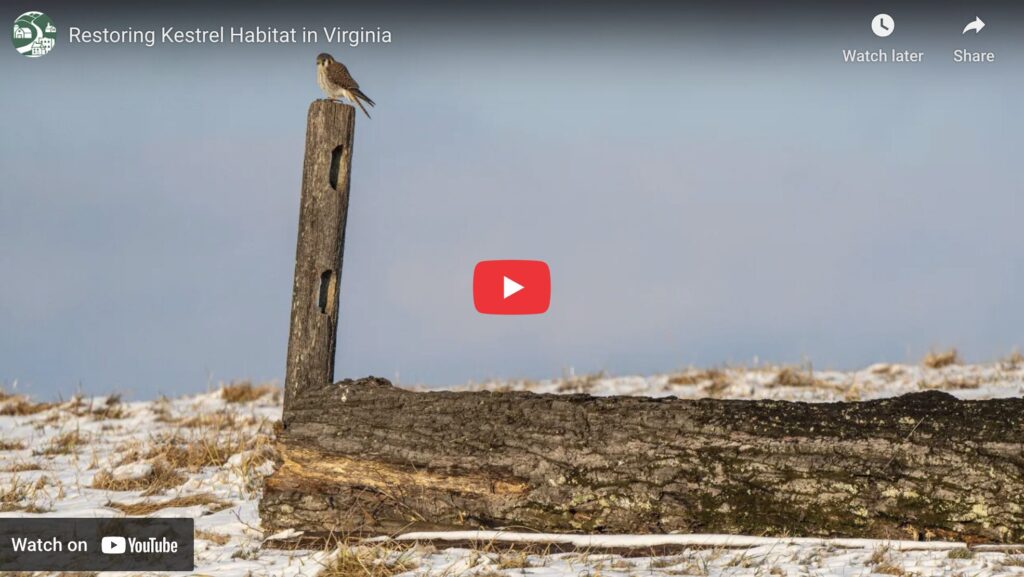
In Albemarle County, Michelle McKenzie enrolled Bellair Farm in both the delayed haying and summer pasture stockpiling programs in 2024. The increase in grassland birds has been so significant that McKenzie has hosted bird walks with the Virginia Society of Ornithology’s Piedmont Bird Club. “I would absolutely recommend this program to others. Interacting with the VGBI staff has also provided networking opportunities and discussions about other programs that we’re getting involved in,” McKenzie said. Those include four kestrel boxes and a barn owl box, which McShan monitors in spring and summer.

Monte Vista Farm in Greene County had 295 enrolled in VGBI’s delayed haying incentive program this summer, while another 40 acres on the outskirts of the hayfields have been converted into pollinator fields. “Happily, the new owners of Monte Vista Farm have the property primarily for wildlife habitat, and they’re already committed to delayed haying for the entire property going forward,” McShane said.

Producers can meet Virginia’s grassland birds and learn more about best management practices for birds, native plantings for quail, nesting boxes for American kestrel, streamside plantings for wildlife and water quality, and more at:  https://www.vagrasslandbirds.org/resources/

Downloadable high-resolution images for media:

#####

The Piedmont Environmental Council (PEC) works to protect and restore the lands and waters of the Virginia Piedmont, while building stronger, more sustainable communities. Founded in 1972, PEC is a locally based, community-supported 501(c)3 nonprofit and accredited land trust. At the core of PEC’s approach is a focus on educating, engaging and empowering people to effect positive change in their communities. 

President’s Letter: Our perseverance is paying off

President’s Letter: Our perseverance is paying off

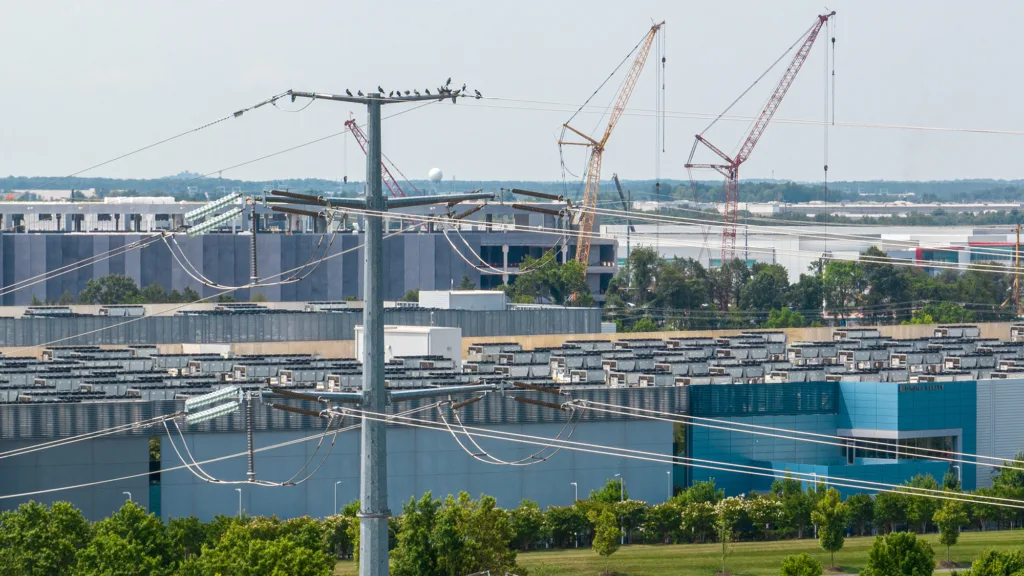
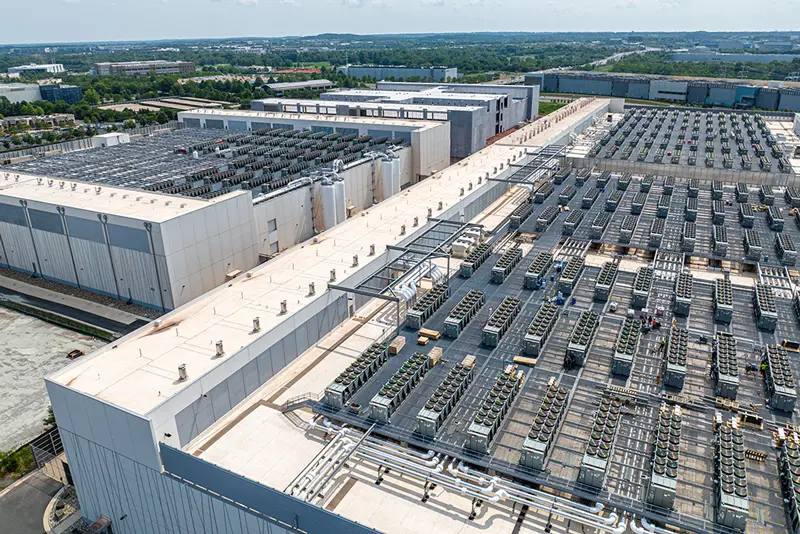
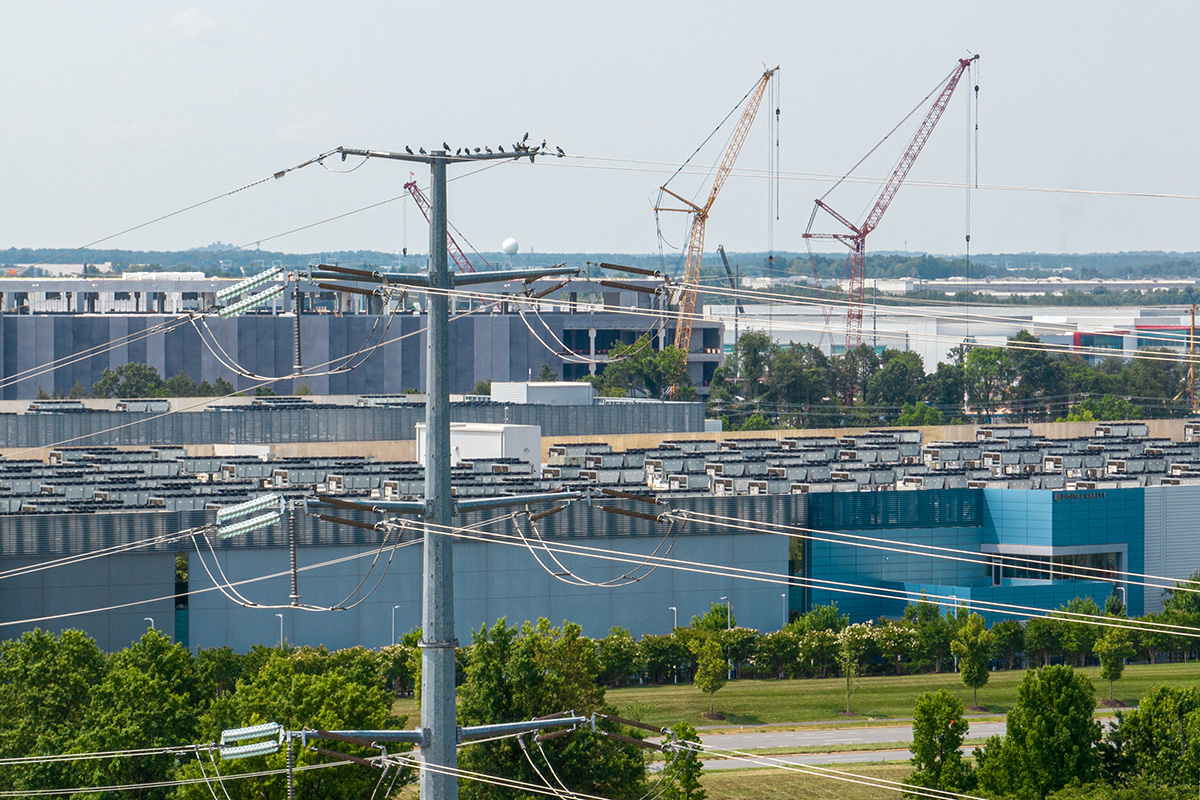
Our work has never been more relevant than it is in this moment: when the pressure of data centers and all of their electrical infrastructure threatens both our past conservation victories and our future conservation efforts; when the federal government is stripping away support for clean energy and protections for public lands while also proposing energy infrastructure on working farm and forest lands; and when neighborhoods are threatened with looming data center buildings, towering transmission lines and risks to water supplies and air quality.

A legacy of conservation and community at risk in Fauquier County

From their storied pasts to the present day, the Fauquier County towns of Remington, Bealeton and the many unique crossroad communities in the surrounding region have been characterized by their rural charm. And for decades, The Piedmont Environmental Council has been committed to collaborating with these local communities on conservation, land use planning, historic preservation and public access to nature. But as pressure for massive data center complexes spreads beyond Northern Virginia into the Piedmont’s special rural communities, we worry the progress and investments we and many others have made toward conserving, enhancing and preserving these communities will be lost forever.


Photo by Hugh Kenny

1990s |  PEC opposed the Fauquier Forward plan that would have widened Virginia State Route 28 and replaced the agricultural economy through that area with suburbs. Instead, we advocated for an alternative vision of conservation and helped create the county’s Purchase of Development Rights program, which pays landowners to relinquish development rights on their properties, thus supporting farmers, preserving the environmental and economic benefits of agriculture and preventing costly sprawl. Since then, Fauquier’s PDR program has become a model for other places, creating an important tool for landowners who want to keep their land in farming.

2006 |  PEC helped the county acquire Rappahannock Station Battlefield Park, preserving this critical battlefield for a future public park and recreation area near the town of Remington. PEC supported development of a master plan for the park and continues to advocate for walking trails and interpretive signage that will tell the important history of the town and this historic battlefield.

Photo by Hugh Kenny
Photo by Paula Combs

2017 |  In support of Remington’s effort to strengthen tourism and enhance pedestrian safety, PEC received a PATH Foundation grant to develop a plan called Remington Walks. This plan to rejuvenate Main Street with walking trails, town signage, pedestrian-friendly connectivity and more was developed with input gathered during community meetings and walking audits with residents. Remington Walks was adopted into Remington’s comprehensive plan and has been a guide and supportive document for several subsequent projects, including a gazebo next to the town hall, completed trail connections to Margaret Pierce Elementary and an improved railroad crossing accessible for strollers and wheelchairs downtown.

2021 |  PEC and numerous partners set about creating an Upper Rappahannock River Water Trail that provides much-needed public access at several points along this Virginia-designated scenic river. In August 2021, we helped cut the ribbon on the new Rector Tract public canoe and kayak launch a short walk from downtown Remington. Open dawn to dusk, this launch closes a 25-mile gap in public access to the river between Riverside Preserve and Kelly’s Ford in Culpeper County.

the complete boat launch
Photo by Hugh Kenny
Photo by Hugh Kenny

2021 |  Waterloo Bridge over the Rappahannock River is the uppermost point of the historic Rappahannock Canal, an important historic resource and a unique community treasure. Built in 1878, it was closed in 2014 and slated for replacement by the Virginia Department of Transportation. Advocating for its restoration, rather than replacement, PEC invested in a consultant to put forward a restoration alternative, held numerous community meetings, pushed VDOT to consider other options, and, with the financial help of the Hitt family, was able to fully restore the oldest metal truss bridge still standing in Virginia today.

2021 |  PEC established a native plant garden at C.M. Crockett Park in Midland. As a part of our efforts to promote native landscaping practices, we applied for a grant from Kortlandt Fund of the Northern Piedmont Community Foundation to purchase the native plants for the project. We also designed the garden and worked with the Fauquier Parks and Recreation Department and community volunteers to install it.

Photo by Dan Holmes

The network of support to conserve, enhance, and preserve Remington and southern Fauquier extends well beyond PEC. The local churches, the Virginia Cooperative Extension, and John Waldeck established the Remington Community Garden. The town utilized a PATH Make It Happen Grant to build a new gazebo next to the town hall. And the Remington Community Partnership — run by the tireless Mary and Ray Root — has worked to document, preserve and promote the historic resources of the town. Countless people have led numerous other projects, but a comprehensive list could take up the entire publication! 

Remington and its surrounding areas are at the intersection of two very different futures. The tremendous work we’ve all already done together paves a path that retains the region’s rural charm, agricultural heritage and economy, and promise of a vibrant place for visitation and recreation. 

This progress is threatened by pressure from multiple data center proposals that could put more industrial development in the quaint town of Remington than all the commercial space in Fauquier County combined. Together these projects would open a floodgate of new transmission lines, substations, construction traffic, air pollution, noise, and massive concrete computer warehouses that will crowd out other forms of investment and business interest and induce even more industrial sprawl. 

Before our county leaders make major decisions that will forever alter a critical piece of Fauquier’s rural identity and economy, it’s important to revisit and remember the investments and community accomplishments made in the face of past development pressures that would have transformed this region.

This article appeared in the 2025 fall edition of The Piedmont Environmental Council’s member newsletter, The Piedmont View. If you’d like to become a PEC member or renew your membership, please visit pecva.org/join.

Why is Dominion trying to kill rooftop solar?

Why is Dominion trying to kill rooftop solar?

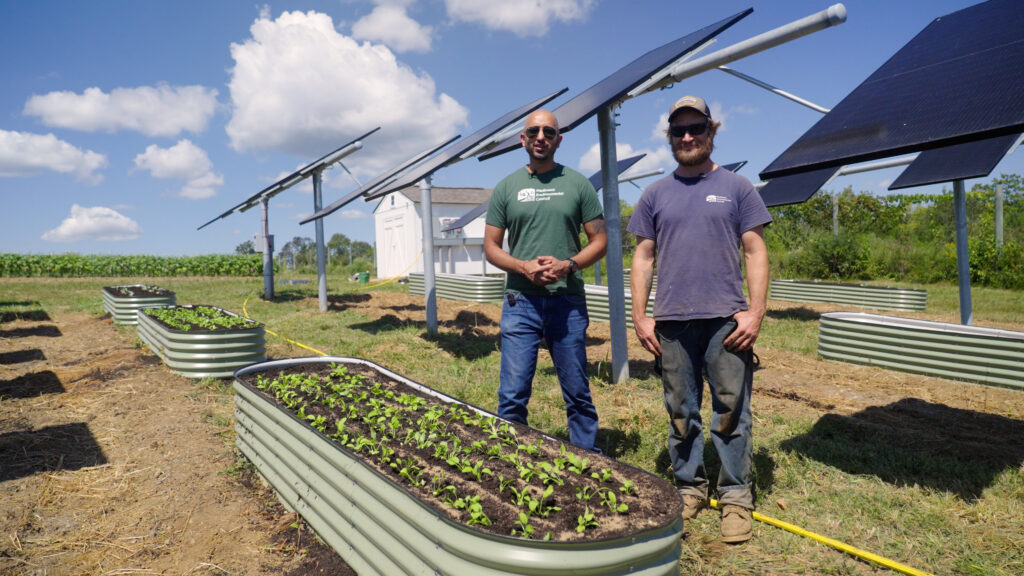
These days, it’s always refreshing to find things that most folks agree on. Solar on rooftops, parking lots and brownfields, along with smaller-scale agrivoltaics (combining agriculture and solar production on the same land), get pretty widespread support in the world of renewable energy and climate efforts. But Dominion Energy wants to undermine the economic viability of these popular energy solutions in Virginia by slashing the value of their most critical element: net metering.