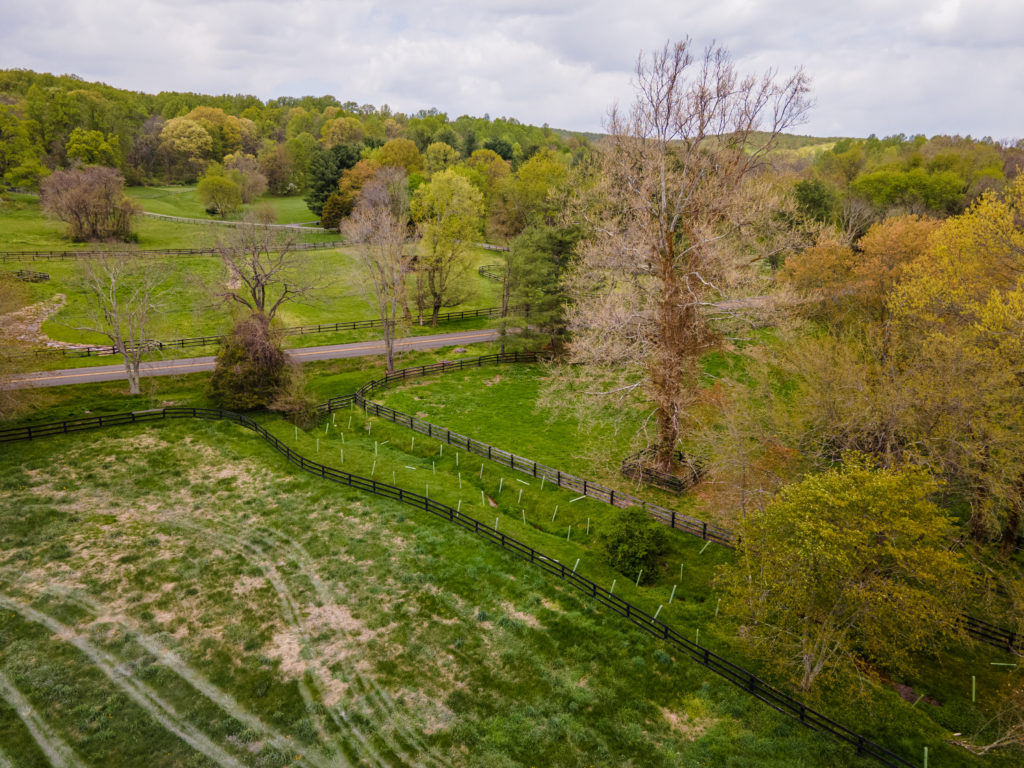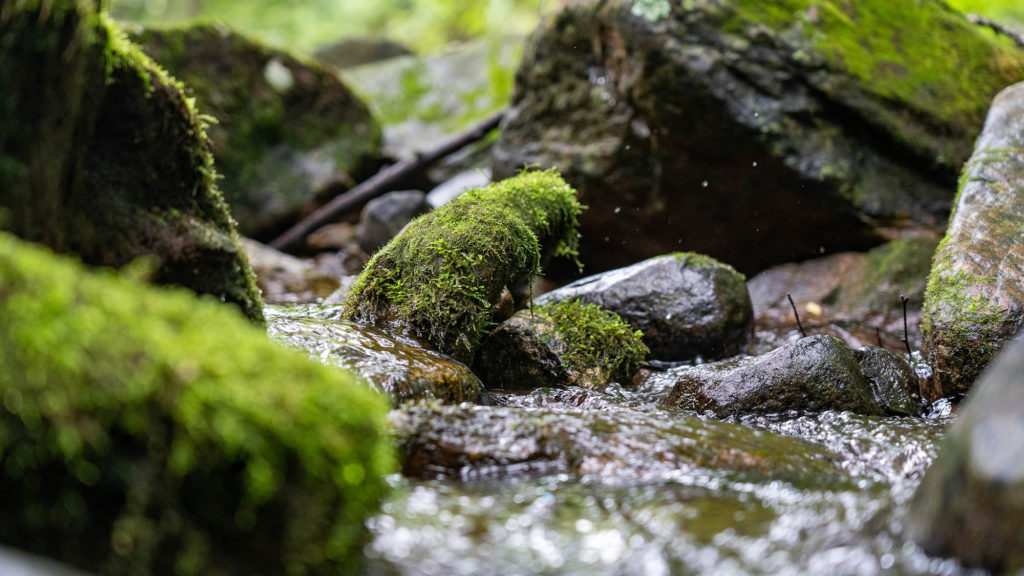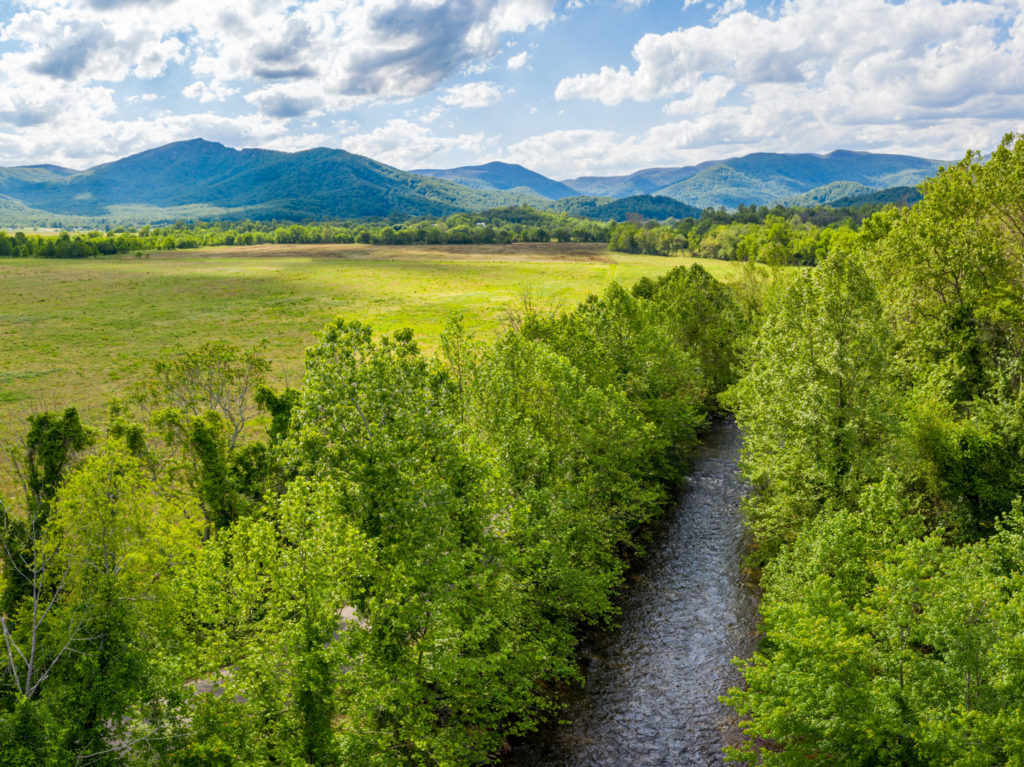
Planting riparian buffers along native trout streams is a priority for the Piedmont Environmental Council (PEC) and Friends of the Rappahannock (FOR). Many of the headwater streams of the Upper Rappahannock watershed support Eastern brook trout, the only trout species native to Virginia.
Clean Water
Water flows through all of our land. To keep it plentiful and safe for drinking, swimming and fishing, we need clean air, expansive forests, responsible farms, wooded stream banks, and communities and individuals who make choices to avoid pollution.
Why Riparian Buffers?
Riparian buffers are the vegetated areas along rivers, streams, creeks, and other waterways. They provide a number of important benefits for stream health, people and wildlife.
Good News for the Brook Trout
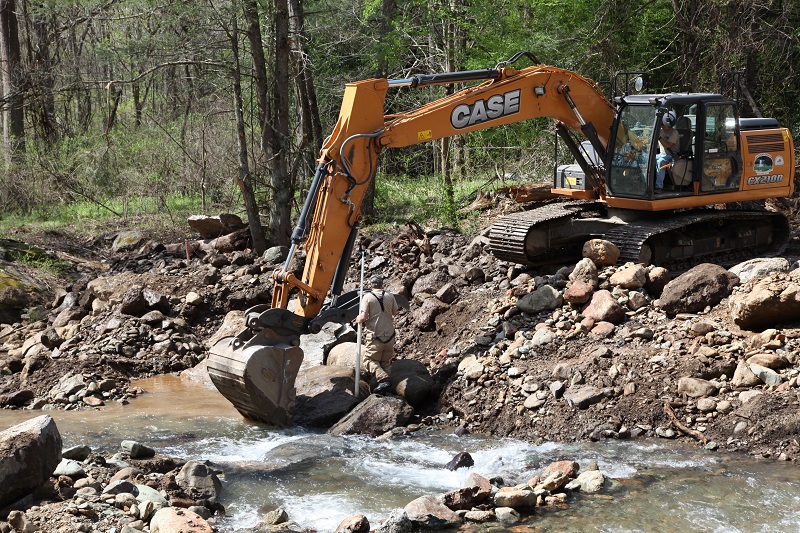
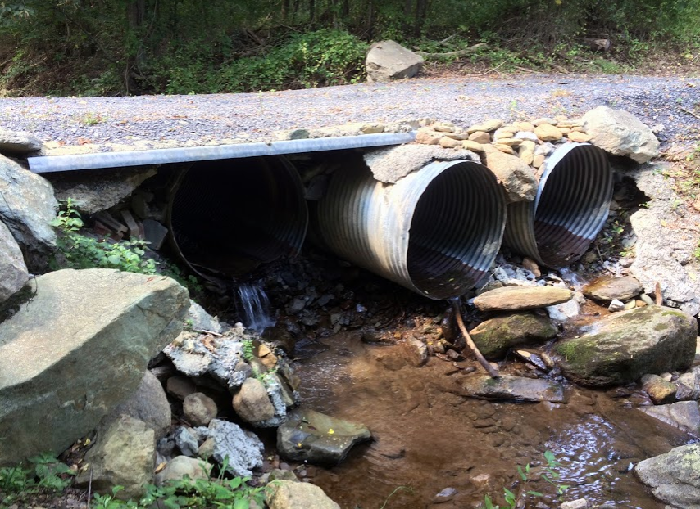
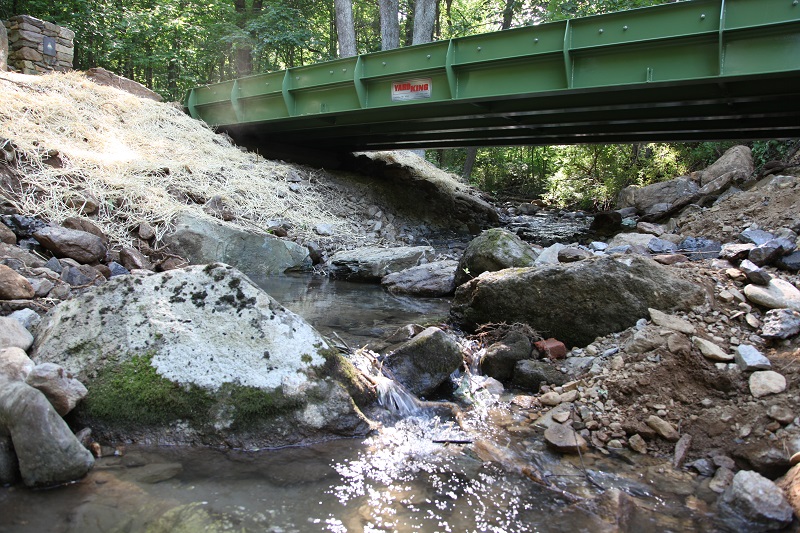
We’re continuing our efforts to increase the habitat available to the eastern brook trout and other fish species with two pilot culvert removal projects…
National Fish and Wildlife Foundation Grant
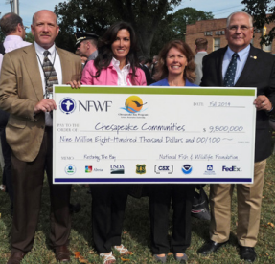
The National Fish and Wildlife Foundation awarded PEC a $200,000 grant from the Chesapeake Bay Stewardship Fund this past October. With this grant, PEC will collaborate with Loudoun County, the Town of Lovettsville, Loudoun County Master Gardeners and Loudoun homeowners associations to implement projects that involve planting native trees and shrubs, improving stormwater facilities and reducing polluted runoff in Loudoun County communities.
Teaming Up to Save the “Brookie”
Virginia’s state fish, the eastern brook trout, is in trouble. The Commonwealth’s only native trout has seen a sharp decline in population due to a detrimental combination of rising temperatures, physical barriers to streamflow, pollution, and habitat loss. Many expect the species to be added to VA’s Wildlife Action Plan list in the near future.
Helping Hands for Spout Run
CLARKE– Clarke County’s Spout Run watershed has the potential to provide clean water and support a large variety of wildlife species. Yet, the stream is on the State Impaired Waters List due to nutrient and sediment levels from fertilizers, livestock and other human-related activities. This is bad news not only for the wildlife and people living around the watershed, but also for communities downstream—including the Chesapeake Bay.
‘Fracking’ on Conserved Land?
The Virginia Outdoors Foundation (VOF) is an important state public agency that has taken part in conserving land in the Commonwealth since 1966. Today, VOF is the largest easement holder in Virginia, and PEC is proud to have partnered with them over the decades. Over the past two years, however, VOF reviewed and approved a number of new easements permit oil and gas drilling—including the potential for hydraulic fracturing (a.k.a. “fracking”)—in areas that have little to no history of energy extraction.
Spout Run Watershed Gets Some T.L.C.
Clarke County’s Spout Run watershed is comprised of 14 miles of perennial streams, many of which are spring-fed. So, Spout Run has the potential to provide clean water and support a large variety of wildlife species. Yet, the streams are considered unhealthy due to the levels of nutrients and sediment from fertilizers, livestock, and other human-related activities. For this reason, the Spout Run watershed is on Virginia’s State Impaired Waters List. This is bad news not only for the wildlife and people living around the watershed, but also for those downstream—including the Chesapeake Bay.
Looking Beyond Property Lines to Restore the Thumb Run Watershed
PEC’s Sustainable Habitat Program Manager, James Barnes, often works with landowners in the Piedmont on a one-on-one basis—helping them find ways (and funding) to improve their properties to restore wildlife habitat and water quality. This conservation work is important, and Barnes has worked with many excited landowners. He’s realized, however, that to make a lasting difference in habitat resoration in the Piedmont, landowners will need to start looking past their property lines.
Healthy, Safer Families, and Communities
Arsenic and rocket fuel in our water. Gender-altering hormones and medications in our rivers and streams. PCBs, dioxins and pesticides in breast milk. Lead in children’s toys and women’s lipstick. Hazardous ingredients in air fresheners, development disrupting chemicals in plastic baby bottles and dangerous fumes from vinyl shower curtains. Our world is awash in chemicals and pollutants that pose health risks to our families, our communities and our environment.