Land Conservation

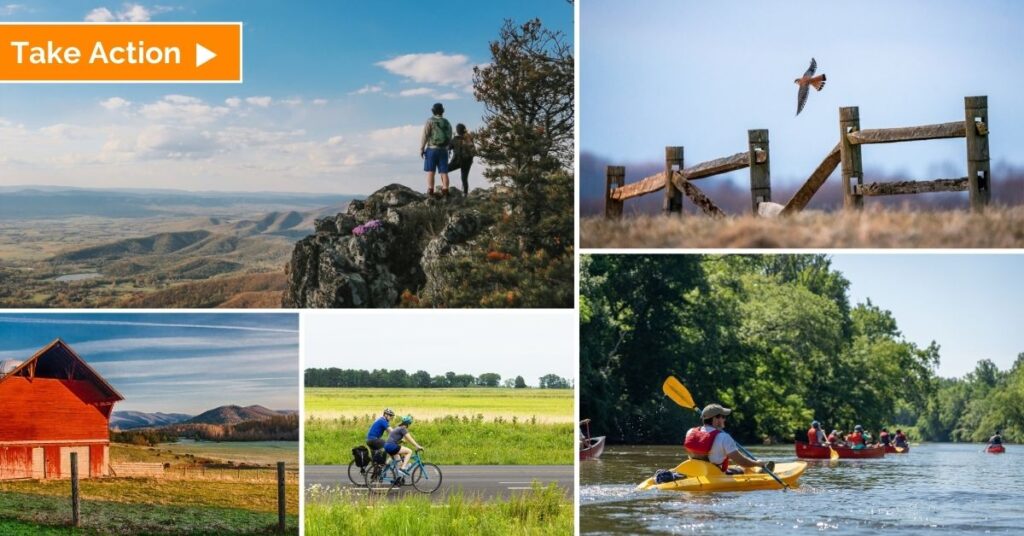
PEC has helped landowners permanently protect over 430,000 acres of rural or natural land. Conservation Easements help ensure that the Virginia Piedmont is always characterized by its open spaces, healthy environment, and cultural resources.

Press Release:  Financial incentives available to farmers for haying practices that support nesting birds

Press Release: Financial incentives available to farmers for haying practices that support nesting birds

Media Contacts:
October Greenfield, VGBI Co-Coordinator, [email protected]; 540-347-2334, x7051
Lauria McShane, VGBI Assistant; [email protected]; 540-347-2334, x7056

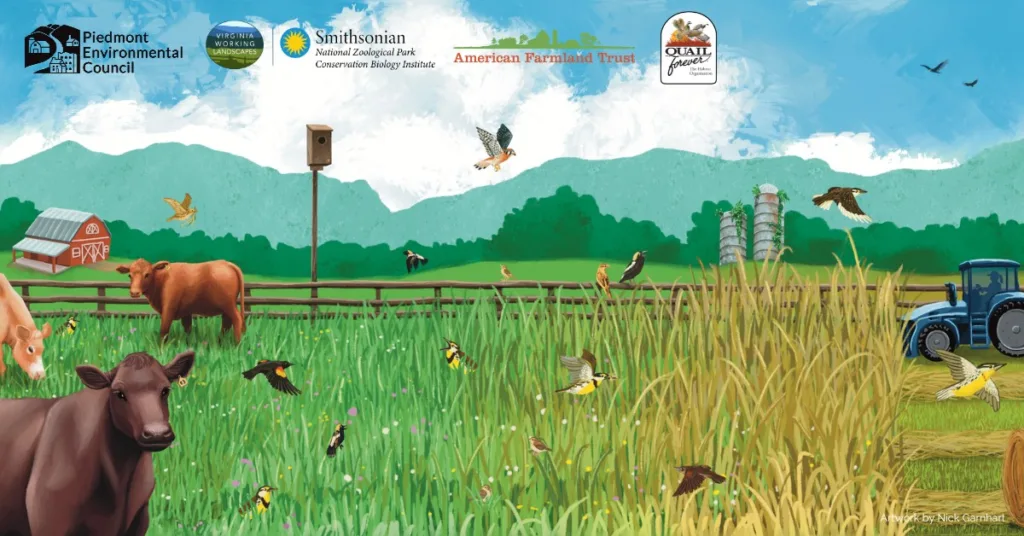
artwork graphic with hayfield, cows, a tractor and birds with mountains in the background

PIEDMONT, SHENANDOAH VALLEY, BLUE RIDGE, Va. (Oct. 14, 2025) –  The Virginia Grassland Bird Initiative is pleased to announce the opening of its incentives program for landowners and farmers! Now through Nov 30, farmers in the 16 counties across the northern Virginia Piedmont, Blue Ridge, and Shenandoah Valley regions can apply for financial incentives to implement practices that help support nesting grassland birds during the 2026 haying season.

Entering its fifth year, the Virginia Grassland Bird Initiative is a collaborative effort of The Piedmont Environmental Council, Smithsonian’s Virginia Working Landscapes, Quail Forever, American Farmland Trust, and Shenandoah Valley Conservancy working together with landowners and farmers to restore grassland habitat using “regenerative” agricultural practices tested by farmers and researchers alike, proving to benefit both birds and agricultural operations. Funded by the National Fish and Wildlife Foundation, VGBI provides tools and technical assistance and pays farmers up to $35 per acre in exchange for: 1) delaying the first cut of hay until July 1 or later; and/or 2) rotating livestock out of select fields between April 15 and July 1 or later. Farmers can learn more about the program and apply at: vagrasslandbirds.org/incentives/.

VGBI was formed in response to the 53% decline in the 60 species of native grassland birds that have adopted hayfields and pasturelands as surrogate habitat as native grasslands have suffered more intense impact by humans than any other land-based ecosystem in North America. Since 2021, 57 farmers have formally enrolled over 3,600 acres of land into the financial incentives program, while another 37 have participated voluntarily, without the financial incentives, adding another 3,700 acres of land supporting nesting grassland birds.

“Delayed haying until at least July 1 is a game change for birds, because it allows them to fledge at least one successful clutch of young. But it also lets producers strategically spread out labor requirements during the hay cutting season, and the higher fiber, more mature hay resulting from delayed haying is good for feeding dry cows, horses, and retired animals, as well as for mushroom hay and bedding,” said Lauria McShane, PEC’s VGBI assistant.

Rotating livestock out of certain fields in early spring is called summer pasture stockpiling, and it “bridges the summer dormancy gap by providing standing forage in late summer without the risk and expense of planting summer annuals. Stockpiling also allows fields to rest for fall or winter stockpiling with the goal of reducing the days that hay is fed and, therefore, reducing annual feed cost,” McShane said.

On Francis McGuigan’s farm in Greene County, “the results were dramatic,” he said, pointing out a flock of at least 30 goldfinches perched atop vegetation enjoying seedheads from the field on a recent check-in with McShane that’s part of the incentives program. He said that in the past, he’d only see a couple of goldfinches fly over the field in any given year. “Not only did the bird population increase, but so did the insect, small mammal and amphibian populations. We saw and heard the results all summer. I’m proud that my small farm is supporting ecosystem expansion and resilience through VGBI’s summer pasture stockpiling program,” McGuigan said.

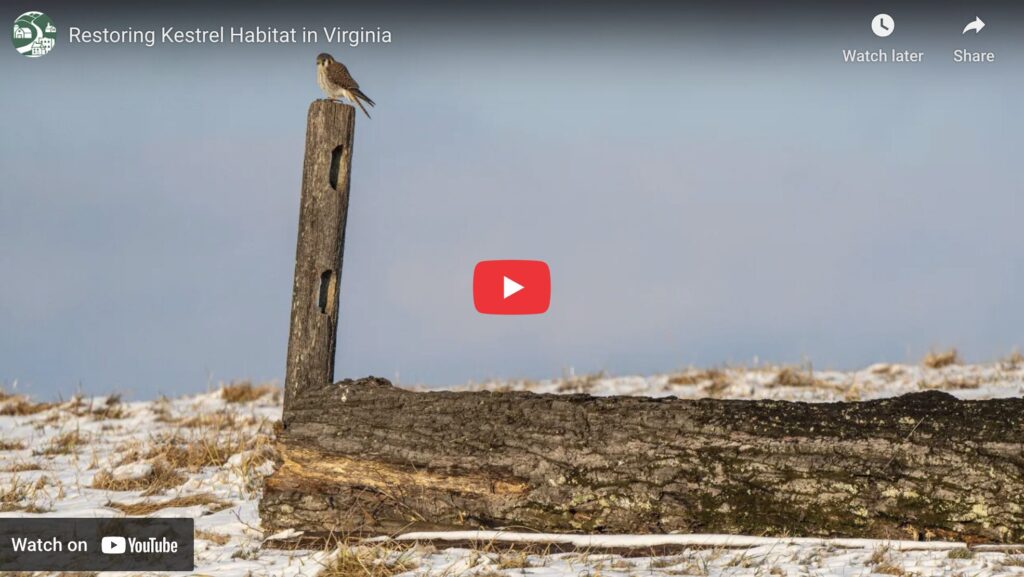
In Albemarle County, Michelle McKenzie enrolled Bellair Farm in both the delayed haying and summer pasture stockpiling programs in 2024. The increase in grassland birds has been so significant that McKenzie has hosted bird walks with the Virginia Society of Ornithology’s Piedmont Bird Club. “I would absolutely recommend this program to others. Interacting with the VGBI staff has also provided networking opportunities and discussions about other programs that we’re getting involved in,” McKenzie said. Those include four kestrel boxes and a barn owl box, which McShan monitors in spring and summer.

Monte Vista Farm in Greene County had 295 enrolled in VGBI’s delayed haying incentive program this summer, while another 40 acres on the outskirts of the hayfields have been converted into pollinator fields. “Happily, the new owners of Monte Vista Farm have the property primarily for wildlife habitat, and they’re already committed to delayed haying for the entire property going forward,” McShane said.

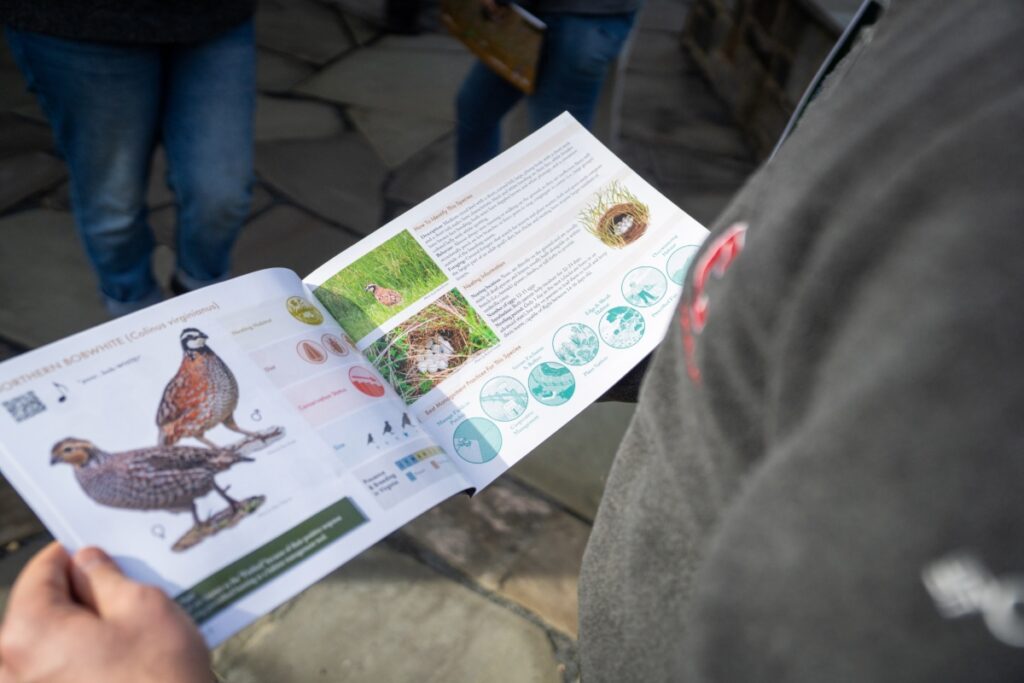
Producers can meet Virginia’s grassland birds and learn more about best management practices for birds, native plantings for quail, nesting boxes for American kestrel, streamside plantings for wildlife and water quality, and more at:  https://www.vagrasslandbirds.org/resources/

Downloadable high-resolution images for media:

#####

The Piedmont Environmental Council (PEC) works to protect and restore the lands and waters of the Virginia Piedmont, while building stronger, more sustainable communities. Founded in 1972, PEC is a locally based, community-supported 501(c)3 nonprofit and accredited land trust. At the core of PEC’s approach is a focus on educating, engaging and empowering people to effect positive change in their communities. 

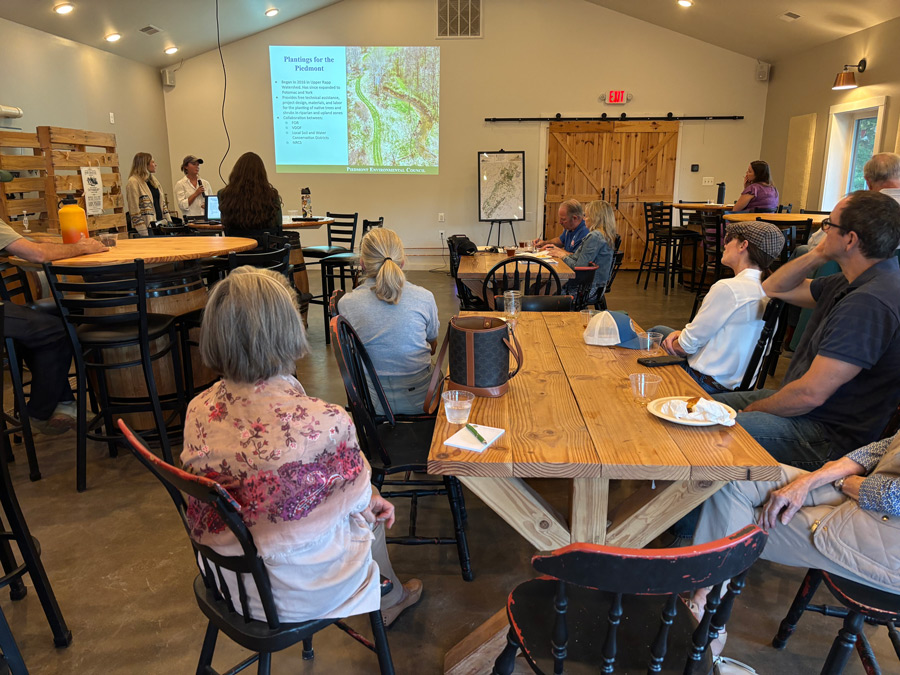
Plantings for the Piedmont: A Team Effort

Plantings for the Piedmont: A Team Effort

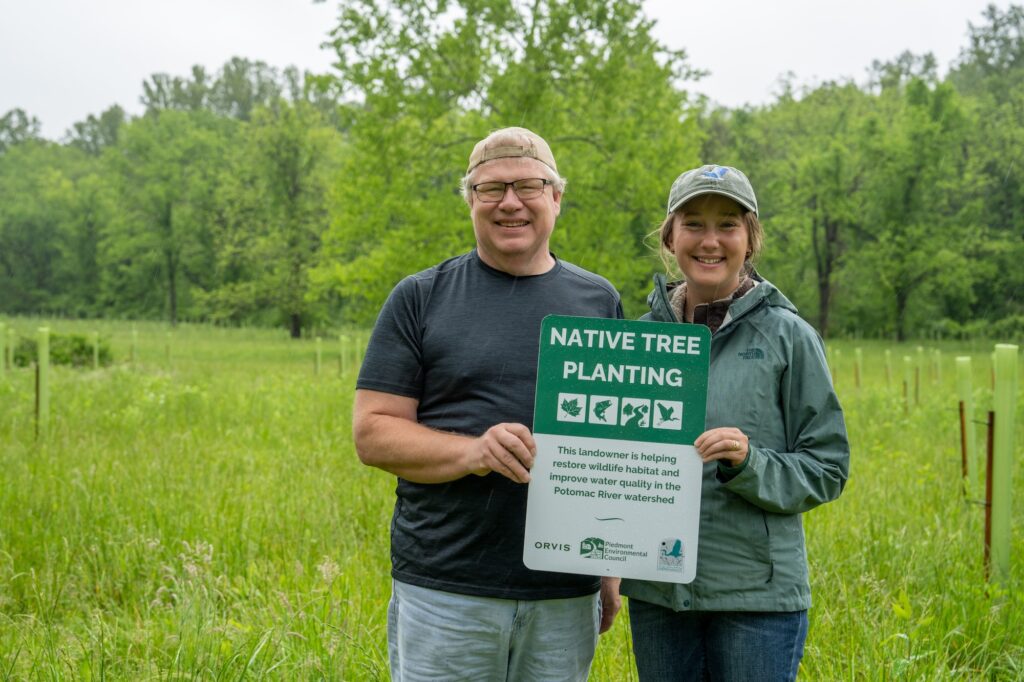
It was a brisk morning in late January as I stood with a Fauquier County landowner. We leaned against a fence at the end of the site visit, discussing the coming tree planting projects at her property, when she said, “I want you to know that we’re a team. Whether it’s today as we’re standing here, tomorrow, or the next day, we’re in this together.”

Broad Run Bridge Expansion Proposal Threatens Chapman-Beverley Mill

Broad Run Bridge Expansion Proposal Threatens Chapman-Beverley Mill

A proposal from the Virginia Department of Transportation (VDOT) would replace and significantly widen the I-66 bridge at Broad Run, leading to potentially disastrous implications for historic Chapman-Beverley Mill, as well as the Broad Run-Little Georgetown Rural Historic District and the surrounding area.

Conserving a Crown Jewel in Culpeper County

Conserving a Crown Jewel in Culpeper County

Western View Plantation in Culpeper County gets its name from the panoramic vista of the Blue Ridge Mountains and Shenandoah National Park seen from its pastures and fields. This 700-acre working farm exemplifies the kind of agricultural operation that sustains a thriving rural economy.
Thanks to the efforts of many — including a farming family dedicated to conserving farmland for the continuation of our local food systems — PEC used $1.6 million of state and federal funding to purchase an Agricultural Land Easement that now permanently protects the excellent soils and streams that run through Western View.

Expanding a Piece of Heaven

Expanding a Piece of Heaven

As the warm sunlight stretches through the bare tree branches at The Piedmont Environmental Council’s Warrenton office, Hans and Anne Wachtmeister huddle in the yard for a picture. With a smiling face, Hans holds up a sign that reads, “This property is forever protected with a conservation easement.”

A Conservation Win in Loudoun County

A Conservation Win in Loudoun County

The conservation of Beaver Dam Farm also marked an important milestone in protecting water quality, as conservation of the farm’s nearly half-mile of frontage along Beaverdam Creek provided the last link in a continuous 5-mile corridor of protected lands along the waterway. Beaverdam Creek is a major tributary of Goose Creek, a designated Virginia Scenic River and public drinking water source for Loudoun and Fairfax counties.

Conservation Funds Protect Clarke County Property

Conservation Funds Protect Clarke County Property

Sometimes advancing conservation in our region means supporting another partner’s vision. This was the case last year, when The Piedmont Environmental Council contributed funds from our Clark County Land Conservation Fund to the purchase of a conservation easement at the 43-acre Lilly property, facilitating a conservation win for all parties.