As Dominion is acquired by an out of state company, who has Virginia’s best interests in mind?
WARRENTON, Va. (May 27, 2026) – The announced acquisition of Dominion Energy by NextEra is the latest — and largest — example of the expansion of monopoly control over basic utility services and is a threat to Virginians’ right to self determination.
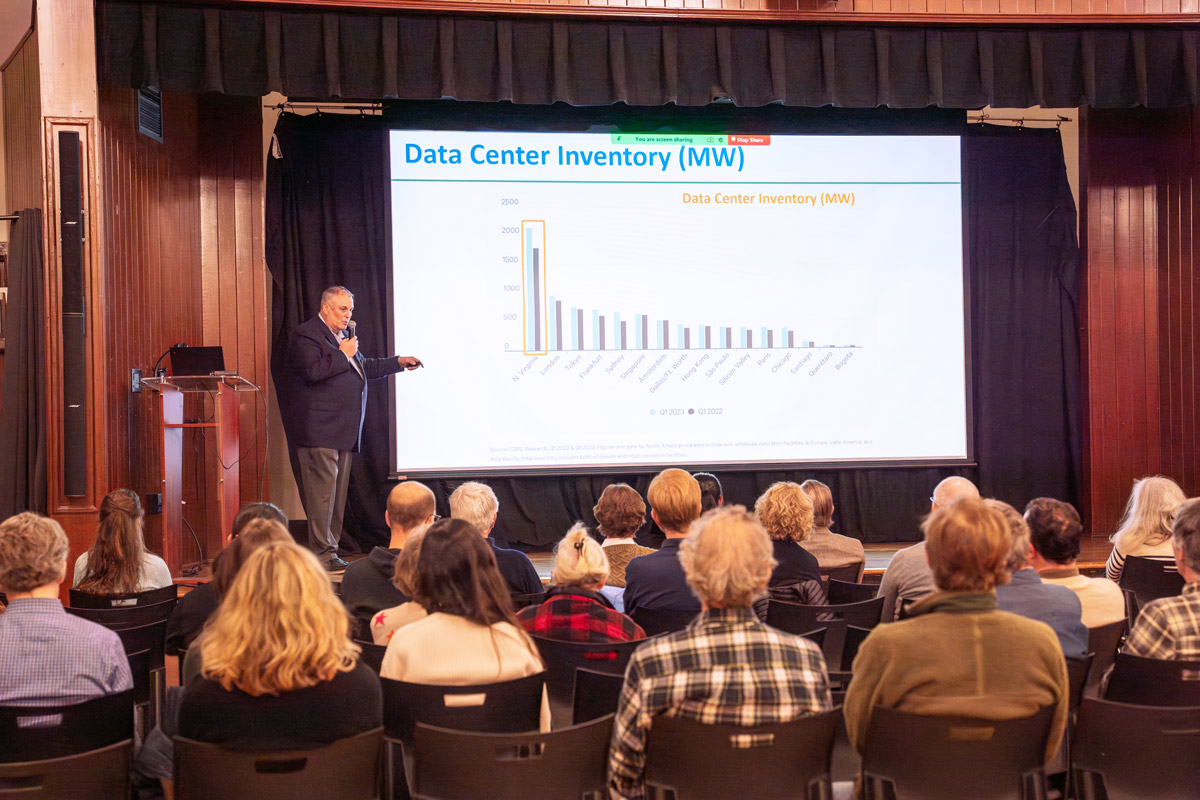
The consolidation of these two large utilities is to facilitate the build out of energy infrastructure needed for data center demand: 70 GW in Dominion territory and an estimated 130 GW in PJM territory overall.
This announcement comes at a time when powerful tech interests and monopoly utilities building out data centers and new energy infrastructure have triggered nationwide outrage. Polls from across the political spectrum reflect decreasing support for data centers: Gallup, Washington Post-Schar School, Marquette Law School Poll, Change Research, Data Center Watch.
In light of this consolidation, every Virginian should demand answers from their state representatives to these critical questions.
Regulating the New Megacompany: The combined companies would create the largest utility in the world, operating across at least five states, and it will not be a Virginia company. NextEra could control more of the industry in coordination with large hyperscalers – Google and Meta – with whom they already have partnerships.
- Who will decide what energy infrastructure is most appropriate?
- How will the interests of local communities and Virginia be represented; and who gets to decide?
- How will the State Corporation Commission, Department of Environmental Quality, and other state agencies regulate this gigantic new entity?
- The potential for the new entity to have an outsized influence at the state and federal level could overwhelm local interests.
Assessment and Mitigation of Impacts from Massive Generation and Transmission Expansion: Currently, Dominion cannot supply the 70 GW of energy it has promised to data centers, which requires massive, new transmission and generation infrastructure. Increasing the amount of transmission and generation in Virginia by 3-5 times will have substantial impacts on our communities, land, air, water, and historic sites, as well as individual private property rights.
- Who will be responsible for determining not only the site specific impacts of the new infrastructure, but also the broader cumulative impacts?
- How will NextEra handle impacts on communities, natural resources and historic and scenic landscapes of Virginia?
Rate Setting and Ratepayer Protections: The SCC has jurisdiction over the review of the proposed acquisition of Dominion Energy and over the Dominion and Virginia Electric and Power Company.
- Who will pay for the infrastructure supporting the 70 GW of electricity generation, transmission and distribution that Dominion has signed contracts for?
- What measures need to be put in place to ensure that the new entity will provide existing ratepayers with energy at a reasonable cost, including the cost of impacts on communities and the environment, without subsidizing the cost of infrastructure needed only for data center demand?
Virginia’s Broader Economy: The character of the state was built on its rich history and beautiful and diverse landscapes. Tourism and agriculture are at risk because of current plans to build transmission lines through hundreds of miles of previously untouched forestland, historic sites, agricultural zones, recreation areas and residential neighborhoods. When combined with the forestry industry, the combined total economic output with agriculture surges to over $105 billion and supports nearly 490,000 jobs, making up 9.3% of the state’s GDP. Tourism has a comprehensive economic footprint of $53.3 billion.
- How will existing industries and other economic sectors be affected by data centers and energy infrastructure?
Eminent Domain: The Valley Link transmission project is just one of a dozen or more large transmission line projects required to serve data centers. This cannot and should not be allowed under current law. Localities still have a voice, as do utility rate payers and local property owners. To exercise eminent domain to take land, there has to be a public benefit. Destroying thousands of miles of forests and farmland is not a public benefit. Town and county boards, along with the Virginia General Assembly, must respond to and support this opposition in order to preserve the communities they were elected to represent and protect.
- How will NextEra justify the taking of private lands for massive transmission line projects?
“Let’s be clear — data centers are the sole reason this merger is happening; this is not a result of increased consumer demand from residential or small business customers. As Dominion and NextEra shareholders reap hundreds of millions of dollars in this deal, everyday Virginians will be left footing the bill, and our natural resources will continue to be depleted. Massive new transmission and generation infrastructure, including dozens of substations, are being forced on communities across Virginia,” says Piedmont Environmental Council President Chris Miller. “Virginia citizens and our representatives must continue to fight for local determination of whether — and under what conditions — this new infrastructure will be built. Concerns about the taking of property or the impairment of property for such a singular purpose will only be heightened by this merger — as will the need for a better, more transparent process to assess impacts, provide mitigation and assign costs to the data center industry,” he said.