
Considering Reissue of a Biosolids Land Application Permit in Albemarle County
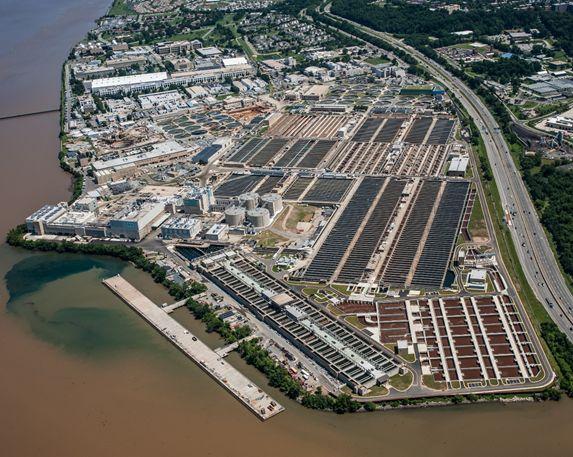
source of most biosolids spread in Albemarle County, Virginia.
Credit: U.S. EPA, Public domain, via Wikimedia Commons.
UPDATE: Since this advisory was released, the Virginia Department of Environmental Quality posted a website update saying “On May 26, 2026, Synagro Central, LLC removed the AB 09 site from the reissuance application, reducing the total acreage to 4,133.5 at seven sites, of which 53.4 acres is new land application area.”
WHO: Virginia Department of Environmental Quality and Albemarle County community members
WHAT: The Piedmont Environmental Council encourages the community to attend a meeting regarding a DEQ permit renewal. Synagro Central, LLC., has submitted an application to reissue an existing Virginia Pollution Abatement permit (# VPA01587) to include 5,782.6 acres of agricultural and silvicultural land at eight sites, of which 1,702.5 acres is new land application area. The permit authorizes the land application of biosolids and water treatment plant residuals as fertilizer to specific sites in Albemarle County. These biosolids are applied on farmlands, which can impact grazing livestock and hay production as well as leaching into wells, groundwater, and surface waters, including drinking water supply watersheds.
According to the Virginia Department of Environmental Quality (DEQ), biosolids are solid waste (sewage sludge) which wastewater treatment plants produce by removing regulated contaminants from wastewater. Refined, in part, from human and food wastes, sewage sludge is rich in nutrients. It is then treated to remove various toxic contaminants (e.g. heavy metals), dried and marketed to farmers by third parties, as inexpensive fertilizer.
During the community meeting, DEQ will share information with the public on technical issues related to the proposed permit reissuance such as: site-specific information that DEQ may consider when drafting the permit; the standard content of permits; and how the public can provide comments on the draft permits.
For site-specific information about this application and additional information about the DEQ permitting program for biosolids and water treatment residuals, visit: Land Application – Virginia Pollution Abatement | Virginia DEQ
Following the public meeting, DEQ will draft a permit based on information in the application and will publish notice of the draft permit for public comment. Based on comments received on the draft permit, DEQ may make a final decision on the permit, or hold a public hearing.
DEQ Contact: Mattie Jenkins, 901 Russell Dr, Salem, VA 24153; Phone: 434-907-7739; E-mail: [email protected]
WHEN: Monday, June 1, 2026, 6:00 p.m.
WHERE: Piedmont Virginia Community College – The Bolick Center Event Space B, 501 College Drive, Charlottesville, VA 22902. (Google Maps)
WHY: Clean water and healthy soil are paramount to public health and viable local food production. The presence of PFAS (polyfluoroalkyl substances), known as “forever chemicals,” in biosolids is a threat to both.
According to the U.S. Environmental Protection Agency, PFAS are a group of thousands of chemicals used in consumer products and industry that are harmful to both human and animal health. Called “forever chemicals” because they do not break down, but instead build up and persist in our bodies, soil, water and wildlife. They contaminate drinking water, ground and surface waters, soil, livestock and crops.
In April, Gov. Spanberger signed House Bill 1072 (put forward by Delegate Amy Laufer), which allows a locality to provide for testing and monitoring for PFAS substances of the land application of sewage sludge using an applicable test method established by the U.S. Environmental Protection Agency. In May, Gov. Spanberger signed legislation into law to protect public drinking water and combat contamination caused by PFAS by improving testing and monitoring protocols.
Media Contact: Elizabeth Ransom, Media & PR Specialist, [email protected]; 540-347-2334 x 7029
###
The Piedmont Environmental Council (PEC) works to protect and restore the lands and waters of the Virginia Piedmont, while building stronger, more sustainable communities. Founded in 1972, PEC is a locally based, community-supported 501(c)3 nonprofit and accredited land trust. At the core of PEC’s approach is a focus on educating, engaging and empowering people to effect positive change in their communities.