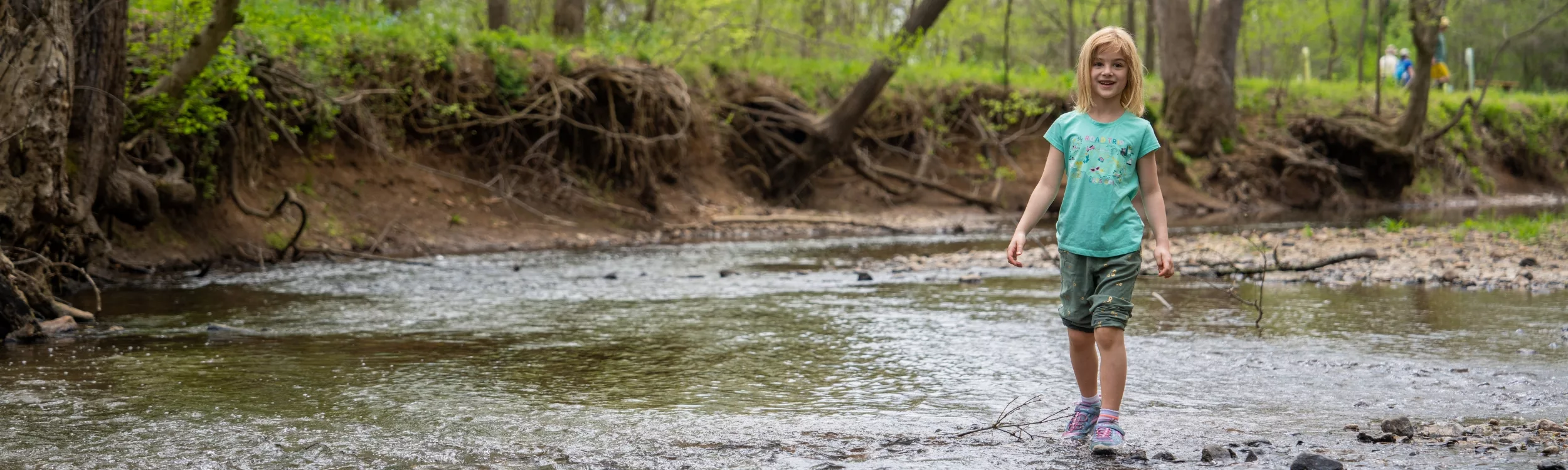
Water is the lifeblood of our land, communities and economy. From the headwater streams of Shenandoah National Park to the Chesapeake Bay, water flows through all of our land. PEC helps landowners and residents across the Virginia Piedmont improve water quality in the region through land conservation, riparian buffer and stream restoration projects, the implementation of agricultural best management practices, and the promotion of more sustainable land use.
Our Watershed Approach
Locally, what we do in our backyards matters to downstream users. Activities on land can increase the amount of pollution that enters waterways, from car oils and fuels to fertilizers and animal waste. All pollution moves with water and sediment and rates of pollution can increase where there is erosion along streambanks in rural settings, or where there is increased impervious surfaces like pavement and rooftops in urban areas.
Efforts to maximize good land use, ranging from farming and forestry to cities and suburbs work to meet watershed goals for the Chesapeake Bay. Land use practices involving energy, agriculture, and urban, suburban and industrial development have a major impact on the available water supply.
Energy projects
Pipelines for gas and transmission lines for power can disrupt watersheds, too. Forests and fields that provide habitat and filter clean water for streams are impacted by large-scale infrastructure. PEC encourages smart management of energy infrastructure, so the placement of gas pipelines and transmission lines does not create a harmful barrier for stream pathways.
Agricultural lands management
Agricultural best management practices (BMPs) include a wide range of management strategies to conserve natural land and water quality while simultaneously improving agricultural production. These best management practices have many benefits that protect water quality, such as decreasing chemical runoff and fencing around streams to prevent harmful erosion. In addition, agricultural BMPs such as rotational grazing, fencing, and protection of native grasses increase cattle safety and soil health, benefiting the rural agricultural economy.
Urban, suburban and industrial development
PEC’s promotion of smart development and growth ensures sustainable long-term land use and complements best management practices for conserving land. Local infrastructure is sustained as good investments when communities choose green infrastructure, and roads are built to minimally impact the health of streams and forests. Partnering with landowners, residents, and HOAs, and working with developers toward these goals, ensures the continued sense of place for future generations in the Piedmont.

Who’s Protecting the Piedmont?
Piedmont Environmental Council Statement on the Potomac River Being Named the Most Threatened River in America
Shenandoah Borderlands project protects 5,000 acres for clean water, habitat, scenic viewshed
Hilton Farm: A Key Piece of the Conservation Puzzle in the Rappahannock-Rapidan Watershed
15,000 Reasons to Celebrate: Plantings, Partnerships and Protecting Water
Meet the Team: Conservation
Photos + Event Recap: A Beautiful Day for the Bluebells
Spring Tree Planting Volunteer Opportunities
Pond Management: A Starter Kit for Healthy Pond Management
