As energy bills go up and the demand for electricity escalates, largely driven by data centers, The Piedmont Environmental Council remains focused on solutions with broad public support.
We are pleased to share the great news that 12 solution-oriented energy bills PEC either authored, informed, or advocated for in the General Assembly were signed into law by Gov. Spanberger!
We worked on these practical legislative proposals with our partners ahead of the 2026 General Assembly session, laying the groundwork for accelerating the underutilized (but high-opportunity) small-scale, distributed generation and storage opportunities in Virginia. These bills add new pieces to the Commonwealth’s clean energy future while also enabling energy independence for more Virginians.
Benefits of Distributed Generation Energy
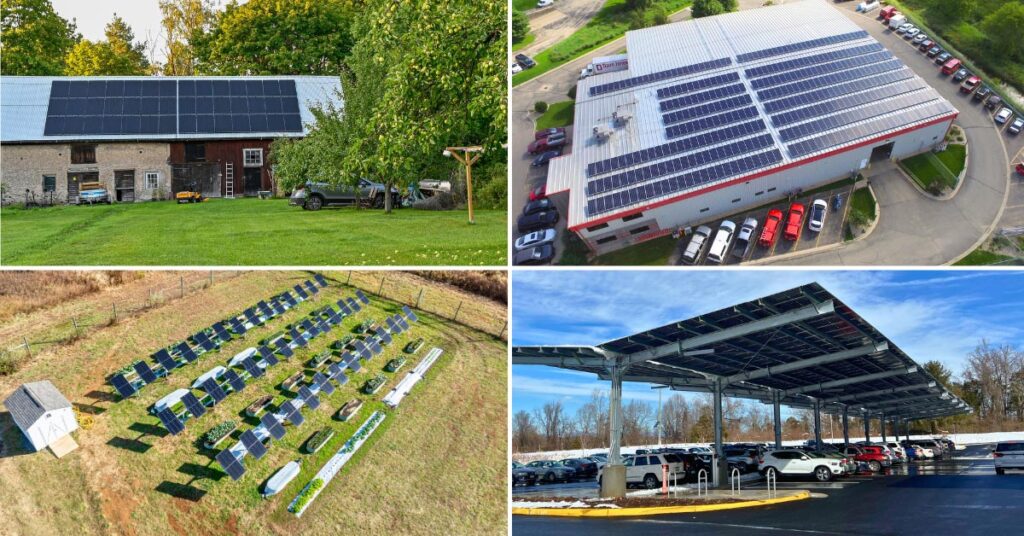
Increasing distributed generation energy (i.e. rooftop, balcony and parking lot solar, small-scale agrivoltaics, etc.) will:
- Aid our clean energy transition
- Preserve important natural resources
- Decrease overall power load on the grid
- Reduce the need for costly new transmission and generation infrastructure
- Connect energy quickly to the grid at a time when we need it most
- Aid consumers dealing with rapidly escalating utility rates
- Make way for personal energy independence and virtual power plants with battery backup
Which Bills Are Now Law?
All of the legislation below has either been signed or is expected to be signed into law by Gov. Spanberger and received broad, bipartisan support throughout both the Senate and House. Bills 2-6 below, coined the “Affordable Clean Energy Package,” were developed through rigorous and productive engagement within a robust stakeholder group including The Piedmont Environmental Council, Southern Environmental Law Center, Virginia Conservation Network, Virginia League of Conservation Voters, Solar United Neighbors, Permit Power, Chesapeake Climate Action Network and Advanced Energy United.
1. Agrivoltaics Definition Created [SB340/ HB508]
Until now, Virginia lacked an official definition of “agrivoltaics.” Working alongside the Virginia Farm Bureau, PEC helped Virginia develop an official definition for “agrivoltaics” that will ensure dual use solar projects take best management practices into account. This bill, carried by Sen. Russet Perry and Del. John McAuliff and signed into law by Gov. Spanberger on April 6, now officially defines agrivoltaics as solar development that:
- Prioritizes and sustains agricultural production
- Ensures land remains in active farm use
- Allows for the continued sale of agricultural products on existing farm businesses
- Maintains flexibility for farmers over time
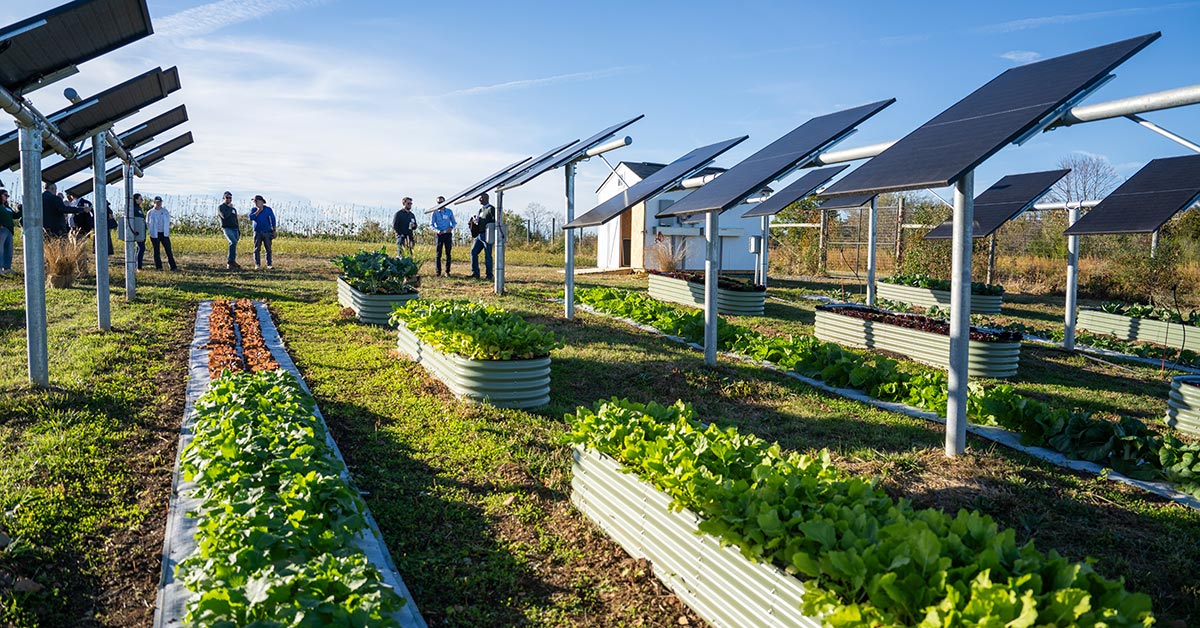
When done well, agrivoltaics represents a collaborative path toward cleaner energy production in a way that allows farmers to gain energy independence, protects farms from rising utility bills, and provides another potential revenue stream for farmers, all while keeping our agricultural lands in production.
This legislation builds on the collaborative work between agricultural, conservation and solar groups. PEC’s Community Farm in Loudoun County serves as an important testing ground and demonstration site for Virginia’s first crop-based agrivoltaics project – officially completed last year.
2. Distributed Generation Expansion Act [SB175/ HB628]
Distributed generation is a type of energy production that occurs on small-scale, onsite locations like rooftops, parking lots, landfills, etc., rather than larger scale power plants that send generated energy over longer distances. Because of Dominion Energy’s stronghold on the regulatory environment in Virginia, the state has been limited in how much of this type of power generation it can implement. Unlike with distributed generation, for-profit investor-owned utilities – like Dominion – make significant, guaranteed profits off of large scale generation and transmission projects.
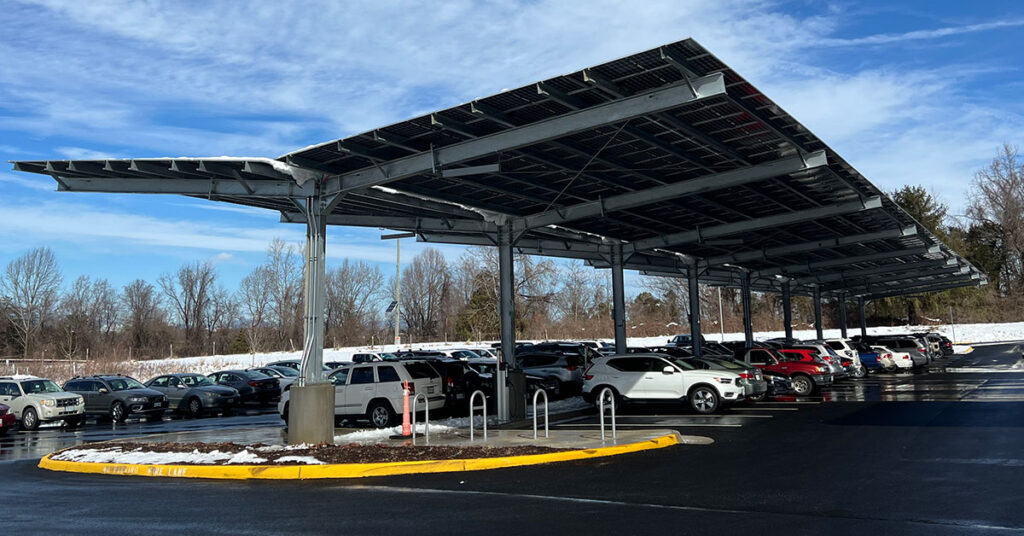
This legislation: 1) increases the amount of distributed generation Dominion must build annually by nearly five-fold, and 2) mandates 1 gigawatt (GW) of solar be built on previously disturbed sites, including parking lots, landfills, coalfields and contaminated industrial or commercial sites. That’s enough to power over 175,000 homes! Installing this distributed energy generation on previously developed sites will save around 10,000 acres of agricultural and forested land from energy development – and will allow affordable energy to connect to the grid and be put to use more quickly.
3. Energy Storage Expansion [SB448/HB895]
Long duration energy storage is a type of battery system that captures and stores energy when it is plentiful and discharges it when supply is low. In other words, it allows stored energy, including solar and wind, to continue to power your home long after that energy has been produced. When storage is paired with renewable energy, our existing generation becomes more efficient. Adding storage also decreases the need for expensive new transmission and polluting gas plants by decreasing the data-center-driven peak load pressure that is pushing Virginia to build new energy infrastructure.
This legislation, patroned by Del. Sullivan and Sen. Bagby, substantially increases the amount of storage Dominion is required to build by 2045. Targets for short duration storage, which is typically 2-4 hours worth of energy per site, will increase six-fold from 2.6 GW to 16 GW. Long-duration storage, a developing technology which can hold energy for over 10 hours, will now have a 4 GW build target. Additionally, as part of PEC’s years-long engagement on the bill, there will now be a workgroup that will develop best practices and a guiding model ordinance to empower localities to build better projects.
4. Smart Permitting (SolarApp+) [SB 382/HB590]
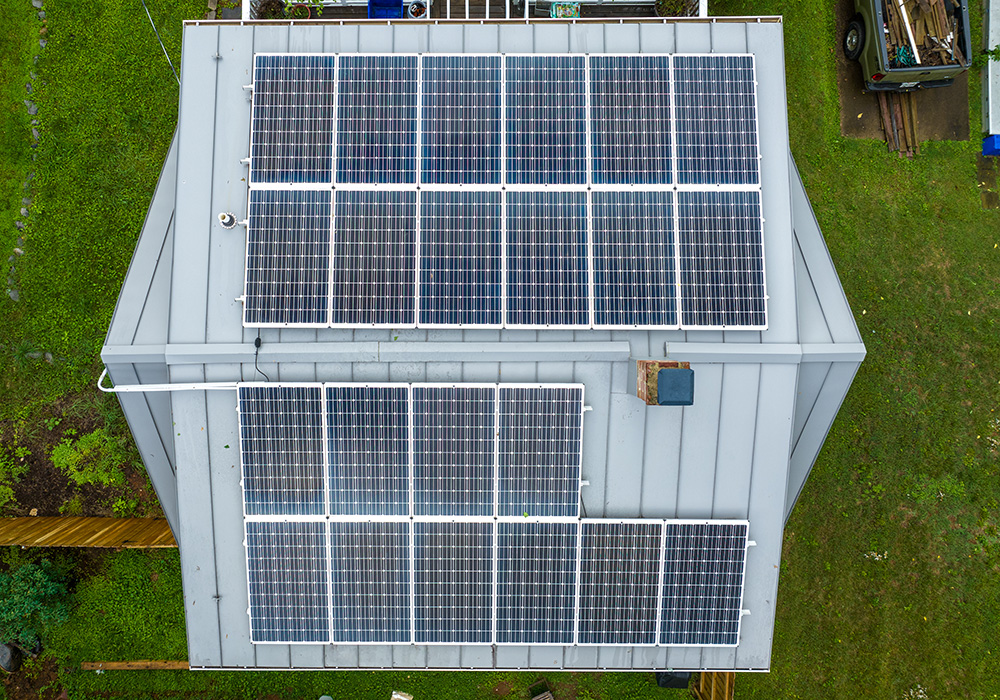
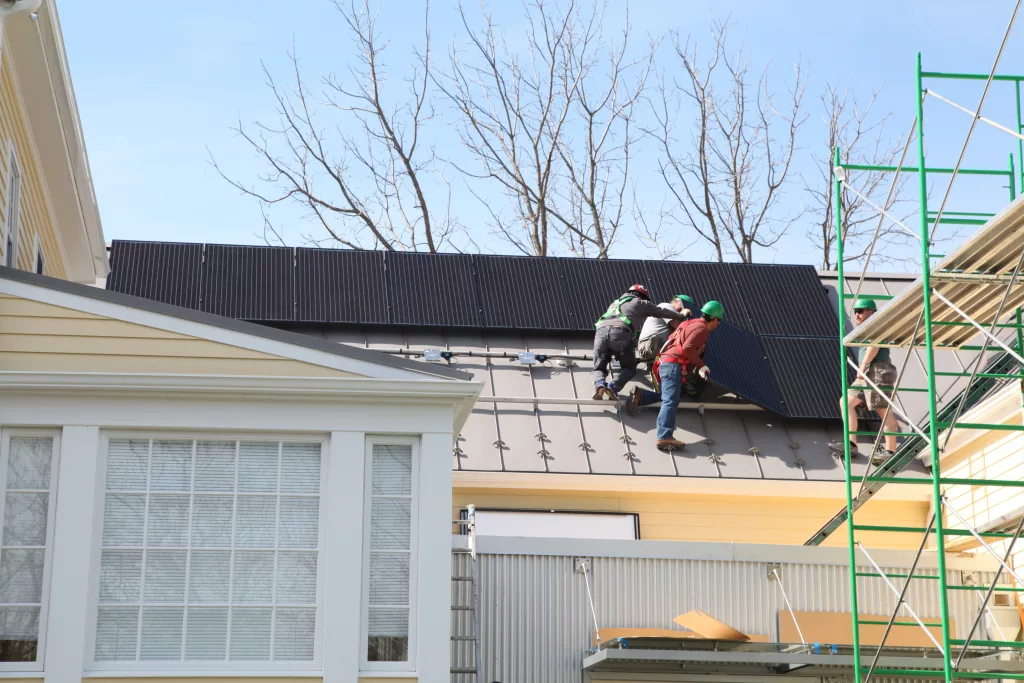
Rooftop solar on homes and buildings remains a powerful, but underutilized way to generate your own power – and protect yourself from rising electric bills. However, getting the county’s approval to install rooftop solar often entails months long delays. This delay often increases the costs of the project. Compare this to a country such as Australia, where a system can be purchased, installed and permitted in a matter of days and at around a third of the cost. It is critical that we work to decrease the various hard and soft costs around rooftop solar. This bill is a positive step in that direction.
This legislation creates a Virginia Department of Energy automated tool to streamline this rooftop solar permit approval process. A locality can also adopt this tool, or create its own. Either option will work to save the county and the consumer time, resources and money.
5. Balcony (“Plug-in”) Solar [SB 250/HB395]
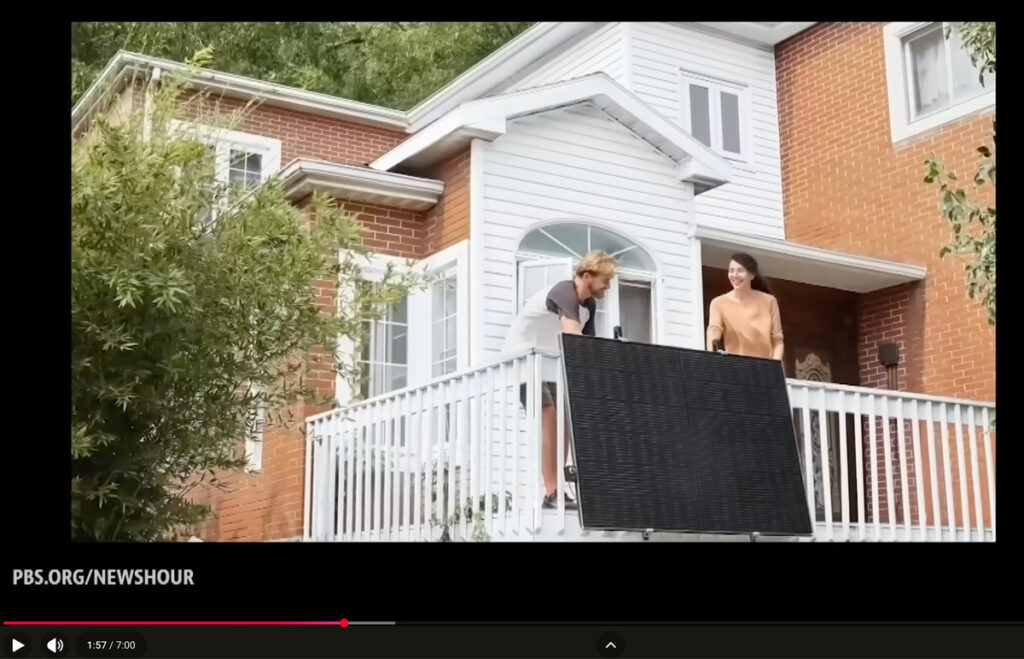
This legislation removes the red tape for small, plug-in solar panels in Virginia, while maintaining national safety standards. Plug-in solar panels, which connect to a standard power outlet, provide a simple, reliable way for consumers to save money by generating their own electricity. A micro-inverter converts the solar energy to AC power and feeds electricity into the home’s circuit. Small-scale plug-in systems can be installed on a balcony, in a front- or backyard, or on a roof.
Ranging from 200-1,600 watts in output, plug-in systems provide enough electricity to power a small air conditioner. Small solar installations on balconies are popular in other countries, where people have installed millions of easy, low-cost solar panels to generate power.
6. Consumer Protections for Residential Solar [SB823/HB1439]
This legislation builds trust in the residential solar adoption process by protecting vulnerable homeowners from predatory practices by some solar companies. The law requires a consumer disclosure form that transparently outlines the specifications, costs and financing options before a residential solar contract is signed. Violating companies will face a civil penalty as a key part of establishing trust in residents as we seek a more robust distributed generation buildout in Virginia.
7. Distributed Energy Resources Task Force [SB223/HB 285]
This bipartisan compromise establishes an advisory commission within the Department of Energy that will be responsible for creating a comprehensive strategy to advance the Commonwealth’s transition toward integrated distributed energy resource markets.
During the 2026 General Assembly session, PEC also supported legislation to advance:
- Shared Solar: Increases shared solar capacity and the ability for multiple households to benefit from smaller solar installations. This will expand the shared solar programs operated by Appalachian Power and Dominion Energy by 50 megawatts (MW) and 525 MW respectively.
- Virtual Power Plants: Allows all energy generated or stored by batteries, heat pumps, thermostats, etc., to be fed to electric cooperative companies (customer-owned, not-for-profit utilities), which are then able to act as “virtual power plants.” The electric cooperatives can then use that energy to supply its other customers.
- Electric co-ops: Under the legislation, an electric cooperative may initiate and implement a virtual power plant, offer incentives to residential customers to purchase battery storage devices and must to evaluate various methods to optimize demand.
- Appalachian Power: Requires a pilot program to evaluate electric grid needs and the ability of virtual power plants to help meet them.
- Parking Lot Solar [SB26/HB1234]: Empowers localities to require solar canopies on nonresidential parking lot developments that would have 100 or more contiguous parking spaces, with some exemptions. For example, think solar panel canopies over a Walmart parking lot that produce power and shade cars.
It was wonderful to move forward on so many exciting pieces of legislation after years of effort to establish common ground in disparate spaces. Working to bring these priorities together enabled us to move renewable energy forward in a responsible, durable way. Thank you to all who supported these bills!
For more information about PEC’s energy work, contact Ashish Kapoor at [email protected].
This text was taken from an email alert sent out on April 16, 2026. Sign up for emails →