This text was taken from an email alert sent out on June 5, 2026. Sign up for email alerts →
Dear Supporter,
I’m excited to share a major win for clean energy and energy independence in Virginia. The State Corporation Commission (SCC) ruled that net metering, which is an essential part of rooftop solar, will remain unchanged! PEC has been engaged in this net metering regulatory case as an intervenor since last year.
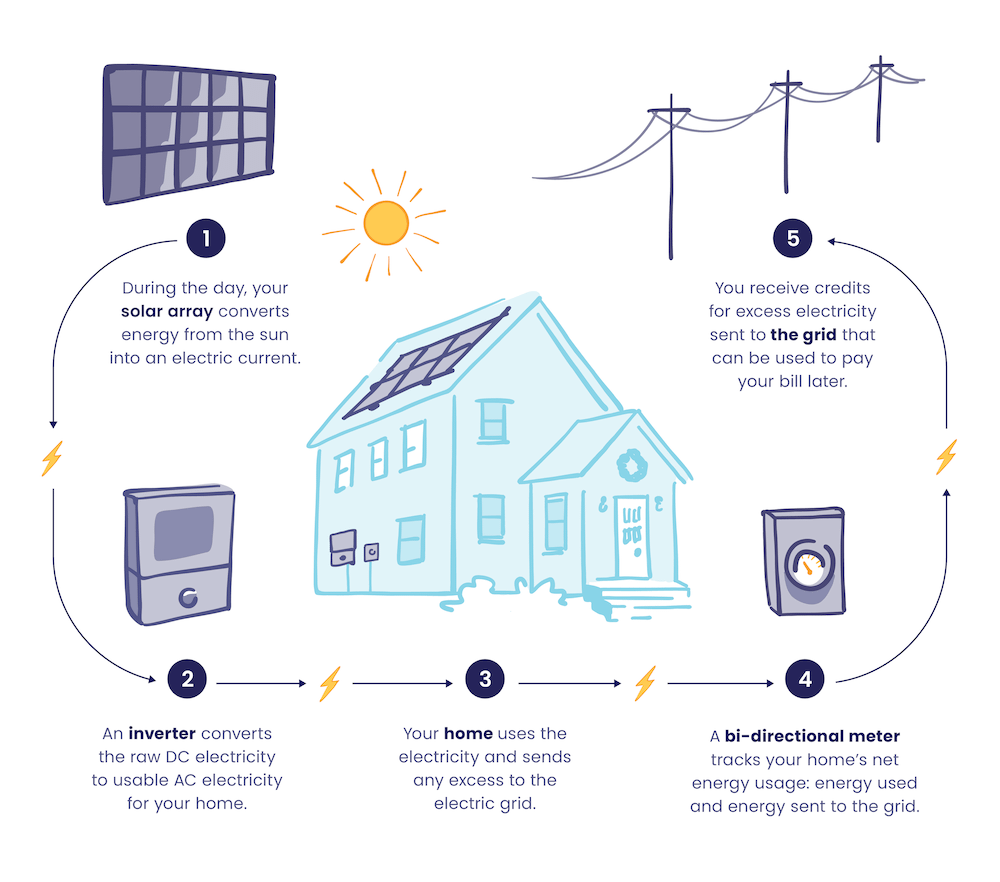
Net metering gives people credit for the excess energy their solar panels send back to the grid. Simply put, it makes rooftop and other small-scale solar fair and financially-viable choices. It allows Virginia families and businesses to invest in energy independence and protect themselves from rapidly-escalating power bills.
Solar owners currently receive a credit equal to the full per-unit value of excess energy their solar panels send back to the electrical grid. Last year, Dominion petitioned the SCC to decrease net metering rates.
Had Dominion been successful, the change would have cut the net metering rate by nearly half, slashing an important incentive for Virginians to adopt clean energy alternatives. Dominion’s proposed change would have reduced the practicality of rooftop solar and severely hampered distributed energy generation. All of this, at a time when Virginia is facing an energy crisis being driven by skyrocketing data center energy demands that are straining the grid.
How Net Metering Works
The SCC sent out a clarification on its May 1 ruling, in which it concluded that Dominion must “[maintain] the existing energy-based accounting for netting imported and exported electricity over the [one-year] net metering period.”
In addition, the SCC rejected both Dominion’s request to capture the customer’s Solar Renewable Energy Certificates (SRECs) and its attempt to add a burdensome fee for new applications. They also approved a 30-minute interval for purposes of developing more accurate data regarding net usage; however, netting will remain annual for solar customers.
The only meaningful financial change for a customer receiving net metering credits is the “export credit” for any excess energy left over after the one-year mark, which will now be credited at 5.8 cents per kilowatt hour, a value about 2.5 times lower than the previous rate. However, customers will still receive the same value for leftover energy they return to the grid from month to month – this only affects the leftover energy value when the meter “resets” every year.
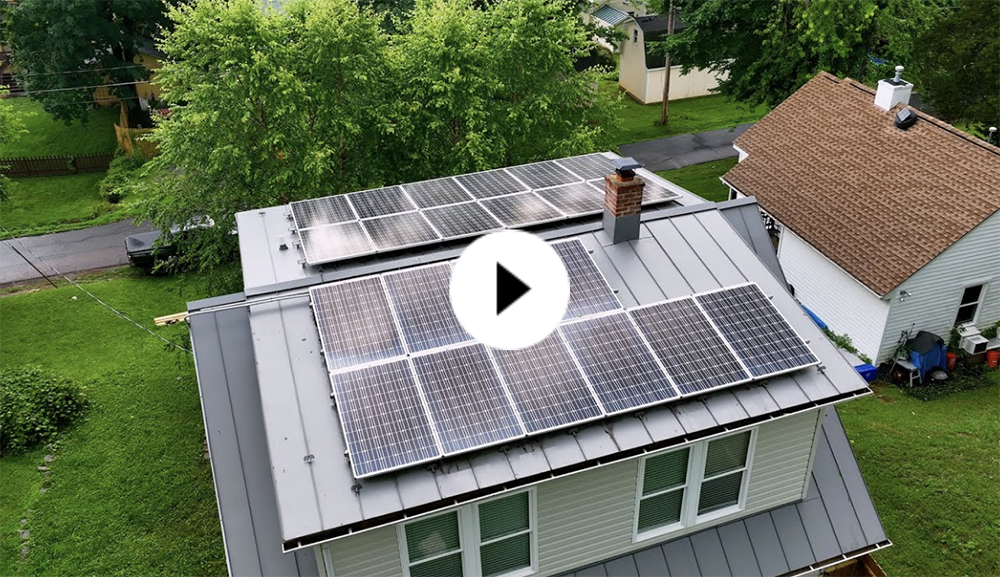
Save on Electricity Bills with Solar + Solarize Piedmont
Now that net metering is protected, it’s the perfect time to go solar. If you’ve been thinking about getting solar for your home, business, or farm, you can get a free quote from a well-vetted, qualified installer with Solarize Piedmont now through July 15, with no commitment. If you decide to go solar, you’ll be joining over 50,000 Virginians that are already getting clean, affordable energy on their own roof or property.
Why Solar?
Solar is a smart, reliable way for homeowners to take control of their energy costs, and it’s more accessible than ever.
- Solar provides durable technology, flexible financing options, and local support.
- Solar connects clean energy to the grid, helping our regional energy system.
- As electricity prices continue to rise, solar offers long-term savings — up to tens of thousands of dollars over the life of the panels – and greater predictability for household budgets.
- And when paired with backup batteries, solar creates “off the grid” energy independence.
In addition to Solarize Piedmont’s negotiated pricing, you can also take advantage of Solar Renewable Energy Certificate (SREC) incentives available to Virginians who make the switch. With our legislative victories expanding Dominion’s distributed generation requirements, these values are expected to rise over time.
Free Solarize Webinar
Join Solarize Virginia’s free informational webinar Wednesday, June 10 from 2-3 p.m. to learn about the benefits of solar, how it works, financing options and what to expect — from installation to long-term savings. You’ll also be able to ask questions and connect with trusted local resources.
Learn more and register →
You can also visit our Frequently Asked Questions (FAQs) page.
The Value of Solar: More Than Meets the Eye
PEC is committed to advancing Virginia’s clean energy future. Last year, we commissioned a study by Dunsky Energy + Climate Advisors to calculate the actual value of distributed solar generation to every Virginian. The study considered a range of factors that utilities don’t acknowledge, such as how quickly clean energy can be connected to the grid; reduced negative impacts from new transmission and generation projects; and the environmental benefits of conserving lands that would be otherwise lost to energy development – all things small-scale solar provides.
The report demonstrates that these factors contribute significantly and therefore, the value of small-scale, distributed solar far exceeds Dominion’s assessment.
Read the Value of Solar Report →
As Virginia moves toward its clean energy targets under the Virginia Clean Economy Act, policy frameworks must reflect the full range of benefits that distributed solar and storage provide and offer a fair and comprehensive valuation of distributed energy resources. This will ensure support for increased investment in distributed solar generation and allow these resources to play a growing role in meeting Virginia’s energy needs–reliably, affordably, and sustainably.
Moving the Needle on Clean Energy Legislation
Gov. Spanberger recently signed into law 12 solution-oriented energy bills PEC either authored, informed, or advocated for in the 2026 General Assembly. Those bills lay the groundwork for accelerating small-scale, distributed generation (e.g., rooftop, balcony and parking lot solar, small-scale agrivoltaics, etc.) and storage opportunities in Virginia.
These technologies aid our clean energy transition, preserve important natural resources, and decrease overall power load on the grid, reducing the need for costly new transmission and generation infrastructure.
Bills signed into law this spring include a definition of agrivoltaics, which is important for future incentives and ensuring that dual use solar projects take best management practices into account; requirements for increased buildout of distributed generation on rooftops, parking lots and brownfields; expansion of energy storage; streamlined permitting for rooftop solar; approval of balcony (aka “plug-in”) solar; consumer protections for residential solar; creation and expansion of shared solar and virtual power plants, creation of a Distributed Energy Resources Task Force; and more.
Read more about these bills and other legislation PEC advocated for →
These bills add new pieces to the Commonwealth’s clean energy future, while adhering to conservation values and enabling energy independence for more Virginians.
Thank you for your engagement and attention to these important issues impacting energy affordability in Virginia. Please don’t hesitate to reach out with any questions. For Solarize-related questions, you can also reach out directly to LEAP at [email protected].
Sincerely,
Ashish Kapoor
Senior Energy & Climate Advisor
[email protected]
540-347-2334 x7054