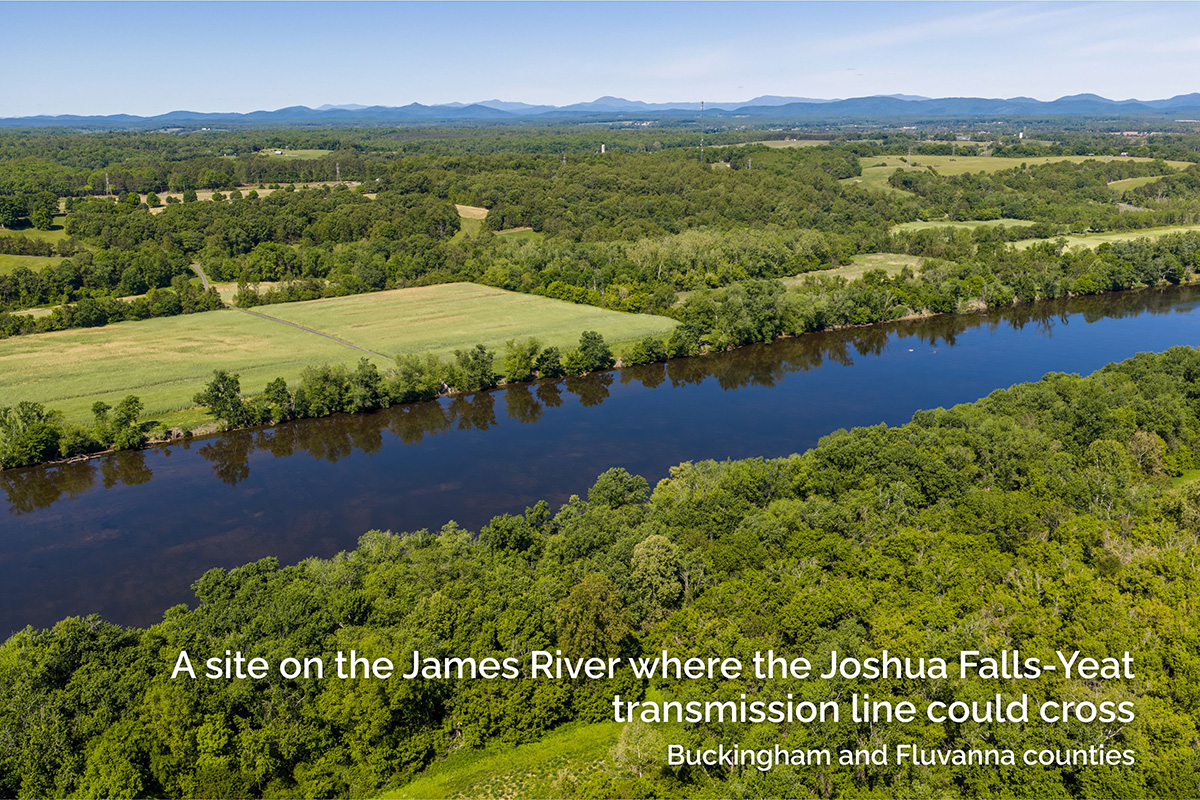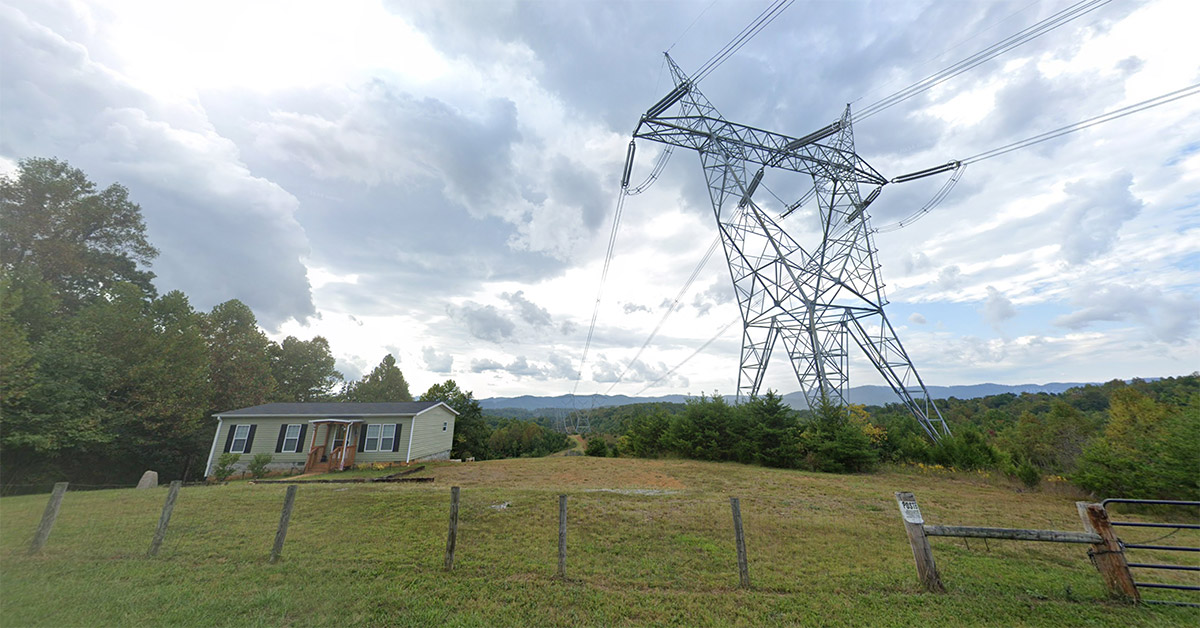
This text was taken from an email alert sent out on June 3, 2026. Sign up for email alerts →
Dear Supporter,
In February, Valley Link Transmission – a joint venture between Dominion Energy and two other utilities – revealed preliminary routes for a 115-mile, 765 kilovolt transmission line project called Joshua Falls-Yeat, named for the two substations it intends to connect.
The highest-voltage transmission line ever proposed in Dominion Energy’s territory would carve through as many as nine Virginia counties to deliver power to Dominion Energy’s growing queue of data centers.
Since then, PEC and the communities the project would plow through have been hard at work: showing up at meetings, sharing information, alerting residents and identifying and mapping impacts.
This email addresses what the next steps are for this project, including a list of community meetings you can attend in June, an opportunity for public comment, and what actions communities have taken. Despite Dominion’s claims that the line is needed for regional stability, it is clear that without data centers, it would not be needed and that there is no immediate benefit to any of the nine counties.
Updated Routes and Community Meetings
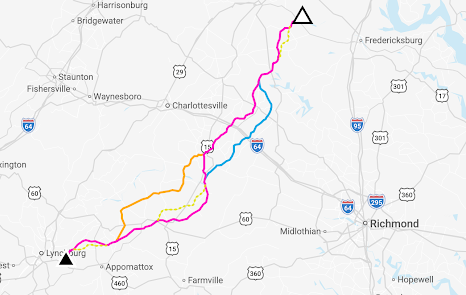
Map of the proposed Joshua Falls-Yeat corridors. Source: Valley Link Transmission.
On May 27, Valley Link released updated routes for the project. To see the routes previously released in March and the new proposed routes, you can visit Valley Link’s site for the project; once there, you’ll need to either create an account or “Continue as Guest,” then use the checkboxes on the left-hand side of the map to toggle the routes previously released in March on and off to see how things have changed.
The potential paths the project could take have shifted at least slightly in every locality. Its proposed starting point, originally slated to be the existing Joshua-Falls Substation in Campbell County, also looks to have been moved about two miles southeast and will now require a brand-new substation.
Valley Link is hosting a second round of community meetings to present these changes in June. As so many of you did in March, we urge you and your neighbors to attend.
- Wednesday, June 10
- Virtual
- Monday, June 15:
- Orange County
- Spotsylvania County
- Tuesday, June 16:
- Appomattox County
- Goochland County
- Thursday, June 18
- Buckingham County
- Campbell County
- Monday, June 22
- Fluvanna County
- Tuesday, June 23
- Louisa County
- Thursday, June 25
- Culpeper County
Joshua Falls-Yeat Corridor Named One of Virginia’s Most Endangered Historic Places
Preservation Virginia announced that the project corridor has been named to their annual list of Virginia’s Most Endangered Historic Places, at a press conference held by PEC and several of our partners, hosted by Historic Germanna May 19. PEC’s statement notes the impact from the “unchecked and unregulated growth of the data center industry in Virginia.”
Communities Band Together
The public response to this project has been extraordinary. Residents in the affected counties turned out by the hundreds in a series of March open houses hosted by Valley Link. Local groups have begun organizing their neighbors in opposition across the region, and thousands have flocked online to coordinate.
Residents have packed local government meetings to express their concerns about the project. PEC has joined many of these meetings, each with its own massive showing of concerned residents. In Orange County, for example, an estimated 1,000 people attended the March 24 meeting.
That grassroots effort has filtered to local elected officials. In an uncommon display of solidarity, eight of the nine counties’ boards of supervisors have adopted formal resolutions to oppose the transmission line. Some counties’ stances are stricter than others, but collectively they reference the sweeping concerns raised by their citizens.
Last month, a multi-county summit was held in Louisa to discuss joint opposition to the project. Though they all have different factors to consider, at least five counties (Culpeper, Fluvanna, Goochland, Louisa and Orange) are working under joint legal representation to oppose the project.
Take Action
The region the Joshua Falls-Yeat transmission line would cut through includes irreplaceable historical, environmental and cultural resources, essential agricultural and forestal lands and scenic landscapes. These resources are important economic drivers, while supporting environmental health and enhancing resident’s quality of life. Direct visitor spending through this region was $677.7 million in 2024.
As Valley Link has frequently noted, high voltage lines are like new superhighways. The land within several miles on either side will be subject to new development pressure for potential substations, generation and new data center proposals, similar to the development pressures opened up by interchanges on an interstate. Because designs are subject to change, properties not affected by the current draft could end up being impacted if the line shifts.
June Actions
1. Attend Follow-up Community Meetings
Valley Link held a flurry of community meetings in March. Based on that initial resident feedback, they’ve updated routes and are hosting community meetings to present these changes in June. If you’re able, attend your local meeting and bring your neighbors!
2. Submit Comments to PJM
Because significant changes have been made to the proposed route since PJM selected it in February 2025, the project is due to be re-approved by PJM’s board within the next two months. This is where you come in.
We encourage you to email comments to PJM at [email protected] with your concerns about the project before it is re-approved by the board in its current form, likely in July. Request they be forwarded to the PJM Board of Managers concerning their pending review of scope changes for the Joshua Falls-Yeat Transmission line.
Some suggested topics include:
- Insights you can offer about the impacts the line would have on your local community, and
- Questions about the validity of its timeline given the scale of community concern and county government opposition representing nearly its entire length.
Both of these points will help frame the issue of whether this project is really the best available solution. If PJM is serious about an in-service date just three years from now, then an accurate assessment of the obstacles to that timeline is warranted. We won’t see alternatives that better protect Virginia’s communities and natural resources if we don’t advocate for them.
For example, in a similarly competitive process this year, PJM selected a Dominion proposal to build a 185 mile-long high-voltage line entirely underground, and mostly within existing rights of way. When fully complete, that project would be able to move nearly as much power as the Joshua Falls-Yeat line, all without taking 2,600 acres of private land.
And Culpeper County, whose Board of Supervisors adopted a resolution to oppose the project in April, has approval authority for the siting of the Yeat substation, without which the project can’t move forward in its current form. Campbell County will also need to approve a new Joshua Falls substation location. And in between the two, Valley Link will need to acquire thousands of acres of greenfield land through either negotiation or eminent domain.
Valley Link expects to file an application in September with the State Corporation Commission, which has approval authority for transmission lines like this. Stay tuned for ways to get involved in that process in the coming months.
In light of the expansion of gas generation in the region, such as Fluvanna’s Tenaska plant and Dominion’s recently proposed Cumberland gas plant, it’s increasingly clear central Virginia is expected to bear an outsized portion of the energy infrastructure required to serve the world’s data centers. It’s crucial to engage on this issue, in connection with our data center reform and clean energy efforts.
The Joshua Falls-Yeat line is one very large piece of an even larger story. PEC will continue to tell that story, and we couldn’t do it without your support. Please feel free to share this widely and make sure you’re signed up for alerts from us at pecva.org/signup.
Thank you for staying engaged,
Michael Barber
Senior Energy Infrastructure Policy Analyst
[email protected]
(540) 347-2334 x7036