
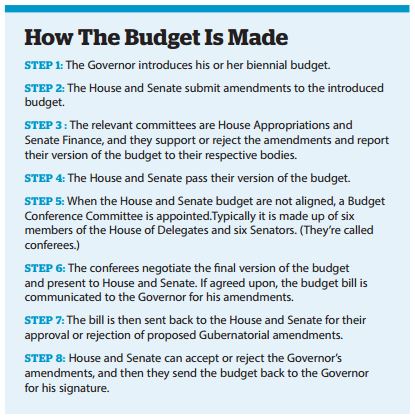
Virginia operates on a biennial budget of which, we are in the second year. The Governor introduced his amendments to the budget in December. While our focus was on changes to the conservation grant programs and the Land Preservation Tax Credit, we were also concerned by the lack of funding provided for Agricultural Best Management Programs (Ag BMPs). That introduced budget became the foundation for the House and Senate Budget bills. Below is a brief description of the differences between the two budget bills.
Regional, State and National
PEC joins with partner organizations to promote thriving communities and healthy natural resources in the Shenandoah Valley, the central Piedmont, the Journey Through Hallowed Ground corridor and Northern Virginia counties.
Good News! Subcommittee Tables HB 1470
HB 1470, which would significantly cut Virginia’s successful land conservation incentive, was tabled in subcommittee on Wednesday, January 18.
General Assembly eyes further cuts to land conservation
The Virginia General Assembly will kick off on January 11, 2017, and with a budget shortfall weighing heavily on the minds of our legislators, a lot of cuts are being discussed. Of particular concern is HB 1470, which would substantially reduce the tax incentives for land conservation. This text was is a modified version of an email alert we sent out on December 20, 2016.
Post-election thoughts
Coming out of the election there is a lot of concern, particularly within the environmental community, about the direction that federal policy will go over the next four years. What parts of campaign rhetoric will become reality? On that subject, only time will tell.
Here at The Piedmont Environmental Council we have historically tried not to rely on federal policies, but rather the direct actions of residents, landowners, and businesses in the Piedmont region. It’s a bi-partisan approach, and something we have found people of all political stripes can rally around.
In that vein, here are some post-election thoughts from The Piedmont Environmental Council’s President, Chris Miller:
This Year’s General Assembly
Each winter, one hundred state delegates and forty state senators convene for the Virginia General Assembly, in either a 45-day “short session” or a 60-day “long session.” This year—it was a long session.

10/1/15: Update on Warrenton-Wheeler Transmission Line Case
Following a two day evidentiary hearing in Richmond in August 2015 and one final public hearing was held in Warrenton on August 10, 2015, the Warrenton to Wheeler transmission line case is slowly moving towards resolution.
Background on Warrenton-Wheeler-Gainesville
Dominion and Northern Virginia Electric Cooperative (NOVEC) are pursuing a new 230kV transmission line through Prince William County and Fauquier, stating current or future reliability issues associated with the Warrenton Substation in Fauquier County, and the Wheeler and Gainesville Substations in Prince William County, as the reason for the project.
A Broad List of Opposition to the Outer Beltway
A list of groups who have opposed the Outer Beltway, and a list of elected officials who have publicly opposed or expressed concern.
*this list is a work in progress. If you would like to add your organization or your name to the elected officials list, please contact [email protected]*
Sacrificing History… For What?
Often environmentalists are told that we just 'say no' to things. To which I would argue — saying 'no' to a bad idea is a very important part of what we do. But it's not all we do. At The Piedmont Environmental Council we also strive to put forward constructive alternatives. That's why it's so frustrating to see the Virginia Department of Transportation, led by Sean Connaughton, make mega-projects like the Outer Beltway and Charlottesville Bypass its highest priority. Despite great arguments against both projects — fiscal, environmental, common sense arguments — and plenty of alternatives, VDOT is charging ahead. This text is from an email alert sent out on September 19, 2013:

When Mickey Came to Town
Virginia’s northern Piedmont is a beautiful and vibrant place—boasting of forests, rivers, mountains, farmland, thriving towns, and numerous historic and cultural resources. But all of this came under threat in November 1993, when the The Walt Disney Company made a surprise announcement that they planned to build an American history theme park near what was then the small town of Haymarket, VA—only four miles from Manassas Battlefield.