
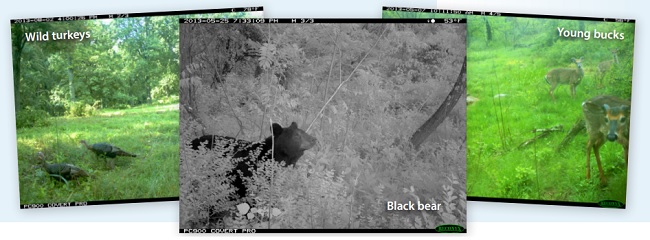
The first two steps in land management are to assess what condition the land is in and then decide what your goals are. PEC is going through both of these steps at the Piedmont Memorial Overlook—our 50-acre tract that straddles Clarke and Fauquier county.
PEC
On the Ground- Fall 2013
There's a lot going on throughout the region, including short stories from Albemarle, Clarke, Culpeper, Fauquier, Madison and Orange.
Looking Ahead
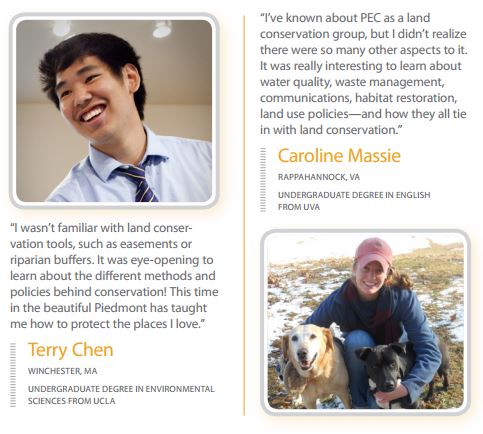
PEC’s Fellowship Program, which just finished its 7th year, gives college and graduate students a comprehensive look at the work PEC does in this region. Through classroom discussions, field trips, hands-on activities, and a final project—participants gain practical knowledge and skills to transition into careers in conservation, urban planning, agriculture, historic preservation, public policy, and other related fields. PEC’s staff obviously thinks the Fellowship is a great program, but don’t take our word for it!
Transportation Updates
A quick update on the Charlottesville Western Bypass and DC Outer Beltway
Loudoun Farm Incubator
The concept of incubators to launch new farm businesses has been developing in the sustainable agriculture community for years. Veteran agriculturalists understand that, much like a successful farm business, a successful farmer incubator requires very particular skills and experience.
Defining our Food Labels
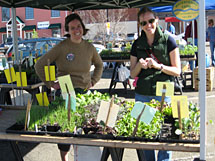
When talking about our food, we constantly hear terms like ‘organic’, ‘local’, ‘free-range’, and ‘grass-fed.’ These labels are meant to guide consumers’ food purchasing decisions by offering information on the farming methods used to grow or raise food, and the reassurance that food safety risks have been minimized. More often than not, however, I find it difficult to distinguish the plethora of different labels.
Our Alternative — Rethinking the Bi-County Parkway
Our proposal, detailed in the report Rethinking the Bi-County Parkway, focuses on fixing east-west routes for commuters, it provides lower impact local road fixes and connections to help local residents, it preserves the Rural Crescent and Transition Area, and could allow for the roads to be closed through the Battlefield (although it’s not clear that would ultimately be necessary, due to the reduced traffic that would result from implementing the alternatives we’ve suggested).
What is a Comprehensive Plan, and Why Should We Care?
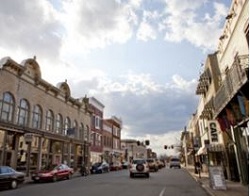
Six of PEC’s nine counties are in the process of updating their Comprehensive Plans, or will be doing so soon. It can be easy to tune out these updates, but revisions to the ‘Comp Plan’ can mean drastic changes to the look, feel, and functionality of your county, town, and day-to-day life. This is because the Comp Plan is the community’s most important document regarding land use, growth, development, transportation, and resource utilization.
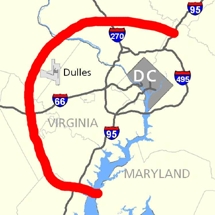
Summer Update on the Outer Beltway
VDOT is pushing to create a new major highway in Northern Virginia referred to (among other names) as the Outer Beltway. PEC’s take? This mega-highway would cut through a National Park, open up over 100,000 acres to residential development, and has the potential to actually increase traffic congestion on I-66 and Rt. 50. The good news is—after years of trying to get more press coverage and citizen engagement on the issue—we may have reached a turning point.

The Piedmont Through the Viewfinder
They say a picture’s worth a thousand words, and that couldn’t be more true than when it comes to the beauty of Virginia’s Piedmont. No one knows this better than our regional photographers.