
Submit comments by Tuesday, Aug. 26. More info and sample letter →
This text was taken from an email alert sent out on Aug. 4, 2025. Sign up for email alerts →
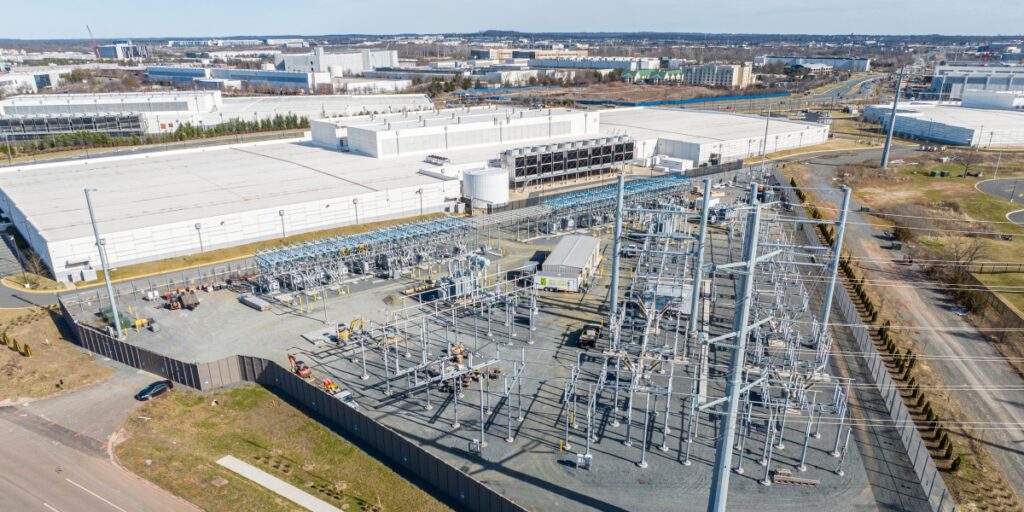
Dear supporter,
You may have seen some of the recent news stories highlighting the increase in electricity costs caused by the explosive energy demands of data centers. In one story published in the Wall Street Journal, I was quoted as saying “We think this is the most important decision that’s being made in America about who pays for energy. How do you make sure residential users aren’t being asked to subsidize these giant global corporations?”
I’m writing to you today to tell you about a critical opportunity to weigh in. This summer, the State Corporation Commission (SCC) is hearing the 2025 biennial review of Dominion Energy’s rates, terms, and conditions for generation and transmission infrastructure. This rate case is the first opportunity to address the electricity rate structure for the largest concentration of data centers in the world. In legal terms, this is a “case of first impression,” because it considers new issues that have never been decided.
The current rate structure spreads infrastructure costs over Dominion’s entire customer base,including residents like you and me. This means that all ratepayers must pay for the energy infrastructure data centers require, a financial burden that should not be unfairly placed on residents and other businesses.
The SCC’s case is the most consequential case we’ve seen so far related to who pays for the energy that data centers use. It not only sets rates in Dominion Energy’s service area but will set a precedent for other utilities and states to potentially follow.
Dominion Energy has proposed a new rate class for high energy users, including data centers, that would include utility tariffs meant to better protect other ratepayers from the increased costs and risk of the explosive energy demand necessitated by the data center industry. PEC appreciates this step, but feels it doesn’t go far enough; we’ve filed expert witness testimony on the case pushing the SCC to demand better and set the bar higher.
*Read the “How You Can Help” section below for more information about submitting comments.
Why This Case is Particularly Important
Data center energy demand has increased more than any other industry in modern times, from an average of 16 megawatts (MW) per proposal in 2013 to about 70 MW in 2024, which is about as much energy as 15,000-20,000 households use.
Requests for 300 MW data center campuses are now common, with some requests as large as 2,400 – 7,000 MW. To put that in perspective, a single 7,000 MW data center campus would require as much power as four nuclear power plants the size of North Anna, which has a total capacity of about 1,892 MW (1.9 Gigawatts). To drive the point home further about the scale of energy we’re talking about, there are ten states with a peak demand less than 7,000 MW!
Dominion Energy currently has 40,000 MW or 40 gigawatts (GW) of data center capacity requests in various stages of contracting in their service territory, the addition of which would more than triple the entire current peak demand of the system (which is currently about 23,000 MW or 23 GW). That’s the equivalent of powering 10 million homes; Virginia currently has approximately 3.4 million households.
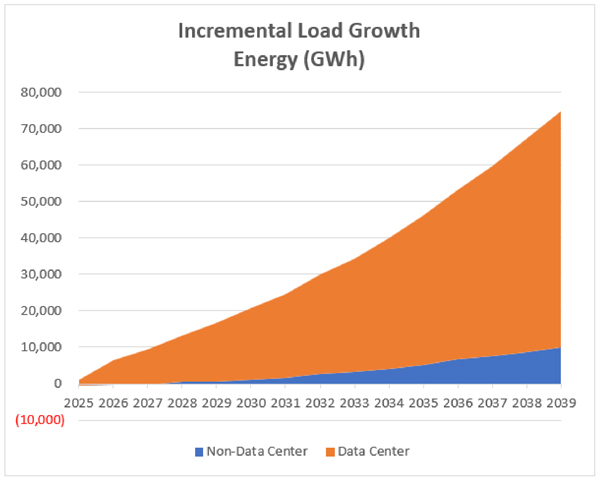
This SCC review is the first opportunity to address the electricity rate structure, terms, and conditions that apply to these high energy users. For the next several years, data centers are projected to be the sole driver of energy load growth and the primary driver for the foreseeable future as is shown in the graph above and presented as a part of our testimony.
As the costs for new transmission lines, substations, and power generation facilities quickly increase to meet data centers’ energy demand, it is important to ensure those costs are allocated fairly and that our utilities do not overbuild the system for demand that doesn’t materialize, leaving the rest of the electric customers with the bill.
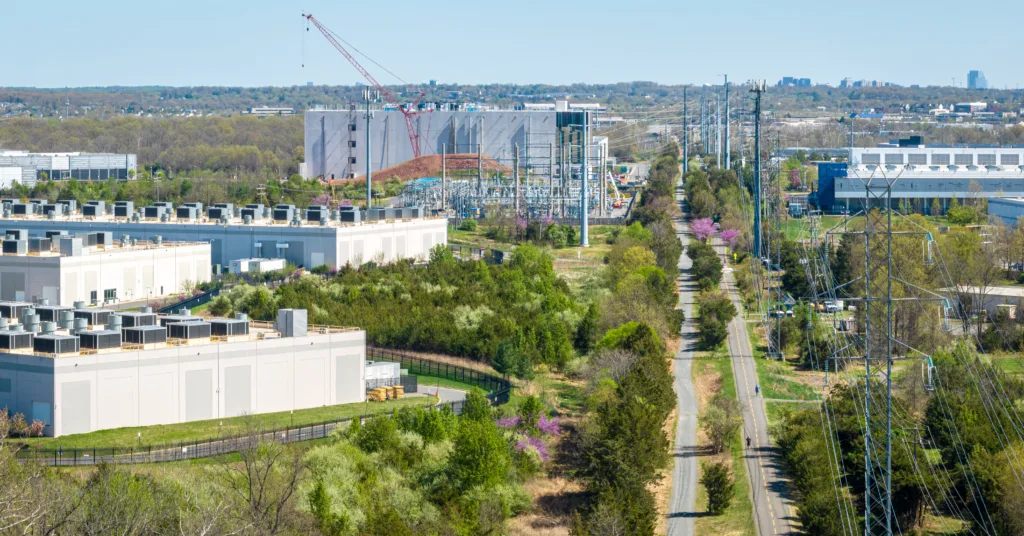
With single data center buildings using as much power as entire counties in Virginia, the current rate, terms, and conditions are completely inadequate and place too much burden on the non-data center ratepayers.
What PEC is Pushing For
Dominion Energy’s proposal is a good first step, but we believe this unprecedented demand requires much more. We have put forward a reasonable proposal that recommends:
- Make sure data centers pay a fair price – Dominion’s proposed minimum charges for power are too low, especially since data centers require a significant amount of new power plants and storage to operate. We’re proposing higher minimum charges to protect other residents and businesses from these excessive costs.
- Create stricter contracts – Data centers currently have too much freedom to change their contracted electricity capacity (referred to as “customer discretion”). This can be a problem because utility companies have to build new infrastructure (like power plants and transmission lines) to meet the demand that the data centers need. If a data center then decides to use less power than it committed to, the cost of that new infrastructure is still there, and the financial burden gets shifted to other customers (like residential homes and small businesses).
By decreasing customer discretion in contracts, we encourage more accurate energy load estimates from data centers and reduce risk to other customers. - Require longer contracts and shorter ramp-up times – If a data center’s energy contract is too short and it decides to leave early, the utility is left with an overbuilt electric grid. The cost of this overbuilt grid would then fall to other customers, leading to higher electricity bills for everyone else. A longer contract minimizes this risk for ratepayers.
The “ramp-up period” is the time it takes for a data center to start using the full amount of power it has agreed to. Requiring a shorter “ramp-up” period ensures that a data center begins paying its fair share for the new energy infrastructure as quickly as possible, protecting other customers from having to foot the bill in the initial years of the project i.e. helping the utility company recover its investment more quickly and fairly. - Make data centers pay for their own power lines – Data centers use so much energy that they often need their own dedicated transmission lines. We believe the data centers should be responsible for the full cost of these lines, instead of spreading the cost among all customers. This would also make it easier for the SCC to require the data centers themselves to pay for the mitigation of the impacts of transmission lines. For example, the SCC often decides to deny requests to underground power lines that would lessen the impact on communities, arguing it will cost all ratepayers more.
- Change how costs are allocated – Dominion’s current method for dividing costs places a heavy financial burden on residential customers. It still assumes that customers who use more energy during a single “peak hour” are the main reason new generation like power plants are needed. In reality, it’s data centers—with their constant, 24/7 high demand—that are driving the need for this new infrastructure. We’re recommending a new method, called Probability of Dispatch, that more fairly allocates costs based on who is actually using the most power throughout the year.
You can find a table comparing Dominion’s proposed changes and PEC’s recommended changes on pg. 3 of our official testimony.
How You Can Help
Any comments or public testimony that speaks to one or more of the issues above would be very helpful. We encourage you to also emphasize in your comments the need to:
- protect other ratepayers from ballooning infrastructure costs associated with the high energy demand of data centers through fair cost allocation
- follow cost causer pays principles that dictates that the entity (e.g. data centers) whose actions necessitate an upgrade or change to a system should be responsible for covering that cost
- minimize financial risk to the other ratepayers of stranded assets and potential overbuilds due to market speculation
Two Ways to Weigh In
1) Submit written comments by Tuesday, Aug. 26: To submit comments visit the SCC website for this case (PUR-2025-00058): https://www.scc.virginia.gov/case-information/submit-public-comments/cases/pur-2025-00058.html.
You can file written comments either by uploading a file (like a PDF or Word document of a letter) or just typing in the provided text box. See our sample letter below.
2) Provide oral testimony on Tuesday, Sept. 2 (before the hearing): Oral testimony will be taken via phone starting at 12 p.m. This would be an opportunity to speak directly to the commissioners. *The preregistration deadline to sign up to speak is Aug. 26 at 5 p.m.
The SCC’s scheduling order describes exactly how to sign up to provide public testimony:
On or before Aug. 26, 2025, any person desiring to offer testimony as a public witness shall provide to the Commission: (a) your name, and (b) the telephone number that you wish the Commission to call during the hearing to receive your testimony. This information may be provided to the Commission: (i) by filling out a form on the Commission’s website at scc.virginia.gov/case-information/webcasting; or (ii) by calling (804) 371-9141 to register.
Sample letter:
Dear Honorable Commissioners of the State Corporation Commission,
I am writing to express my serious concerns regarding Dominion Energy’s 2025 biennial review of rates, terms, and conditions for generation and transmission infrastructure (Case No. PUR-2025-00058). As a residential ratepayer, I urge the SCC to protect consumers like myself from unfairly subsidizing the exploding energy demands of data centers.
While Dominion’s proposal to create a new rate class for high energy users is a necessary first step, it does not go far enough. The current rate structure unfairly burdens residents, small businesses, and farmers with the significant costs of new infrastructure, primarily driven by data centers’ constant, high-volume energy consumption. We must ensure that those who are causing this unprecedented load growth pay their fair share.
I urge you to:
- Ensure data centers pay a fair price through higher minimum charges that reflect the true cost of their energy demands.
- Implement stricter, longer-term contracts with shorter ramp-up periods to minimize financial risk to other ratepayers from overbuilt infrastructure or unanticipated load changes.
- Require data centers to pay for their own dedicated transmission lines, which they necessitate.
- Revise cost allocation methods, such as adopting a Probability of Dispatch approach, to accurately assign costs based on year-round energy usage rather than historical peak loads, which no longer reflect the primary drivers of new infrastructure.
The rapid and unconstrained growth of data centers in Virginia, with some campuses requiring power equivalent to multiple nuclear plants, will have a monumental impact on our electricity bills. It is crucial that the SCC sets a strong precedent in this case to prevent residential and small business customers from bearing the financial brunt of this industry’s expansion.
Thank you for considering my comments and for your commitment to protecting Virginia’s ratepayers.
Ask the SCC to Set a Strong Standard
The massive data center industry continues its unconstrained growth in Virginia with more being approved by localities every month. The cost of meeting the increasing energy demand just continues to grow. We need the State Corporation Commission to set a strong standard in this rate case to ensure residential ratepayers, small businesses, and other customers are not left paying the bill.
Submit your comments today and urge the SCC to protect the rest of ratepayers from this unprecedented load demand of a single industry. Your voice matters. Help ensure that the data center industry is paying their fair share by submitting comments or signing up to speak by the Aug. 26 deadline.
Thank you for taking action!
Sincerely,
Chris Miller, President
The Piedmont Environmental Council
[email protected]
