
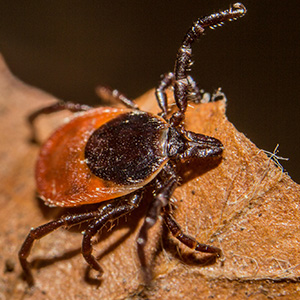
In a departure from my normal column on creating habitat, here is some knowledge on ticks ecology and preventative measures from the perspective of an ecologist who spends a lot of time outside. With a little education and forethought, you and your family can better enjoy the outdoors all season long. First – a word of warning: I’m not a health professional by training, so always consult your doctor if you have health concerns.
Our Work
Safeguarding the landscapes, communities and heritage of the Piedmont by involving citizens in public policy and land conservation. Learn more about our work by browsing the subject areas below and find out how to get involved!
Virginia Uranium Proponents are Desperate
Just a few short months ago the Virginia General Assembly responded to the will of the people — legislators were forced to withdraw a bill that would have lifted the state-wide ban on Uranium mining. As we said then, this was an important victory, but not the final one. Now as we near the end of Governor McDonnell's term, mining backers are conducting a heavy handed PR campaign. They are hoping to persuade the Governor to act against the will of the General Assembly — pressuring him to draft rules that would lift the decades old ban on uranium mining and milling in Virginia. This text was taken from an email alert sent out on June 4th, 2013.
School Location Matters
Building a new school, like any major construction project, requires a lot of thought and planning. And with that planning comes the need to address the concerns citizens in the nearby area might have about its impacts — traffic, noise and lights, just to name a few. Which is why it's concerning to hear that Loudoun County is considering changes to the Zoning Ordinance that would allow public schools to be built 'By-Right', pretty much anywhere — removing the public's ability to give input. This text was taken from an email alert sent out on May 21st, 2013:
Opposition to the Outer Beltway Picking Up
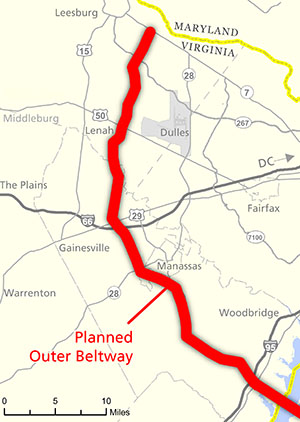
Over the past two years we’ve been writing (and sometimes jumping up and down) about the McDonnell Administration’s prioritization of the multi-billion dollar DC Outer Beltway project. It’s been difficult, however, to get press coverage or widespread citizen engagement, because the project has seemed remote. But that changed this past December, when VDOT finally put a line on the map.
Since then, citizen opposition to the project has mounted. At the end of April, six legislators from Northern Virginia announced their opposition to the project. This Tuesday, Congressman Wolf sent a letter to Governor McDonnell expressing “serious reservations.” This text is from an email alert sent out on May 16th.
The Problem with the Outer Beltway
The Outer Beltway, and its component parts the Bi-County Parkway and 6-laned Northstar Blvd, is a bad deal for the residents of Prince William and Loudoun County. It’s also a bad deal for people who live in counties and cities to the east and west, as well as Virginia taxpayers as a whole.

Uranium Mining: Going…Going…Gone?
In 2007, Virginia Uranium, Inc. (VUI) made their intentions clear: they were going to persuade lawmakers to lift the Commonwealth’s standing moratorium on uranium mining and milling. The company had their eyes set on a large deposit of uranium in Southwest Virginia, and they adamantly ignored the numerous warnings and unknowns. Determined to break ground in Pittsylvania County, VUI poured millions into a massive lobbying effort and PR campaign to make it happen. They pulled all of the stops— including flying legislators to France.
Nature’s Extravaganza!
It might be hard to believe with daffodils and pansies struggling to stand tall in the snow just last week, but we have it on good authority that spring really will be with us soon. Plan now to enjoy two great natural spectacles — brilliant bluebells and amazing azaleas. Shake off the winter doldrums and celebrate the return of spring in the Piedmont. This text is from an email alert that was sent out on March 2nd, 2013.

Discovering Local Food
In my role as the Buy Fresh Buy Local Coordinator for The Piedmont Environmental Council (PEC), local food is an everyday topic of conversation. From broader discussions on how to encourage larger institutions to purchase locally or how to make the food distribution system more efficient, to quick conversations with farmers about a new ethnic vegetable variety or gourmet garlic — Buy Fresh Buy Local is all about strengthening our local food system so that it supports farmers and consumers alike.
Orange County Unveils Sprawling Vision
Just last week, the County Planning Commission put out a pretty shocking map. The maps and accompanying lays out what Orange would look like in 2025 — including major development along Route 20 and increased residential and commercial development in agriculturally zoned land, among other things. This text is from an email alert sent out on March 29th, 2013.
Building a Home for Wildlife: Houses, Nests, & More
Just like humans, wildlife species have four primary needs to survive: food, water, shelter and space. These four components form the basis of wildlife habitat, and each species fulfills these needs differently. Yet, for all species, if one of these four components is missing in a given area, it can affect the species’ population. In this article, I’ll be focusing on one of these needs – cover (the wildlife term for “shelter”) — and what are potential solutions when it’s a limiting factor in an environment. Specifically, how we can use man-made cover to help out wildlife.