
When I parked my car near the large red barn at Long Acre Farm, I heard a chorus of cows. Hundreds of their expectant faces were lined up along the fence in the nearby field. Farmer Dustin Watson was heading my way wearing faded Wrangler jeans, a red button-down shirt and a baseball hat emblazoned with the Long Acre Farm logo. WVTF radio reporter Sandy Hausman, getting out of her car at the same time, asked if the cows might be hungry. They probably recognized him? Yes, definitely, he said.
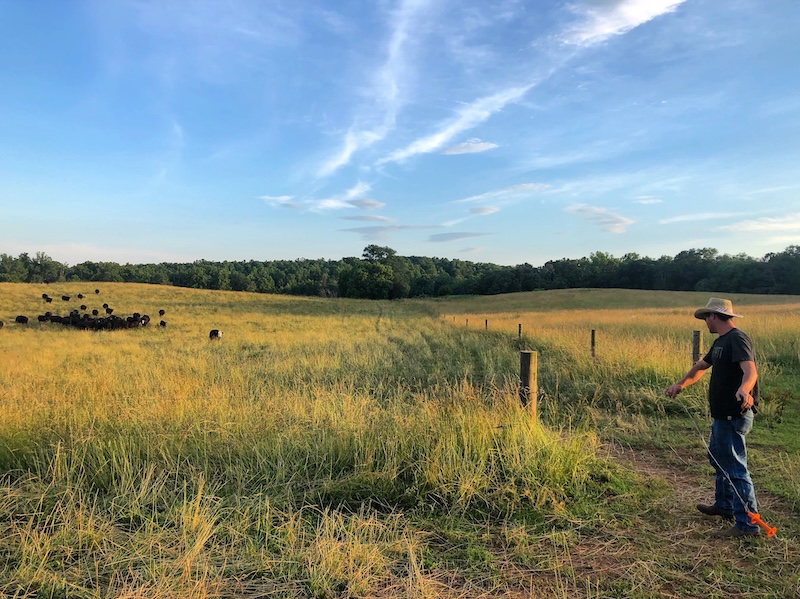
Sandy held up a microphone to capture the sound. While she interviewed Dustin, Dustin’s wife Gillian walked over from the house to say hello. Visibly pregnant, she moved gingerly over the gravel road in her sandals, pulling a long button-down blue shirt over her black dress to protect against the unseasonably cold wind. It was mid-May, but the temperature was in the 50s and storm clouds were darkening the sky. Gillian told me it had been a long journey to this moment, with significant uncertainty about whether she and her husband would be able to hold onto his family farm.
Dustin always wanted to carry on the tradition as the fourth-generation family member to own the farm. His great-grandfather bought the farm in 1939, and it had passed down to his grandfather.
“It was just always something I had in the back of my mind,” he said. “At a young age, I thought: how am I going to do this?” In 2023, the farm was co-owned by his mother and his aunt, who needed to sell. But, as a young farmer, Watson did not have the money to buy out his aunt, and while she did not have plans to run the farm operation, she could not afford to give the farm away, either. The farm’s future was in jeopardy.
Long Acre Farm was facing a predicament that many working farms in Virginia face. According to the U.S. Census of Agriculture, Virginia lost 488,000 acres of farmland between 2017 and 2022, more than in the previous 15 years. According to research from American Farmland Trust, about 300 million acres of farmland across the United States will change hands in the next two decades. As farmers age and retire, about a third of agricultural land in the United States faces an uncertain future. Due to rising costs, development pressures and declining interest, farms like Long Acre are often sold and developed. Between 2017 and 2022, 10% of all Virginia farms ceased to operate.
Watson did not want Long Acre Farm to become one of those statistics. “My grandfather bought this farm in 1939, and this is where he wanted his legacy to be,” he said. “I ended up calling the extension agent here in Greene, and she told me about a new program with The Piedmont Environmental Council that is purchasing conservation easements on working farms in the Rappahannock watershed.”
That program was the U.S. Department of Agriculture: Natural Resources Conservation Service’s Agricultural Land Easement, or ALE, program, designed to help landowners like the Watsons, land trusts like PEC, and other entities work together to protect working farms through conservation easements that limit land conversion and nonagricultural uses. The program provides grant funding that allows the purchase of the conservation easement on the property. NRCS Virginia currently manages over 157 conservation easements protecting over 21,000 acres.
“Protecting working farms while keeping them in production is central to our mission at NRCS,” said NRCS Virginia State Conservationist Dr. Edwin Martinez. “This easement ensures this land remains a productive operation while also delivering important water quality and conservation benefits. Through strong partnerships, we are able to keep producers on the land and protect resources that matter to communities across Virginia and the Chesapeake Bay watershed.”
To help keep the cattle farm in Dustin Watson’s family and protected forever by a conservation easement, PEC led a complex process among partnering organizations. American Farmland Trust loaned Watson the money to buy out his aunt, while PEC secured funds from the ALE program and the Virginia Land Conservation Foundation to purchase the conservation easement once the farm was in his name. Then, Watson used the money from the sale of the easement to pay off the loan. In early April, this whole process wrapped up after more than two years, and Long Acre Farm was officially protected by an easement held jointly by PEC and the Culpeper Soil and Water Conservation District.
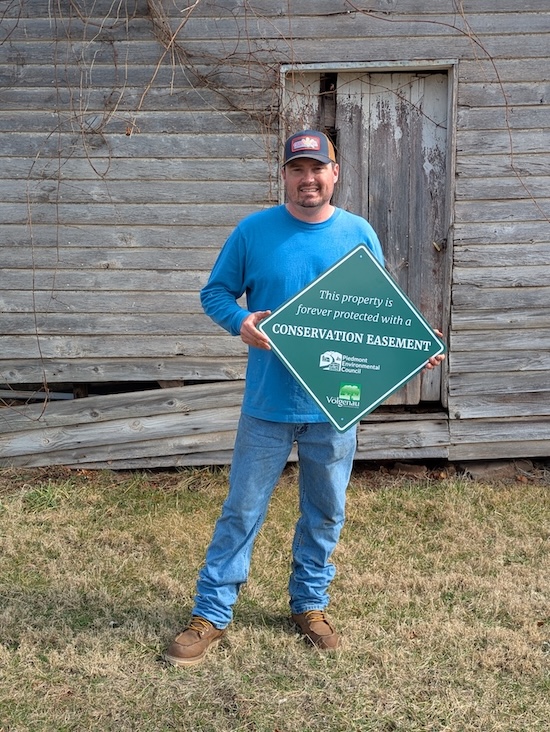
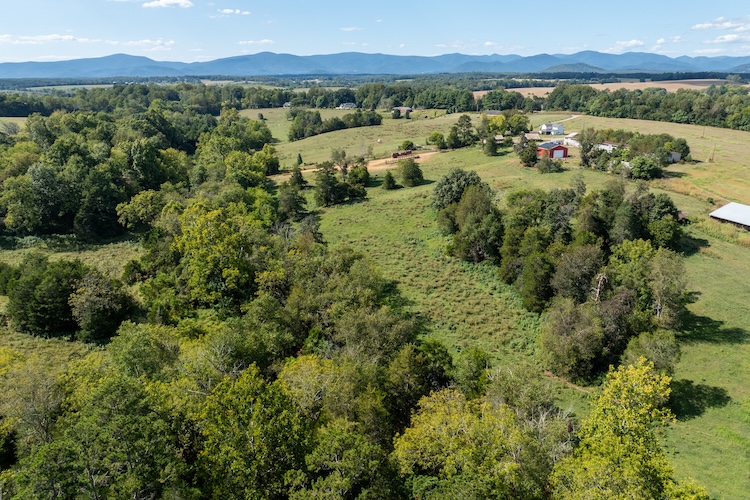
This protects the property’s important natural resources. Twenty-four acres at Long Acre are state-designated “prime farmland” and 136 acres are “farmland of statewide importance.” Long Acre has 86 acres of open fields and pasture and 133 acres of working native hardwood forest. One and a half miles of perennial streams on the property flow to the Rapidan River, a major tributary of the Rappahannock River, which provides drinking water to downstream communities and ultimately flows to the Chesapeake Bay. The easement protects the water quality in these streams and the riparian buffers along their banks, which support habitat for both aquatic and terrestrial species. Visible from the Appalachian Trail and Shenandoah National Park, the farm holds important scenic value as well.
Long Acre Farm is the sixth ALE project PEC completed in the last two years, conserving over 2,330 acres in Orange, Madison, Culpeper and Greene counties.
Several of us retreated to the Watsons’ front porch to shelter from the rain: PEC Conservation Program Manager Kim Biasiolli, American Farmland Trust Program Manager Jen Perkins and PEC Conservation Director Mike Kane. We reflected on the easement and what it meant for the future. Dustin said he used to lose sleep at night when he imagined losing this place. But now he and his wife Gillian are getting ready to start a new generation.
This article appeared in the 2026 summer edition of The Piedmont Environmental Council’s member newsletter, The Piedmont View. If you’d like to become a PEC member or renew your membership, please visit pecva.org/join.