“It was unlike anything I’ve ever seen before,” said Hugh Kenny about his first time visiting the Vantage VA2 data center in Sterling, Virginia. As The Piedmont Environmental Council’s multimedia specialist, Hugh has photographed and filmed dozens of data centers in Virginia over the last seven years. But the Vantage site has something none of the other facilities do: on-site natural gas turbines for power.
Diesel backup generators are a common fixture on most data center campuses, intended to kick in and operate temporarily during unplanned power outages. But the Vantage VA2 data center uses a “bring your own power” model, running its eight natural gas turbines 24/7 to power the energy-hungry equipment inside. Vantage is the first of its kind in the region, but because data centers must wait years to get connected to a power grid that can’t yet accommodate their energy demands, PEC fears more may be soon to come, causing rippling health impacts for already vulnerable populations.
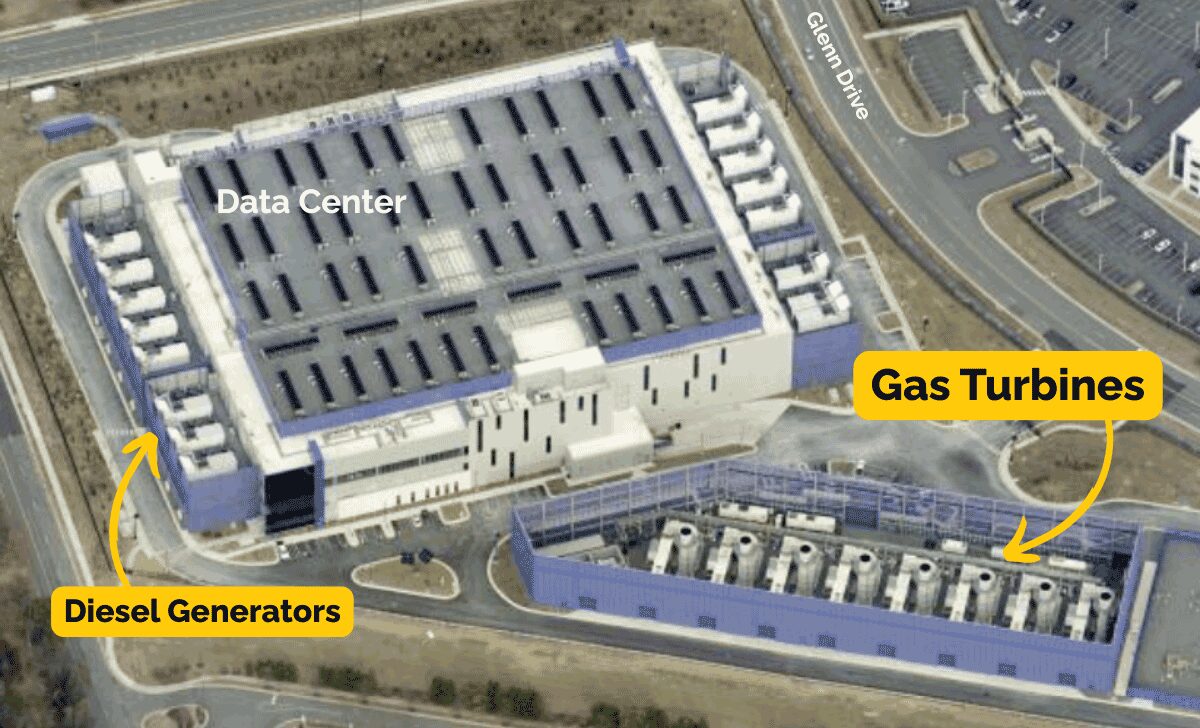
Concerned about potential public health impacts to the residential communities around facilities like Vantage, PEC commissioned an independent study by EmPower Analytics Group to model air pollution created by these turbines operating in populated areas.
The findings of the study are “a wake-up call for the entire region,” says PEC Director of Land Use Julie Bolthouse. EmPower Analytics Group found that, when operating at the maximum permitted emissions, the Vantage VA2 data center could result in $265 million to $495 million in health-related damages and 17-33 additional premature deaths over the next five years across the impacted region. People living miles away from the data center can be affected by the pollution; in the case of Vantage VA2, its emissions reach more than 2.5 million people, including those living in neighboring counties and parts of the broader Washington, D.C. metropolitan region.
Emissions from Vantage VA2 and from intermittent use of backup diesel generators at multiple other nearby data centers have a cumulative impact on air quality — and if on-site gas turbines for data centers become a common solution to grid connection delays, the combined air pollution will degrade Virginia’s air quality for decades.
A growing trend
Utilities like Dominion Energy can’t keep up with the skyrocketing demand from new data centers. In Dominion’s territory alone, the total energy requested by planned data centers has reached over 70 gigawatts, a jaw-dropping figure that could power all the homes in Virginia nearly four times over and is triple the size of the current grid.
As utilities struggle with capacity challenges, the wait time for data centers to get the power they need from the electric grid grows. Highlighting the extreme delays new projects face,“Dominion recently presented to the State Corporation Commission a process for large load power requests that would take up to 25 years for a new customer to get through,” Julie said.
As a result, while the Vantage’s on-site gas generation is the first such “mini power plant” in the region, it won’t be the last. Another data center developer in Loudoun has proposed 23 gas turbines — almost three times as many as the Vantage VA2 facility — at the Digital Dulles site just 15 minutes away.
Who pays the price?
Set against a landscape of increasing air pollution nationwide, this trend endangers community health, especially among the most vulnerable. A recent report from the American Lung Association found that nearly half of the nation’s children — whose smaller lungs and rapid breathing rate make them especially susceptible to health effects from pollution — live in places with dangerous levels of air pollution. The report also found that people of color are more than twice as likely as white people to live in a community with unsafe levels of both smog and fine particulate matter. PEC’s study of the Vantage VA2 data center similarly showed that areas estimated to have some of the highest impacts from the Vantage facility overlap with marginalized communities to the east.
The Vantage VA2 study focused on fine particulate matter, widely recognized as one of the most harmful pollutants to human health because its microscopic size allows it to penetrate deep into the lungs and enter the bloodstream. Extensive scientific evidence shows that long-term exposure — including at levels below current federal standards — is associated with increased risk of heart disease, stroke, respiratory illness, asthma exacerbation and premature death. Air pollution from increased use of gas turbines will lead to millions of dollars in annual public-health costs for Virginians.
The cost is also reflected on monthly electric bills. Often touted as a data center solution that doesn’t impact other ratepayers, on-site gas generation is still inextricably tied to the broader network of energy infrastructure. Like Vantage VA2, many data centers with on-site gas generation intend to use their turbines as a stop-gap measure until they can connect to the grid, and so still contribute to the demand for more power plants, transmission lines and substations. At the same time, utilities are now in competition with data center developers for a limited supply of gas turbines, driving up the costs of both. While wealthy tech companies can afford to spend as much as it takes to get to market faster, utilities trying to replace aging turbines will pass the increased costs onto their ratepayers.
A better way forward
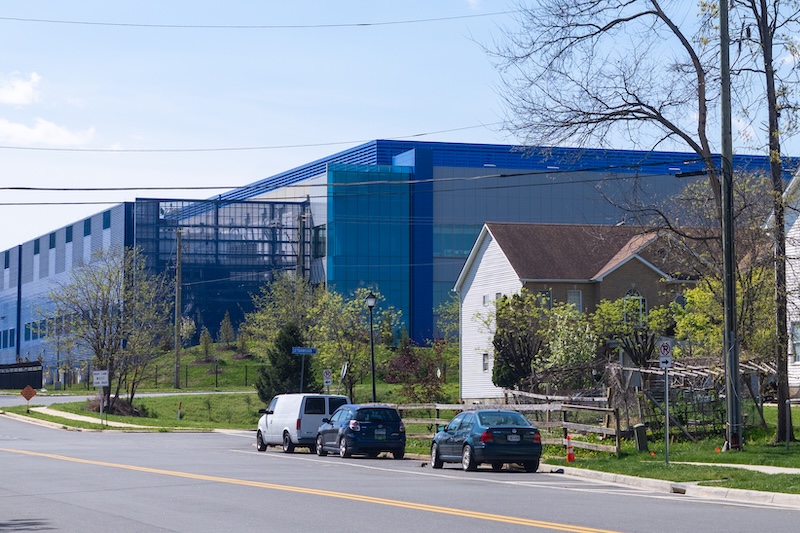
When the developers of the Vantage VA2 data center wanted to add on-site gas generation to the project to bypass the wait for power supply from Dominion, they only needed to submit a minor source air permit to the Virginia Department of Environmental Quality. This type of permit requires no public hearing or notice, and so when the data center came online, the local community was blindsided by the emissions and the noise, which residents say has caused tinnitus, disrupted their sleep and made being outside unbearable.

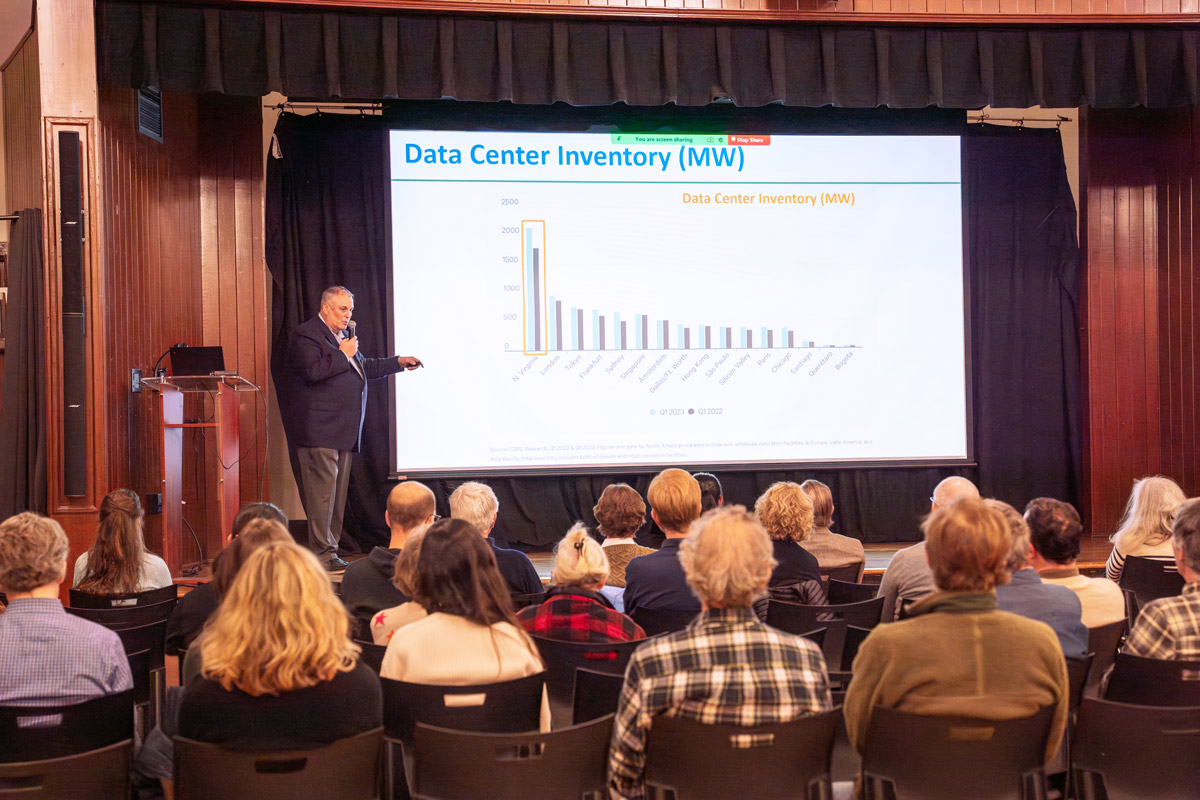
In April, PEC held an information session for local residents to learn more about the results of the Vantage study and what they could do to make their voices heard. “People had a lot of questions and comments,” said Gem Bingol, PEC’s senior field representative for Loudoun County. “My sense was that they were grateful to have the information.”
Greg Pirio, who lives just 150 yards from the Vantage site, says “PEC’s support by publishing that [air quality] study was important because it highlights what can happen.” Greg and his neighbors are seeking solutions that will “improve what’s happened to us and make a difference for us and for other communities.” Their central request is simple: “Stop permitting power plants from being built on the data centers.” (Read more about Greg on Page 6.)
Though DEQ has critiqued PEC’s study and released its own report in response, Julie emphasized that “PEC stands by our study methodology, which projects the cumulative impact on public health if more on-site generation is approved in the future through minor permits. DEQ’s response only defends the appropriateness of the minor permit approval and emphasizes that the site is in compliance with all regulations.”
“Being below the federal standard isn’t the same as zero health impact,” says Michael Cork, the researcher who conducted the air quality study on Vantage VA2. “DEQ’s report is explicit that it doesn’t evaluate health impacts. It doesn’t speak to the added health burden from new infrastructure, which is the gap our analysis is meant to fill.”
Evaluating data centers’ on-site gas power plants in isolation is not enough. Even if individually their emissions are under the permitting threshold, each additional gas turbine adds to a cumulative air pollution burden for communities. The minor permits do not measure those cumulative effects.
PEC supports a “pause to plan” approach to managing data center demand, with transparent accounting and appropriate safeguards at the state level. We’re encouraging towns and counties to do three things:
1) reject data center proposals that include on-site natural gas power near homes or schools;
2) amend regulations to require an additional approval process for any gas power plant behind the meter; and
3) treat these on-site power plants as standalone electricity-generating facilities that need more thorough review of public health impacts.
Our state and local governments must take action now to ensure this industry is not allowed to degrade local air quality of our communities and steal all the progress made over the years through stronger emission controls on cars and power plants.
This article appeared in the 2026 summer edition of The Piedmont Environmental Council’s member newsletter, The Piedmont View. If you’d like to become a PEC member or renew your membership, please visit pecva.org/join.