
The day before the Board of Supervisors November 14th public hearing the applicant proposed changes that were only made available to the public hours before the hearing. The changes are peripheral in nature. Although the amount of land being added to the service district and rezoned commercial has decreased, the project layout is the same. Instead of the RV Park being a part of the service district and the commercial rezoning, the rural agricultural (RA) zoning will be modified to allow a travel trailer park with water and sewer still being supplied from the service district public infrastructure.
Our Work
Safeguarding the landscapes, communities and heritage of the Piedmont by involving citizens in public policy and land conservation. Learn more about our work by browsing the subject areas below and find out how to get involved!
Orange County Considers Major Changes to its Comprehensive Plan
The draft being considered is a severe departure from Orange’s current Comprehensive Plan, creating brand new classifications such as Town Suburban Residential and recommending expanded commercial activities both south of Orange on Route 15 and along most of the Route 3 corridor (including lands within the Wilderness Battlefield National Park along Route 20).
This Week
VDOT has scheduled two public meetings on the Outer Beltway/Bi-County Parkway. There won't be a public speaking period, but they will be collecting questions and comments. If you cannot attend, I encourage you to submit your comments by email to [email protected]! This email alert was sent out on September 30th, 2013:
The Outer Beltway — Water, Air & Climate Impacts
Email from November 21, 2013: ….yesterday, we joined with more than a dozen prominent conservation organizations — including the National Wildlife Federation, the Virginia League of Conservation Voters, and the Virginia Chapter of the Sierra Club — in submitting a joint letter to Governor-Elect Terry McAuliffe. The letter points to the Bi-County Parkway as the project in Northern Virginia that would have the largest negative impact on the environment….
Busy October — Including an Important Comp Plan Rewrite
Happy Friday! It's officially fall, and there's a lot going on throughout the region and in Fauquier County in particular. There are rezonings and zoning amendments under consideration, we've also got tabling at Fauquier Heritage Day in Warrenton this weekend, Outer Beltway public hearings next week, and PEC's Meeting at Galemont on October 12th (the online registration is up!), as well as the 15th Anniversary of the Warrenton Branch Greenway. This text was taken from an email alert sent out on September 27th, 2013.
Expanding Beef Cattle Profitability in VA’s Northern Piedmont
Currently:
• Most weaned and backgrounded calves leave the state for fattening in out-of-state feedlots.
• A small percentage of calves are kept as stockers before shipping to out-of-state feedlots.
• Most cow-calf operations take commodity price. Some buyers pay premiums.
• Beef returns as “boxed beef” for retail to metro-consumers. Value/revenue is lost out-of-state.
A small percentage (<10%) of the region’s farms and cattle are conception-to-carcass operations that direct market beef (mostly pasture raised or grass-fed) at a premium to consumers. They process beef (usually one or two at a time) at one of six custom facilities. These producers are seeking additional slaughter and processing capacity.
Pastures in the region are currently underutilized with gains at about 1 lb/day.
Efficiencies in cattle and pasture management, grazing, and transit, processing, even paperwork could increase returns to producers and the region. Processing and sales volumes could greatly increase. Additional acreage would be employed in grazing cattle retained in the region. Total returns to the regional economy would increase.
Fall !
This is my kind of weather! Red maples turn their namesake, broad wing hawks and other raptor migrate south, white-tailed deer enter the rut, and so many more fun things. Speaking of deer, here's a copy of a recent article I wrote on deer abundance and wildlife habitat. This text was taken from an email sent out on September 20th, 2013:
Sacrificing History… For What?
Often environmentalists are told that we just 'say no' to things. To which I would argue — saying 'no' to a bad idea is a very important part of what we do. But it's not all we do. At The Piedmont Environmental Council we also strive to put forward constructive alternatives. That's why it's so frustrating to see the Virginia Department of Transportation, led by Sean Connaughton, make mega-projects like the Outer Beltway and Charlottesville Bypass its highest priority. Despite great arguments against both projects — fiscal, environmental, common sense arguments — and plenty of alternatives, VDOT is charging ahead. This text is from an email alert sent out on September 19, 2013:
When Mickey Came to Town
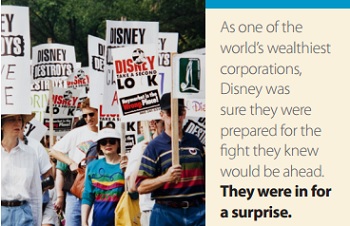
Virginia’s northern Piedmont is a beautiful and vibrant place—boasting of forests, rivers, mountains, farmland, thriving towns, and numerous historic and cultural resources. But all of this came under threat in November 1993, when the The Walt Disney Company made a surprise announcement that they planned to build an American history theme park near what was then the small town of Haymarket, VA—only four miles from Manassas Battlefield.
Expanding the Warrenton Branch Greenway
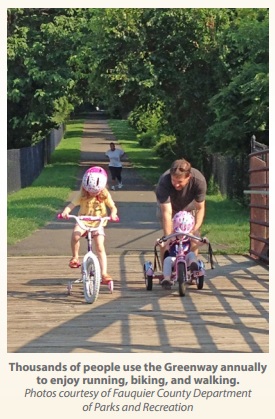
The Warrenton Branch Greenway is a treasured community resource in Old Town Warrenton. The 1.5 mile-long trail not only provides a great outdoor recreational space, but it is also an important historic resource—as it follows the old Orange and Alexandria Rail-road line that was built in the 1850s. Today, thousands of people use this trail annually to enjoy running, walking and biking.