
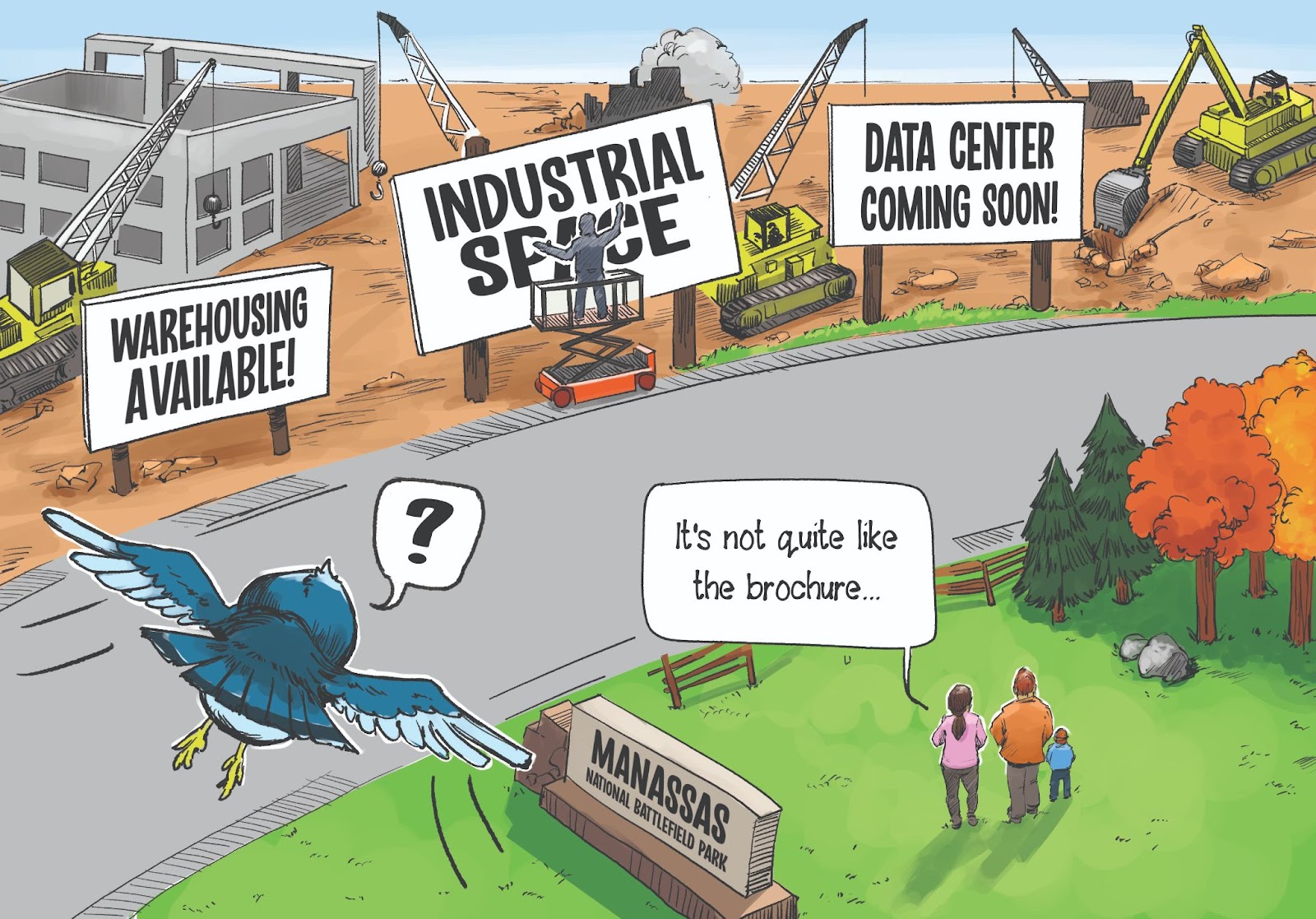
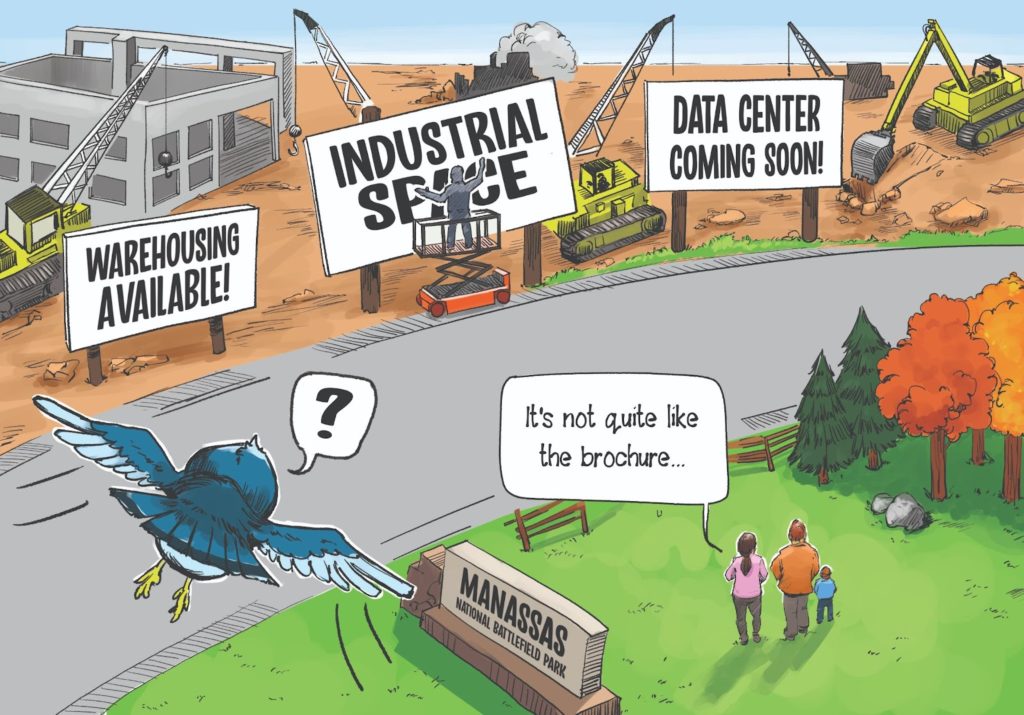
With recommendation of approval from both the Prince William County staff and Planning Commission, the “PW Digital Gateway” Comprehensive Plan Amendment is set for public hearing by the Board of Supervisors on Tuesday, November 1, 2022. This is a critical moment for the County and the entire region.
Energy Matters
PEC works toward energy solutions that emphasize efficiency first, use appropriate technologies for the 21st Century and respect the scenic and historic character of the Piedmont.
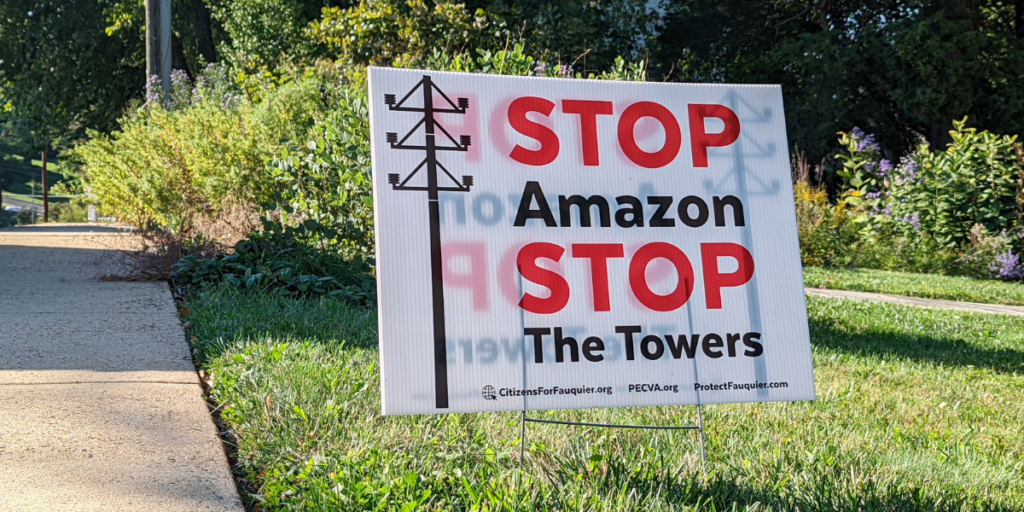
Town Hall Meeting Will Provide New Information Surrounding Proposed Warrenton Amazon Data Center
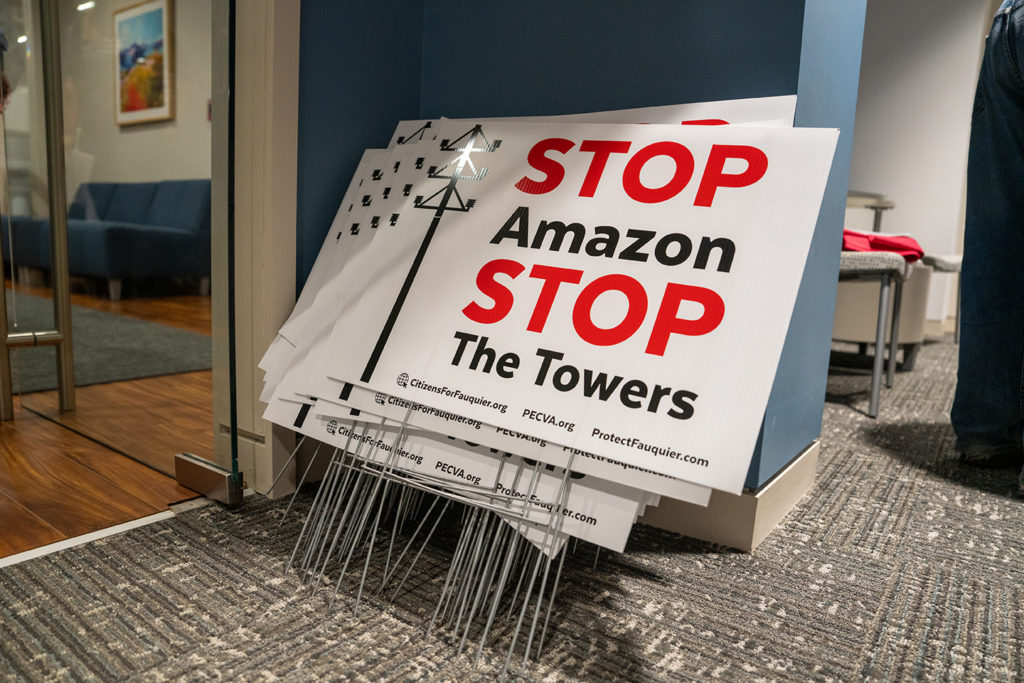
On Wednesday, Oct. 26, Citizens for Fauquier County, The Piedmont Environmental Council and Protect Fauquier will host a town hall event to explore the myths and realities of Amazon’s proposed Blackwell Road data center in Warrenton.
Join us for an Amazon data center town hall next Wednesday, Oct. 26
Given the positive feedback on our last town hall, Protect Fauquier, Citizens for Fauquier County, and PEC have decided to hold another meeting on the proposed Amazon data center.
Takeaways from the recent Warrenton Amazon Data Center Balloon Test
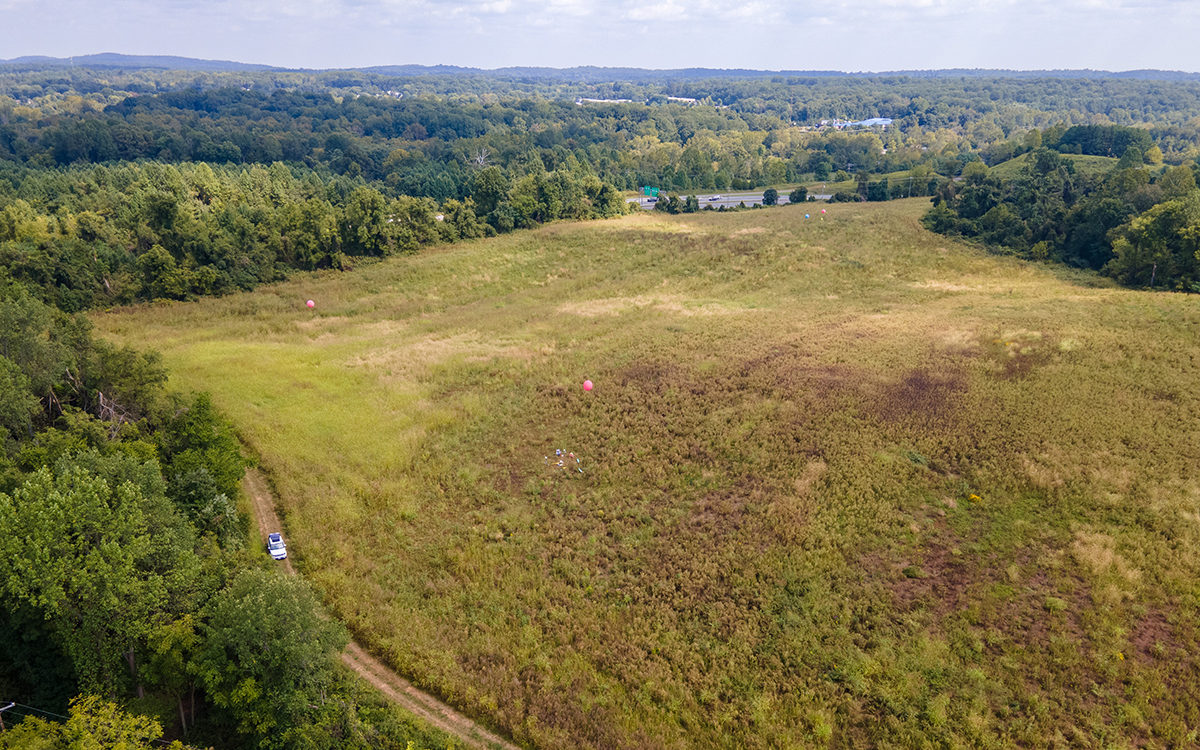
By now, you’ve probably read about the balloon test conducted by Wetland Studies and Solutions, Inc. for the proposed Amazon data center on Blackwell Road last Thursday, Sept. 15. If you had to travel to/from Warrenton on U.S. Route 17 or 15/29 Business or were at a number of different locations in Town you might have even seen the balloons themselves.
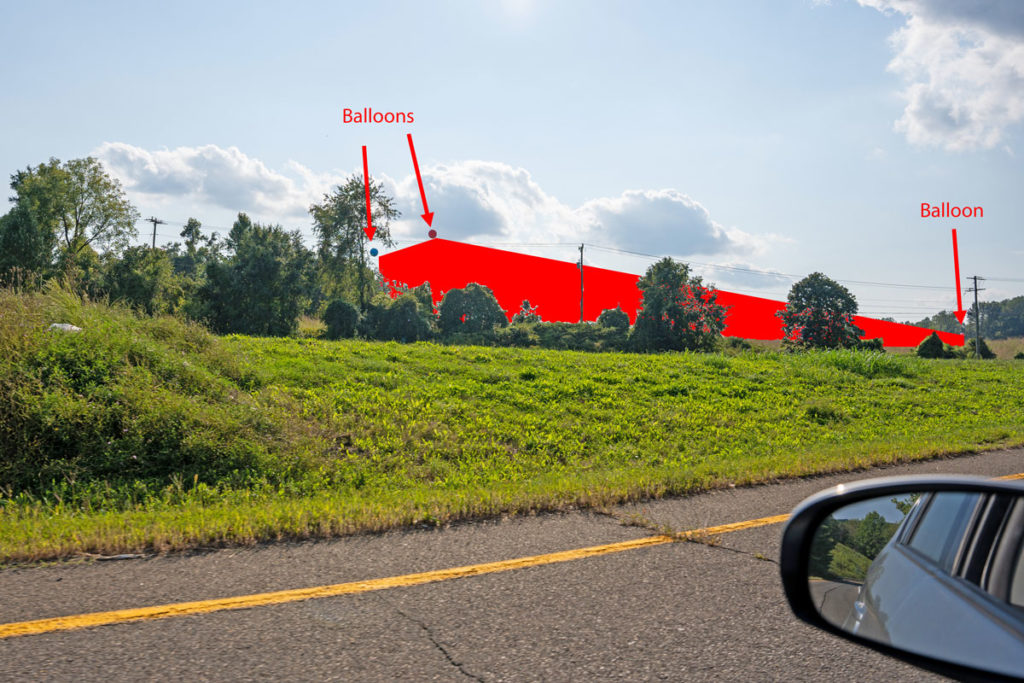
Here are photos/renderings of what we saw that day:
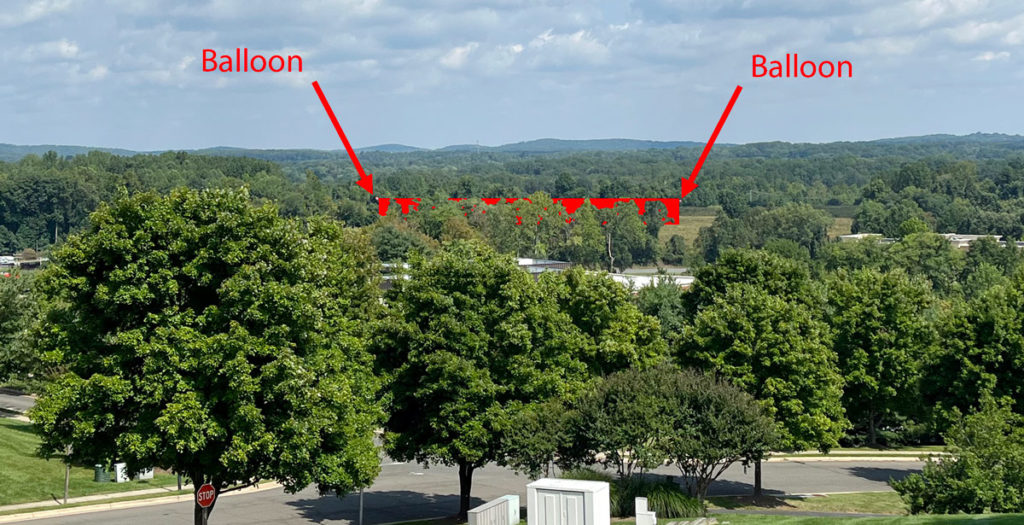
See all of the photos captured that day >>
The balloons may have been placed at the corners of the proposed 220,000-square-foot and 37-foot-high Amazon data center, but as you can see in the drone shot, two of the four balloons were quite close to each other. So it’s not clear whether that was true or not. While the balloon locations are a good starting point for determining the visual impact of the proposed data center, we should all be aware that they do not provide the full picture.
For instance, Amazon’s latest submission to the Town on September 9 failed to provide details on how the height of the balloon test was determined. Thus, we’re not sure if the height of the balloons accurately reflected all building elements that were detailed in that same submission. Amazon’s architects indicated that with the inclusion of a parapet wall (an extension of the wall at the edge of a roof) and other rooftop equipment, the tallest point of the building could reach just under 57 feet — 20 ft above the height of the building itself. It’s unclear if the balloons were at a height closer to 37 or 57 feet.
Additionally, the four balloons cover just a tiny fraction of the surface area of the proposed 220,00- square-foot building — only the outer corners of what would be filled in by the building — and the location of each of the balloons was influenced by the wind that day.
Most importantly, the balloon test did not include the removal of trees as proposed in the Tree Study prepared by Amazon’s representatives and included in the September 9 submission (see page 13) that shows substantial tree removal, particularly at the northern and western edges of the property, some of the most visible portions of the site to adjacent neighborhoods and Rt. 17.
Despite these limitations, the balloons were still visible from a number of different vantage points in Town. We prepared a viewshed analysis of the 37-foot data center building and presented this map to the community at our August 10 Town Hall. The analysis utilizes LiDAR data that encompasses current groundcover and topography to predict how visible the 37-foot elevation of the building would be within a 3-mile x 3-mile square.
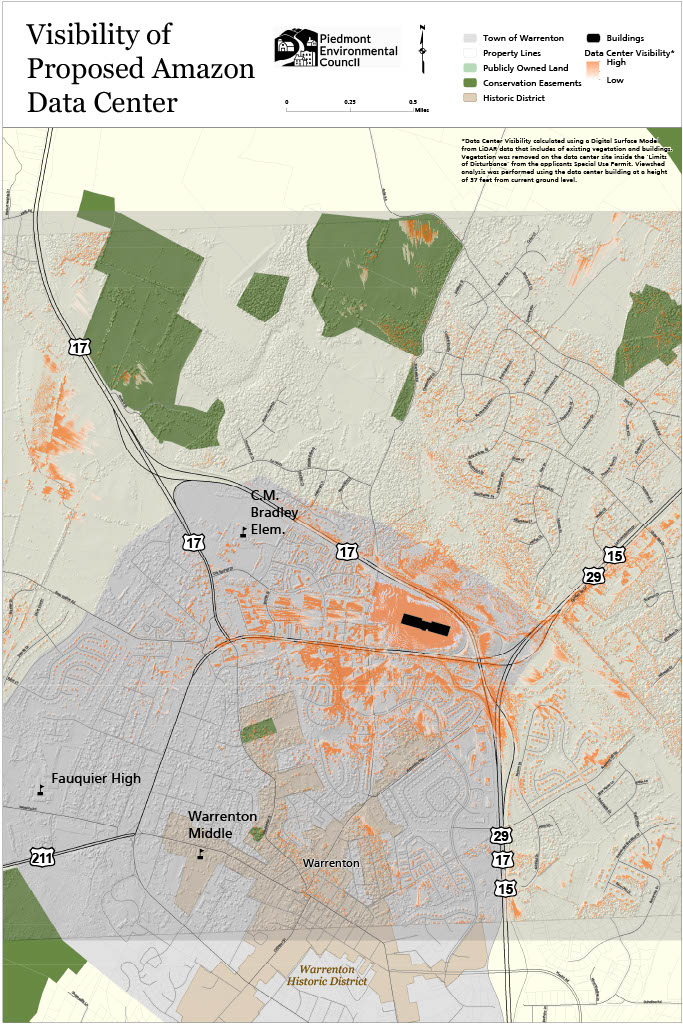
As we predicted, the balloons were visible from many of the areas we highlighted in red on our viewshed map, confirming the accuracy of our analysis. Again, it’s likely that the visual impacts are understated given the limitations of the balloon test.
This new information is all the more reason residents should come out and voice their concerns about the detriment this proposal will have on quality of life in the Town and County, including visual impacts of the data center on Warrenton’s gateway, numerous locations in Town, and the rural character that draws visitors and residents alike to this area.
Finally, the coalition, Citizens for Fauquier County, Protect Fauquier, and PEC, plan to hold another town hall on October 26 at the Highland School.
The Amazon Data Centers: Myths and Realities
Highland School Auditorium
597 Broadview Avenue, Warrenton, Virginia 20186
October 26, 2022 @ 7 – 9 p.m.
Come out to learn more about the Amazon data center proposals and the impact they could have on the Town of Warrenton and the County! We’ll also be sharing the actions you can take to oppose this proposal as we get closer to the Planning Commission’s decision.
Please don’t hesitate to reach out to PEC’s Fauquier Field Representative, Kevin Kask, with your thoughts or questions. He can be reached at [email protected] and (540) 347-2334 ext. 7046.
“PW Digital Gateway” Public Hearing on Sept. 14
The countdown toward one of the most important decisions for the future of Prince William County, and the region as a whole, has begun. The Prince William County Planning Commission has scheduled a public hearing on the Digital Gateway Comprehensive Plan Amendment this coming Wednesday, Sept. 14.
Resources from Warrenton Town Hall Meeting August 10, 2022
On August 10, 2022 the local citizen group Protect Fauquier and nonprofit organizations Citizens for Fauquier County and Piedmont Environmental Council hosted a community town hall to highlight our concerns regarding the data center and its broader impacts and to share actions residents can take to oppose the proposal.
Takeaways from the July 26 Planning Commission Work Session
More questions and concerns regarding Amazon’s special use permit application for a data center at Blackwell Road in Warrenton.
Three local groups unite against proposed Amazon data center and associated transmission line
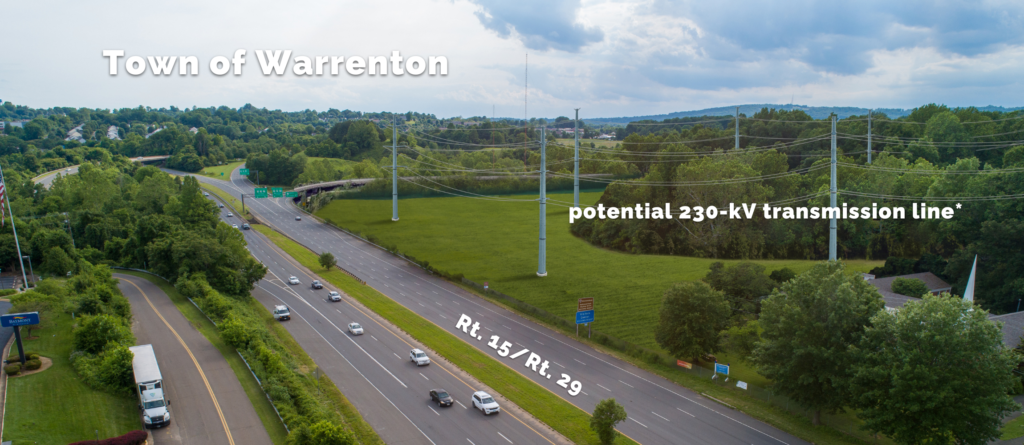
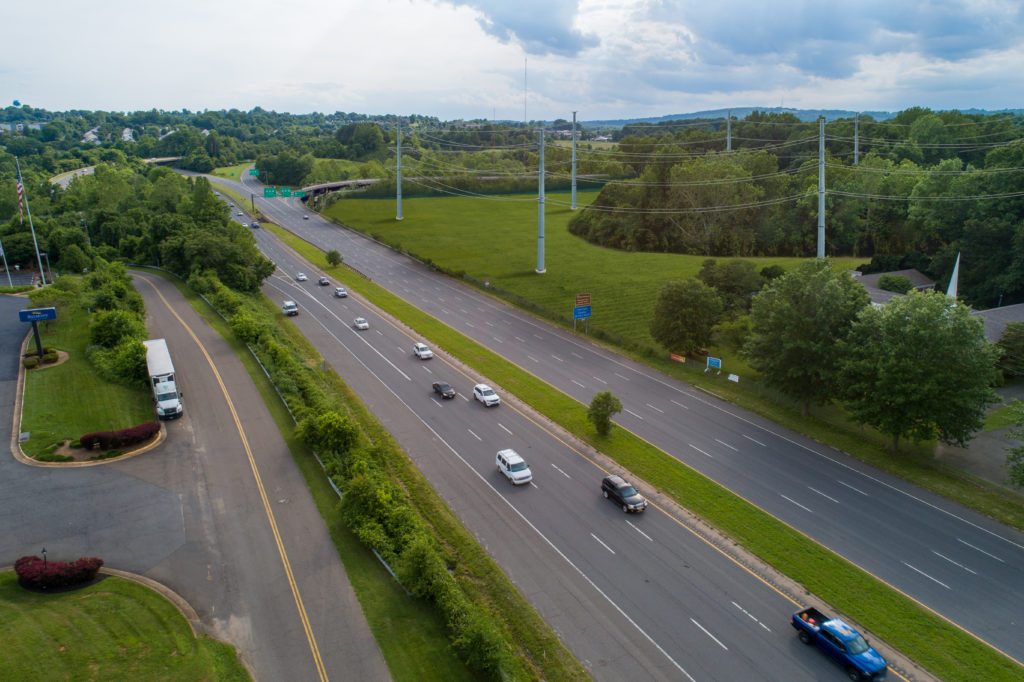
The local citizen group Protect Fauquier and nonprofit organizations Citizens For Fauquier County (CFFC) and The Piedmont Environmental Council (PEC) are united against Amazon’s proposed data center project near Blackwell Road. The data center would sit at the northern gateway into Warrenton, along with a new Dominion electric substation, and would require miles of new high voltage transmission lines supported by 110-feet-tall steel towers, according to Dominion Energy.
Utility-Scale Solar
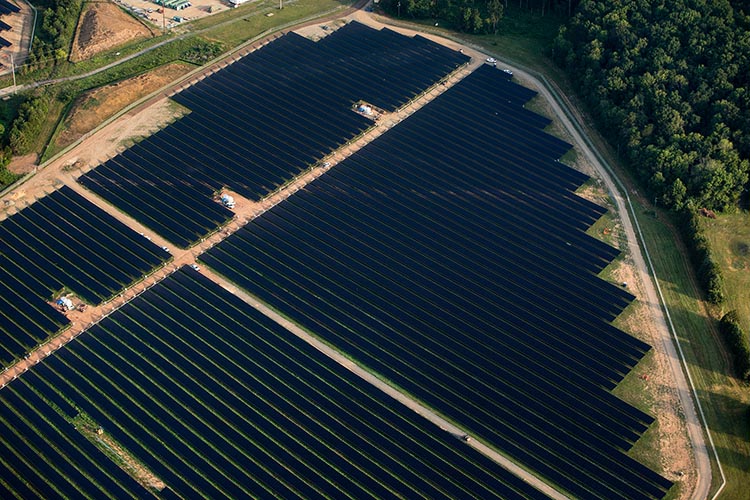
Over the past few years, the declining cost of solar panels, coupled with rising demand for green energy sources has spurred interest in the development of utility-scale solar facilities throughout Virginia. These facilities are often located in rural areas, consume numerous acres (many are well over 1000 acres) and are incorrectly referred to as solar farms. They have many of the same environmental benefits as rooftop solar. However, they more resemble light industrial sites and it is proving difficult at best to protect our natural, cultural, and historic resources from poorly sited facilities.
Ratepayer-funded subsidy for Amazon and Dominion?
Following up on our June email alert regarding the Amazon data center proposed in Warrenton; responses to our Freedom of Information Act (FOIA) requests to the Town of Warrenton and Fauquier County.