The General Assembly Needs to End the $1.9 Billion Tax Exemption for Data Centers
With budget negotiations ongoing and a June 30 deadline looming, Virginia has one last chance this year to pump the brakes on an unprecedented data center expansion that is overwhelming the state’s electric grid — and its communities.
What is the “Crisis by Contract”?
Virginia is facing what we call a “crisis by contract” — the result of our utilities agreeing to private contracts to provide data center customers with unlimited amounts of power on unreasonable timelines.
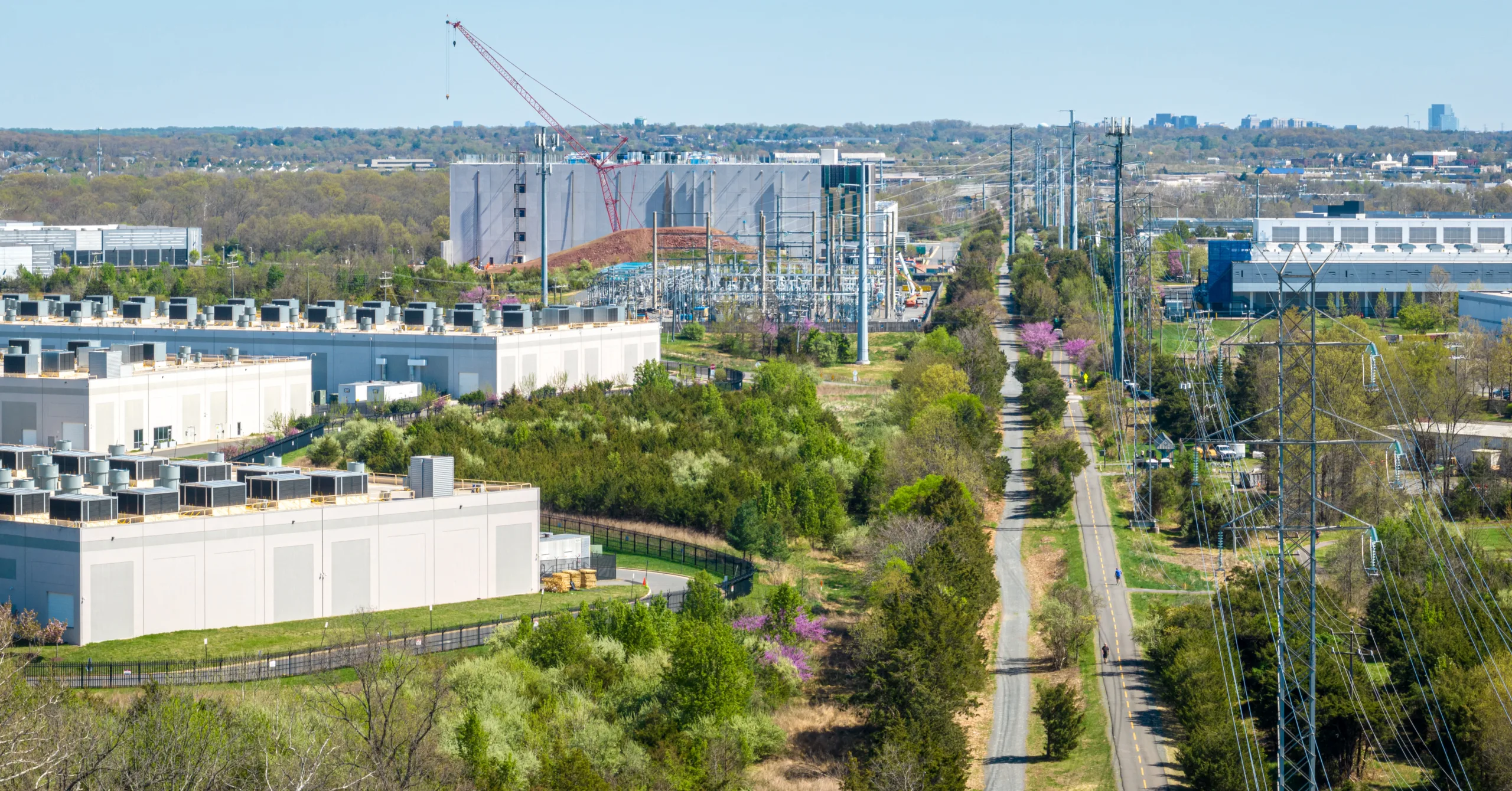
Dominion Energy, the transmission provider for the eastern half of the state, has already agreed to supply 51 gigawatts (GW) of contracted power to future data centers. To put that in perspective, the grid’s current peak demand is about 25 GW. Meeting those commitments would more than triple the grid’s capacity and require hundreds of new substations, thousands of miles of transmission lines, and dozens of new power plants.
Over the last five years, Dominion has only been able to energize about 1–2 GW of data center load per year. The right-of-way for transmission lines to move all of this power will have to come from stream corridors, public parks, farmland, and residential and business properties. Permitting large-scale power plants takes time — reliability, utility customer rates, public health, and environmental impacts all have to be evaluated. There is no shortcut that doesn’t hurt someone.
The Scale of Virginia’s Data Center Market
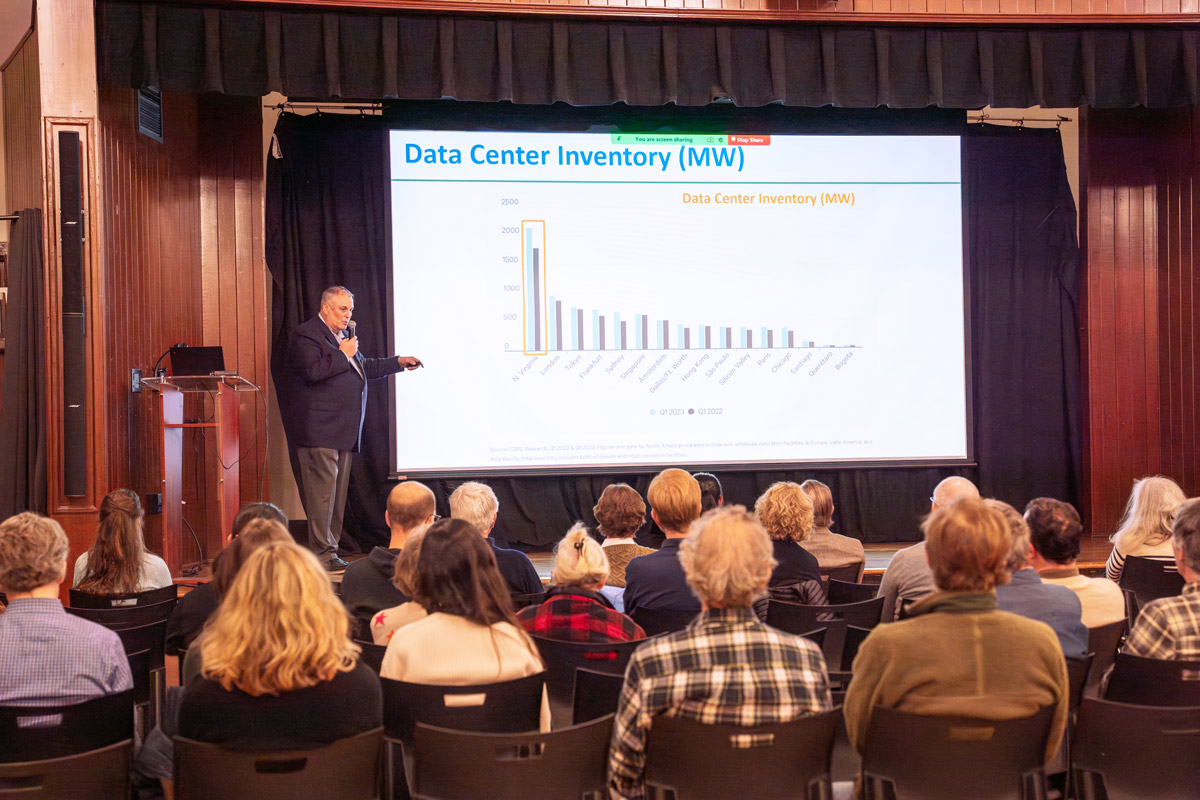
Virginia already holds the title of data center capital of the world, with the most robust fiber network and cloud interconnection ecosystem on the planet. Here’s what that looks like by the numbers:
- Largest data center market on the planet at approximately 10 GW of existing capacity
- Around 300 million square feet of planned growth in the pipeline
- 70 GW of delivery point requests to data centers in the pipeline in Dominion Energy territory alone
- Approximately 10 new delivery point requests per month from data centers, typically totaling 2–3 GW each
- A 15-year wait for new load requests under Dominion’s proposed connection plan, as calculated by Google in a recent SCC filing
- Over 10,500 backup generators permitted at data centers in Virginia
- Nearly 4 GW of delayed retirement of coal facilities
- Three new gas plants proposed: Chesterfield (1 GW peaker), Tenaska (1.5 GW baseload), and Cumberland (3 GW baseload)
At the regional energy market level, the pressure is mounting beyond Virginia’s borders. The PJM capacity auction for 2027/2028 fell short by an unprecedented 6.5 GW — a sign that the broader grid is struggling to keep up with explosive demand from data centers.
What the General Assembly Tried to Do — and What Failed
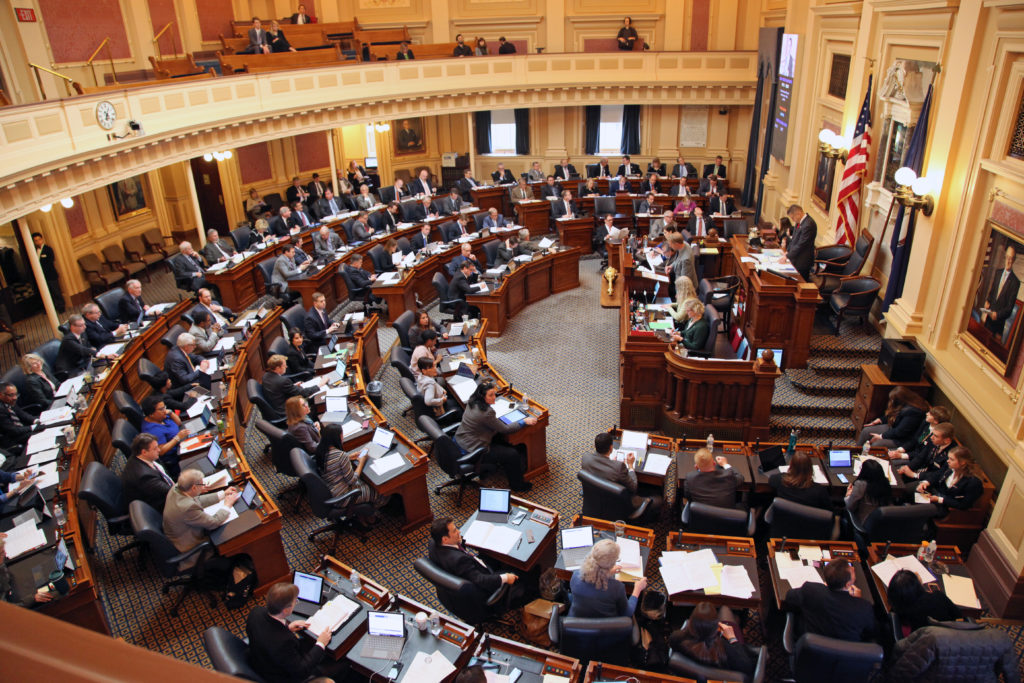
This legislative session, Virginia had real opportunities to get ahead of the crisis. All of them failed.
HB1515 would have paused any additional local approvals of data centers. SB619 would have put urgently-needed state review and guardrails on how large data center customers connect to the grid. SB339 would have better protected other utility customers from unfairly subsidizing the transmission and generation costs required to serve data centers.
The budget negotiations are now the last opportunity this year to incorporate elements of these proposals — a pause on approvals, guardrails from SB619, and ratepayer protections from SB339. Legislators return to Richmond on June 18 to finalize the budget ahead of a June 30 deadline.
The $1.9 Billion Tax Break Virginia Can No Longer Afford
Separate from the grid crisis, the General Assembly is also deadlocked over whether to continue Virginia’s $1.9 billion annual sales tax exemption for data center equipment.
This tax break began in 2008 at $1.6 million — a reasonable incentive at the time to attract a nascent industry. It has since ballooned to $1.9 billion annually, making it the largest tax break to any single industry in Virginia, equal to roughly 6% of the state’s annual revenue. It is expected to keep growing if left in place.
The Senate has emphasized that the industry places heavy demands on the electric grid, provides relatively few long-term jobs, and that the revenue being forfeited is critically needed for the state budget. The House and the Governor have argued that ending the exemption before 2035 would damage Virginia’s business reputation and discourage investment.
PEC’s position is straightforward: Virginia is already the data center capital of the world. The industry is not going to leave if the tax exemption goes away — it will continue to locate here because of an unmatched fiber network, cloud interconnection ecosystem, and proximity to major markets. Not paying state sales tax on expensive equipment has simply become part of the industry’s business model. It is a subsidy that benefits some of the wealthiest companies on earth — Amazon, Google, Microsoft — at the expense of Virginia taxpayers and communities.
The industry will not abandon Virginia if the exemption is eliminated. The operational advantages of being here far outweigh the additional cost. But the state can no longer rationalize forfeiting nearly $2 billion annually while those same companies overwhelm our grid and infrastructure.
Acts of Desperation: What Happens When the Grid Can’t Keep Up
Facing years of delays in getting power from the grid, the data center industry is turning to workarounds that are bad for communities, bad for public health, and arguably bad for the industry itself.
On-site Power (“Bridge-to-Power”)
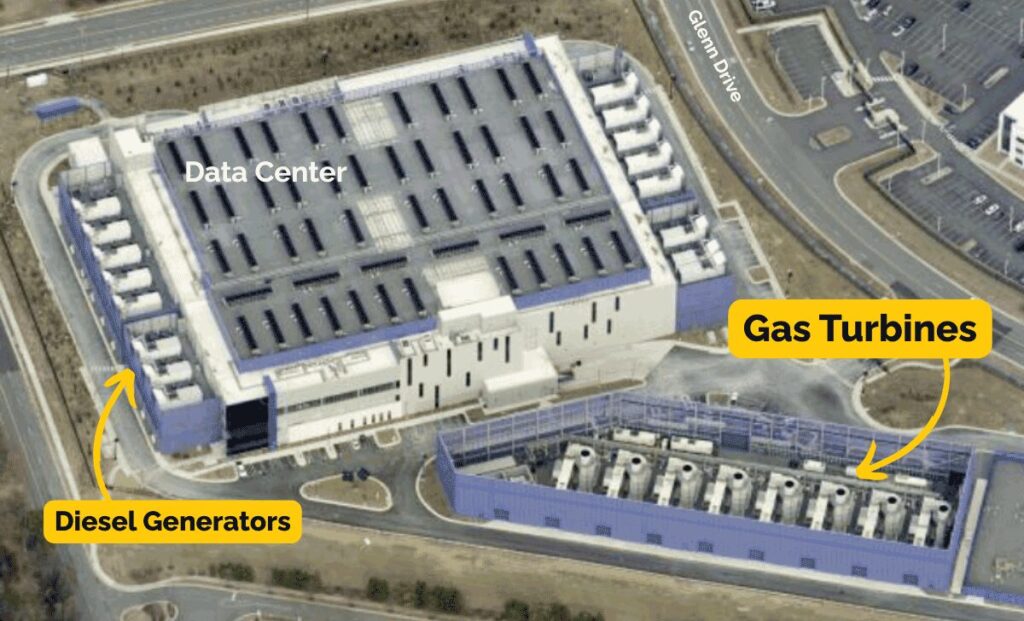
On-site power, or “bridge-to-power”, as it’s often called in the industry, is usually a temporary solution to get a portion of the full power needed to a site more quickly so that the data center can start leasing space or compute. The vast majority of companies want to eventually connect to the grid for enhanced reliability and better cost efficiency, which means this solution is only temporary and does not reduce infrastructure costs for ratepayers in the long term.
One data center in Sterling, Virginia is running off eight gas turbines because it could not get power from the grid. Residents have lodged regular complaints about noise and emissions. During Winter Storm Fern, the facility reportedly had to fall back on its backup diesel generators likely due to gas curtailments or failure of the onsite turbines. Unfortunately, this was a predictable outcome that highlights the unreliability of on-site fossil fuel generation and why this is a bad energy solution for the industry.
PEC conducted a study on the public health impacts of this Vantage site and found the effects are significant — and could become much worse if this model spreads. The Virginia Department of Environmental Quality has declined to conduct cumulative impact reviews or hold regular public hearings on minor permits for these facilities. Similar gas-powered proposals are already appearing elsewhere, including a proposed plant in Remington, VA. [click for more on our study]
Connect and Manage
The regional transmission operator PJM, utilities, and data center customers are also developing a “connect and manage” approach. Because the grid is built for peak demand — the hottest and coldest weeks of the year — there is often excess capacity during moderate weather. The plan is to connect new data center customers to that excess capacity and then curtail them (pushing them onto backup generators) during heat waves and cold snaps.
There are technical challenges to this approach such as defining when and how curtailment happens, if operators are paid to curtail their load, and if reliability will be reduced for all customers as additional load strains the grid. However, there are also serious threats to air quality that no party is currently acknowledging in the discussions:
- Heat waves often coincide with the highest air pollution days. Deploying thousands of diesel generators during a heat wave means the worst air quality days get worse.
- As more load is added, curtailment events become more frequent and longer. The system creates a snowball effect of increasing generator use over time.
- The cumulative air quality impact in areas with concentrated data centers could be severe, with no relief until grid infrastructure catches up — which could take decades.
The Bottom Line

We can’t keep connecting more data centers and ignore the severe impacts of this anymore. Virginia already has enough data centers approved and holding near-term contracts with in-service dates to keep the construction industry busy for decades. Continuing to approve more gives the industry a false sense that adequate resources are available here — when they are not, without significant degradation of quality of life for Virginians and the grid infrastructure everyone depends on.
Continued approvals will lead to increased energy costs, industrialization of neighborhoods, degraded air quality, water scarcity during summer months, and an inability to ever meet state climate goals. There is also a risk that we are overshooting real demand, especially as companies attempt to capture and dominate the market with free or artificially low priced AI tools and services. As the market contracts around “winners”, slows down due to price shocks as companies increase those prices, or energy usage decreases due to technological advancements, Virginia could be left with billions in stranded energy assets. Worse, the state will be locked into an overpriced fossil fuel future as mega transmission and fossil fuel projects are rushed to meet this potentially excessive demand.
The state must pause new data center approvals, end the $1.9 billion tax exemption, and put guardrails in place to connect the load already in the pipeline in a way that protects ratepayers, communities, and the environment.
Legislators reconvene on June 18. Please send a letter to your delegate, senator, and Governor Spanberger before they finalize the budget.