
The Charlottesville-Albemarle Transportation Coalition (CATCO) is a citizen group formed in 1988 to respond to proposed improvements to the local Rt 29 corridor. Their objective was the development of real solutions to emerging congestion problems. Their work included opposition to the Western Bypass, specifically after it was elevated as a priority ahead of previously agreed upon, more effective solutions. The CATCO Green Book summarizes these efforts through 2000. It provides an invaluable digest and summary of the genesis of the Western Bypass and why this community has long opposed it.
Albemarle County & the City of Charlottesville
The staff in PEC's Charlottesville office works with citizens to solve the many land use and conservation challenges facing the Charlottesville and Albemarle area.
Fuzzy Math, Shoddy Design
The saga continues. In order to keep the Rt. 29 Western Bypass proposal within their budget, VDOT accepted a “modified design” to the southern terminus last year that is significantly different than the one presented in VDOT’s Environmental Assessment. And it is now becoming clear that there are some major flaws in this cheap design — flaws related to traffic flow and safety, and that actually increase the travel time on the Bypass. This text is from an email alert we sent out on May 14th.
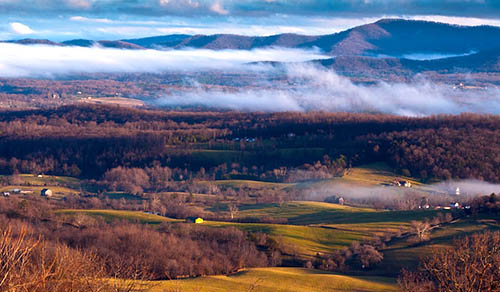
The Future of Albemarle County
We had a great response to the update I gave last week about the Western Bypass, with more than 140 people already sending emails to our U.S. Senators with their concerns. I encourage you to write if you haven't already. Today though, I want to update you about another important process going on in Albemarle County — a process that impacts County and City residents alike. This text is from a March 21st email alert.
Rt. 29 Western Bypass Not Shovel Ready
When it comes to the Western Bypass, I feel like I’ve been jumping up and down for a while, trying to get the decision-makers to pay attention. But quite recently, a number of things have happened that give me hope, and it’s time to get our U.S. Senators involved.
Army Corps & EPA Call Out Flaws in Western Bypass Review
[12/17/12] This has not been a good few weeks for those pushing the Rt. 29 Western Bypass. In late November, a letter from the Environmental Protection Agency was made public that calls into question the draft Environmental Assessment prepared by VDOT. And just last week, a letter from the Army Corps of Engineers came to light, which says:
Charlottesville Western Bypass: Not just a local issue
In June 2011, the Albemarle County Board of Supervisors shocked constituents by holding an unpublicized, late-night vote to resurrect the Route 29 Western Bypass, northwest of Charlottesville. Since then, VDOT—under pressure from political interests in Lynchburg and the McDonnell administration—has put the Bypass on the construction fast-track. While communities north of Charlottesville may think this bypass is only a local issue, there are compelling reasons for Virginians everywhere to pay attention—and it’s not just the quarterbillion dollar price-tag. Big picture: this bypass is part of VDOT’s vision to transform Rt. 29 into a Central Virginia Interstate; acting as an alternative to I-81 and I-95. This is not only a bad idea, it’s not feasible without a massive right-of-way acquisition and billions of dollars in funding.
Video Shows the Real Solutions to Traffic Problems on Rt. 29
Nobody doubts the need to fix traffic problems on Route 29. But the proposed $250 million Western Bypass is not the answer—nor is it a done deal. View this video produced by The Southern Environmental Law Center to learn about more cost-effective alternatives that would provide greater benefits to the Charlottesville-Albemarle community.
Sketches with Jeff – Part 1 & 2
PEC's Charlottesville & Albemarle Field Officer, Jeff Werner, has been struggling for many years with how to explain the issues surrounding the proposed Rt. 29 Western Bypass. He decided to give drawing a shot.
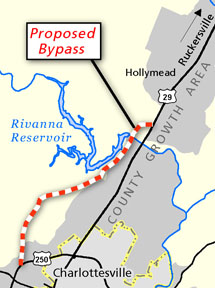
Albemarle Revives Controversial Western Bypass
At their June meeting, the Albemarle Board of Supervisors voted 4-2 to reverse the County's long-held opposition to the Western Bypass–a $250-350 million project that VDOT studies have shown would not reduce traffic congestion on Rt. 29 North
1,000 Acres of Jefferson County Preserved
Members of the Carter family acted together in 2009 to protect nearly 1,000 acres of land in Albemarle County that has been in their family since 1730. The Carters’ ancestors were neighbors to the Jeffersons, with a plantation about seven miles from Monticello, and the 1792 home, Redlands, suggests a Jeffersonian influence. The house was built by Martin Thacker, who also built Monticello, and its plan resembles Thomas Jefferson’s unbuilt design for the Virginia governor’s mansion.