
PEC President Chris Miller was one of twelve experts from across the country summoned to testify before a House of Representatives subcommittee at a June 12 hearing entitled “The Future of the Grid: Proposals for Reforming National Transmission Policy.”
Our Work
Safeguarding the landscapes, communities and heritage of the Piedmont by involving citizens in public policy and land conservation. Learn more about our work by browsing the subject areas below and find out how to get involved!
Socioeconomic Study on Uranium Mining Released
A newly released study by Chmura Associates projects that "the adverse economic impact under the worst-case scenario is nearly twice as great as the corresponding positive impact in our best-case scenario."
Failed French Uranium Mining—A Model for Virginia to Emulate?
For over 20 years, proponents of a healthy Virginia have questioned whether uranium mining has been properly conducted in regions with (geologic, hydrologic, meteorological, etc.) conditions similar to those found in Virginia. Uranium mining proponents have claimed that it has been conducted properly in France.
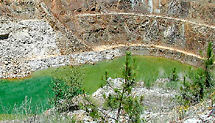
The Mining & Milling Process
Learn how uranium is mined and milled.
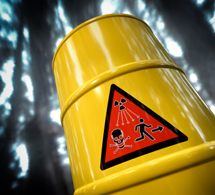
The Consequences of Toxic Uranium
Uranium mining and milling produces massive amounts of toxic waste that can contaminate air, drinking water, and pristine rivers and streams. Virtually all uranium mining in the U.S. has occurred in sparsely populated regions of the arid west, where rainfall is often below 15 inches per year. Still, according to the U.S. Environmental Protection Agency, tailings have contaminated the groundwater at almost all U.S. mill sites.
Water & Uranium Mining
According to the Environmental Protection Agency's TENORM Report, "Water is perhaps the most significant means of dispersal of uranium and related [radioactive materials] in the environment from mines and mine wastes…Uranium is very soluble in acidic and alkaline waters and can be transported easily from a mine site." This is of great concern. If Virginia allows uranium mining, it would be the first state to do so in the United States in a climate where rainfall exceeds evaporation.
Enhancing Habitat for Birds
Check out the Bird Habitat Guide to learn how you can enhance bird habitat in your backyard.
The Piedmont is home to over 140 species of birds that breed in the area, but many of these bird populations have declined in recent decades due to loss of habitat and degradation.
PEC recently teamed up with the American Bird Conservancy to produce a Bird Habitat Guide that offers tips on how you can enhance bird and wildlife habitat on your property.
Whether you have a large farm or small backyard, you can help a variety of birds to thrive through simple changes such as leaving a fence row to grow unkempt or allowing part of your yard to grow up in native grasses rather than mowing.
Grasslands & Meadows
Converting areas of turf and lawn into native warm season grasslands increases the vertical structure and species diversity necessary to feed and provide cover for grassland birds such as bobwhite quail, grasshopper sparrows, meadowlarks, and loggerhead shrikes. Typical warm-season grass species include switchgrass, indiangrass, little and big bluestem, which can be mixed into a beautiful wildflower meadow filled with black-eyed Susans, partridge pea, purple coneflower, butterfly milkweed, and New England Asters.
Information on Important Crop Pollinators
Pollinators play a significant role in the production of more than 150 food crops in the United States, and studies have found that pollination enhances the yield and quality of a variety of important economic crops. The majority of this economic benefit is attributed to pollination by wild bees. Providing uncultivated land, or habitat, near field edges has shown to increase crop yield and profit. Piedmont farmers can benefit financially by providing adequate habitat for these little produce-friendly helpers.
Common Aquatic Invasive Species in the Piedmont
Invasive species are introduced to local waterways from other parts of the world. In the new environment and without natural predators, many adapt to the local aquatic environment, proliferate, and out-compete native aquatic species. Their often prolific reproduction causes ecological disruptions as well as problems with human use and enjoyment of waterways, including clogging water intake pipes and suffocating ponds.
The best way to help manage aquatic invasive species is to stop their spread by cleaning boating and other water equipment and by never releasing aquarium pets or plants into the wild.