
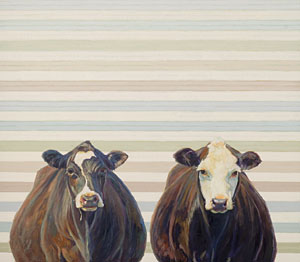
The Piedmont Environmental Council is proud to bring together eleven of the leading artists working in the Virginia Piedmont region. The thirty works of art chosen for exhibition will highlight a cross section of artists who by their creativity and ability make us all aware of the abundant resources of the region. These artists work in various mediums and approach their art in different ways, but all share a sense of place that is the Virginia Piedmont.
Our Work
Safeguarding the landscapes, communities and heritage of the Piedmont by involving citizens in public policy and land conservation. Learn more about our work by browsing the subject areas below and find out how to get involved!
Presentation from Summer 2014 Community Meetings
The following presentation was given at a July 2014 community meeting sponsored by PEC, on the subject of natural gas pipeline proposals in Virginia.
What is the Connection Between My Home and My Drinking Water?
Although your property may not have a stream or pond on it, all land is a part of a watershed and has some effect on the condition of waterways. Land and water are intricately connected by the natural water cycle.
Future Of The Silver Line
Extending rail service to Loudoun County is about more than transportation. WAMU host Kojo Nnamdi explores the political and societal aspects of the Silver Line (with commentary by PEC President, Chris Miller).
How Plants Fly
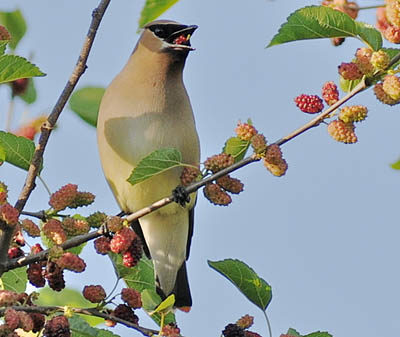
As my mother and I pulled up at the Jones Nature Preserve in Rappahannock, a brilliant bird dipped through the air—a rich tropical blue on delicate wings. They came in this week, Bruce Jones told me, the indigo buntings. He had led a bird walk over the weekend, and they saw 15 to 20 of these migrants, which flourish in the shrubby areas between his meadows and his woods.
Better Habitat: Water, Woods and Beyond
Learn about Wildlife Habitat in the Virginia Piedmont — what it is, why we care, what a landowner can do to improve it. The following PowerPoint presentations were given to members of the Orange County Hunt in March, 2012.
Virginia’s Six-Year Plan for Transportation
If you've ever wondered what roads will be built or what new transit options are going to exist in the near term –The Commonwealth Transportation Board has released its working draft of Virginia's Six-Year Improvement Program for comments, due by Friday, May 18, 2012.
The recently released draft plan covers 2013-2018 and it includes all of the proposed highway, road and bridge projects as well as rail, transit, bicycle, pedestrian and other transportation improvements across the state — with a total associated cost of $10.6 billion.
Planet Earth Diversified
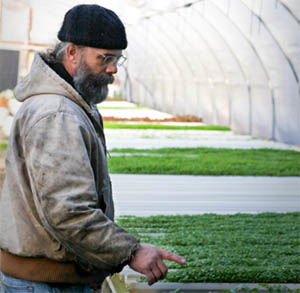
You might think it unlikely that a farmer as grounded as Michael Clark of Planet Earth Diversified would get his inspiration from the spaceship Apollo 13. But if you take a tour of his farm, you'll see just how technology and careful engineering play into every aspect of its production.
Pannill’s Gate Farm
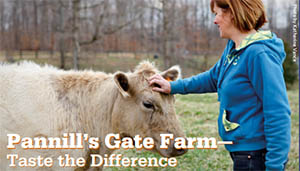
“Come ‘ere babies, who’s gonna come visit?” Patty Johnson calls out as we climb the fence into the field at Pannill’s Gate farm near Culpeper, Virginia. The cows regard her carefully, presumably weighing their chances of getting food or a scratch on the head. Every day, Patty is out in the fields, checking on her entirely grass-fed herd of Red Angus and Murray Grey cattle. For her, the practice of rotational grazing, or moving the cows to a new strip of pasture daily, “re-establishes that relationship- why I am here and why I do this.”
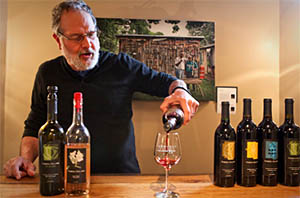
Fabbioli Cellars
For Doug Fabbioli of Fabbioli Cellars in Leesburg, growing his winery and his vines in a way that is environmentally and economically sustainable is a center point of his business philosophy. “Honestly,” he says, “environmental and economic sustainability really go hand in hand.”