Updated June 5, 2026
What is the Rapidan River-Clark Mountain Rural Historic District?
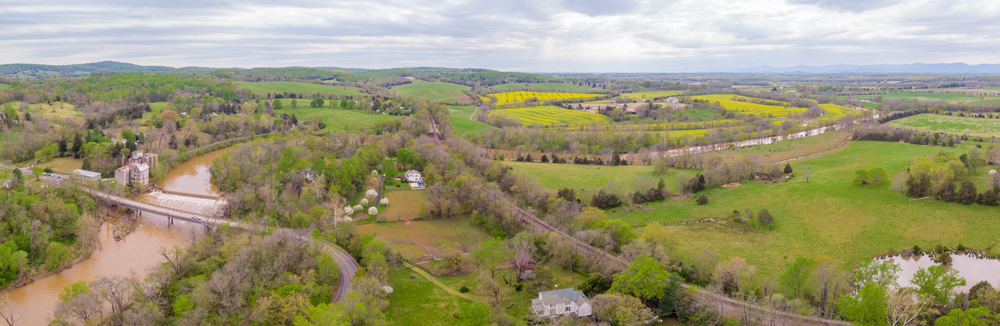
The Rapidan River-Clark Mountain Rural Historic District is a nearly 40,000-acre historic landscape in Orange County and parts of Madison and Culpeper Counties that has been determined eligible for listing on the Virginia Landmarks Register and the National Register of Historic Places for its high concentration of historic resources dating from 1722 through 1968.
What is special about this area?
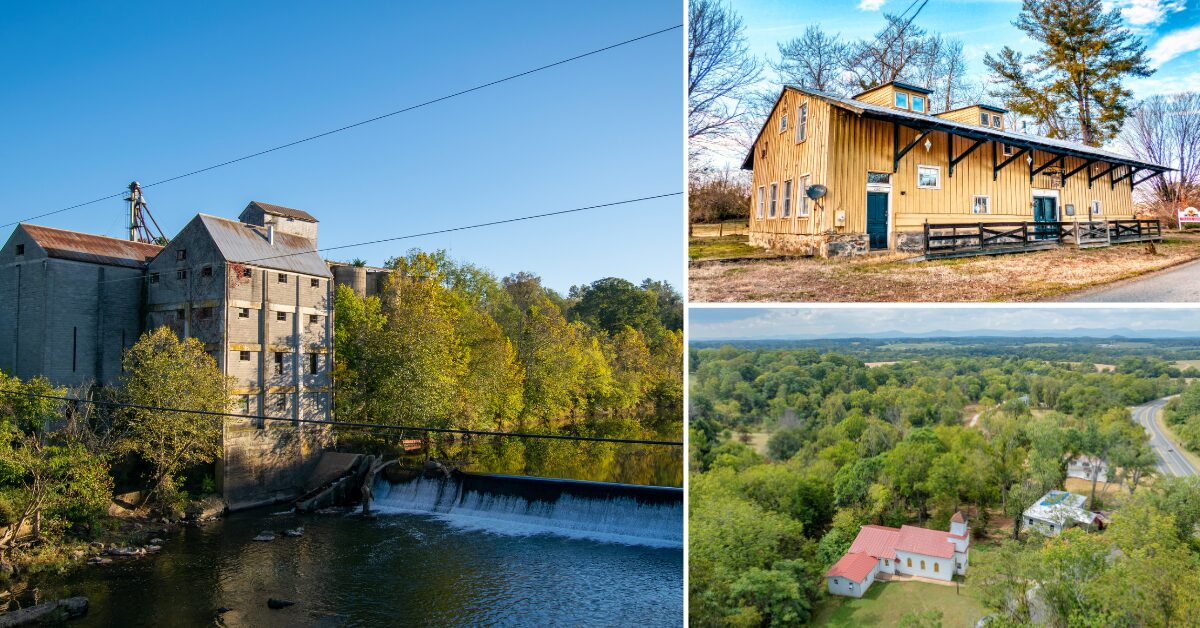
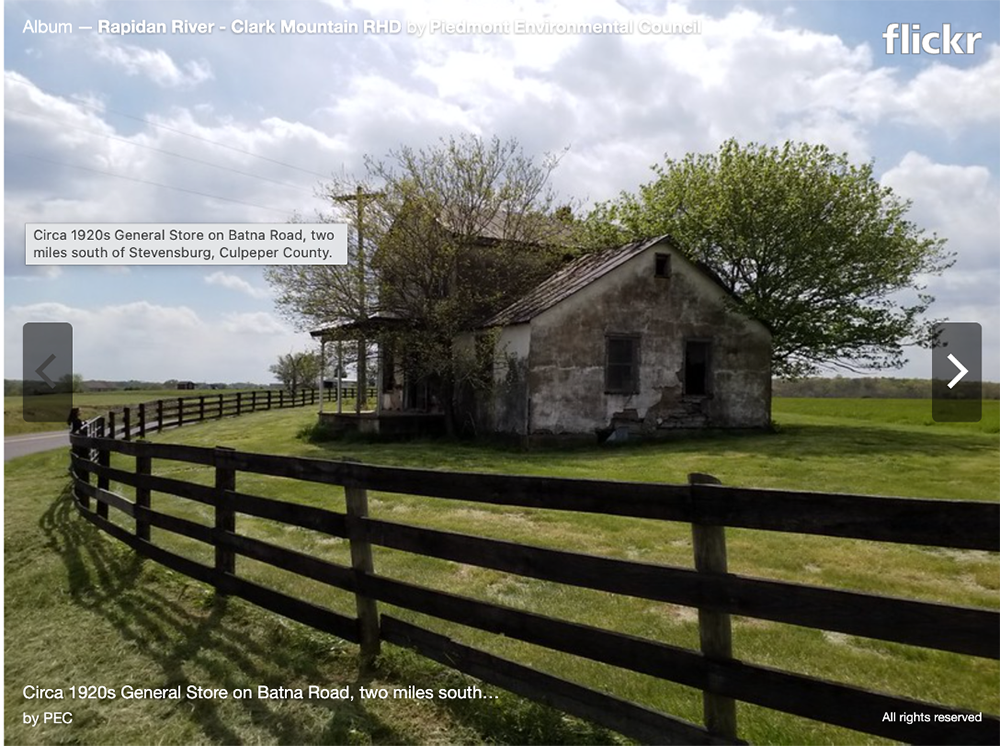
The district contains a wide range of historic sites, from grand houses like Meander (c.1766), Greenway (c.1788) and Brampton (c.1846), to the Hopewell Baptist Church (c.1881), the Rapidan Train Depot (c.1876) and Taylor Sylvania Barn (c.1920), to remnants of the Civil War-era Rapidan Line.
Click on the image below to view our Flickr album.
The resources are important for their association with broad patterns of history with areas of significance including the Civil War, agricultural history, industry, geography and hydrology, and social history, including early settlements, African-American communities and 20th-century migration patterns.
The resources are locally significant for their distinctive characteristics of construction, but also for the aesthetic created by the surviving patterns of agricultural fields and riverine woodlands flanking the waterway, dotted with a mix of domestic and agricultural architectural survivals ranging from high style to vernacular buildings.
Why are rural historic districts important?
There are a number of benefits associated with the creation of a rural historic district:
- The process of creating a rural historic district is a powerful place-making tool that educates residents and landowners within the proposed district about the history of the area, which can lead to a better understanding of the historical significance, a deeper appreciation of and connection to local history and the local landscape, and a sense of local pride.
- Establishing a rural historic district establishes a clear public purpose for the donation of conservation easements and eligibility for many state and federal conservation grants for landowners of properties. Both state (Virginia Open-Space Land Act and Conservation Easement Act) and federal law (National Historic Preservation Act) are specific as to the public purpose of protecting historic sites. Landowners within a listed rural historic district can use historic preservation as a qualifying purpose under the IRS regulations, when taking a charitable deduction for a conservation easement.
- Virginia Code requires the SCC to minimize impacts to historic resources, including historic districts, when siting transmission lines. It also must be considered as a potentially affected resource by federal agencies reviewing major federal actions under the National Environmental Policy Act or section 106 of the National Historic Protection Act.
Taken together, the benefits of rural historic districts – the mitigation review required to approve transmission line projects, the qualifying purpose language under IRS regulations, and the increased pride of place – add up to strong motivation for additional land conservation.
In the more than 25 years since the nearby Madison-Barbour and Southwest Mountains Rural Historic Districts were listed, levels of conservation in these areas have grown to more than 40% of the districts being protected.
Building on increased public awareness and appreciation for the area’s significant historic resources, a listing of the Rapidan River-Clark Mountain RHD on the Virginia Landmarks Register and the National Register of Historic Places could result in increased levels of conservation within the district.
Is my property in the proposed district?
This map shows the area covered by the proposed historic district. Take a look to see if your property is included – click the image to view larger.

For more detailed maps, please contact Don McCown at [email protected].
Does this restrict what I can do on my property?
A Virginia Landmarks Register or National Register historic district is solely an honorary designation, illuminating and documenting the historic significance of the area. It does not place any prohibitions or restrictions on property owners. Only locally-designated historic districts are subject to local zoning ordinances and procedures.
How is a rural historic district created?
The Piedmont Environmental Council (PEC), through a combination of grants and private funding, raised the money to hire a consultant to complete a Preliminary Information Form (PIF) for the proposed district, and guide that PIF through the evaluation process with the Virginia Department of Historic Resources (DHR).
The district was determined eligible for listing in the Virginia Landmarks Register and National Register of Historic Places in September 2017. In order to have the register-eligible district listed on both the state and national registers, PEC decided to hire a firm to complete a full National Register nomination.
The complete Preliminary Information Form is below.
In 2018, PEC hired the Fairfield Foundation of Gloucester, Virginia (Fairfield) to complete the survey and nomination work for the district. The survey work for the district entailed visiting every property in the district to create an accurate documentation of all of the resources that exist on the property – essentially a snapshot in time. The documentation is important – if anything should happen to the resources over time due to fire, neglect or bulldozer, the perpetual record is there.
After completion of the survey work, Fairfield began to work on the narrative portion of the National Register nomination for the district. This section of the nomination describes the historic significance of the district and important contributing resources, and ties those resources and their significance to certain themes, such as agriculture, architecture, conservation, settlement and more. All survey work and a first draft of the National Register nomination was completed in 2025.
Community Meetings
During the course of work on the proposed district, PEC and the Fairfield Foundation have held a number of public meetings.
Community Meeting, Town of Rapidan, Culpeper County, February 2026
On Feb. 19, 2026, PEC hosted a community meeting at Emmanuel Episcopal Church in the Town of Rapidan in Culpeper County to explain the proposed historic district and provide an update on our work over the past several years to move toward a listing on the Virginia Landmarks Register and the National Register of Historic Places. PEC staff, along with The Fairfield Foundation and the Virginia Department of Historic Resources (DHR) led a discussion about what a rural historic district is, where we are in the listing process, and the historical significance of the area.
Read more: Rapidan River-Clark Mt. area seeks Rural Historic District status to save rich heritage (Piedmont Journal-Recorder)
Virtual Public Meeting, November 2021
At our virtual community meeting on Nov. 4, 2021, we talked about the district and nominating process.
Community Meeting and Tour of Little Petersburg, Orange County, December 2020
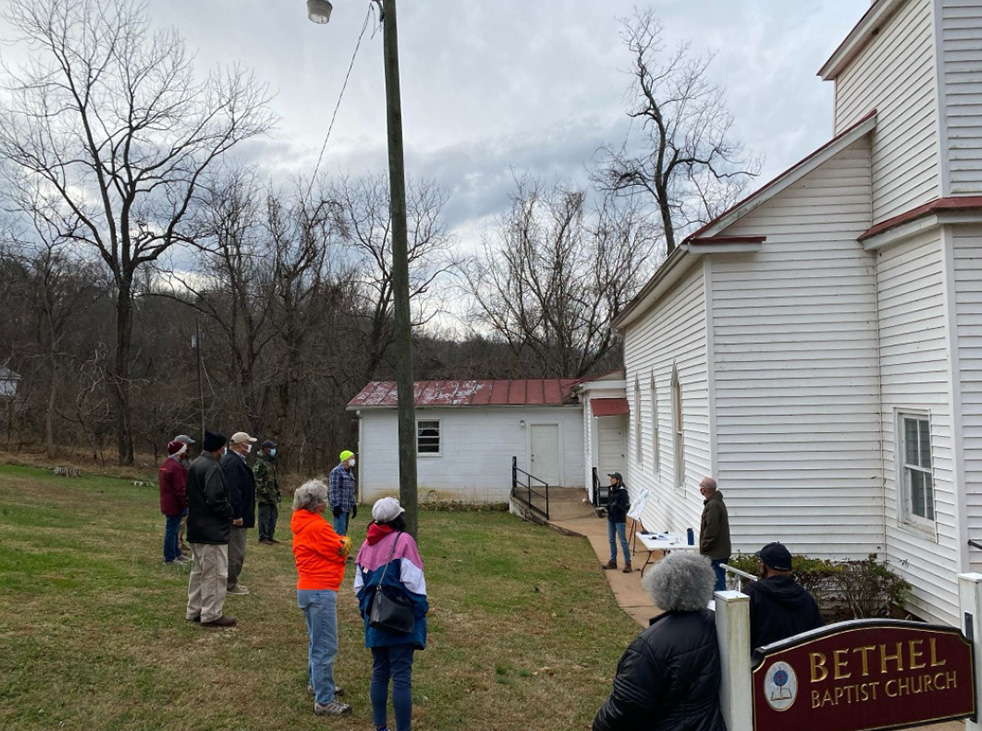
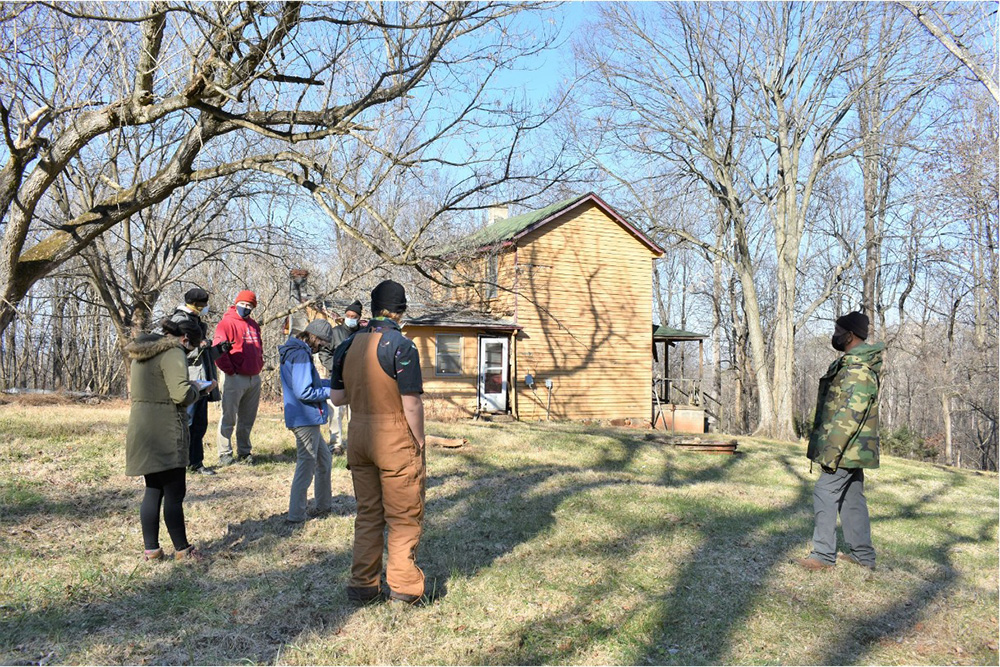
Left: Credit: Fairfield Foundation
A team from Fairfield Foundation surveys the Millard Dade House in Little Petersburg, along with community descendants Bruce Monroe, Alexis Kemper and Gregory Monroe. December 11, 2020. Credit: Fairfield Foundation.
What happens next?
In April 2026, the nomination was formally submitted to DHR. There will be opportunity for additional public comment later this year. During DHR’s review process, we anticipate holding another community meeting in Summer or Fall 2026. It is our hope that the nomination will go before DHR’s State Review Board by the end of the year. If the State Review Board approves the nomination, the district will be listed on the Virginia Landmarks Register first and then will be reviewed by the Keeper of the National Register for listing on the National Register of Historic Places sometime in 2027. If you would like to receive email updates about the next steps for the district, as well as other current land use matters in Culpeper, Madison, and Orange counties, sign up for updates here.
Questions? Please contact Don McCown, Land Use Field Representative for Madison and Orange Counties at [email protected] or 434-977-2033 x7047.