
To become a PEC member or renew your existing membership, visit our donations page today!
Thank you for taking a moment to read about PEC’s achievements across our region and throughout our programs this year. We could not do this work without your support and your commitment, so thank you for giving generously and engaging in the future of your community!
Our model of educating, engaging and empowering residents to bring about positive change in their communities is making a difference, ensuring the Virginia Piedmont remains a vibrant, healthy and beautiful place for all.

Land Conservation Across the Piedmont
As an accredited land trust, PEC partners with landowners to permanently protect lands with conservation easements, we support conservation practices that restore native habitat and improve water quality, and we work with partners to increase and improve public access to land and water.
Through the use of various conservation tools, paired with the strong commitment of our landowner partners, PEC permanently protected 892 acres across the region in 2024. In 2025, we expect an additional five projects to close before the end of the year, for another 804 acres of protected lands. We also worked with partner organizations on an additional 8 projects, resulting in the conservation of 8,400 acres in the Piedmont. These collective efforts of the conservation community are some of the most significant gains made in private conservation in the eastern United States.
Our success is rooted in the strategic leverage of resources, most notably the federal Agricultural Land Easement (ALE) program, which gives farmers financial compensation for permanently protecting prime agricultural soils. Since 2018, PEC has raised and delivered over $4.9 million in state and federal grants to local farmers, successfully protecting 2,125 acres of working farmland across the region. We have secured an additional $4.4 million in state and federal grants that will protect 1,647 acres upon finalization of the projects in the near future.
PEC also focuses on protecting crucial natural areas throughout the region. In Fauquier County, our conservation of 177 acres in late 2024 expanded an important green buffer near the Warrenton Service District and added to a network of nearly 2,200 conserved acres protecting the headwaters for Cedar Run. This year, in Greene, we conserved an 88-acre forested parcel next to Shenandoah National Park, expanding the globally important greater Shenandoah ecosystem. At the end of 2024, PEC assisted in the protection of 70 acres of native hardwood forest in Albemarle County, creating a vital habitat and refuge for wildlife surrounded by commercial development.
PEC is recognized nationally as a catalyst, an innovator and defender of state and federal public policies that support and deliver powerful financial incentives to protect our land and waters. In 2025, we worked to develop, articulate and advocate for public policy around land conservation, improved water quality, and the funding needed to foster and accelerate natural resource conservation in Virginia and beyond.
Improving Water Quality
Riparian buffers — the vegetated areas along rivers, streams, creeks and other waterways — are one of the most effective means of protecting water quality throughout the Chesapeake Bay watershed, ensuring clean drinking water and healthy ecosystems. PEC’s Plantings for the Piedmont is part of our mission to protect and restore the lands and waters of the Virginia Piedmont and helps meet the larger goal of a healthy Chesapeake Bay. This spring, 53 dedicated volunteers helped us plant over 5,000 native trees on nine properties, restoring almost 20 acres of riparian buffers, including a significant planting along Cromwell Run in Fauquier County. Our fall 2025 planting season will complete over a dozen projects, totalling nearly 29 acres and 8,000 trees. Since 2022, PEC’s Plantings for the Piedmont program has restored over 100 acres of streamside areas with about 30,000 native trees and shrubs.
Restoring Grassland Bird Habitat
For the fourth year, PEC expanded our wildlife habitat work through the Virginia Grassland Bird Initiative, a collaborative effort with Smithsonian’s Virginia’s Working Landscapes, American Farmland Trust, Quail Forever and the Shenandoah Valley Conservancy. This program gives landowners a financial incentive to manage their fields in a way that supports grassland birds, which have experienced steep declines in recent decades. Since 2021, over 90 farmers have enrolled more than 7,000 acres in this program
Expanding and Improving Public Access to Land and Water
PEC has steadfastly supported the creation of a Virginia State Park at Oak Hill, the well-preserved home of James Monroe. As a Virginia State Park, Oak Hill would enhance Virginians’ access to fresh air, nature and trails across more than 1,200 acres of fields, forest, wetlands, wildlife habitat, and Little River frontage. Its location along U.S. Route 15, just minutes south of Leesburg, a short drive from millions residents in Northern Virginia, and close to Dulles Airport make it an important new resource for Virginians and visitors to our state.
We celebrated a major milestone in local quality of life: the long-awaited, newly renovated Gordonsville community pool opened this summer. This was a culmination of a 10-year park expansion effort that PEC helped fund through securing grants and donating land.
At the end of 2024, after more than a decade of PEC-led advocacy, Albemarle County opened its largest park, Biscuit Run Park. PEC has meanwhile been working to improve connectivity between the park and the surrounding neighborhoods, including the Southwood neighborhood, which holds the area’s largest concentration of affordable housing.
PEC led a coalition of organizations and neighborhood leaders to advocate for closing Free Bridge Lane in Charlottesville to cars, transforming the disused road into a safe riverside promenade for walking and biking. The county made this significant public access victory permanent in August.
Land Use: Creating Stronger, More Sustainable Communities
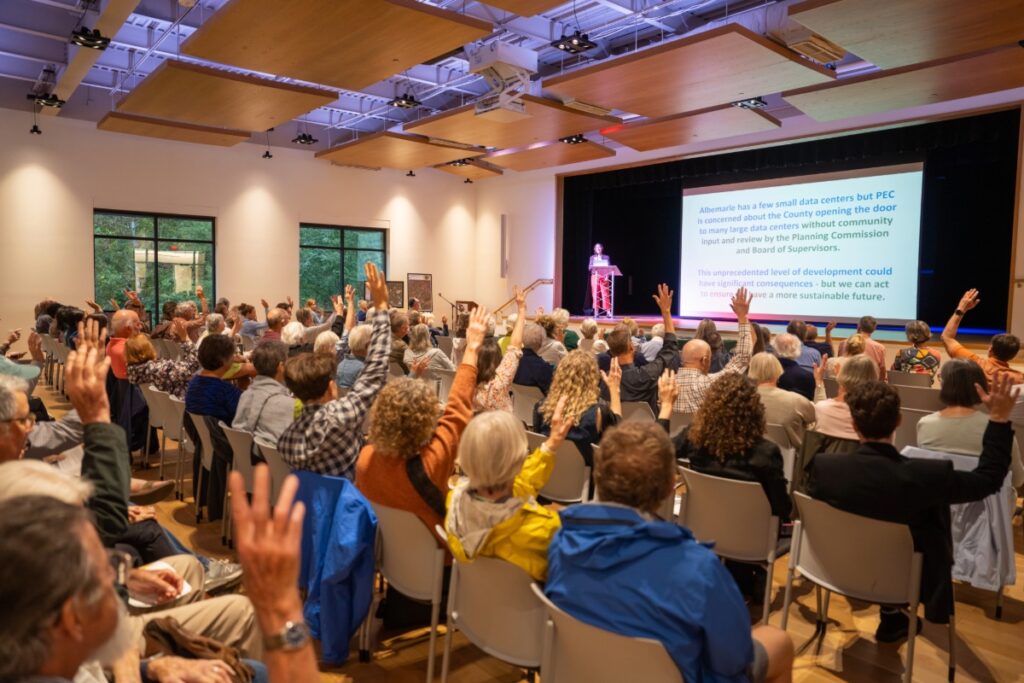
The presence of our staff across all nine counties is fundamental to PEC’s value, enabling a localized approach to land use. This engagement drives the thoughtful processes that are necessary to achieve balanced decision-making between growth and development and the critical protection of natural and cultural resources. Our staff-led grassroots efforts delivered major, tangible victories in 2025, thwarting bad projects and incompatible land uses while advancing other conservation policies.
Albemarle County: During the four-year Albemarle Comprehensive Plan (AC44) update, PEC steadfastly advocated for stronger Rural Area protections and smart growth principles to combat sprawl. PEC urged the County to maintain its land conservation programs and strictly enforce its Growth Management Policy. In October, the Board of Supervisors ultimately adopted an updated comprehensive plan that is consistent with PEC’s vision for the county.
Separately, our community engagement efforts led the County to implement a Special Use Permit process for data centers larger than 40,000 square feet, which ensures greater transparency and public input on massive industrial projects that could affect Albemarle.
Clarke County: PEC advocacy achieved unanimous Board of Supervisors adoption of the new Double Tollgate Light Industrial District. This victory secures a smart growth approach to economic development in the County that uses such resources as public water, sewer, and preexisting road systems to guide development while actively protecting surrounding agricultural lands.
Through involvement with the ongoing Rural Lands Plan update, we successfully reinforced the community’s strong and consistent desire to maintain the county’s rural nature with thoughtful planning. The Rural Lands Plan is currently being drafted, and we will provide input when it comes before the Planning Commission at the end of this year.
Culpeper County: We achieved a major victory for Culpeper when the Board of Supervisors removed data centers as a by-right use on all land outside of the Culpeper Technology Zone, a result of PEC’s advocacy for much-needed zoning changes. Now, all new data centers will require a Conditional Use Permit, bringing necessary and transparent guardrails to future development proposals.
Our advocacy and community engagement this year have also resulted in a curtailing of additional data center growth within the town boundaries and the elimination of exemptions for backup generator testing, ensuring that essential noise protections remain in place in nonemergency situations.
Fauquier County: In partnership with other advocates, PEC is fighting five data center projects in and around the Town of Remington that threaten to transform the community with industrial sprawl, air pollution and noise impacts as well as new energy infrastructure to support it. Facing a strong community response and a Planning Commission recommendation for denial, the largest of these proposals, the Gigaland Project, was temporarily withdrawn by its developer. As Dominion Energy plans transmission line infrastructure through Fauquier County to serve Northern Virginia data centers, PEC is pushing for alternatives to lessen the impacts, such as the avoidance of critical resources and the undergrounding of transmission lines.
PEC has met twice with the Virginia Department of Transportation (VDOT) and engaged members in opposing VDOT’s plan to replace the Interstate 66 bridge over Broad Run due to its impacts on the adjacent Chapman-Beverley Mill, the Broad Run-Little Georgetown Rural Historic District and the Bull Run Mountains Natural Area Preserve. The proposed project would result in a significant widening of the bridge, facilitating a future expansion of I-66 that is not in keeping with the comprehensive plans of the communities involved.
Greene County: PEC, community members, and partner organizations convinced the Board of Supervisors to pass a resolution that will scale back the proposed White Run Reservoir and water treatment plant. This smaller project is considered the most fiscally prudent and environmentally responsible way to ensure the county has a secure water supply.
We provided key support for the ongoing zoning text amendment process to address potential threats from over-scaled agritourism development. This proactive effort will help safeguard both the county’s groundwater resources and the rural character that defines Greene’s economy and identity.
Loudoun County: PEC remains deeply engaged in data center and energy infrastructure development in Loudoun County, including the new Electrical Infrastructure Plan and Phase 2 of the Data Center Comprehensive Plan Amendment to establish stronger environmental performance standards for the county’s industrial growth.
Additionally, PEC actively supported residents’ opposition to the proposed above-ground Golden to Mars transmission line project in eastern Loudoun, engaging in two locally based State Corporation Commission (SCC) hearings on the proposal and joining the county and residents as respondents in the case. We continue to support other residents facing similar proposals, noise and pollution challenges.
PEC also rallied community members to engage in ongoing stakeholder sessions for the Western Loudoun Comprehensive Plan Amendment to guide future development of the county’s rural areas with better protections for farms and rural businesses. We advocated to maintain the integrity of the U.S. Route 50 traffic calming project, partnering with other groups to provide a bus tour for staff and consultants for a more in-depth look at the draft recommendations. PEC supported community-focused plans for Mickie Gordon Park and continued to support Lucketts residents advocating for a Lucketts Small Area Plan before any further bypass planning by the County.
Madison County: For over a year, PEC worked alongside county residents and leaders to draft and successfully advocate for the adoption of an updated Comprehensive Plan for Madison County. The new plan establishes a conservation-informed blueprint for steering future growth into appropriate areas and protecting productive farmland, environmentally sensitive areas and scenic viewsheds.
Orange County: PEC is mobilizing residents to oppose a permit application by the waste recycling and biosolids company Synagro to spread PFAS-contaminated biosolids on Orange County farmland. Perfluoroalkyl and Polyfluoroalkyl Substances (PFAS) are a group of manmade chemicals that break down slowly, if ever, and can be found in soil, air and water supplies, leading to recurring exposure. We are calling for a public hearing to urge the Department of Environmental Quality to require testing for these dangerous “forever chemicals.”
We filed an amicus curiae (Friend of the Court) brief in the Wilderness Crossing lawsuit, highlighting how this proposal for a massive data center complex would undermine existing public and private conservation investments in the area. We are encouraged by the recent circuit court ruling that the lawsuit challenging the massive Wilderness Crossing rezoning can proceed.
PEC is also closely tracking proposed zoning changes, including the split of the Agricultural District into A1 and A2 districts, and advocating for strong regulations, including Special Use Permit requirements, in the proposed Technology District intended for data center development.
Rappahannock County: PEC supported the Sperryville Pedestrian Safety and Accessibility Plan to make the town safer and more walkable. Additionally, the Washington Town Council dedicated a new multi-use trail through Washington, partially funded by PEC’s dedicated Krebser Fund.
We successfully advocated for a zoning amendment to apply Dark Skies standards to new residential construction, thereby advancing best practices for reducing the impacts of outdoor lighting on the environment.

Shaping and Advancing Virginia’s Clean Energy Future
PEC is working to advance clean energy in Virginia in a way that is sensitive to our most critical natural, cultural and agricultural resources and highlights varied forms of distributed generation. PEC believes that distributed generation energy solutions — rooftop solar, parking lot solar, agrivoltaics and batteries — have significant potential in the Commonwealth to meet future energy demand with lower impact, and create benefits for families, farms and small businesses like energy independence. Thanks to our advocacy, distributed energy policy has achieved wins in Culpeper and Greene Counties.
During the 2025 General Assembly session, we successfully lobbied for, and saw signed into law, a bill to establish a “virtual power plant” pilot program to demonstrate the possibilities for balancing the grid without building massive, disruptive infrastructure. Other bills that passed in 2025 with bipartisan support, including legislation requiring more distributed generation on parking lots and brownfields and to build well-sited short and long-duration energy storage, were ultimately vetoed by Governor Youngkin. PEC will continue to lead these advocacy efforts with partners in Virginia as we revisit this legislation in the 2026 session.
Later in the year, we began campaigning against Dominion Energy’s proposal to the SCC to cut net metering credit values by nearly half, a change that would critically undermine the financial viability of rooftop solar for homeowners and small businesses. We commissioned a “Value of Solar” report that demonstrates the true benefits of distributed generation to all Virginia citizens. The report will be used to promote public comment and public testimony in the SCC case and it is available on PEC’s website.
In an effort to demonstrate a truly sustainable, dual-use approach to energy, our Community Farm in Loudoun County launched Virginia’s first crop-based agrivoltaics project. Developed by PEC with technical assistance from the Department of Energy’s National Renewable Energy Lab, this small installation is now fully operational, producing all of the farm’s power.
Setting an Example Through Land Ownership
PEC owns a small number of properties that serve as vital showcases for conservation best practices, sustainable agriculture, and public engagement.
Roundabout Meadows:
The Community Farm at Roundabout Meadows, our educational farm for agricultural best practices, engaged and educated more than 740 volunteers who contributed over 1,300 hours of service this year. To date, the farm has donated 54,000 pounds of fresh produce to local hunger relief partners in Loudoun and Clarke Counties. PEC continues to work with the Loudoun Fauquier Garden Club and NOVA Parks to enhance the network of trails connected to Mt. Zion Regional Park which provides access to the Old Carolina Road and wildlife meadows along Housers Branch, providing easy access to nature for residents and visitors.
Piedmont Memorial Overlook:
We welcomed thousands of people this year to our Piedmont Memorial Overlook (PMO), located in Fauquier and Clarke Counties and adjacent to Sky Meadows State Park. Throughout the year, PEC hosted native meadow walks, birdwatching and history hikes.
PEC’s Data Center Campaign
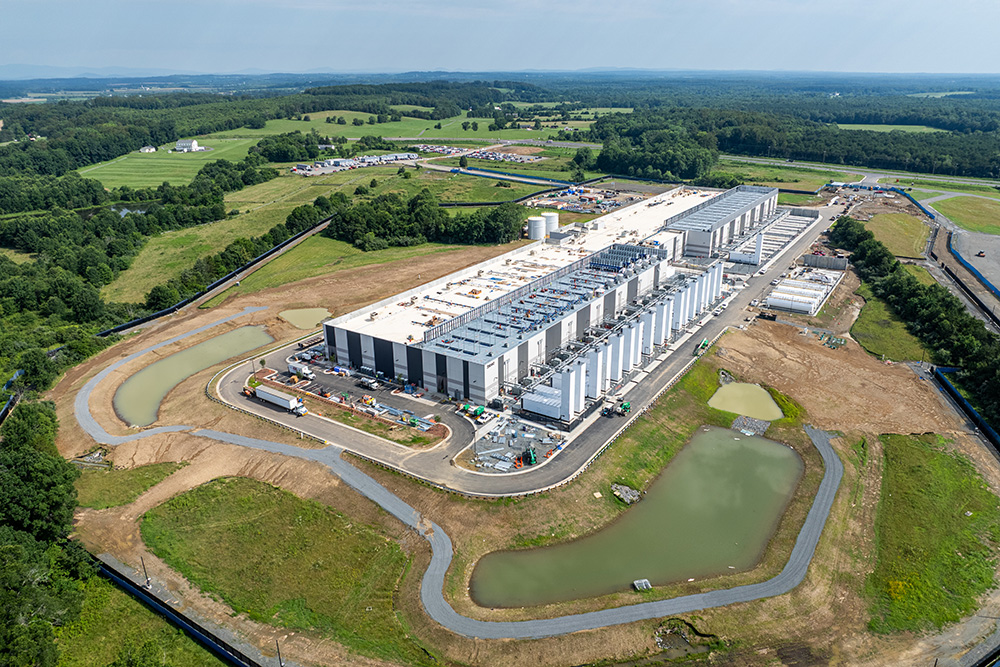
Virginia and its residents are bearing the brunt of the global investment in cloud computing and artificial intelligence. This unbridled growth of the data center industry is resulting in increasing electricity prices for residents across the state, extraordinary environmental consequences and delayed decommissioning of fossil fuel plants that serve Virginia.
Since 2021, PEC has led a statewide coalition working to fundamentally reshape how Virginia manages the digital economy, moving beyond fighting individual data center permits to pushing for statewide structural reforms. Our work includes legal, legislative and grassroots efforts to protect Virginia’s conservation lands, communities and ratepayers from the unchecked growth of the data center industry.
In 2025, we formally launched a digital advertising campaign called “Virginians for a Smarter Digital Future” to reach a broader audience about the impacts of this industry. Our public awareness campaign has connected the abstract concept of data centers to the immediate economic and environmental concerns of average citizens, positioning PEC as the leading voice on the economic and environmental threats, and making data center reform a pressing political and public topic across the state and across the nation.