
After four years of diligent work — including countless hours of community meetings, pop-ups, work sessions, surveys and public hearings — the Albemarle County Board of Supervisors adopted the newly-updated Albemarle County Comprehensive Plan, which will serve as a guide for future development in the county through 2044 (hence the nickname “AC44”). The Piedmont Environmental Council has been involved every step of the way to ensure the plan maintains foundational policies that protect people and the environment.
The Code of Virginia requires that every locality have a comprehensive plan and review it every five years. A comprehensive plan is a community’s most important guiding document for land use, growth, development, transportation and resource utilization. It serves as a blueprint and includes specific actions that can drastically impact the look, feel and function of a community. Those actions could include things like adding a bicycle lane to a specific roadway, providing guidelines for affordable housing, or recognizing the benefits of conservation.
Throughout our 50+ year history, PEC has weighed in on comprehensive plan updates across our nine-county service area, an approach that has been foundational to our success conserving and restoring the lands and waters of the Virginia Piedmont. Dedicating our staff resources and decades of expertise to local planning helps us build stronger, more sustainable communities.
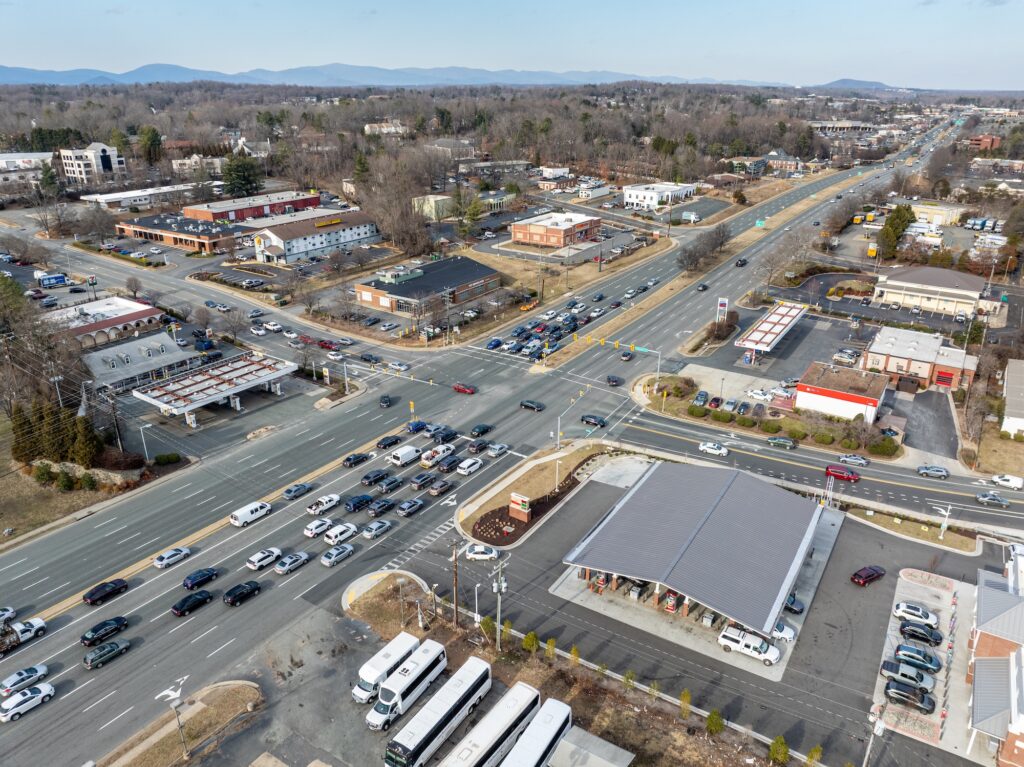
A Comprehensive Vision
From the beginning, Albemarle County decided the entire update would be completed through the lenses of climate change and equity. Rob McGinnis, PEC’s lead land use advocate during the AC44 process, said many localities include policies to address droughts, flooding or local biodiversity stressors, but it’s rare to address the topic of climate change head-on.
PEC worked hard to ensure that climate-informed goals were woven throughout AC44, rather than siloed into only one section or chapter, as is often the case in comprehensive planning.
“The plan has infused within it a tremendous amount of climate change-related policy that addresses the overarching drivers of these impacts, not just the first layer,” McGinnis said.
Given that climate action lens approach, PEC staff developed a Climate Action Platform for Albemarle to inform our advocacy and further outlined our vision for the county:
“PEC envisions an Albemarle County with the majority of its rural lands permanently protected, with intact natural and cultural landscapes, healthy waters, and working farms and forests. The County’s urban areas are vibrant, mixed-use, and walkable, with everyday access to open space, parkland, and recreational opportunities. Equity and climate action are north stars in planning and zoning decisions, and everyone has a chance to help determine the County’s future.”
To meet the challenges of AC44, PEC dedicated significant resources to engagement, including new staff in Albemarle County who worked closely with community members, partner organizations and local government to amplify this vision and advocate for language in AC44 that would support it. We contributed comments and suggestions at public meetings, kept citizens informed about what proposed changes could mean for their community, and worked to ensure the comprehensive plan update did not eliminate or alter policies that PEC has long supported and worked hard to maintain.
A Different Kind of County
Originally established to protect water resources — including drinking water — Albemarle County’s “Rural Area” comprises 95% of the land in the county, while the more urban and suburban “Development Areas” make up the remaining 5%. Maintaining a designated Rural Area distinct from designated Development Areas allows Albemarle County to not only protect clean water supplies, but also to contain around its urban center much of the residential sprawl that threatens to encroach on natural resources and rural communities, and to create walkable, connected communities by encouraging density where services already exist. This is why PEC pushed for the county’s long-term Growth Management Policy in AC44 to remain substantially intact.
The past 45 years have brought many calls to expand the Development Area boundaries to accommodate new growth in the county rather than directing that growth into the existing Development Area boundaries. During the AC44 update, PEC staff spent significant time and energy opposing multiple land use policy proposals that would have extended development into the Rural Area.
“The big contradiction was the county stating it was not going to expand development into the Rural Areas, but adding these new tools that appear to contradict all that,” McGinnis said. PEC’s AC44 team was extremely concerned with this fundamental contradiction: on one hand the county was retaining its long-held Growth Management Policy, and on the other hand proposing multiple policies that opened the door to sprawl extending into the Rural Area.

Albemarle County designated the Rural Area in 1980 in part to protect water resources. Pictured here, Beaver Creek Reservoir provides drinking water to the community of Crozet, a designated Development Area. Photo by Cassidy Girvin
One of PEC’s major successes was the plan’s renewed focus on the value of the Rural Area and land conservation after we repeatedly emphasized the benefits to all residents. These benefits include:
- improving climate resiliency by retaining forest and farmland that sequester carbon and mitigate the impacts of major flood events;
- ensuring ample, clean water resources for drinking, recreation and habitat;
- protecting public health and minimizing climate impacts from vehicle congestion and emissions associated with sprawl;
- enhancing biodiversity conservation;
- strengthening our local economy through local farm and forest products and tourism that relies on scenic and historic viewsheds;
- reducing cost to the county by minimizing the demand for infrastructure and services in the Rural Area.
To ensure the Rural Area received the planning attention it deserves, PEC staff advocated alongside community members in rural Albemarle that AC44 include a distinct and standalone Rural Area chapter, as well as a strong recommendation for the preparation of a future Rural Area Land Use Plan, which would give community members the chance to weigh in on a plan just for the Rural Area. Thanks to this advocacy, AC44 included both.
Language Matters
Even with all the community engagement and review, comprehensive plans are subject to interpretation, with all future land use decisions weighed against the comprehensive plan’s wording.
For this update, Albemarle County wanted to create a more succinct comprehensive plan, so every word in the document — including the level of clarity and specificity — mattered.
“When new draft language was released, I’d look at all the policy statements and all the goals and objectives and actions, and I’d look at it imagining sometime in the future that we would get a project,” McGinnis said. “What language would I be able to use to advocate for a good project or to advocate against a bad project? And is it in there? And for the most part, now, it is.”
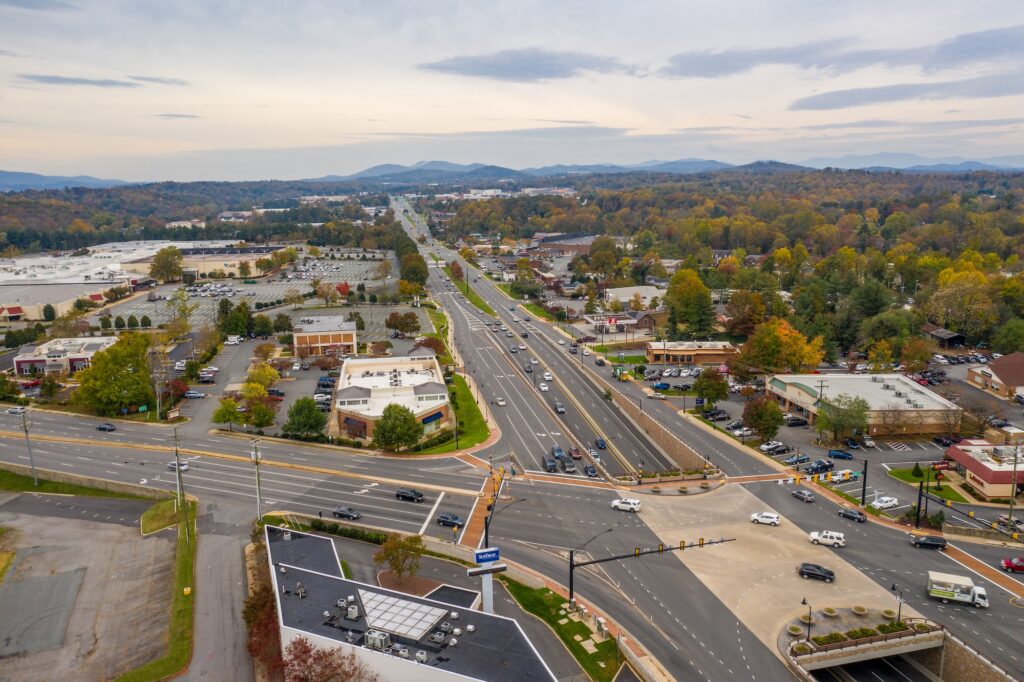
In the end, Albemarle County now has a solid comprehensive plan that PEC feels good about using as a guide going forward. AC44 includes support for conservation and smart growth, more robust planning for the Rural Area, a largely intact Growth Management Policy, and more policies to make our communities stronger and more sustainable.
As PEC looks to the future in Albemarle County, we will remain focused on the wider implications of economic development for land use, smart growth planning, transportation, infrastructure, affordable housing, climate change, natural resources and quality of life in our community.
So now it’s back to work, ensuring that all the successes of AC44 continue in the right direction.
The deeply involved work PEC has done in partnership with Albemarle County is the same work we do toward strong comprehensive plans in all our nine counties. Generous contributions from our supporters make it possible for us to have on-the-ground staff members paying attention to the details in each county and informing and engaging community members who speak out and drive positive outcomes.
This article appeared in the 2025 winter edition of The Piedmont Environmental Council’s member newsletter, The Piedmont View. If you’d like to become a PEC member or renew your membership, please visit pecva.org/join.