
A family retreat
Nestled on the eastern slope of Saddleback Mountain, a small cottage in the woods has been a family retreat for sisters Gayle and Cathy Soloe for decades, since their father first purchased the 89-acre parcel adjacent to Shenandoah National Park in 1958. From the front deck, they enjoy watching the sunrise over the town of Standardsville and the rolling hills of Greene County.
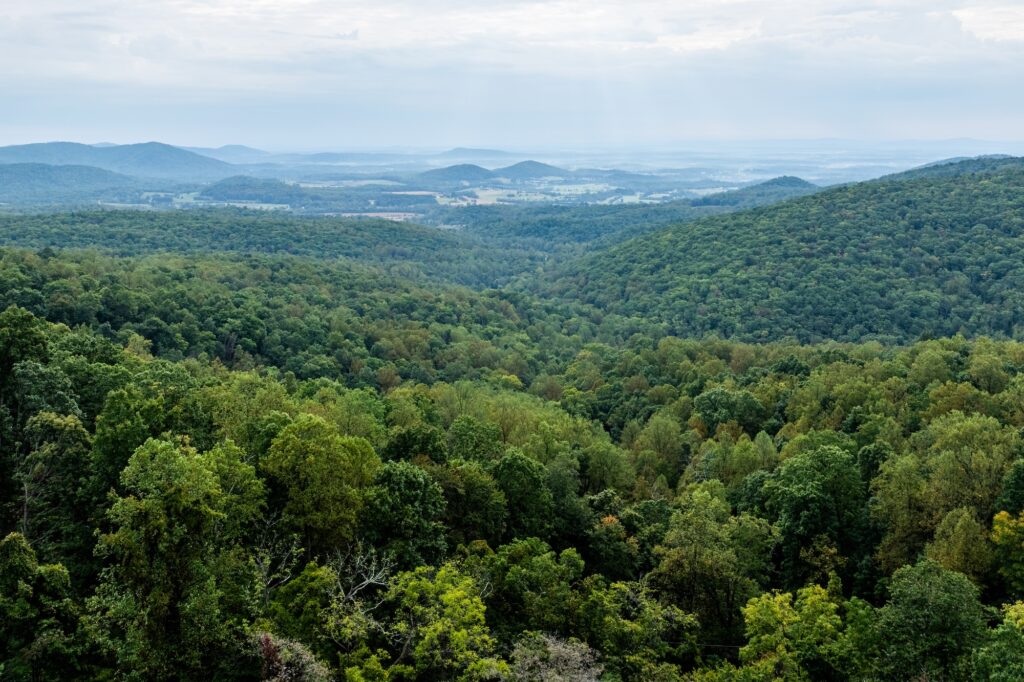
“Being here and looking out at the horizon has a way of resetting your perspective and restoring calm,” says Cathy. “This place has had a profound effect on the lives of all my children, who have had the privilege to grow up coming here where so much wildlife, from bobcats and bears, to walking sticks, to tadpoles and red efts, have taught them to appreciate the delicate balance of all living things and our duty to protect as much as we can.”
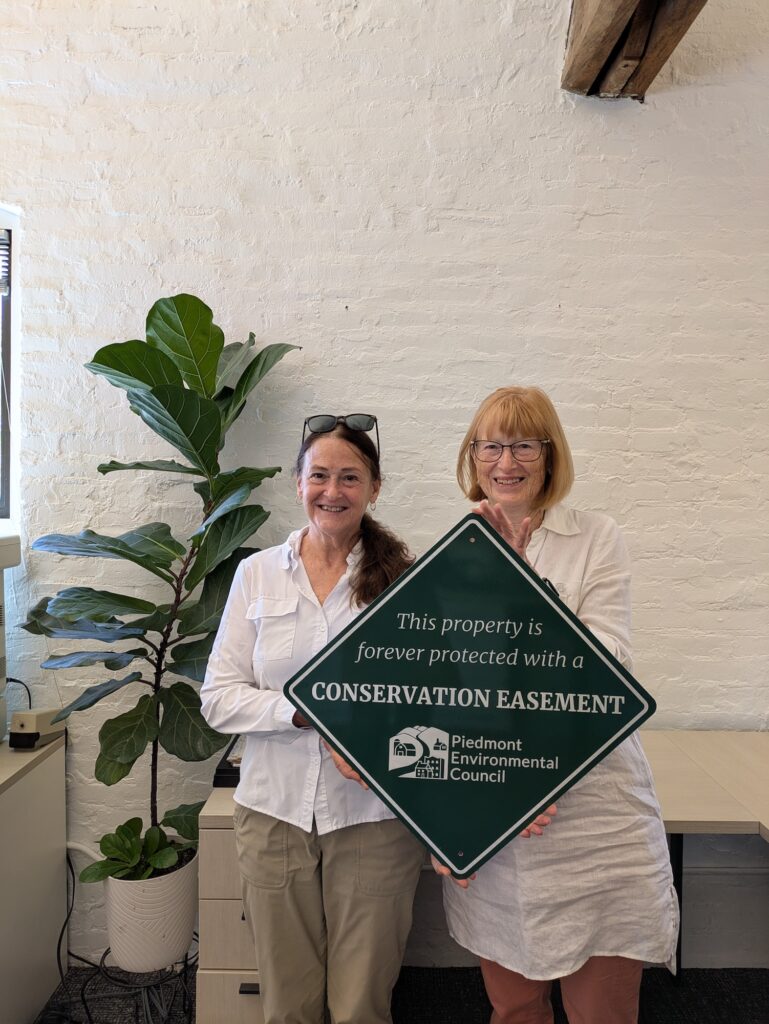
The Piedmont Environmental Council helped Cathy and Gayle place the Greene County property under a conservation easement in September, forever protecting the forestland they love.
Cathy says the impact of this “outdoor classroom” inspired her to become a biology teacher and environmental educator and that her daughter has “followed the same path all the way to the AMNH (American Museum of Natural History) in New York.”
Gayle shares her sister’s fondness for their family refuge. “For much of my adult life, there has been a dog in the back seat of my car, and as soon as we leave the paved road and start the climb up the road, they have the purest excitement of being somewhere they can be free to run and dig and splash in puddles and streams and enjoy being themselves. I like to think that our property has the same pure effect on humans. It does for me,” she said.
A conservation powerhouse
In addition to its indelible impact on the Soloe family, this special parcel of land holds immense conservation value. Kim Biasiolli, a conservation program manager for PEC, calls this property “off the charts” when it comes to the metrics PEC uses to identify the most significant lands to conserve.
“It’s in the highest category of forest conservation value,” Kim says about the 100% forested property. “And from a watershed protection standpoint, it’s important to conserving the headwaters of the streams that flow into the South River and ultimately into the Rappahannock.”
She adds that the property is part of a vital wildlife corridor that runs north to south through Shenandoah National Park within the broader Appalachian landscape. Contiguous habitat is essential for interior forest species like migratory birds, but the more that land is fragmented by development, the less habitat there is, Kim says. “Even more common species like black bears need larger areas of habitat to survive and thrive. So, little pockets here and there are not enough, especially if they’re not connected.”
The Soloe property is part of this essential contiguous habitat. Sitting beside the national park, the entire property is part of an “outstanding ecological core,” a Virginia state designation that identifies intact areas of undeveloped land that are a top priority for land conservation.
Conservation of even this privately-owned land also has important public benefits. In addition to wildlife habitat and clean water, conserved forestland reduces flooding impacts from severe storms, pulls air pollutants and carbon out of the atmosphere, and contributes to the scenic viewsheds that both locals and visitors enjoy.
A National Park Service report showed that in 2024, Shenandoah National Park visitors spent $175 million in nearby communities. National Park tourism is a major economic force in Greene County, and conserving the lands around the park adds to the awe-inspiring vistas that keep visitors returning. “When you’re driving west from Ruckersville toward the park, this property really is visible,” says Kim. “You see the park, you see the mountainsides, and it’s part of the visual experience that visitors have coming into the park.”
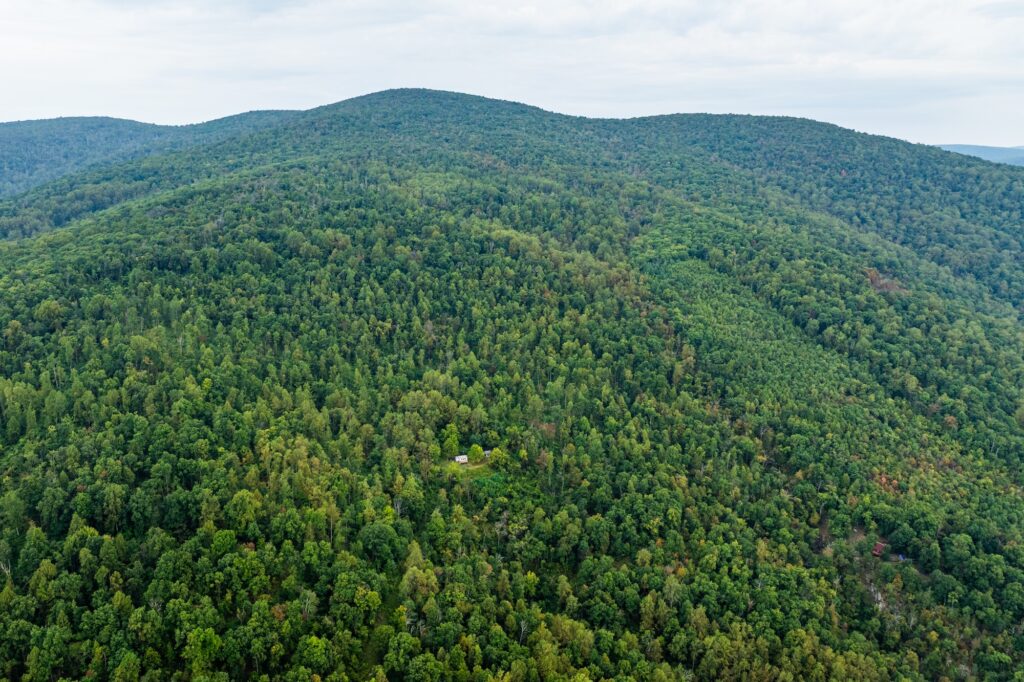
The Soloe sisters’ cottage is surrounded by forestland adjacent to Shenandoah National Park. Photo by Hugh Kenny
A puzzle piece
When it comes to conserving land, the impact is amplified when parcels are connected: each one is more valuable as part of the collective than separately. Shenandoah National Park and the bordering privately-held lands are part of the larger Appalachian landscape, a global conservation priority for flood mitigation, carbon sequestration, drinking water protection and biodiversity.
PEC staff have been working for the past six years on a larger effort to strategically identify and protect top conservation priorities adjacent to the national park, including the Soloe property. To date, staff have secured grant funding for over 5,000 acres in the pipeline to be placed under conservation easement.
PEC’s efforts to conserve the Shenandoah borderlands connect us with partner organizations working toward the same goal, including the Shenandoah National Park Trust, which provided funding for continued stewardship of the Soloe property.
“Over the past few years, PEC has been partnering with the Shenandoah National Park Trust and other people, organizations and entities working in and around the park to develop a cohesive and collaborative land conservation strategy,” Kim says. Much like conserved land, each partner has more impact working together than separately.
Conserving land can be a race against time — or, more specifically, against parcelization, when larger parcels are broken up into smaller and smaller chunks, typically for financial benefit. In many parts of Greene County, long narrow parcels resembling a barcode along the mountainside irrevocably divide the land and invite future development. Kim calls this the “Humpty Dumpty effect,” because “once it’s broken apart, it’s impossible to put back together again.” The threat of parcelization makes conserving the larger parcels like the Soloe property all the more urgent.
The Soloe sisters were all too familiar with this pressure, and acted to save their property from future divisions.
“Overdevelopment is a continuing problem everywhere,” Gayle says. “While growth and development is inevitable, future generations will appreciate the stewardship of those who were able to make the decision to conserve.”
Cathy adds that they want the property “to continue to stay a wild and protected place for plants and animals to thrive and future generations of visitors to find the solace here that we have.”
“Neither the property nor the house on it are grand,” Gayle says, “but nature itself has all the grandeur anyone would need.”
This easement will forever protect the many ecological and community benefits of land in a global conservation priority area in the Virginia Piedmont. It’s the outcome of years of perseverance by PEC conservation staff who work hand-in-hand with community members in our nine-county region. Our unique model is only possible because of the generous and continuing financial contributions of our members and supporters. Thank you!
This article appeared in the 2025 winter edition of The Piedmont Environmental Council’s member newsletter, The Piedmont View. If you’d like to become a PEC member or renew your membership, please visit pecva.org/join.