
We have received word that landowners throughout the Piedmont had begun receiving notices from Spectra Energy, referencing a proposal for a new natural gas pipeline through Virginia. Spectra is distributing a map and a fact sheet in the mail. Find out more.
Energy Matters
PEC works toward energy solutions that emphasize efficiency first, use appropriate technologies for the 21st Century and respect the scenic and historic character of the Piedmont.
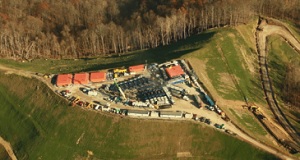
‘Fracking’ on Conserved Land?
The Virginia Outdoors Foundation (VOF) is an important state public agency that has taken part in conserving land in the Commonwealth since 1966. Today, VOF is the largest easement holder in Virginia, and PEC is proud to have partnered with them over the decades. Over the past two years, however, VOF reviewed and approved a number of new easements permit oil and gas drilling—including the potential for hydraulic fracturing (a.k.a. “fracking”)—in areas that have little to no history of energy extraction.

Spectra Energy Gas Pipeline Suspended
If you’re not on our email list, you may have missed that there was some welcome news on the proposed Spectra Energy gas pipeline, which affected Albemarle, Culpeper, Fauquier, Madison, Orange and Rappahannock Counties.
Virginia Uranium Proponents are Desperate
Just a few short months ago the Virginia General Assembly responded to the will of the people — legislators were forced to withdraw a bill that would have lifted the state-wide ban on Uranium mining. As we said then, this was an important victory, but not the final one. Now as we near the end of Governor McDonnell's term, mining backers are conducting a heavy handed PR campaign. They are hoping to persuade the Governor to act against the will of the General Assembly — pressuring him to draft rules that would lift the decades old ban on uranium mining and milling in Virginia. This text was taken from an email alert sent out on June 4th, 2013.
Uranium Mining: Going…Going…Gone?
In 2007, Virginia Uranium, Inc. (VUI) made their intentions clear: they were going to persuade lawmakers to lift the Commonwealth’s standing moratorium on uranium mining and milling. The company had their eyes set on a large deposit of uranium in Southwest Virginia, and they adamantly ignored the numerous warnings and unknowns. Determined to break ground in Pittsylvania County, VUI poured millions into a massive lobbying effort and PR campaign to make it happen. They pulled all of the stops— including flying legislators to France.
Uranium Mining… Going, Going, Gone?
After a big push, Uranium mining proponents have realized they simply don't have the votes. Seeing the writing on the wall, Senator John C. Watkins (R – Powhatan) officially withdrew his bill to lift the ban this afternoon.
My co-worker Rob and I were there, and quite frankly it was pretty exciting. We were a part of a packed crowd from around the state who had traveled to Richmond to show support for keeping the ban. It was great to have something go our way. Continue reading this January 31st email alert:
Time To Write Your State Reps About Uranium
The bills to lift the ban on uranium mining and milling have officially hit Richmond. Despite widespread opposition from local governments and businesses, HB 2330 and SB 1353 were submitted and are now moving through their respective committees — putting the health of Virginia's air, water and ultimately its people at risk. Unfortunately, these bills are as bad as we expected them to be. Proponents claim that mining would be limited to Pittsylvania County, but the bills are drafted in a way that would allow mining throughout the Commonwealth with simple amendments. Continue reading this January 25th email alert:
The Curse of the Yellow Powder
Is it possible to restore a landscape damaged by uranium? Ask the Navajo in New Mexico.
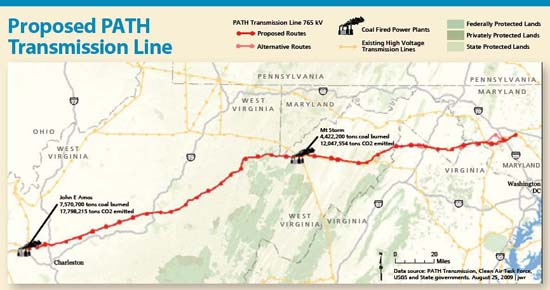
Coal-By-Wire Transmission Line: DEFEATED
For six years, the Potomac Appalachian Transmission Highline (PATH)—a massive, unnecessary 765-kV transmission line— has threatened Virginia. The line was to start in southwest West Virginia, travel northeast through previously undisturbed land, eventually cross through Virginia’s northern Piedmont, and wind up near Frederick, Maryland. PEC and our allies have been fighting this wasteful project for years, and we have some good news: The PATH transmission line project is officially dead. On August 24th, the Board of PJM, our regional grid operators, voted to cancel the project.
Gov. McDonnell’s Uranium Mining Group: Putting the Cart Before the Horse
In 2007, Virginia Uranium, LLC, (VUI) began lobbying hard for the General Assembly’s standing moratorium on uranium mining and milling to be lifted. The corporation has big plans to start a mining and milling operation in Pittsylvania County, and PEC and our allies have fought them every step of the way. There is simply too much at stake. Uranium mining and milling in Virginia would be an extremely dangerous experiment. In the United States, uranium has only been mined in arid regions— where low rainfall makes it more feasible to contain the radioactive and toxic mining waste. Virginia is anything but arid.