Background
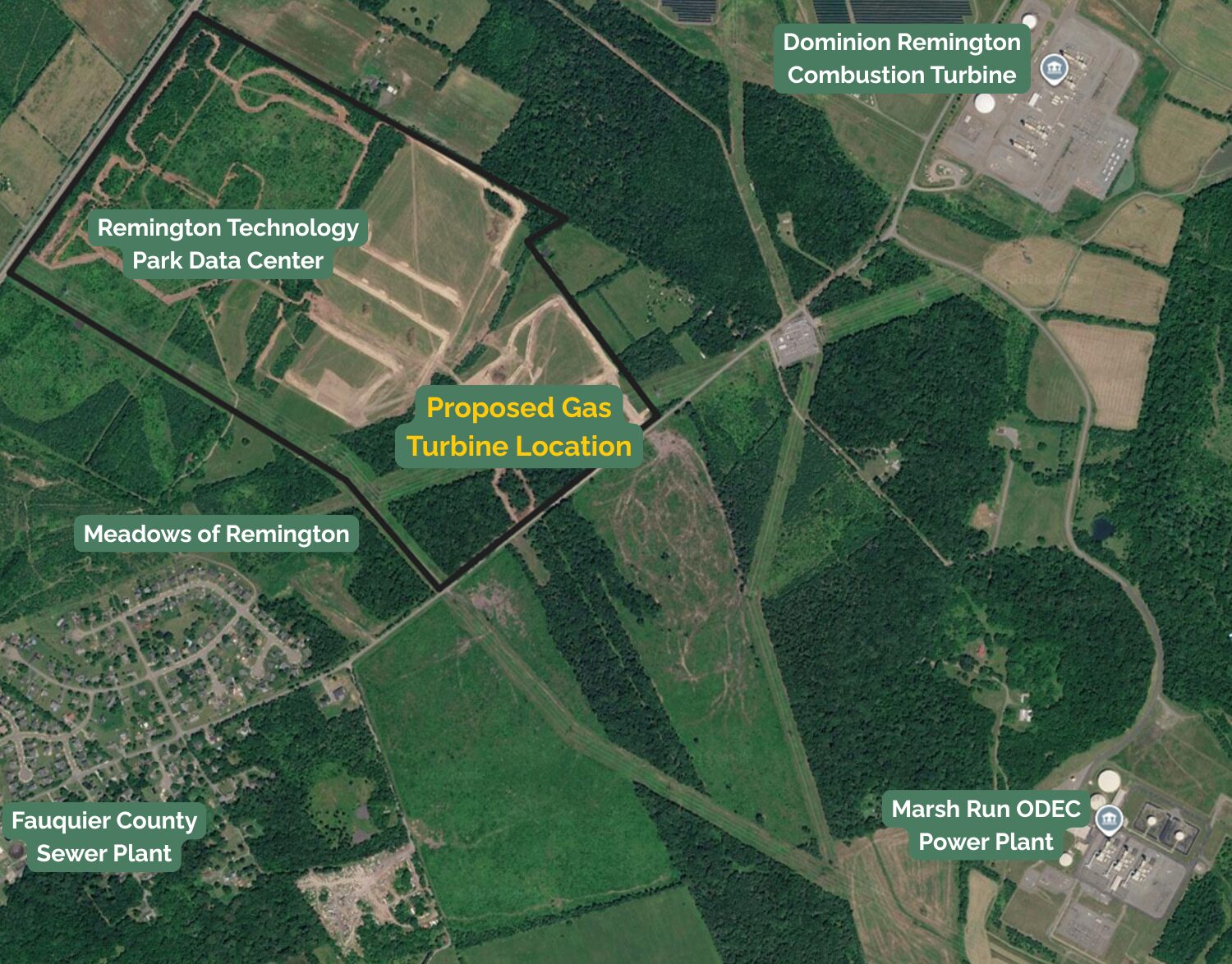
The Remington Technology Park is an approved data center campus on 234 acres along Lucky Hill Road in Remington, VA that allows up to six data center buildings totaling between 1.5 and 1.8 million square feet. The developer, PointOne, proposed building an onsite power plant of 13 gas turbines in early 2026. In April 2026, PEC decided to commission a study of the cumulative impacts due to the proximity of this site to the adjacent Meadows of Remington residential neighborhood and two existing power plants, Dominion Remington Combustion Turbine and Marsh Run ODEC Power Plant. Prior to completion of our study, the applicant proposed a major change in its application, shifting from gas turbines to fuel cells for their power. PEC finalized the study in early July and we feel the results are still important for the community to see.
Results
The report evaluated the potential air-quality, public-health and health economic impacts attributable to the Phase 1 on-site power system proposed for the Remington Technology Park Data Center. The analysis estimated population-level health impacts from long-term exposure to fine particulate matter (PM2.5) and PM2.5-forming emissions.
The proposed facility adds to an area with existing fossil-fuel power generation infrastructure. Two nearby gas-fired power plants already operate along Lucky Hill Road, and the proposed Phase 1 power system would be permitted to emit approximately the same amount of direct PM2.5 annually as the combined 2025 actual PM2.5 emissions from those facilities.
Population exposure is not limited to the communities closest to the facility. The highest concentration increases occur near the facility, but total public-health burden also depends on how many people are exposed. Stafford County accounts for the largest share of estimated population exposure, followed by Spotsylvania County, Prince William County and Fauquier County.
Estimated health damages attributable to the permitted-emissions scenario are significant. Using EPA health-impact methods, the Phase 1 permitted-emissions scenario is estimated to result in approximately 1.5–2.8 additional premature deaths per year, about 1,300 asthma symptom cases per year, and $25–42 million per year in health-related damages. These damages are driven primarily by premature mortality, with additional impacts including asthma onset, asthma symptoms, respiratory illness, cardiovascular outcomes, hospital admissions, school loss days and lost productivity.
Overall, the findings indicate that the Phase 1 on-site power system proposed in the December 2025 air permit application would add measurable air pollution and health burdens to surrounding communities. While actual impacts would depend on future operating levels, emissions controls and facility utilization, the analysis consistently indicates that the proposed emissions are associated with measurable increases in PM2.5 exposure and adverse health impacts across the surrounding region.
Removal of Gas Turbines Means to Minimize Public Health Impact, But Questions Remain.
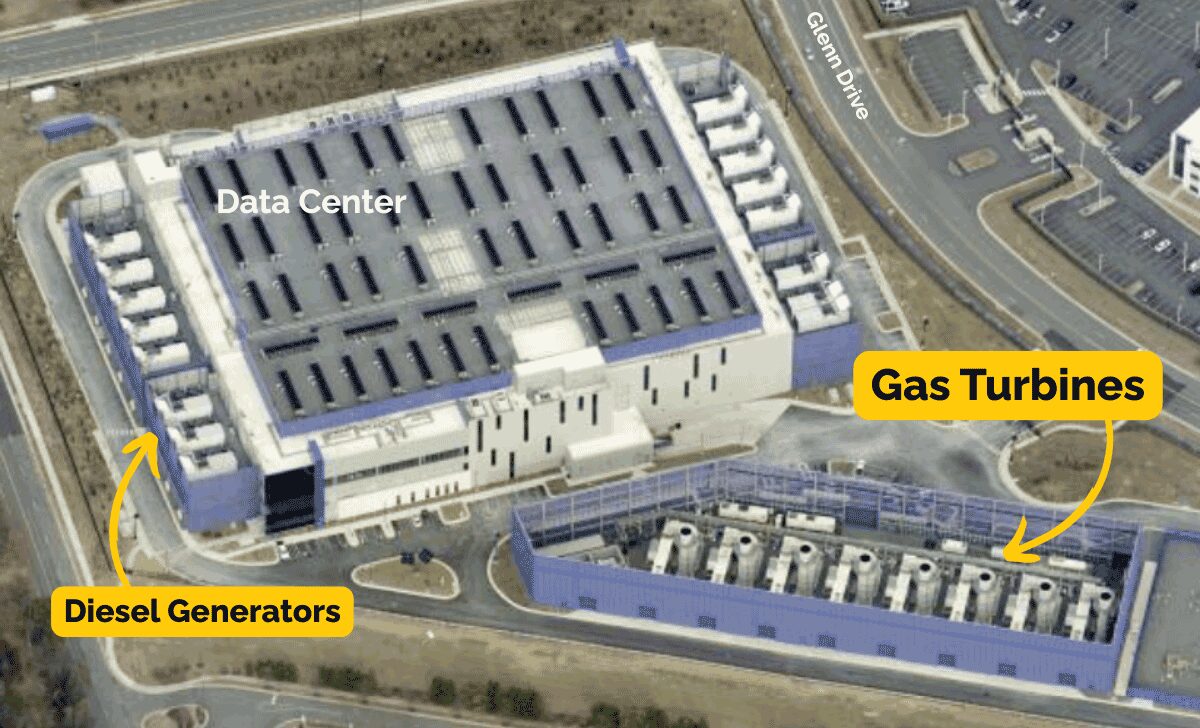
The revised Remington Tech Park power plan replaces the original 13 natural gas turbines with 488 natural gas fuel cells to power the first two data center buildings permanently. The proposal reduces air and noise emissions from the levels we expected from the gas turbines, but it is important to note that the project still carries impacts. It still includes nearly 200 diesel back-up generators and requires a new natural gas pipeline extension from a local gas transmission pipeline to the data center campus; and a natural gas gate station (typically a secure, fenced industrial hub of steel pipes and specialized equipment that transition natural gas from a main pipeline to a local service pipeline). The scale of the proposed fuel cell array is unprecedented, both in the U.S. and around the world, and so questions remain. Read more about our concerns.