When Mike Peterson walks the fields at Kinloch Farm each morning, he is doing more than checking on cattle. He is nurturing connections that stretch far beyond the rolling hills of The Plains — connections between families and their food, between communities and farmers, and between people and the land that sustains them.
“We are fortunate to be part of such an important publication… like [the] Buy Fresh Buy Local guide,” said Peterson, Kinloch’s Farm and Conservation Director. “It provides the regional community a one-stop shop to search for a farmer or grower who can provide food for their family and friends, a concept we do not take lightly.”
This sentiment captures exactly why The Piedmont Environmental Council’s Buy Fresh Buy Local guides matter so much. Published as three distinct editions — Northern Piedmont, Loudoun County and Charlottesville Area (including Nelson, Fluvanna, Louisa, Greene and Albemarle counties) — these biennial directories are not just lists of farms and markets. They are roadmaps to stronger, more sustainable communities.
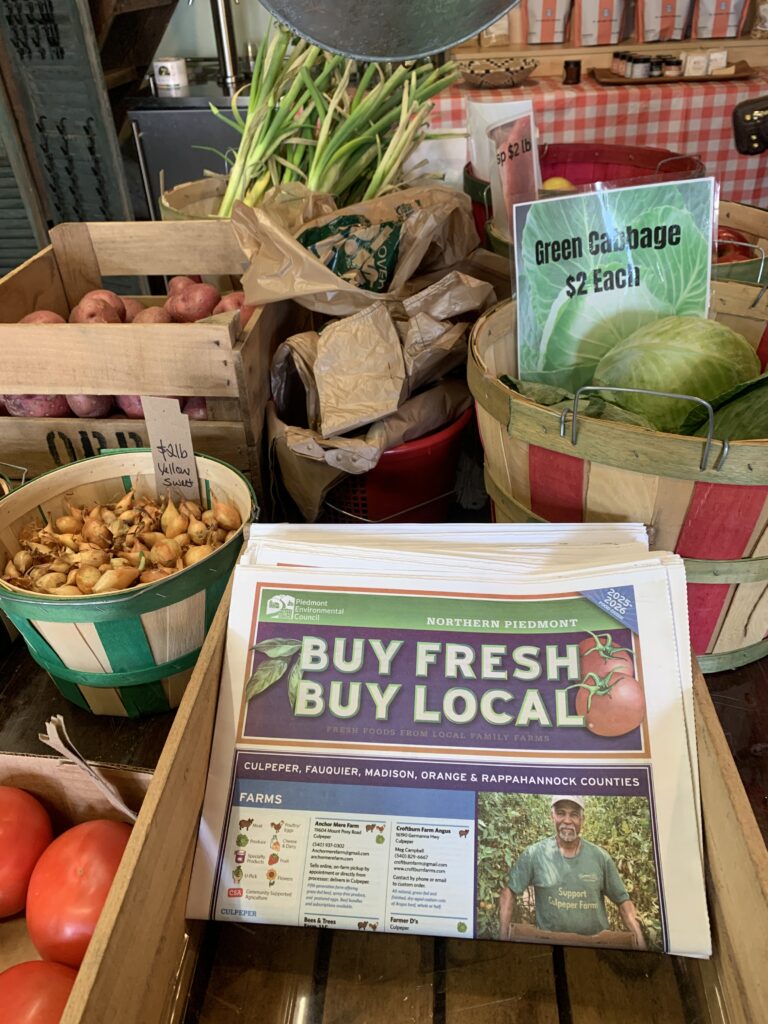
Farming and forestry together make up Virginia’s largest industry. In our region, the guides connect hundreds of local producers with thousands of families seeking fresh, seasonal food. From Kinloch’s grass-fed beef to small vegetable farms tucked into mountain hollows, the directory is a veritable treasure map to the incredible diversity of food grown throughout the Piedmont.
But the impact goes far deeper than convenience. Buying local is also an investment in agricultural resilience that protects farmland and strengthens rural economies, all while supporting families who have chosen to stay on the land and helping reduce the financial and environmental costs of shipping food across continents.
In this way, the Buy Fresh Buy Local guides support PEC’s core tenet that land use policies are not just aspirations for the future, but impact residents today. Put another way, can residents and visitors source their food locally? With Buy Fresh Buy Local, the answer is a resounding yes.
Then there are the stories you might never have known about your food. The artisan bread at the farmers market you can’t resist? Those nuanced flavors come from locally grown and freshly milled grains offered by the likes of Deep Roots Milling, featured in our Charlottesville Area guide. The crisp cider you enjoy on a fall day? The heirloom apples pressed to make it come from an orchard fertilized by grass fed cattle at Long Stone Farm, featured in the Loudoun County guide. The Buy Fresh Buy Local guides make these connections visible and accessible, and help transform abstract concepts about food security and sustainability into concrete choices families can make together.
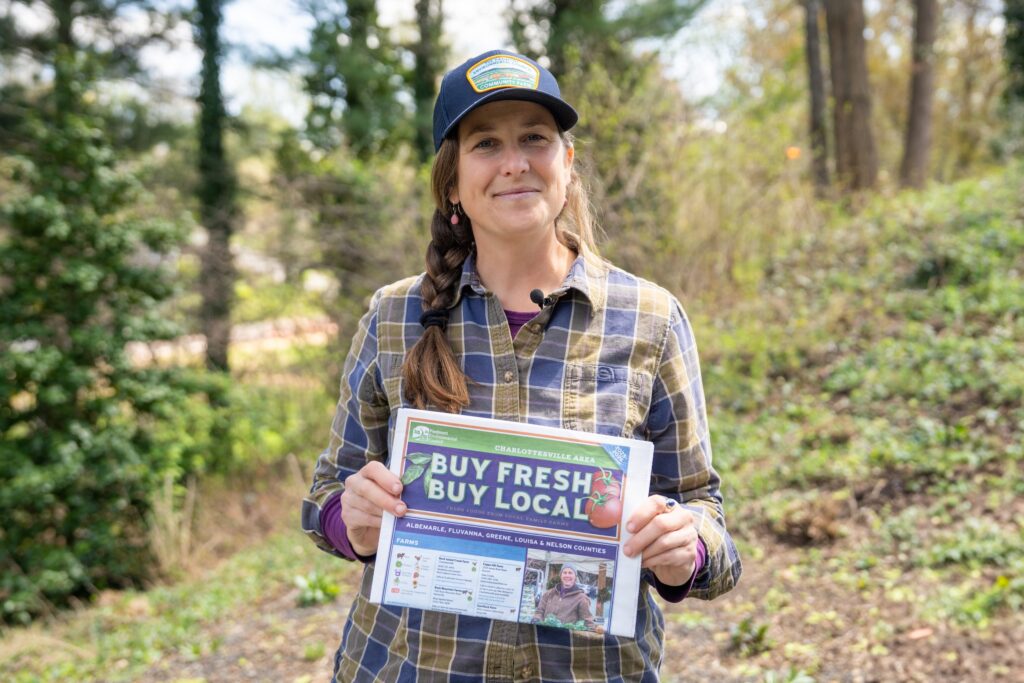
As Peterson notes, connecting families with local food is “a concept we do not take lightly.” Neither does PEC. In a world of industrial agriculture and global supply chains, local food systems offer something precious: the chance to know where our food comes from and the opportunity to support our local community. Buying fresh and buying local nourishes communities in ways that go far beyond the plate.
This article appeared in the 2025 Summer edition of The Piedmont Environmental Council’s member newsletter, The Piedmont View. If you’d like to become a PEC member or renew your membership, please visit pecva.org/join.