
All of us here at PEC know that resilient food systems are crucial to building stronger, more sustainable communities. That’s why we’ve made it a priority to support and promote working farms and to bring fresh, locally grown food to people throughout our region. Since 2019, our properties at Roundabout Meadows and Gilberts Corner have been a cornerstone of our work to promote a just, equitable food system while showcasing sustainable agricultural practices.
A farm for our community
From April through October, PEC’s Community Farm at Roundabout Meadows is a whirlwind of activity. Twice a week, dozens of volunteers visit our farm to connect and contribute to a common goal: feeding neighbors who struggle with food insecurity. During the rest of the week, PEC’s three-member farm staff works tirelessly planting, tending and harvesting vegetables to distribute to our hunger relief partners in Loudoun and Clarke counties. We load thousands of pounds of food into trucks every week, and from there, it makes its way to 1,000+ families throughout the Piedmont, which is home to more than 50,000 food-insecure people.
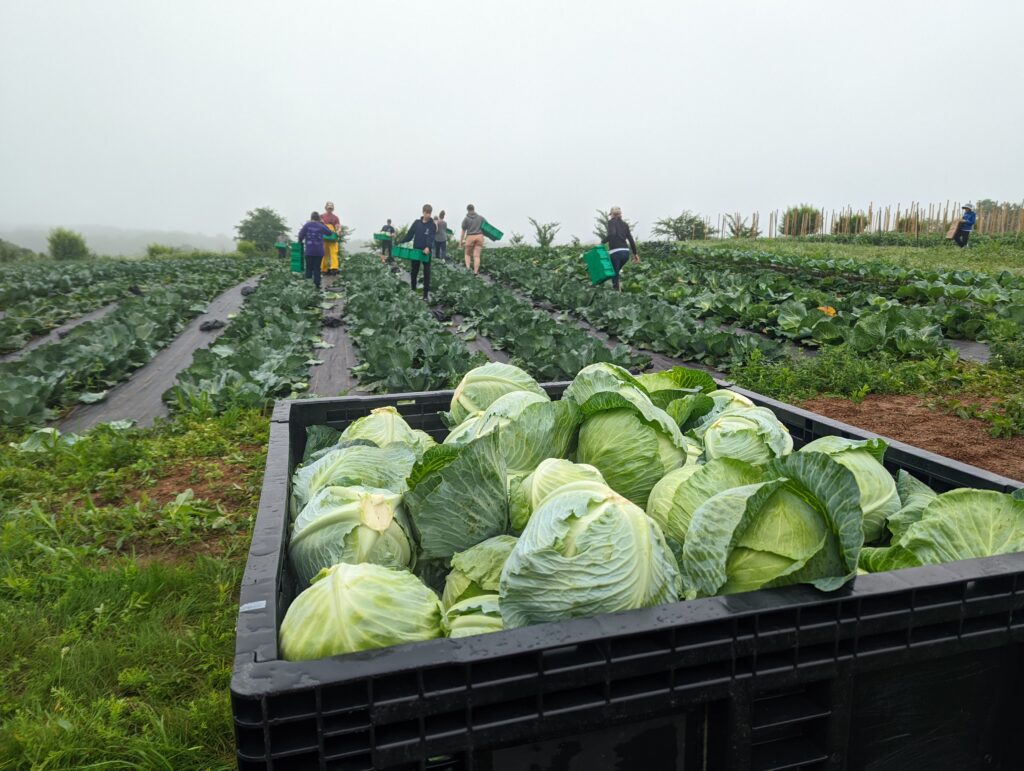
Community Farm volunteers harvest thousands of pounds of cabbage for donation to local hunger relief organizations. Photo by Catherine Fisher
Dozens of similar organizations throughout our region are committed to the same work, yet hunger in Virginia continues to rise, especially among children.
The detrimental effects of hunger are well documented, including poor overall health, behavioral issues and negative educational outcomes for children. For many of us, the solution is simple: grab a bite to eat! But for 1 million food-insecure Virginians, the solution is far more complicated. And recent government spending cuts could make finding a meal even more challenging.
Hunger relief funding cuts loom
Recent changes to hunger relief funding at the federal level are deeply concerning. The tax and spending legislation known as the “Big Beautiful Bill Act” signed into law in July includes big funding cuts to local hunger relief and food programs like those for schools and food banks. A shift of SNAP funding to states will cost Virginia about $250 million per year. Over 814,000 Virginians receive SNAP benefits, and according to the Center on Budget and Policy Priorities, the bill could result in 50,000 Virginians losing their food assistance.
What can organizations and individuals do to help fight hunger in our communities? Just as the causes of food insecurity are multi-faceted, so are the opportunities to help fight hunger.
Food banks and pantries in our region are seeing rising numbers of clients and need more volunteers and financial support. Christ Church Cares food pantry in Millwood is serving more families than ever. Food Pantry Coordinator Mary Parham says, “The number of households we serve has reached about 45 to 50 per week, with some picking up for other families who cannot make it to our location. We only expect this number to increase as federal and state responsibility for this population diminishes and resources are made less available.”
Anne Cushman at FISH of Berryville expects similar increases in need. “As we navigate through the new rules and regulations, FISH is asking local organizations and individuals to partner with us to better serve our clients,” says Cushman. “Much like our partnership with PEC, whether it’s fresh food or clothing or financial donations, every bit helps to make a big difference in the lives of our friends and neighbors in Clarke County.”
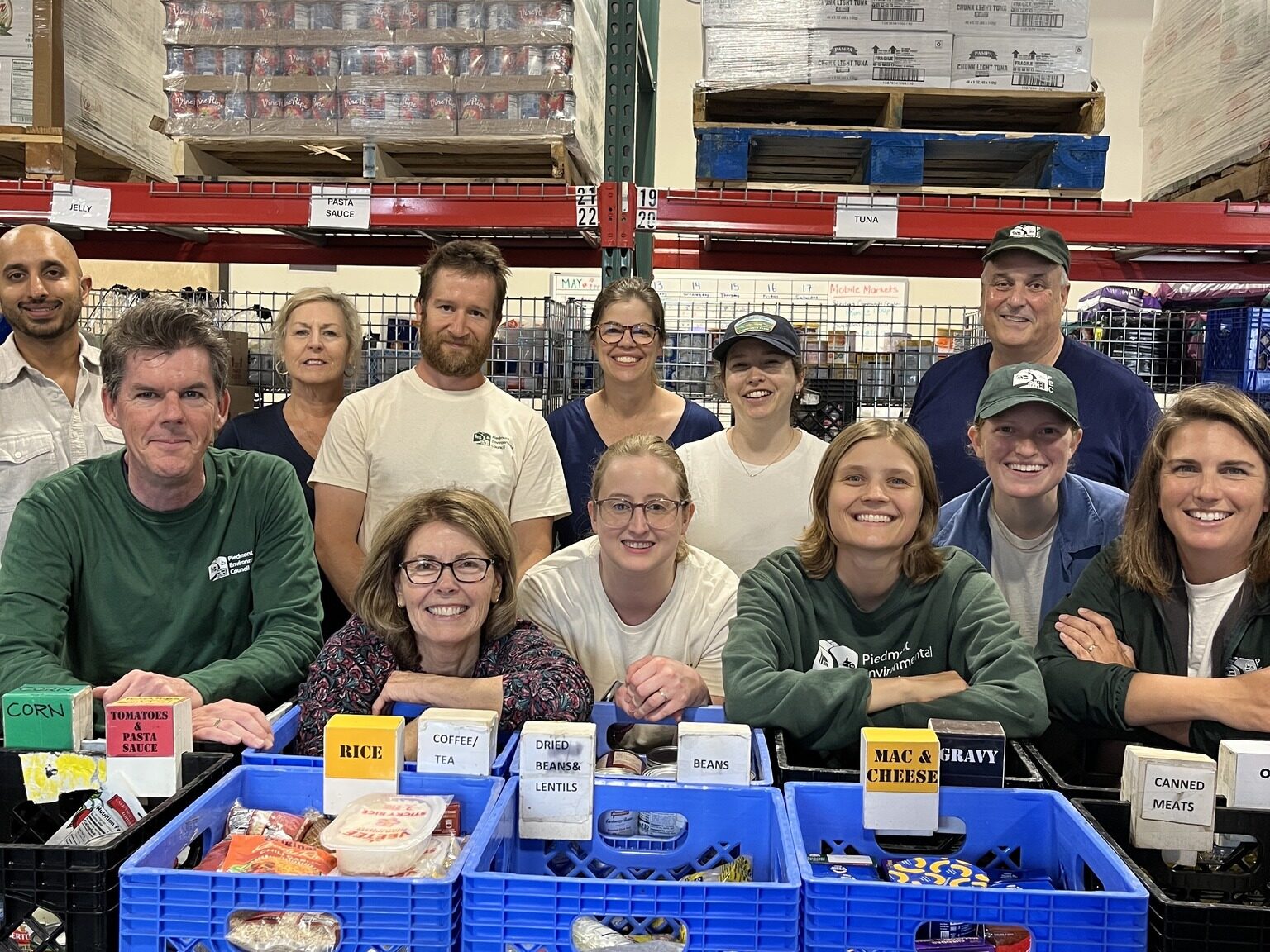
A group of PEC staff volunteering at Loudoun Hunger Relief, one of our food pantry partners. Photo courtesy of Loudoun Hunger Relief
Over the past three years, the team at PEC’s Community Farm has pushed to take our food production and outreach to the next level. We grew and donated over 50,000 pounds of fresh produce in 2024, a tenfold increase from the farm’s first season in 2019, and are working to sustainably increase production year over year. At the same time, we have engaged a record number of volunteers and built partnerships with educational institutions, nonprofits, corporations and community leaders to increase the reach of our mission. When we involve more of our community members in the work of hunger relief, we empower each other to build stronger, more sustainable food systems and protect our vital agricultural resources.
Holding onto valuable farmland
Local farms do more than supply fresh produce, meat and dairy to food banks. They also form the backbone of a resilient local food system that can withstand the increasing pressures of development and climate change. Virginia loses thousands of acres of farmland every year. As changing climate conditions — with more and longer drought periods and more intense rain events — threaten the viability of agriculture in other regions across the U.S., strong, abundant local farms in the Virginia Piedmont will be increasingly critical to feeding us all.
The COVID-19 pandemic highlighted the vulnerability of our food systems, and disruptions to the global supply chain increased demand for local food, animal processors and food pantries. Many food-insecure people rely on large institutions like schools for meals, and when these closed during the pandemic, PEC rallied to connect local meat, dairy and egg producers with our local food banks to meet the increased need.
We learned that we cannot, and should not, rely on just a few globally-scaled producers for food security in our communities. After the challenges of the pandemic years, PEC has doubled down on supporting a sustainable and resilient local food system, seeding possibilities for a continued robust farming economy. Since our beginnings, we’ve partnered with landowners to protect agricultural lands from future development with conservation easements. More recently, we’ve ramped up efforts to leverage a federal Agricultural Land Easement program designed specifically to conserve and keep working agricultural lands in production. We champion soil health through the Community Farm, run the Gilbert’s Corner Farmers Market where local farmers sell their goods, connect farmers with cost-share programs to support sustainable land management practices, and promote local food through our biennial Buy Fresh Buy Local guides.
The fact is: food is an intersection for the majority of PEC’s work, as the agricultural economy is the cornerstone of rural viability and environmental stewardship. Whether you volunteer with us on the farm, support conservation, buy local, donate to a food pantry, or advocate for hunger relief, we invite you to join us to build food security and fight hunger in Virginia, nationally and beyond.
This article appeared in the 2025 fall edition of The Piedmont Environmental Council’s member newsletter, The Piedmont View. If you’d like to become a PEC member or renew your membership, please visit pecva.org/join.