
Update [Jan. 12, 2026]: In December, 2025 despite opposition from dozens of residents, the Board of Supervisors approved a new Technology zoning district that allows practically any parcel of land, anywhere in the county, to be rezoned for data centers.
The new ordinance does include some provisions intended to avoid or mitigate impacts of data center development, and it will ensure a public input process for future proposals. However, the maximum-flexibility approach approved by the Board:
- does not steer data center development away from neighborhoods, schools or farmland;
- does not include any cap on acreage or on how many parcels countywide could be rezoned for data centers; and
- leaves the door wide open for any future boards of supervisors to site data center development in inappropriate areas, especially when negotiating with the richest companies in the world.
Thank you to everyone who attended the public hearings and wrote to the board. If, and when, a data center proposal is introduced in Orange County, you will hear from PEC on next steps.
This text was taken from an email alert sent out on Thursday, Dec. 11, 2025. Sign up for emails →

Dear Supporter,
I’m writing to tell you about a critical opportunity to weigh in on the future of data center development in Orange County.
This coming Tuesday, Dec. 16, the Board of Supervisors is likely to vote on a proposed zoning ordinance that does not go far enough to protect the residents and natural resources of the county. We have serious concerns that the proposed “floating zone” approach will cause land speculation across the county, industrialize agricultural areas, and allow developers to build data centers near parks, schools and homes.
Even after hearing concerns from residents at last Thursday’s public hearing, the Planning Commission voted to recommend that the Board of Supervisors approve the proposed Technology Zoning District.
Please plan to attend the Board of Supervisors public hearing on Dec. 16 and share your comments in person, and/or contact your county supervisor nowwith your questions and concerns.
Tell the Board: The Draft Ordinance Gives Too Much Flexibility to Data Center Developers
Urge the Orange County Board of Supervisors to heed the hard-learned lessons from other Virginia localities by establishing commonsense, reasonable guardrails for the industry and robust, stringent protections for our residents, our resources and our quality of life.
Let the board know that the proposed “floating” Technology District is too permissive and will allow practically unconstrained data center development across the county. But it is critical that they keep the special use permit requirement, which would give the public an opportunity to weigh in on any proposal.
I encourage you to speak at the upcoming public hearing and/or submit written comments to the board.
Our Concerns
While the planning commissioners asked many of the right questions, and we agree with many provisions in the draft ordinance that has been forwarded to the Board of Supervisors, we have serious concerns with the proposed “floating zone” approach to data centers.
- Unrestricted Data Center Sprawl
This approach prioritizes maximum flexibility for developers over the public good, threatening to undermine the county’s future planning.
- Open-ended flexibility. The “floating zone” would allow any piece of land, anywhere in the county—even farmland and residential areas—to be rezoned for massive data centers. For example, a huge data center campus could pop up right in the middle of productive farmland, fragmenting the rural character of the surrounding area.
- No limits on size or location. The draft ordinance includes no cap on total acreage that can be converted or how many data centers can be built county-wide. We are not aware of any jurisdiction in Virginia that utilizes an unrestricted, floating zone for data centers, allowing rezoning applications for data center development of unlimited size anywhere in the county including agricultural and residential zoning districts.
- Risk of future decisions. While the draft ordinance includes a number of mitigation provisions, there is no guarantee that future county officials will restrict data center development to appropriate areas. We have seen over and over, the private economic interests of some of the world’s richest corporations assert almost irresistible pressures on local governments in Virginia.
- Open-ended flexibility. The “floating zone” would allow any piece of land, anywhere in the county—even farmland and residential areas—to be rezoned for massive data centers. For example, a huge data center campus could pop up right in the middle of productive farmland, fragmenting the rural character of the surrounding area.
- Land Speculation for Developers
This proposed floating zone could lead to a developer-led land rush across Orange County.
- Speculative land purchases. The floating zoning approach during the current booming data center market will lead to speculation by developers, increasing land prices, and Technology “districts,” popping up across the county.
This approach is too permissive, especially considering that Orange County has vacant land zoned industrial where data centers are already allowed by right. - Threat to agriculture. Agricultural land is typically cheaper, which helps keep farming viable. By opening up farmland to high-value data center development, the floating zone will likely drive up land values across the county, making it harder for farmers and families to hold onto their land.
- Speculative land purchases. The floating zoning approach during the current booming data center market will lead to speculation by developers, increasing land prices, and Technology “districts,” popping up across the county.
- Unprecedented Scale and Power Demands
The draft ordinance allows for data center campuses of truly massive, practically unlimited size, which has dire implications for our infrastructure and environment.
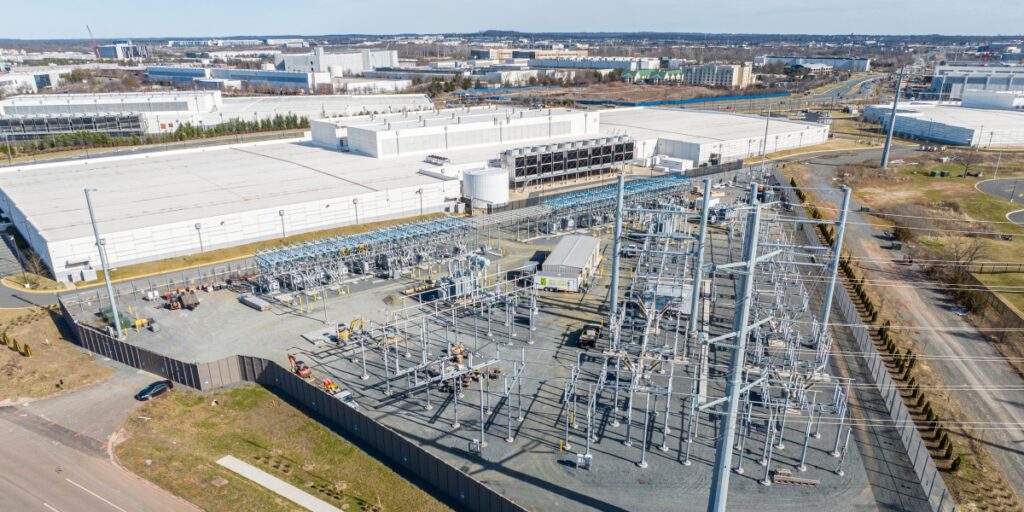
- Massive data center campuses. Under the draft ordinance, on any parcel zoned Technology, 70% of its acreage could be built out with impervious surface, such as data center buildings, parking lots, substations, etc. For example, the Wilderness Crossing proposal allocates over 700 acres for data center development. Under this draft ordinance, 490 acres of a 700-acre parcel could be developed into data centers — that’s over 21 million square feet!
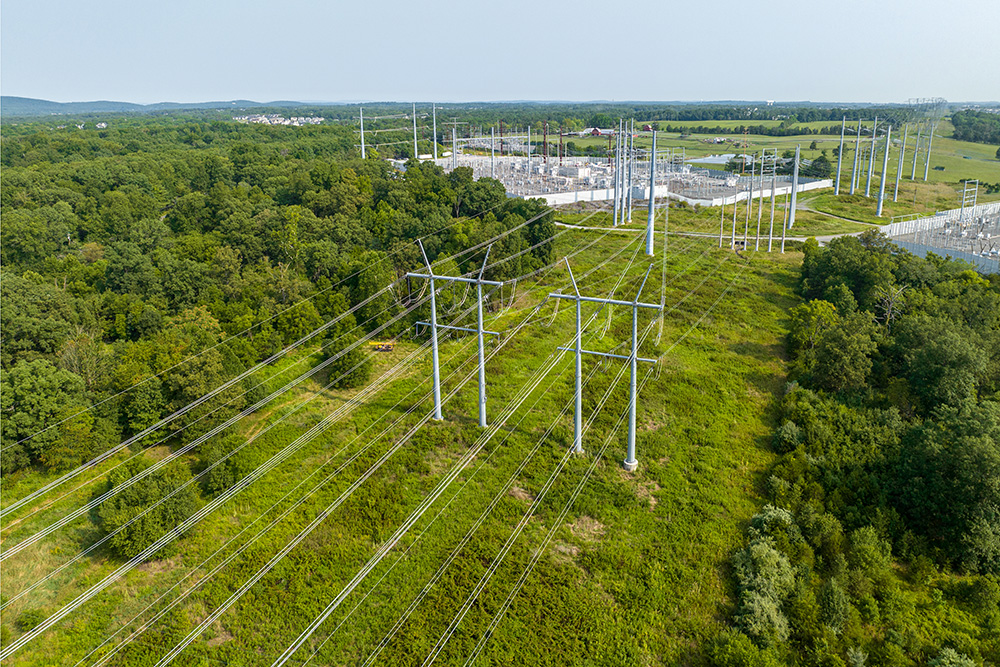
- New transmission lines. The ordinance does not require these giant power users to locate near existing transmission lines. This is critical because once a data center is approved, the electric utility is required to provide power, even if it means using eminent domain to run massive new transmission lines across private property and through our landscapes. Transmission to directly serve data centers is typically provided via 230 kV or larger transmission lines. Orange County currently has only one such line: the 500 kV line across the eastern end of the county.
In the Wilderness Crossing example above, the 21 million square feet would require about6.3 gigawatts of power based on our experience with other data center developments across Virginia.That amount of power would likely require two 500 kV lines/substations. And that’s just one data center proposal. The open-ended nature of the draft ordinance would allow even larger campuses on large acreage parcels or consolidated parcels.
- Massive data center campuses. Under the draft ordinance, on any parcel zoned Technology, 70% of its acreage could be built out with impervious surface, such as data center buildings, parking lots, substations, etc. For example, the Wilderness Crossing proposal allocates over 700 acres for data center development. Under this draft ordinance, 490 acres of a 700-acre parcel could be developed into data centers — that’s over 21 million square feet!
Where We Agree
We applaud the Planning Commission for including several key provisions in the draft, including the requirement for a Special Use Permit for all data centers to ensure public transparency and input and the necessary measure to mandate a separate Special Use Permit for on-site power generation. Furthermore, we strongly support the prohibition on using drinkable water sources for cooling, which is vital for conserving Orange County’s limited water supply.
I hope you’re able to make it out to the Board of Supervisors Public Hearing on Dec. 16. And if not, please submit comments. Your input is critical!
I’m personally available if you have any questions or comments. Feel free to email or call me. And if you know anyone who would like to receive these email updates about Orange County, please forward this email to them and let them know they can sign up for updates here.
Finally, PEC’s work in Orange County — monitoring and reviewing development proposals and zoning changes, and advocating for good planning and best possible outcomes — relies on your consistent action on important issues. It also couldn’t happen without financial support. Consider making a donation or becoming a PEC Member.
Thank you,
Don McCown
Land Use Field Representative
Orange & Madison Counties
[email protected]
(434) 977-2033 x7047