
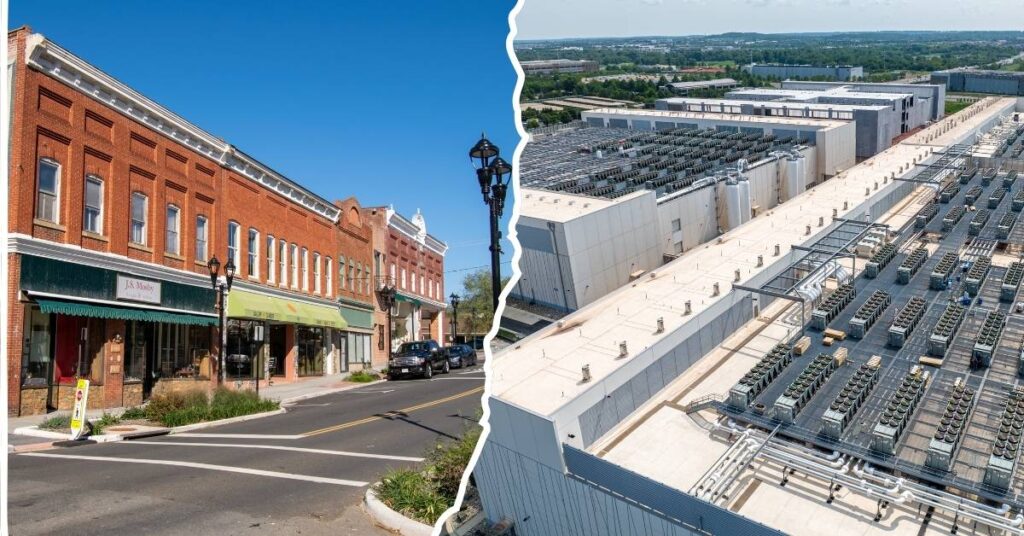
Towns are places that are meant to be vibrant, pedestrian-oriented, human-scaled places for people to live, work and play. They are land constrained, so the limited space should be used for housing, retail and public places. The Town of Orange is a historic, compact and walkable community. The current data center market – focused on data centers of 100,000 square-feet and larger (“hyperscale” data centers) – threatens to overwhelm and industrialize small towns like Orange and strain local infrastructure. The Town of Orange should prohibit data centers larger than 40,000 square feet.
The Piedmont Environmental Council (PEC) is working closely with residents and town officials to ensure that future development complements, not destroys, the unique character of Orange.
Recent Updates: Town Council Takes Action
On Feb. 17, 2026, the Orange Town Council took a significant step by voting unanimously to amend the town’s zoning ordinance. These changes focus on shifting data centers from a “by-right” use (which requires no public input) to a Special Use Permit (SUP) process.
Key Changes Approved:
- Prohibition in Downtown: Data centers are now prohibited in the Traditional Town Center (TTC) district.
- Removal of By-Right Status: In the Town Activity Center (TAC), Rural Commercial (RC), and Traditional Industrial (TI) districts, data centers now require an SUP.
- Residential Protections: Data centers remain prohibited in all residential districts (RR, TR-L, TR-H).
- Closing the Gap: Listening to resident concerns, the Town Council also shifted data centers from by-right to an SUP process in the Round Hill Traditional Neighborhood Development district.
What is an SUP? A Special Use Permit ensures that any data center proposal must undergo a public hearing. This allows you, the resident, to voice concerns regarding noise, visual impact, utility needs and other impacts, before a project is approved.
PEC’s public comments:
Why a Special Use Permit Isn’t Enough
While the move to require a SUP is a “step in the right direction,” PEC and many residents believe the Town should go further. Currently, the Town’s definition of “data center” does not distinguish between a small data center that would fit in with other light industrial buildings and businesses, and a massive, “hyperscale” data center.
> The Reality of Modern Data Centers
In the last 5-10 years, the industry has moved away from building “smaller” data centers (less than 40,000 square feet) to behemoths that dominate the landscape. Today’s hyperscale projects often involve:
- Massive Scale: Buildings are often over 100,000 square feet and 80 feet in height.
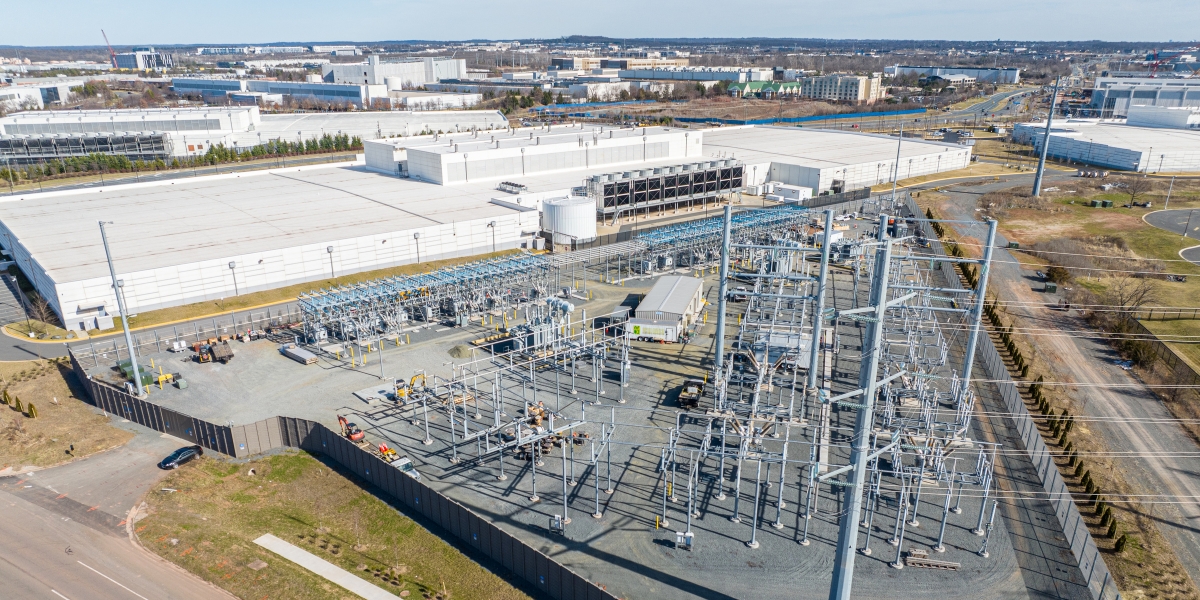
- Heavy Energy Infrastructure: Since many data center campuses require as much energy to operate as a small town, energy companies are struggling to meet demand. We’ve increasingly seen proposals for massive new transmission lines and large substations to carry electricity to these power-hungry facilities.
- Cost to Ratepayers Like You and Me: It’s important to note that the cost to build new electric infrastructure is spread across all ratepayers and shows up on consumers’ energy bills. Unless laws are changed at the state level, residents and businesses will continue footing the bill for the energy needs of the data center industry.
- Constant Noise: Industrial-grade cooling fans and diesel backup generators that run 24/7.
- Air Pollution: Most data centers use massive diesel generators the size of train cars. While these are intended to be used as backup power, data centers are increasingly eyeing them as a primary source of energy and advocating for looser regulations about their use. Diesel is one of the dirtiest forms of generation and at this scale should be cause for concern, especially for people living or working close to a facility.
Read more about the impacts of data centers at pecva.org/datacenters.
Our Position: Prohibit Hyperscale Development
PEC maintains that hyperscale data centers have no place within town limits. Towns are land-constrained; our limited space should be reserved for housing, retail, and public parks—not massive industrial blocks that provide few local jobs and consume vast amounts of energy and water.
We are advocating for the following further protections:
- A Size Cap: Explicitly prohibit data centers larger than 40,000 square feet.
- Strict Definitions: Update the Town ordinance to define and regulate “hyperscale” impacts separately from smaller academic or commercial server rooms, and ensure the definition is not so broad that it can be read to inadvertently include gas turbines or other fossil-fuel-based primary power generation sources that a developer may wish to build on the same site to power the data center. Those are distinct uses and should require a separate SUP.
- Visual and Noise Standards: Ensure that any allowed “small” data centers are subject to strict architectural and sound-buffering requirements.
The Bigger Picture: Orange County
This town-level effort follows a December 2025 decision by the Orange County Board of Supervisors to create a “floating” Technology zoning district. This county-wide ordinance allows practically any parcel—including farmland near schools and neighborhoods—to be rezoned for data centers. Read more →
Unlike the Town’s recent efforts to narrow the scope, the County’s “maximum-flexibility” approach, while still requiring a proposal to go through the SUP process, leaves the door open for large-scale industrialization of our rural landscapes.
How You Can Help
On February 23, the Planning Commission acted to forward a draft definition of “data center” and a draft policy framework for future proposals to the Town Council for their consideration. The Town Council is expected to hold a public hearing on the draft definition soon, and to approve a policy framework (a public hearing for that approval is not required). Your voice is critical during this phase.
- Stay Informed: Sign up for PEC email alerts to receive notifications about issues in Orange and the region at pecva.org/signup.
- Write to the Town Council: Encourage town officials to adopt a 40,000-square-foot size limit to prevent hyperscale data centers and to amend the definition of “data center” so that a developer can’t slip in a fossil fuel power plant as part of the same application. Contact information →
- Talk to Neighbors: Help others understand that data centers today look very different than they did ten years ago and come with a host of impacts to residents and businesses.
- Learn more: Read about the impacts of data centers at pecva.org/datacenters.
Questions?Please reach out to Don McCown, PEC field representative in Orange County, at [email protected].