Restoring Wildlife Habitat

Whether you live in urban, suburban or rural areas, you can make a positive impact on surrounding fish and wildlife populations.  Our web resources are intended to give you the tools to manage your Piedmont lands and waters for greater biodiversity, productivity, and environmental quality.  

Floating Island Installation at Broadlands

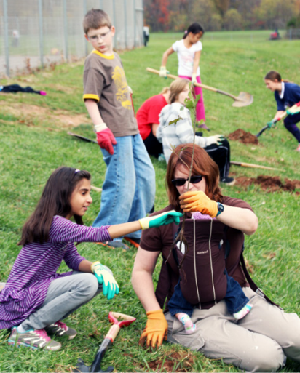
Working together for cleaner water. Volunteers planted three floating islands that will filter nutrient runoff from a Broadlands stormwater pond. Loudoun County Government stormwater staff launched the islands with weights and needed protection from geese until the plants mature. The protection and weights will then be removed.

The Piedmont Environmental Council collaborated with Broadlands Naturally (through the habitat committee of the Broadlands HOA) and Loudoun County, supported by grants from National Fish and Wildlife Foundation and Fairfax Water. Thanks to all who made it possible!
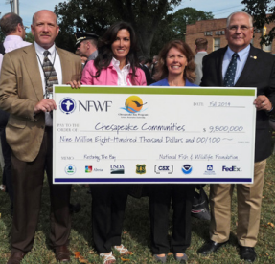
National Fish and Wildlife Foundation Grant

National Fish and Wildlife Foundation Grant

The National Fish and Wildlife Foundation awarded PEC a $200,000 grant from the Chesapeake Bay Stewardship Fund this past October. With this grant, PEC will collaborate with Loudoun County, the Town of Lovettsville, Loudoun County Master Gardeners and Loudoun homeowners associations to implement projects that involve planting native trees and shrubs, improving stormwater facilities and reducing polluted runoff in Loudoun County communities.

Coyotes, Our Elusive Neighbors

For those of us old enough to remember when Looney Tunes ruled the afternoon cartoon television slot, the name Wile E. Coyote holds fond memories of a scrappy canine and his many failed attempts at catching the infamous and speedy Road Runner. To many children this was their first exposure to Canis latrans, who, next to the Gray Wolf, is North America’s other well-known and often misunderstood wild.

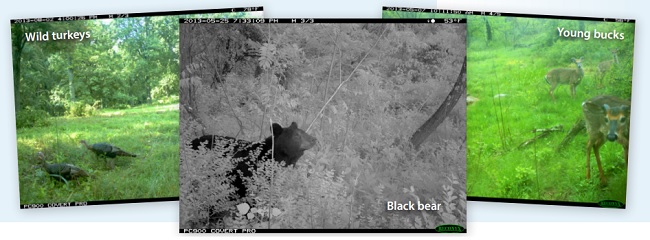
While Wile E. Coyote is known to prowl about on the flat, long desert highways of the American West, our Eastern coyote here in Virginia inhabits a different kind of backdrop. Coyotes are found in almost every environment in our state: forests, fields, suburbs, and city alleys. They are a notoriously secretive and seldom seen species. If you do happen to see a coyote, it is most likely due to chance, illness (such as rabies, mange, canine distemper, etc.), or because the animal has become desensitized to humans, which is often the result of either intentional or unintentional feeding.

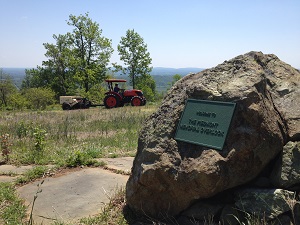
Making Progress at the Piedmont Overlook

Making Progress at the Piedmont Overlook

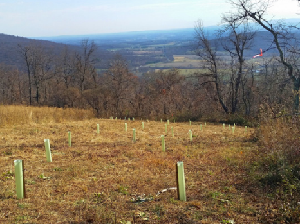
It’s been busy at the Overlook these past few months! PEC is in the final year of a cost-share agreement with the Natural Resources Conservation Service to improve the property’s habitat and increase its biodiversity. The mar­quee part of this grant is the creation of a 17-acre native grass and wildflower meadow on land that was formerly a pasture dominated by tall fescue.

Teaming Up to Save the “Brookie”

Virginia’s state fish, the eastern brook trout, is in trouble. The Commonwealth’s only native trout has seen a sharp decline in population due to a detrimental combination of rising temper­atures, physical barriers to streamflow, pollution, and habitat loss. Many expect the species to be added to VA’s Wildlife Action Plan list in the near future.