
In Colorado and Virginia residents debate whether proposed uranium mills will help or hinder their economies.
Energy Matters
PEC works toward energy solutions that emphasize efficiency first, use appropriate technologies for the 21st Century and respect the scenic and historic character of the Piedmont.
The Poisoned Well
What can a Superfund site in Colorado tell us about potential uranium mining and milling in Virginia?
Presentation from Summer 2014 Community Meetings
The following presentation was given at a July 2014 community meeting sponsored by PEC, on the subject of natural gas pipeline proposals in Virginia.
Uranium Mining: “Not the Time to Relax”
The uranium in Virginia will remain safely underground for now, although pressure is still building to overturn Virginia’s ban on mining and milling this radioactive mineral.
Despite a massive lobbying effort by Virginia Uranium, LLC, it appears that efforts to end the ban this year lacked political support, particularly after a National Academy of Sciences study released in December confirmed that uranium mining and milling would expose Virginians to unprecedented risk. On January 20, Gov. Bob McDonnell requested that there be no effort to lift Virginia’s ban on uranium mining this year, but directed state agencies to start drafting regulations for potential uranium mining and milling.
Introduction to the Uranium Mining Issue
Uranium mining in Virginia poses many risks to the health of residents and the viability of the rural economy. Learn more about the uranium mining moratorium issue and how PEC plans to move forward after the issue failed to come up in this General Assembly session.
PEC Expert Testimony in the TrAIL Line Case
In December 2007, Piedmont Environmental Council submitted the testimony of nine expert witnesses to the VA State Corporation Commission. These witnesses outline the many reasons this transmission line application should be denied by the SCC.
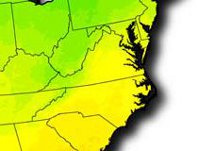
Small-Scale Solar
Virginia has great solar potential– ranked 22nd of the 50 states, Virginia has more solar potential than New Jersey, the East Coast photovoltaic (PV) leader.
PEC Testifies to Congress on Transmission Policy
PEC President Chris Miller was one of twelve experts from across the country summoned to testify before a House of Representatives subcommittee at a June 12 hearing entitled “The Future of the Grid: Proposals for Reforming National Transmission Policy.”
Socioeconomic Study on Uranium Mining Released
A newly released study by Chmura Associates projects that "the adverse economic impact under the worst-case scenario is nearly twice as great as the corresponding positive impact in our best-case scenario."
Failed French Uranium Mining—A Model for Virginia to Emulate?
For over 20 years, proponents of a healthy Virginia have questioned whether uranium mining has been properly conducted in regions with (geologic, hydrologic, meteorological, etc.) conditions similar to those found in Virginia. Uranium mining proponents have claimed that it has been conducted properly in France.