
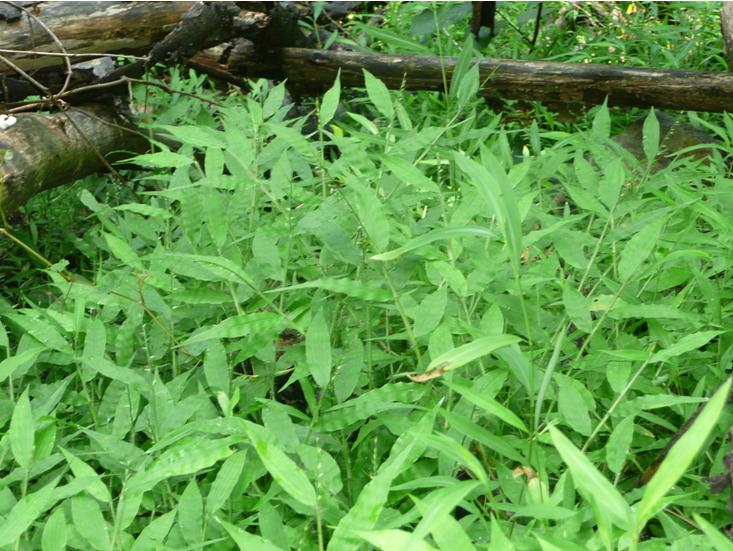
Learn more about the different ways to remove it and how to determine which method to use.
PEC
Section 3: Why Is This Plant Bad?
Wavyleaf basketgrass is one of many exotic, invasive plants that have been introduced to our area. Read more about how invasive species like this one crowd out native trees and create other problems in our forest.
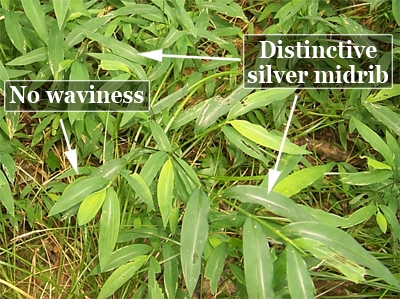
Section 2: Wavyleaf or an Imposter?
Wavyleaf basketgrass (Oplismenus hirtellus ssp. undulatifolius) is sometimes mistakenly identified as Japanese stiltgrass, Arthraxon, or native Deer Tongue. Learn how to tell them apart.
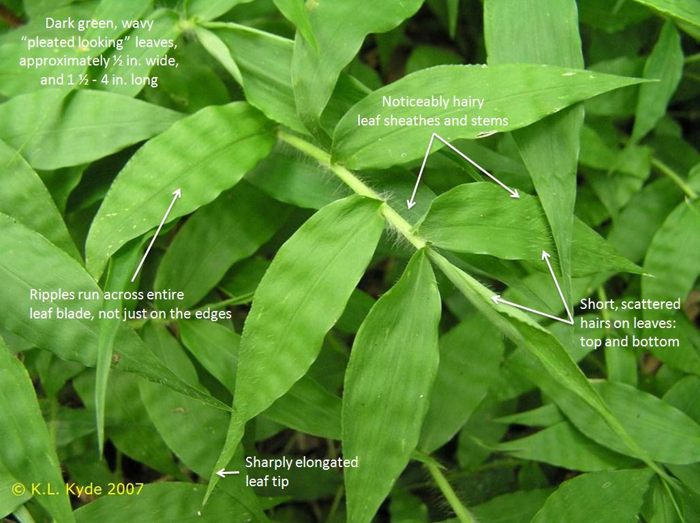
Section 1: What It Looks Like
Wavyleaf basketgrass is a shade-tolerant perennial grass with high potential to overtake other plants and become one of the worst invasive plants in our area. This section has pictures and descriptions to help you identify it if you see it.
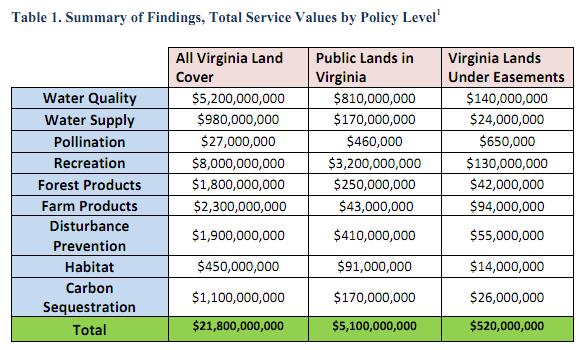
The Economic Benefits of Natural Goods and Services
Using a value transfer approach, this study leverages the results of pre-existing studies to quantify the estimated annual contribution of nine such natural services – water quality, water supply, pollination, recreation, forest products, farm products, disturbance prevention, habitat, and carbon sequestration – to be approximately $21.8 billion.
Socioeconomic Study on Uranium Mining Released
A newly released study by Chmura Associates projects that "the adverse economic impact under the worst-case scenario is nearly twice as great as the corresponding positive impact in our best-case scenario."
Failed French Uranium Mining—A Model for Virginia to Emulate?
For over 20 years, proponents of a healthy Virginia have questioned whether uranium mining has been properly conducted in regions with (geologic, hydrologic, meteorological, etc.) conditions similar to those found in Virginia. Uranium mining proponents have claimed that it has been conducted properly in France.
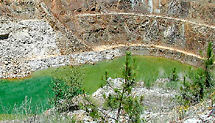
The Mining & Milling Process
Learn how uranium is mined and milled.
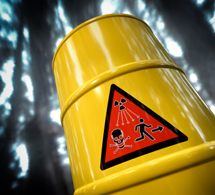
The Consequences of Toxic Uranium
Uranium mining and milling produces massive amounts of toxic waste that can contaminate air, drinking water, and pristine rivers and streams. Virtually all uranium mining in the U.S. has occurred in sparsely populated regions of the arid west, where rainfall is often below 15 inches per year. Still, according to the U.S. Environmental Protection Agency, tailings have contaminated the groundwater at almost all U.S. mill sites.
Water & Uranium Mining
According to the Environmental Protection Agency's TENORM Report, "Water is perhaps the most significant means of dispersal of uranium and related [radioactive materials] in the environment from mines and mine wastes…Uranium is very soluble in acidic and alkaline waters and can be transported easily from a mine site." This is of great concern. If Virginia allows uranium mining, it would be the first state to do so in the United States in a climate where rainfall exceeds evaporation.