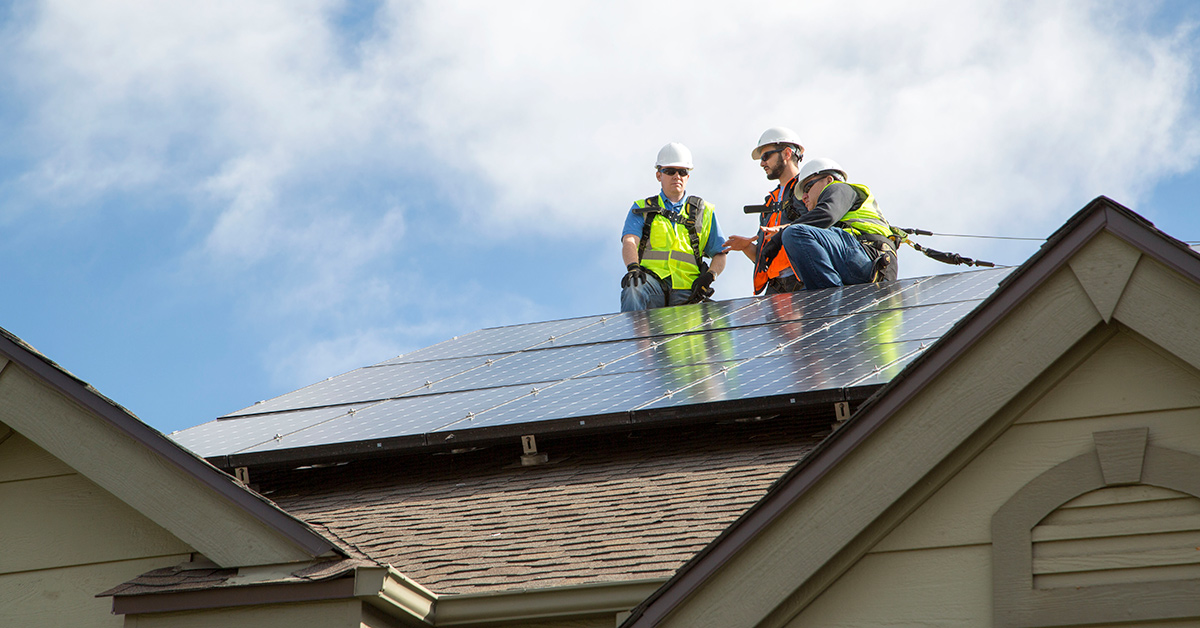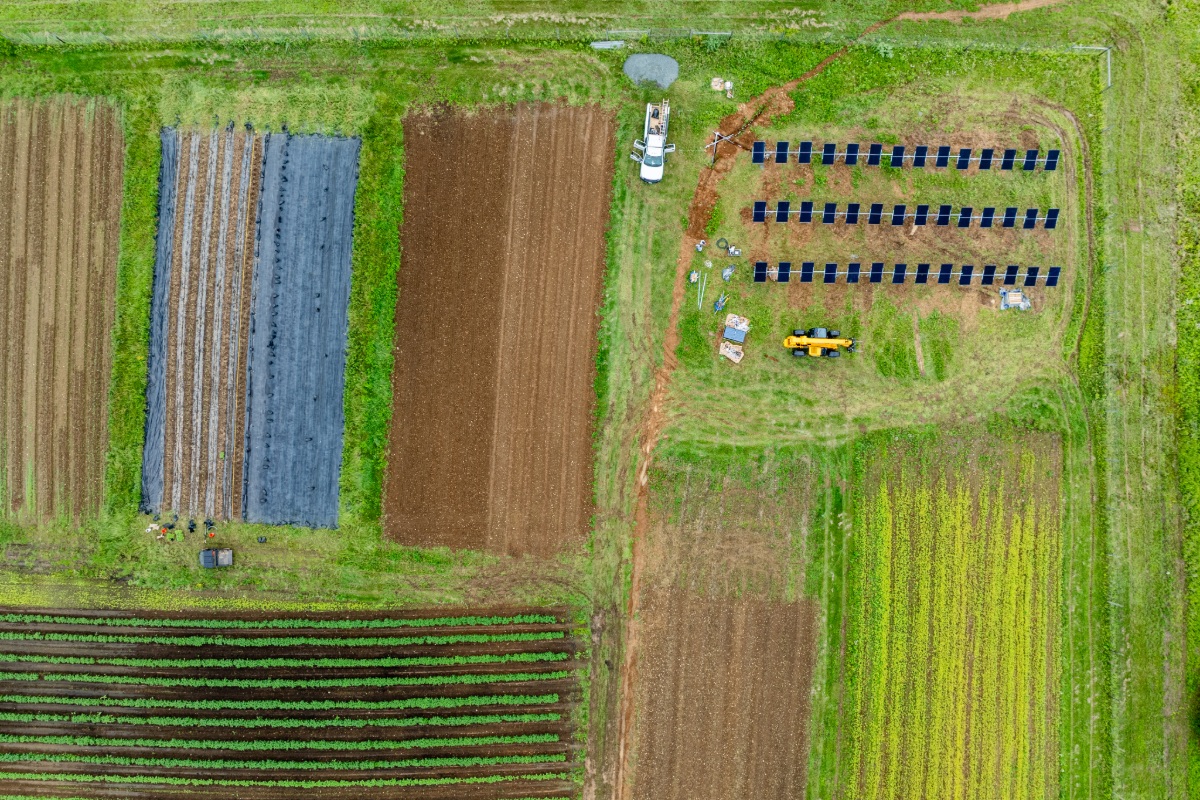
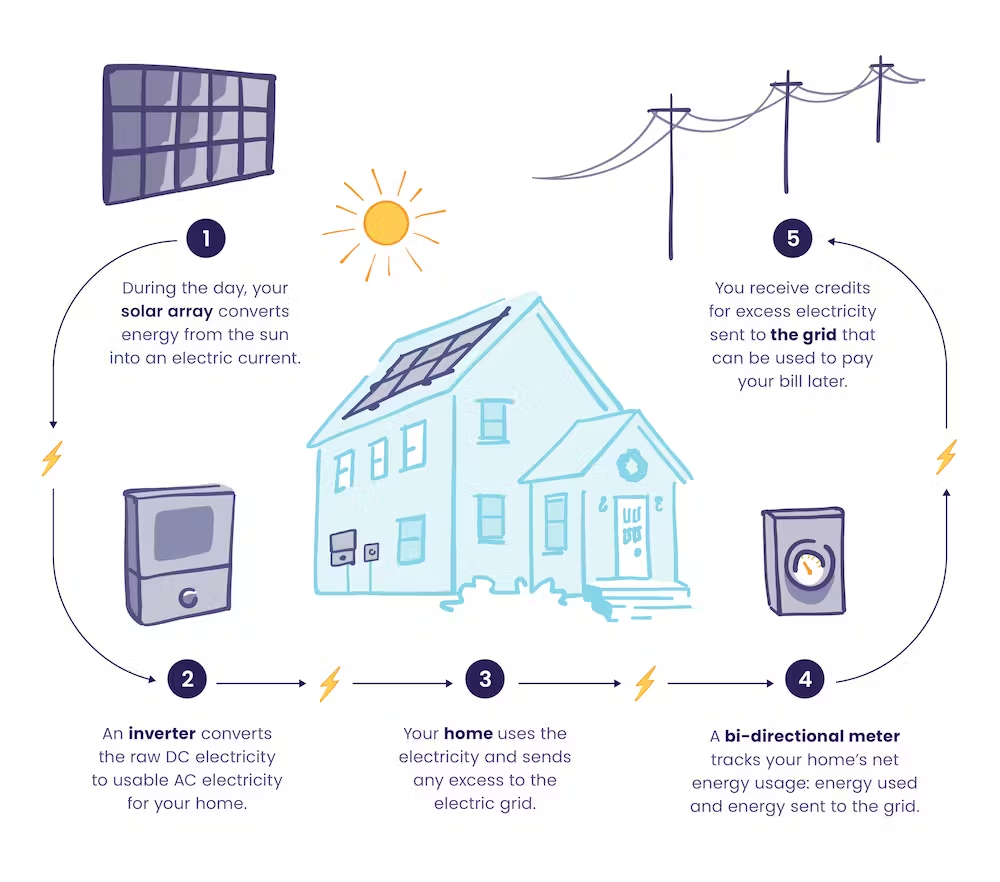
Net Metering is a billing arrangement whereby owners of rooftop and other small-scale solar receive a 1:1 credit for the excess energy their systems generate and send back to the electric grid.
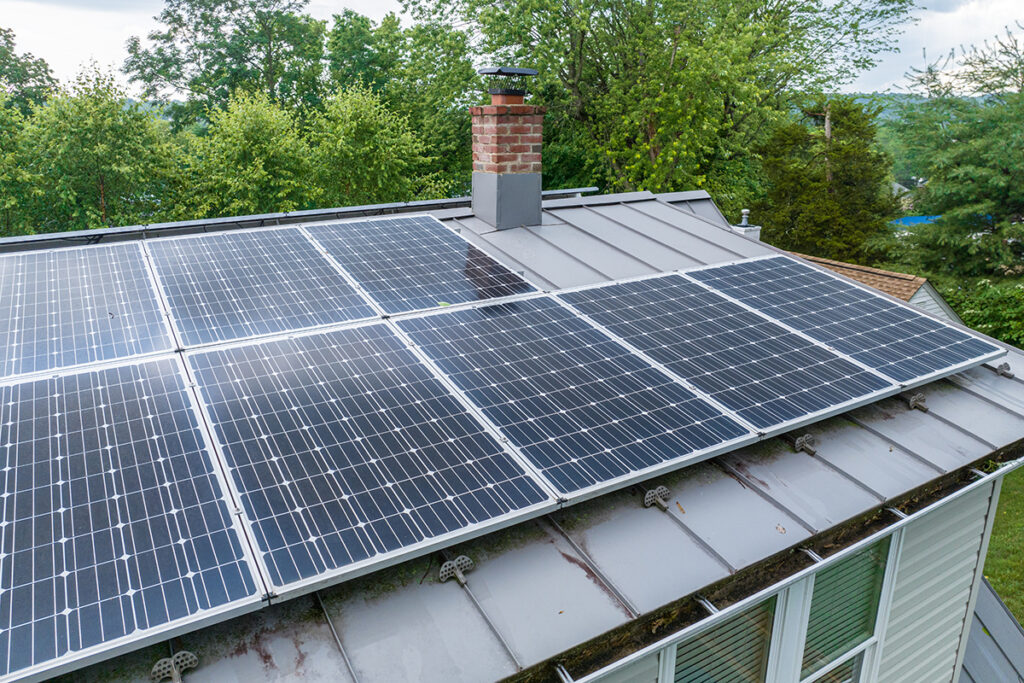
These credits from when the sun is shining automatically offset your energy bill at later times, such as at night or in winter months when their solar panels are less productive. Those credits are good for an entire year. This is how solar installations “pay for themselves” over time, and it’s what makes solar financially accessible to homeowners, farmers and small businesses.
Net metering is the foundation for distributed generation and allows rooftop solar to be built with the goal of meeting the owner’s annual needs. You do not need to sign up or do any additional work to take advantage of this arrangement.
Why Net Metering is at Risk
However, in May 2025, Dominion Energy petitioned the State Corporation Commission to cut the net metering credit by nearly half. Why? Because monopoly utilities like Dominion make maximum revenue from centralized, utility-scale generation — like gas plants and large-scale solar — and infrastructure like transmission lines. Motivated by profits, Dominion’s tremendous lobbying pressure has been a longstanding and powerful force against efforts to create a more distributed grid that would allow more homeowners and businesses to go solar and create energy independence for themselves.
Dominion’s efforts would have severely undermined the practicality of rooftop solar for many people and critically hampered the viability of increased distributed energy generation and energy independence at a time when skyrocketing data center energy demands are straining the grid, Virginia is importing more energy than ever and more than any other state, and electric bills are increasing.
PEC served as an “intervenor” in this case, joining our partners to challenge Dominion’s arguments, pose questions and offer additional information for SCC’s consideration. Fortunately, in May 2026, The State Corporation Commission (SCC) ruled that net metering will remain unchanged!

PEC’s Ashish Kapoor (far right), alongside partners from Solar United Neighbors, Vote Solar, Sierra Club, Give Solar, and Advanced Energy United, spoke at a press conference to kick off the State Corporation Commission hearing regarding Dominion Energy’s request to reduce the value of net metering payments. Their comments stressed the critical importance of preserving current net metering standards to provide a foundation for more distributed generation in Virginia. PEC also served as an intervenor in the case. The SCC case saw expert testimony and over 1,300 public comments.
Photo by Jessica Sims, Virginia Conservation Network.
Report Finds Solar Far Exceeds Value Communicated by Dominion
In 2025, PEC commissioned Dunsky Energy + Climate Advisors to study and calculate the actual value of distributed solar generation in Dominion Energy’s territory — factoring in the range of benefits (such as land conservation, connecting clean energy quickly and mitigating new transmission and generation impacts) that the utility did not account for in its proposed cuts to net metering values. The report, written to be relevant and readable, formed the foundation of PEC’s formal “intervention” when the SCC considered Dominion’s proposal.
Our analysis demonstrated that small-scale distributed solar delivers substantial value that far exceeds what Dominion acknowledged in its proposed net metering framework.
As Virginia advances toward its clean energy targets under the Virginia Clean Economy Act, state policy must reflect the full range of benefits that distributed solar offers. By valuing distributed energy fully and fairly, Virginia is more likely to incentivize meaningful investment in these resources that can play an important role in meeting the state’s energy needs.
Small-scale, distributed solar must play a greater part in Virginia’s energy future. These projects — rooftop solar, parking lot solar, solar on landfills, and dual-use agrivoltaics — bring clean energy to the grid much faster than utility-scale energy generation with lower needs for new transmission and generation, which we all pay for through our utility bills.
Benefits the Electric Grid
Small-scale solar (on rooftops and parking lots) provides immense value by bringing clean energy online quickly and reducing the need for expensive new transmission lines and large-scale power plants — projects that take years to develop with costs that are ultimately passed down to all ratepayers.
Prioritizes Land Conservation
By incentivizing small-scale solar through fair net metering, Virginia can meet its renewable energy goals while protecting working farmlands and open spaces from being converted into massive, utility-scale solar arrays. Emerging practices, like dual-use agrivoltaics that combine agriculture and solar production, also benefit from net metering credits.
Strengthens Grid Reliability
Virginia currently imports more electricity than any other state. At a time when data centers are putting unprecedented strain on our infrastructure, it’s important to encourage distributed energy generation that builds a more resilient and self-sufficient local power grid.
Additional Resources:
- Meaningful Clean Energy Legislation Passed in 2026
- Webinar: Why Dominion is Trying to Kill Smale-Scale Solar
- Dunsky Energy +Climate Value of Solar Report
Have questions about solar? Reach out to Ashish Kapoor at [email protected].